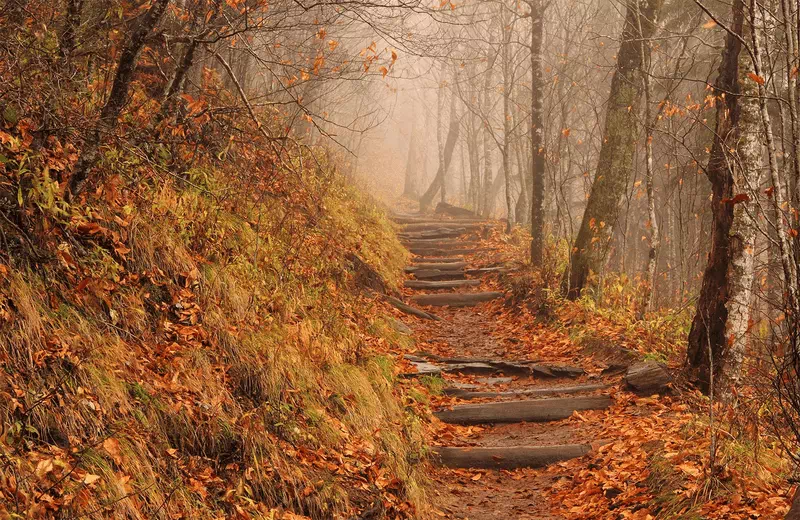
Rajasthan gets talked about for its forts and its deserts, and both deserve the attention. What gets mentioned far less is that the state also holds some of India's most important wildlife territory: tiger reserves with genuine conservation stories, a UNESCO-listed bird sanctuary, and one of the last strongholds of a bird so endangered it now numbers only in the low hundreds nationwide. Five parks in particular cover this range well, and each one asks something slightly different of the traveler who visits.
None of these are casual add-ons to a Jaipur-Agra itinerary. Each deserves a day of its own, planned around the season and the animal you actually want to see.
Here's how the five compare before getting into specifics.
| Park | District | Area | Known For | Best Time to Visit |
|---|---|---|---|---|
| Ranthambore National Park | Sawai Madhopur | About 1,334 sq km | Royal Bengal Tigers, 10th-century fort | October to June |
| Sariska Tiger Reserve | Alwar | 881 sq km core, 1,203 sq km total | India's first successful tiger reintroduction | October to April |
| Keoladeo Ghana National Park | Bharatpur | About 29 sq km | Migratory birds, UNESCO World Heritage status | October to March |
| Desert National Park | Jaisalmer | About 3,162 sq km | Great Indian Bustard, Thar Desert dunes | October to March |
| Mukundra Hills (Darrah) National Park | Kota | About 760 sq km | Rajasthan's newest tiger reserve, Chambal river safaris | October to June |
Mukundra Hills (Darrah) National Park
NationalPark-24d1f1.jpeg)
Mukundra Hills is the newcomer on this list, and it shows in both its infrastructure and its promise. Located about 50 kilometres from Kota and spread across four districts, Darrah forest was declared a wildlife sanctuary back in 1955, made a national park in 2004, and finally notified as Rajasthan's third tiger reserve in 2013, after Ranthambore and Sariska. It was formed by merging three existing protected areas: Darrah Wildlife Sanctuary, Jawahar Sagar Wildlife Sanctuary, and part of the National Chambal Sanctuary, giving it a genuinely unusual mix of forested hills and river frontage.
Tigers were reintroduced here starting in 2018, translocated individually from Ranthambore, and the population remains small and still establishing itself, so sightings are far less reliable than at the other two reserves on this list. What Mukundra offers instead is quieter forest, fewer crowds, and a landscape shaped by the Chambal, Kali, Ahu, and Ramzan rivers running through a valley between the Mukundra and Gargola hill ranges. Sloth bears, leopards, wild boar, and four-horned antelope are more consistent sightings here than tigers currently are. Kota railway station, about 50 kilometres away, is the nearest rail link, and Jaipur airport, roughly 300 kilometres out, is the nearest major airport, though Udaipur's airport sits at a similar distance depending on route.
If a Rajasthan wildlife trip stretches into Kota or Chittorgarh territory, it's also worth pairing Mukundra with a stop in Udaipur, close enough to justify the detour; this two-day Udaipur itinerary and this guide on when to visit Udaipur are both useful for slotting the city into the same trip. Travelers whose route continues toward Madhya Pradesh's forest corridor may also want to look at this roundup of national parks in Madhya Pradesh, since several of that state's reserves sit within reasonable striking distance of Kota.
Ranthambore National Park
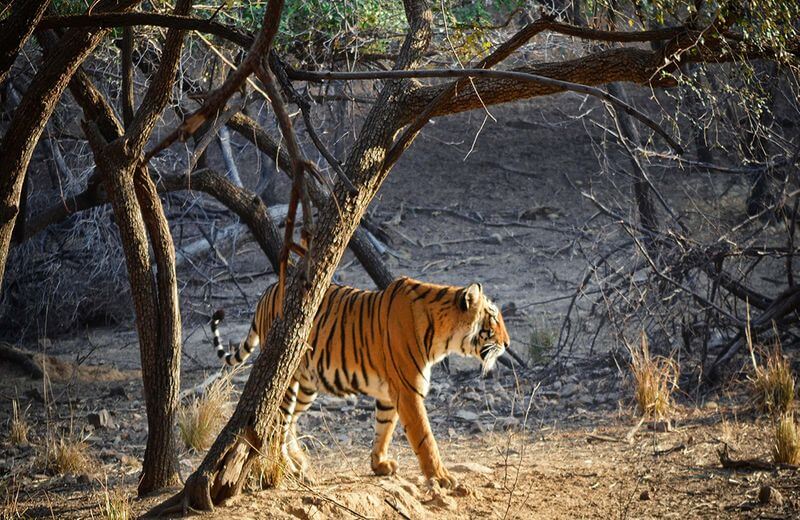
Ranthambore is the name most people already associate with Rajasthan's wildlife, and for good reason. Spread across roughly 1,334 square kilometres in Sawai Madhopur district, it was once the private hunting ground of the Maharajas of Jaipur before being declared a wildlife sanctuary in 1955 and folded into Project Tiger in 1973. It became a national park in 1980, and today it holds one of India's healthiest tiger populations alongside leopards, sloth bears, and marsh crocodiles in its lakes.
Zones 1 through 5 are the classic tiger territories with the highest sighting rates, but the newer buffer zones 6 through 10 have started producing surprisingly good sightings too. Don't assume a buffer-zone permit means a wasted trip.
The park is split into ten safari zones, explored by six-seater jeep or twenty-seater canter, with morning and afternoon shifts timed to sunrise and sunset. Ranthambore Fort, a UNESCO World Heritage Site dating to the 10th century, sits inside the park boundary and is usually included in the safari route through zone five. The park stays open from October through June and closes for the monsoon between July and September. Sawai Madhopur Railway Station sits close to the park entrance, and Jaipur International Airport, roughly 180 kilometres away, is the nearest airport.
Sariska Tiger Reserve National Park
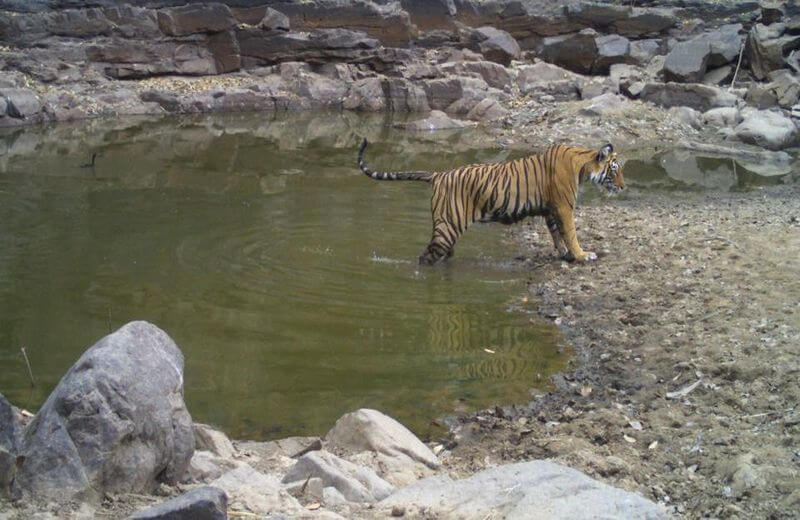
Sariska, in Alwar district, holds a distinction no other Indian reserve can claim: it was the first tiger reserve in the world to successfully bring tigers back after losing them entirely. Poaching wiped out every tiger here by 2005, and starting in 2008, the Rajasthan Forest Department relocated tigers from Ranthambore in a program that international conservationists studied closely. The population has since recovered well, alongside leopards, jungle cats, striped hyenas, and the four-horned antelope.
The reserve covers an 881-square-kilometre core zone within a larger 1,203-square-kilometre protected area, set among the Aravalli hills. Its landscape mixes scrub-thorn forest with dramatic ruins: Kankwari Fort, where Mughal prince Dara Shikoh was once imprisoned, and the Pandupol Hanuman Temple, both sit inside reserve boundaries and double as safari stops. Unlike most Indian tiger reserves, Sariska stays open through the monsoon, though safaris during that stretch are limited to the buffer zone. Alwar Junction railway station is about 35 kilometres from the reserve, and Jaipur airport is roughly 110 kilometres away, making Sariska a genuinely manageable weekend trip from Delhi or Jaipur.
Keoladeo Ghana National Park
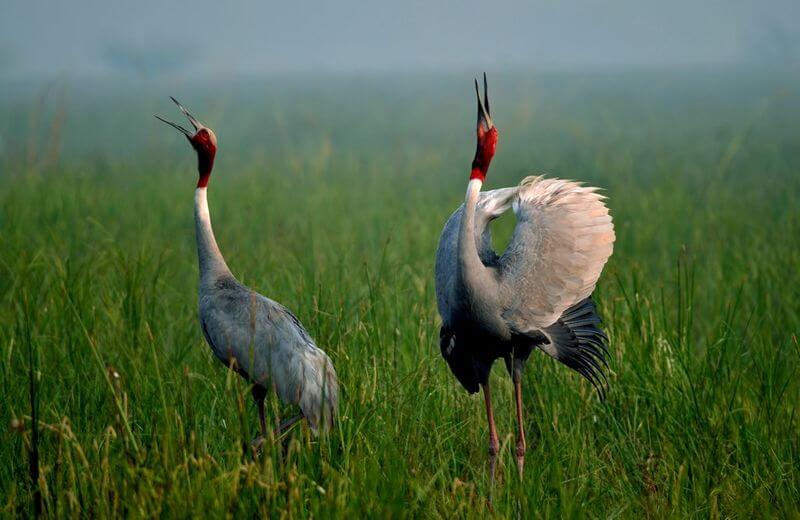
Keoladeo turns the wildlife-park expectation on its head entirely. There are no tigers here, no jeeps racing between waterholes, and no safari zones. Instead, this roughly 29-square-kilometre wetland near Bharatpur is walked, cycled, or explored by rickshaw, and it holds one of the most significant bird populations on the planet: over 370 recorded species, migratory arrivals from Siberia, Afghanistan, and Central Asia, and a history as the wintering ground of the now critically rare Siberian crane.
The park began life in the 1850s as a duck-shooting reserve for the Maharajas of Bharatpur, with British viceroys among the invited guns. Independence changed its purpose entirely: it was notified a bird sanctuary in 1976, became a national park in 1982, and was inscribed as a UNESCO World Heritage Site in 1985. No private vehicles are permitted past the gate, which keeps the wetland genuinely quiet, and trained rickshaw pullers double as knowledgeable bird guides. November through February brings the heaviest migratory traffic, though resident species breed here from August onward. Bharatpur Junction railway station sits about 5 kilometres away, and Agra's airport, roughly 55 kilometres out, is the nearest air link, which makes Keoladeo an easy detour for anyone already visiting the Taj Mahal.
Desert National Park
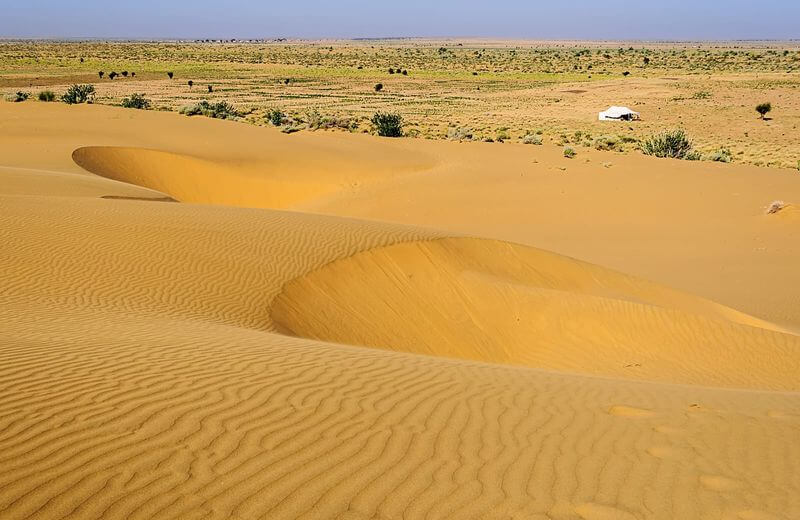
This is where Rajasthan's wildlife story stops looking like anything else in the country. Desert National Park, just outside Jaisalmer, protects roughly 3,162 square kilometres of the Thar Desert, making it one of India's largest national parks despite the popular image of deserts as empty land. Established in 1980, it exists specifically to protect a desert ecosystem that most conservation programs elsewhere in India simply don't cover: sand dunes, rocky outcrops, and dry salt lake beds that together support species found almost nowhere else.
The headline species is the Great Indian Bustard, one of the heaviest flying birds alive and now critically endangered, with a global population that has dropped into the low hundreds. Chinkara, blackbuck, desert fox, and several species of venomous snakes and monitor lizards round out the wildlife list, and the park's Akal Wood Fossil site holds petrified tree trunks estimated at 180 million years old. Jeep safaris run early morning, when temperatures are bearable and animals are most active; the Sudasari checkpost is the most reliable spot for bustard sightings. The park sits about 40 kilometres from Jaisalmer, which has its own small airport and railway station, both well connected to Delhi, Jodhpur, and Jaipur.
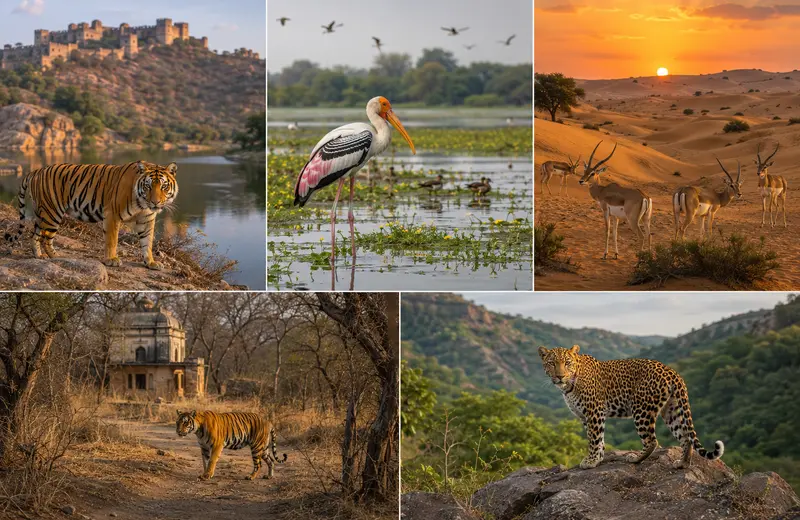
Best Time to Visit: Comparing the Five
Winter, broadly October through February, is the safe answer for all five parks, offering pleasant daytime temperatures and the highest migratory bird activity at Keoladeo and Desert National Park specifically. Tiger sightings work slightly differently, though. At Ranthambore and Sariska, March through June, despite the punishing heat, actually improves tiger visibility, since animals gather more predictably around shrinking waterholes as the forest dries out.
Desert National Park is the one exception to "anytime works," since summer temperatures in the Thar can exceed 45 degrees Celsius and make outdoor safaris genuinely risky rather than merely uncomfortable. Keoladeo, uniquely among the five, stays worth visiting even outside peak winter, since resident breeding birds arrive from August and the wetland itself is scenic year-round. Sariska is the only one of the five that remains open through the monsoon months, though only its buffer zone operates safaris during that stretch.
Budget and Safari Costs
Entry and safari fees at Indian national parks are structured differently for domestic and international visitors, and they change often enough that quoting an exact number here would go stale fast. As a rough shape of what to expect: jeep safaris at the tiger reserves generally cost more than canter (shared bus) safaris, foreign visitors pay a noticeably higher rate than Indian nationals at every park on this list, and Ranthambore in particular has premium "Tatkal" last-minute permits that carry a steep surcharge over advance booking.
Book safari permits well ahead of travel dates, especially for Ranthambore and Sariska during the November-to-April window. Last-minute slots do exist but cost significantly more and offer far less zone choice.
Beyond the safari itself, budget for a guide fee (often bundled into the safari cost already), vehicle charges if booking a private jeep rather than a shared seat, and separate fees for video cameras at some parks, since still photography is typically free but video recording often isn't. Confirm current fee structures directly on the Rajasthan Forest Department's official booking portal before finalizing any trip budget, since rates are revised periodically and differ from what older blog posts may still list.
Photography Tips Across the Five Parks
Each park demands slightly different gear and timing. At Ranthambore and Sariska, a telephoto lens in the 300mm-plus range makes the difference between a distant blur and a usable tiger shot, since safari vehicles can't approach wildlife closely and cats often stay well back from the track. Early morning safaris consistently produce better light than afternoon slots, with the low sun giving skin and fur tones a warmth that flat midday light doesn't.
Keoladeo rewards a different approach entirely. Because the park is walked or cycled rather than driven, getting close to nesting colonies is genuinely possible, and a mid-range zoom paired with patience often beats a longer lens rushed between rickshaw stops. Painted storks and herons nest at eye level in places, particularly during the breeding season from August onward.
Desert National Park punishes careless equipment handling more than any other park on this list. Sand works into camera bodies and lens mounts quickly, so a protective cover and avoiding lens changes in open wind matter more than usual. The desert's low winter light around sunrise and sunset turns the dunes gold and is generally considered the best window for landscape shots, while bustard photography specifically calls for a long lens and a lot of stillness, since the bird is notoriously shy of movement.
Travel Tips for Visiting Rajasthan's National Parks
Clothing matters more at these parks than most first-time visitors expect. Neutral, muted colors work far better than bright clothing for wildlife sightings, and mornings at Ranthambore, Sariska, and Mukundra during winter can dip close to freezing in open-top jeeps, so warm layers matter even though the same afternoon might turn pleasantly warm. At Desert National Park, the opposite problem applies: daytime sun is intense even in winter, and sunglasses, sunscreen, and a hat make the early-morning safari far more comfortable once the sun climbs.
A valid government-issued photo ID is required at every park for safari booking, and international visitors should carry a passport rather than a photocopy. Binoculars are worth packing for all five parks, but especially for Keoladeo and Desert National Park, where the main attractions are birds spotted at a distance rather than animals that approach a vehicle. Photography equipment beyond a standard camera, particularly professional video gear, sometimes needs separate permission or an extra fee, so checking each park's specific policy in advance avoids an awkward conversation at the entry gate.
Finally, treat each park as a full day rather than a quick stop between other destinations. Ranthambore and Sariska in particular reward multiple safaris across different zones, since tiger movement is genuinely unpredictable and a single three-hour drive is not a reliable way to judge what either reserve has to offer. For context on how these five stack up against national parks in the rest of the country, this guide to India's largest national parks is a useful next read, and if the Thar Desert's ecosystem has sparked an interest in arid-zone wildlife specifically, the national parks of neighbouring Gujarat extend a similar desert and grassland habitat into the Rann of Kutch.
The Bottom Line
Rajasthan's five national parks cover an unusually wide range for one state: dense tiger forest at Ranthambore and Sariska, a globally significant wetland at Keoladeo, one of the world's more extreme desert ecosystems at Jaisalmer, and a young, still-developing tiger reserve at Mukundra Hills that rewards patience over guaranteed sightings. Pick based on the season and the animal that actually draws you, book safari permits well before arrival, and confirm entry fees directly with the forest department rather than relying on older listings.