Most people come to Bar Harbor for one reason: it sits at the doorstep of Acadia National Park, where granite cliffs drop straight into the cold Atlantic. What surprises them is the town itself. It is small enough to cross on foot in fifteen minutes, packed with lobster shacks and bookshops, and close enough to the park that you can watch the sunrise from a mountaintop and be back at a café for breakfast. This Bar Harbor, Maine travel guide covers how to get here, when to come, what to actually do, and how to do it without spending your whole trip hunting for parking.
A working plan for Bar Harbor and Acadia — when to go, how to arrive, where to eat lobster, and the stops that earn the drive.
Bar Harbor is the base camp, Acadia is the reason. If you only remember one thing: book your Cadillac Mountain summit reservation early and let the rest of the trip stay loose.
At a Glance
| Detail | What to Know |
|---|---|
| Where it is | Mount Desert Island, Down East Maine |
| Nearest airports | Hancock County–Bar Harbor (BHB), Bangor (BGR), Portland (PWM), Boston Logan (BOS) |
| Drive from Boston | About 280 miles, roughly 5 hours |
| Main draw | Acadia National Park, Cadillac Mountain, the rocky coast |
| Park entry fee | Around $35 per vehicle for a 7-day pass (confirm current rates) |
| Best months | Late June through mid-October |
| Free shuttle | Island Explorer, late June to mid-October |
| Ideal trip length | 3 to 5 days |
Why Bar Harbor Works as Your Base
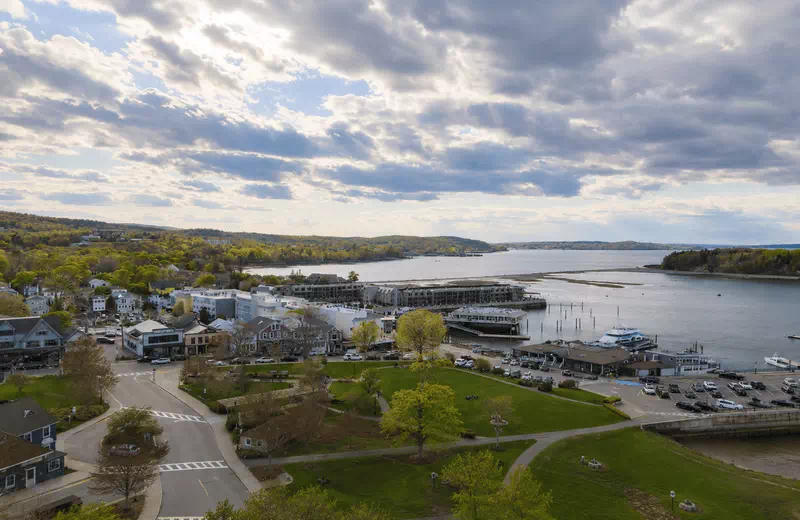
Acadia spreads across Mount Desert Island, the Schoodic Peninsula, and a scatter of smaller islands, and there are no hotels inside the park. You need a town to sleep in, and Bar Harbor is the obvious one. It has the most lodging, the most restaurants, and a free shuttle that loops into the park during the busy season. The relationship is simple, and it mirrors the way Estes Park works for Rocky Mountain National Park: the town handles food and beds, the park handles the views.
There is history packed in here too. A century ago this was a summer escape for some of the wealthiest families in the country, who built enormous "cottages" along the shore. A fire tore through the island in 1947 and took many of them. A few survivors were turned into inns and shops, which is part of why the downtown feels both grand and slightly worn-in at the same time.
Best Time to Visit Bar Harbor
The sweet spot runs from late June through mid-October. July and August bring the warmest, longest days, every shop and tour is open, and the town hums. They are also the most crowded weeks of the year, so trailhead parking fills early and dinner reservations matter.
September is the quiet favorite. Crowds thin out after Labor Day, the weather stays mild, whale-watching boats are still running, and the first hints of color appear in the trees. Peak fall foliage usually lands around mid-October, often a couple of weeks behind the mountains of Vermont and New Hampshire, and the reds against the gray granite are the kind of thing photographers plan whole trips around.
Heads up: many seasonal restaurants, tour operators, and lobster shacks start closing around mid-October. If you visit late in the season, call ahead or you may find half the town shuttered.
Winter is a different animal. The island goes quiet, a lot of businesses close, and parts of the Park Loop Road shut for snow. It can be beautiful and almost empty, but it is a trip for people who want solitude, not lobster rolls and boat tours.
How to Reach Bar Harbor
There is no way around it: you are heading to a remote corner of Maine, so reaching Bar Harbor takes some planning.
By air, the closest option is Hancock County–Bar Harbor Airport (BHB) in Trenton, about a 20-minute drive from downtown. Cape Air runs seasonal connections to and from Boston, but flights are limited. Bangor International Airport (BGR) is the more practical choice for most travelers, sitting roughly 50 miles away with a wider schedule and a drive of a little over an hour. Portland International Jetport (PWM) is farther south, around 175 miles and a three-and-a-half-hour drive, which suits anyone wanting to explore southern Maine on the way up.
Boston Logan (BOS) is the big international hub. It is the largest airport within a half-day's drive, but Bar Harbor is about 280 miles north, so budget close to five hours behind the wheel. The fastest route follows I-95 up to Bangor, then cuts over to Ellsworth and onto Route 3 into Bar Harbor. Plenty of people fly into Boston, spend a night, and drive up the next day; if that is your plan, it helps to know how to get into and around Boston before you start the long haul north.
If you would rather not drive the whole way, Concord Coach Lines runs buses from Boston and Portland up to Bangor, and a seasonal shuttle connects Bangor to Bar Harbor. There is no train into town. The Amtrak Downeaster gets you as far as Portland, and you continue by bus from there.
Getting Around and the Reservations You Actually Need
A car gives you the most freedom, especially for early-morning starts and reaching quieter corners like the Schoodic Peninsula. During the busy season, though, you do not always need it inside the park. The Island Explorer is a fare-free shuttle that runs from late June to mid-October, linking Bar Harbor with most of Acadia's main stops. Using it on a packed August day can save you the misery of circling full parking lots at Sand Beach.
One reservation trips up a lot of first-timers. To drive up the Cadillac Summit Road, you need a separate vehicle reservation, booked through Recreation.gov, during the peak season that typically stretches from late spring into late October. It costs around $6 and is completely separate from your park entrance pass. The shuttle does not go up Cadillac, and walking or biking to the top needs no reservation at all. If you have done the timed-entry routine at a park like Zion, the system will feel familiar; if not, the key is to book the moment your window opens, because sunrise slots vanish fast.
Beyond that, most of Acadia asks only for the standard park entrance pass, which runs about $35 per vehicle for seven days. Fees and reservation dates shift from year to year, so confirm the current details on the official park site before you go.
The Acadia Stops That Earn the Drive
Most of the headline sights string together along the Park Loop Road, a 27-mile route that is one-way for much of its length and runs clockwise from near Bar Harbor. Driving it slowly, with stops, eats up half a day, and that is the right way to do it.
Cadillac Mountain is the obvious start. At 1,530 feet it is the highest point along the North Atlantic seaboard, and from early October to early March it is the first place in the continental United States to see the sunrise. That fact alone draws crowds to the summit before dawn, all wrapped in blankets, watching the light come up over Frenchman Bay and the Porcupine Islands. If sunrise reservations are gone, the daytime views are nearly as good and far less of an early alarm.
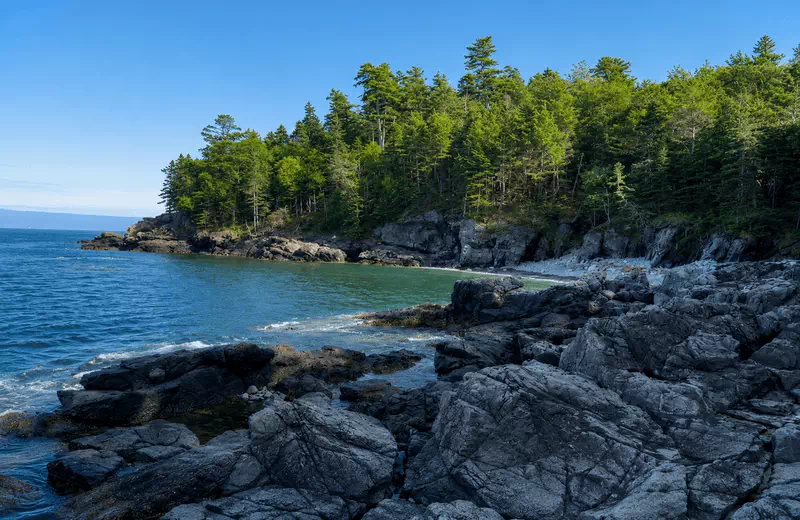
Sand Beach is one of the few sandy stretches on this stretch of rocky coast, tucked into a cove with cold, clear water that only the brave swim in. A short walk away is Thunder Hole, a narrow rock channel where incoming waves slam in and boom out a spray. Time it for mid-to-high tide and the show is loud; show up at low tide and you may wonder what the fuss is about.
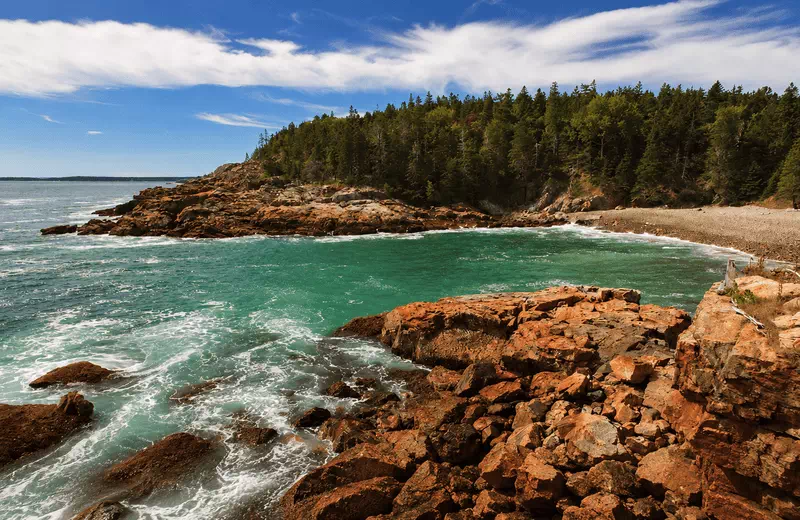
Keep going and you reach Otter Cliff, a wall of pink granite rising straight out of the sea that photographers love in early light. The easy Ocean Path trail links Sand Beach, Thunder Hole, and Otter Cliff over about two miles one way, so you can skip the parking scramble and walk between them instead.
Inland sits Jordan Pond, a glacier-carved lake with water so clear it doubles as a public water supply, which means no swimming, not even a toe. The flat 3.3-mile path circles it, with the rounded "Bubbles" mountains reflected at the far end. The reward at the trailhead is the Jordan Pond House, the only restaurant inside the park, famous for its popovers served warm with butter and jam on a lawn looking out at the water. The wait can be long; it is usually worth it.
Worth knowing: Jordan Pond House and most park dining are seasonal, and popover lines stretch out at midday. Go mid-afternoon, or grab a table early, if you want the experience without the queue.
For hikers, the Beehive Trail is the thrill ride, climbing a roughly 450-foot cliff face on iron rungs and narrow ledges. It is short, it is exposed, and it is not for anyone uneasy with heights or for small kids. The Precipice Trail is tougher still and often closes in spring and summer while peregrine falcons nest on the cliffs. If iron rungs are not your thing, the Bubbles offer a gentler climb to wide views and the oddly balanced Bubble Rock.
Rent a bike in town and you unlock the carriage roads — about 45 miles of crushed-stone paths built by John D. Rockefeller Jr., closed to cars, winding past stone bridges and around ponds. They are the calmest way to experience Acadia, and you can also see them by foot or on a horse-drawn carriage ride.
Two more places reward the extra effort. The Schoodic Peninsula, the only part of Acadia on the mainland, delivers the same crashing surf with a fraction of the crowds. And Bass Harbor Head Lighthouse, on the quieter southwest side of the island, is the postcard Maine lighthouse, best at sunset. If you are drawn to the idea of forest meeting open ocean, Olympic National Park in Washington scratches a similar itch on the opposite coast.
Bar Harbor Town: Free Walks, the Water, and Lobster
Save some time for the town, because a few of its best moments cost nothing. The Shore Path is a flat, oceanside walk that starts near the town pier and traces the waterfront with views of Frenchman Bay and the Porcupine Islands. It is open year-round and needs no pass — ideal for a slow morning or an evening stroll.
The walk to Bar Island is the local trick. At low tide, a gravel sandbar surfaces and you can stroll straight across to the island, poke around its trails, then look back at the town from the water. The catch is the tide: you get a window of roughly an hour and a half on either side of low tide, and people who lose track of time get stranded. Check the tide chart before you set out.
On the water, whale-watching tours leave the harbor through summer and into early fall, with good odds of spotting humpback, finback, and minke whales, plus seals and porpoises. Puffin sightings taper off after mid-August. By October the whales begin moving south and the rides get colder and bouncier, so earlier in the season is the safer bet.
Then there is the food. This is lobster country, and you will find it everywhere — in rolls, steamed whole at dockside pounds, and folded into chowder. Wild Maine blueberries turn up in pie, pancakes, and beer. Eating well here is easy; eating cheaply takes a little effort, since prices climb in peak season.
Where to Stay and Where to Eat
Bar Harbor covers the full range. At the budget end you will find motels along the approach roads and a handful of campgrounds on the island, including park campgrounds that book out months ahead. The middle is where most travelers land: comfortable inns and converted cottages within walking distance of downtown, which is the sweet spot for ditching the car at night. At the top end sit historic oceanfront hotels with private decks and that classic New England look.
For food, lean into seafood. Dockside lobster pounds give you the messy, satisfying version with a harbor view, while casual cafés in town do strong lobster rolls and chowder without a reservation. Sit-down restaurants get busy on summer evenings, so book ahead if you have your heart set on a particular table. Budget noticeably more for meals than you would in an average small town; coastal Maine in season is not cheap.
How Many Days, and a Plan for Each
Three to five days is the comfortable range. Here is a rough framework you can stretch or compress.
| Trip Length | Suggested Plan |
|---|---|
| 1 day (tight) | Sunrise or daytime at Cadillac, drive the Park Loop Road with stops at Sand Beach, Thunder Hole, and Otter Cliff, popovers at Jordan Pond, an evening walk in town |
| 3 days | Day 1 as above; Day 2 bike or walk the carriage roads and hike the Bubbles or Beehive; Day 3 explore the Schoodic Peninsula and walk to Bar Island at low tide |
| 5 days | Add a whale-watching cruise, the Bass Harbor Head Lighthouse at sunset, a slower day on the quiet southwest side, and time to wander the downtown shops |
Smart Travel Tips and a Rough Budget
A few habits make a Bar Harbor trip smoother. Start early, because the popular lots at Sand Beach and Cadillac fill not long after sunrise, and the same spots empty out again in late afternoon. Cell service inside the park is patchy, so download maps and any audio guide before you lose signal. Pack layers no matter the forecast; a warm morning on the coast can turn cold and damp fast, and the summit is windier than the town below. Good shoes matter on the granite, which gets slick when wet.
On money, the park pass is your one fixed cost at roughly $35 per vehicle for a week, plus about $6 if you want to drive Cadillac. Lodging is the big variable, swinging from modest motel rates to high-season oceanfront prices. Food adds up quickly when lobster is involved. The good news is that some of the best experiences here are free: the Shore Path, the Bar Island sandbar, and walking the carriage roads all cost nothing beyond the entrance fee.
Quick safety note: the tide does not wait. Whether you are crossing to Bar Island or scrambling along the rocks below Thunder Hole, know the tide schedule and give yourself a wide margin.
Best Photo Spots
For light, Cadillac Mountain at sunrise is the headline shot, with the islands of Frenchman Bay catching the first color. Otter Cliff glows in early morning, its pink granite warming up as the sun climbs. Jordan Pond is at its best on a still day when the Bubbles mirror in the water, and Bass Harbor Head Lighthouse is a classic sunset frame. In October, a whale-watch cruise gives you foliage reflecting off the bay, a view you simply cannot get from shore. If rugged coastline is your photographic weakness, the sea stacks of Cannon Beach on the Oregon coast make a fine bookend on the other side of the country.
The Wrap-Up
Bar Harbor earns its reputation by being the easy, comfortable base for a park that is anything but tame. Get your Cadillac reservation locked in, come between late June and mid-October if you can, and split your time between the loop road's big sights and the free walks right in town. Do that, and you get the full picture: sunrise on a granite summit, popovers by a glacial pond, and a lobster roll at the end of the day. Your clear next step is to check current park fees and book your summit reservation on the official Acadia National Park site, then build the rest of the trip around it. If gateway towns are your kind of travel, Whitefish beside Glacier National Park and Gatlinburg at the edge of the Smokies run the same playbook.