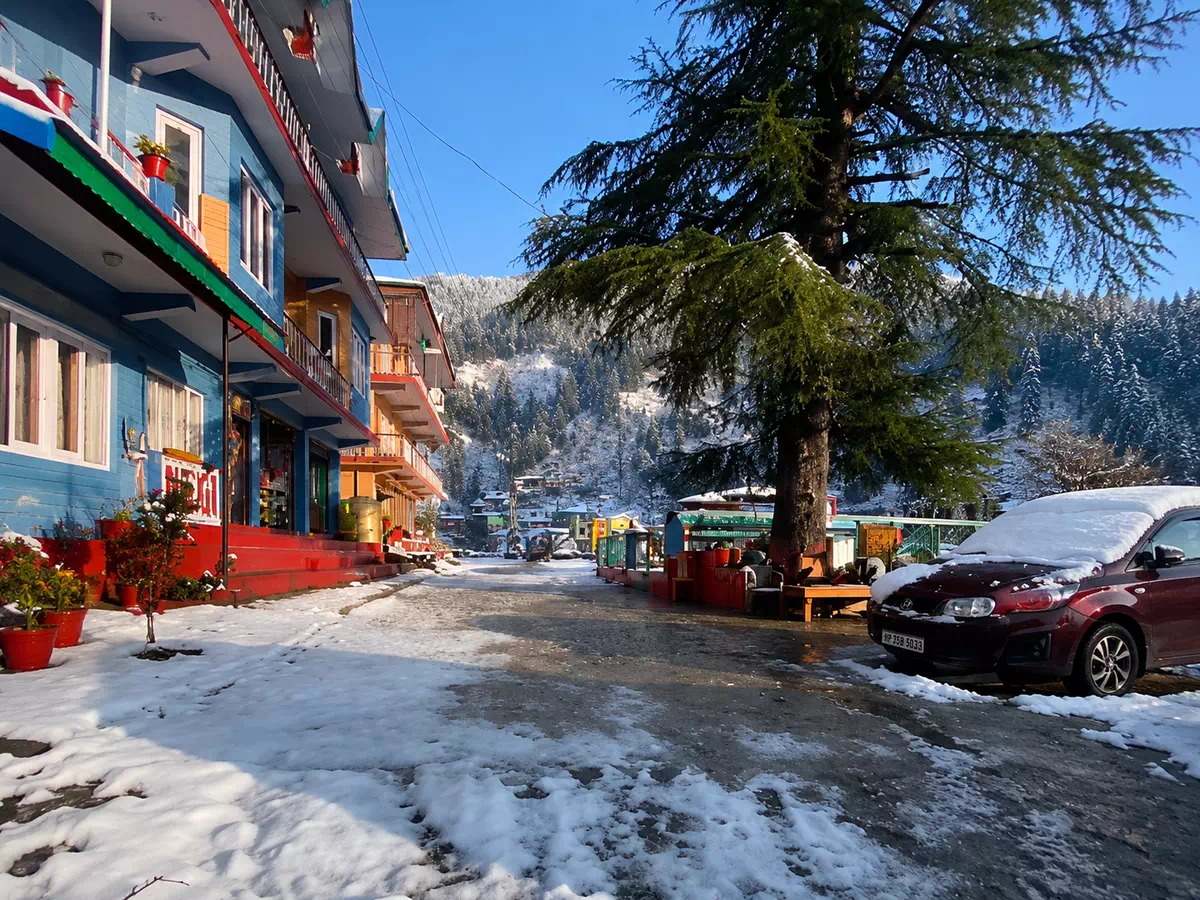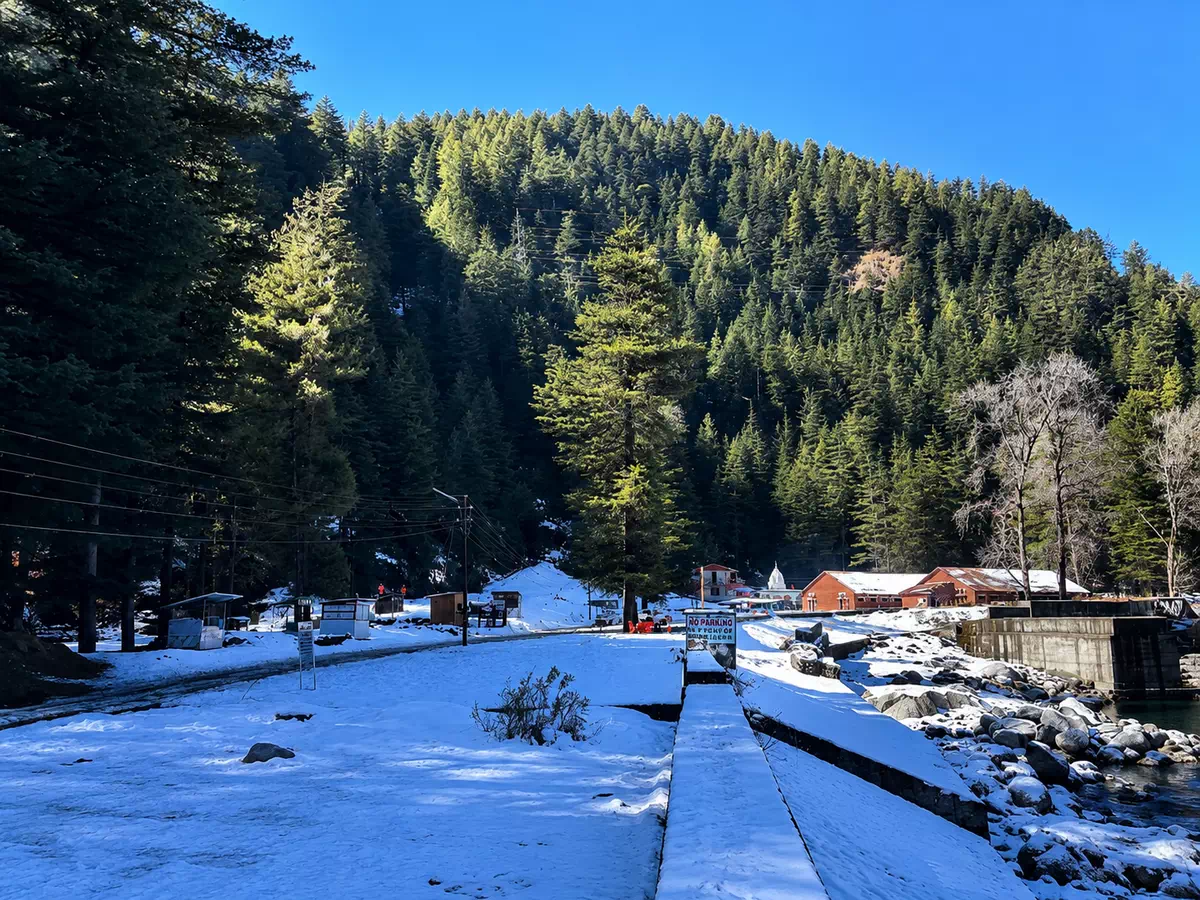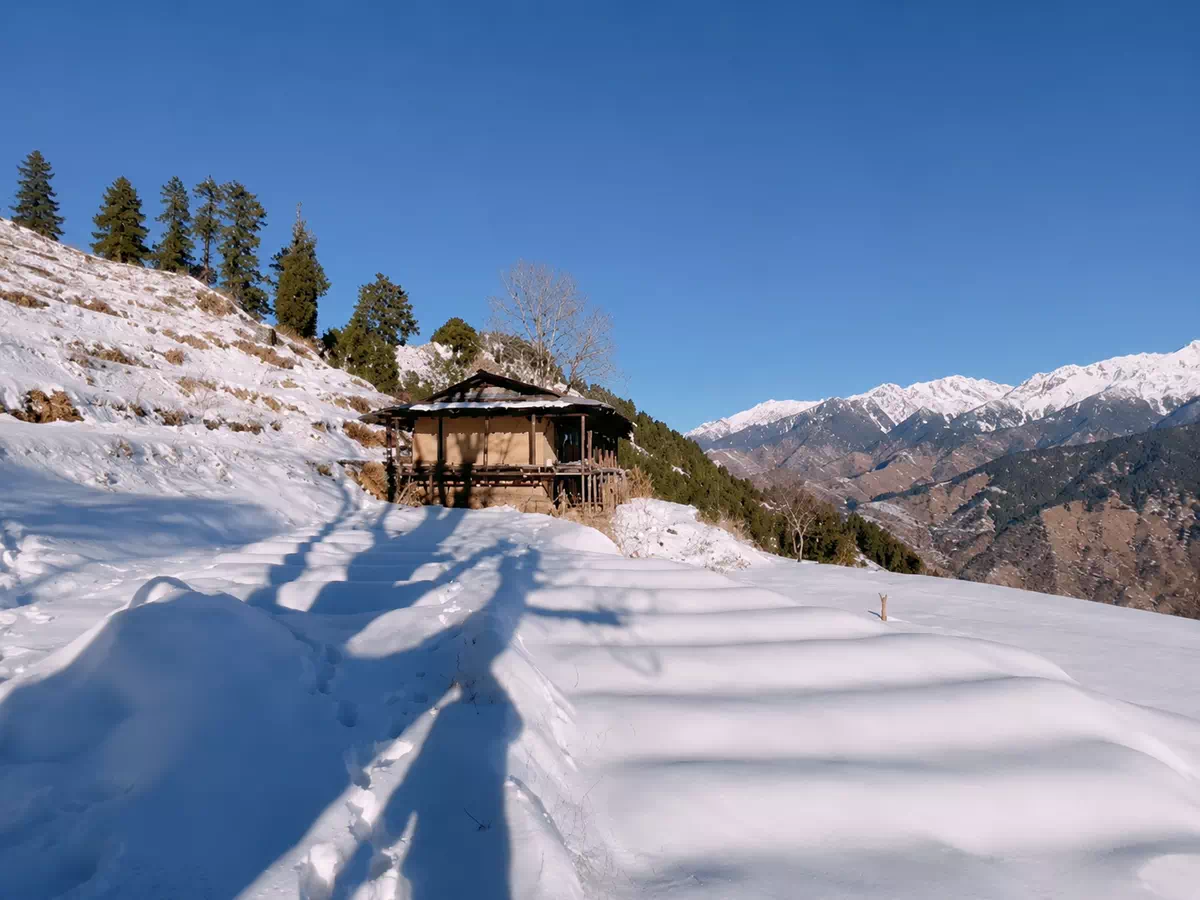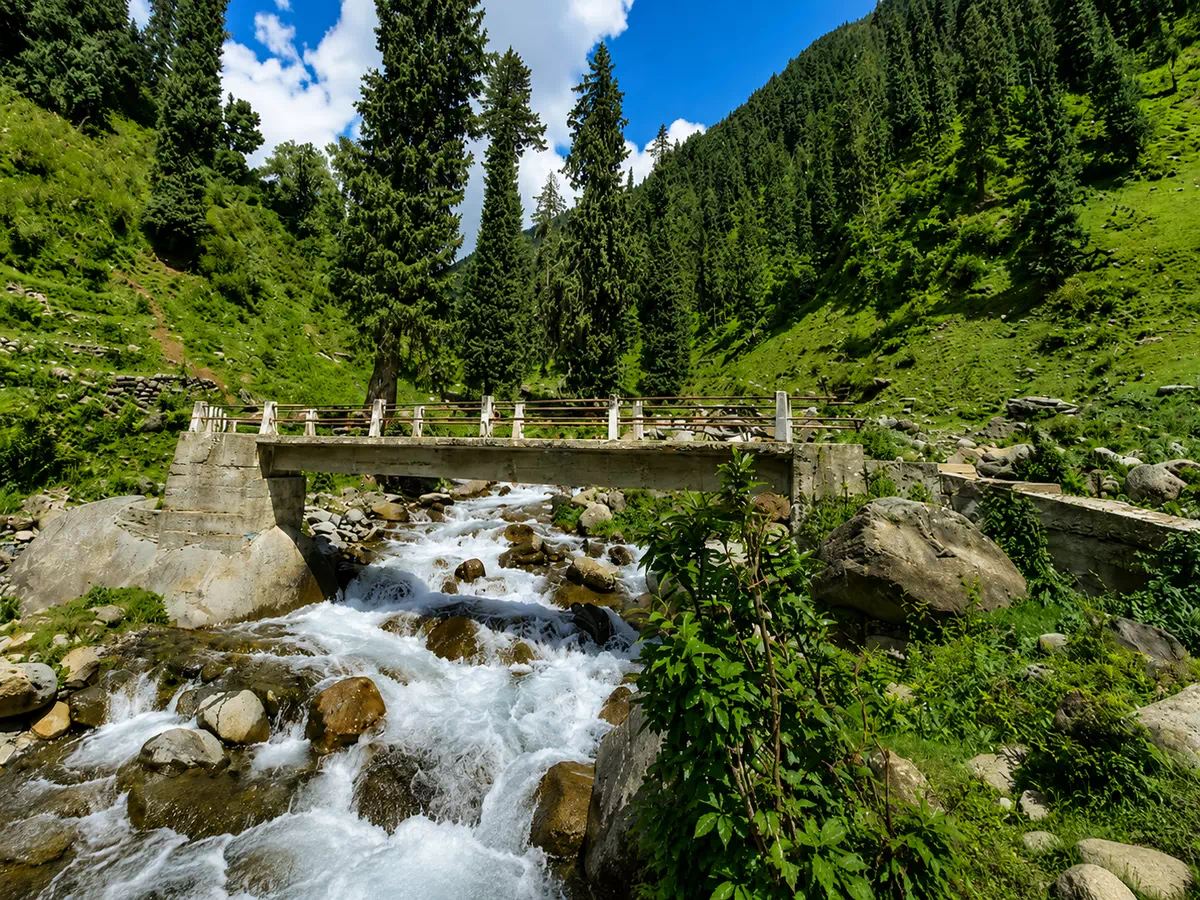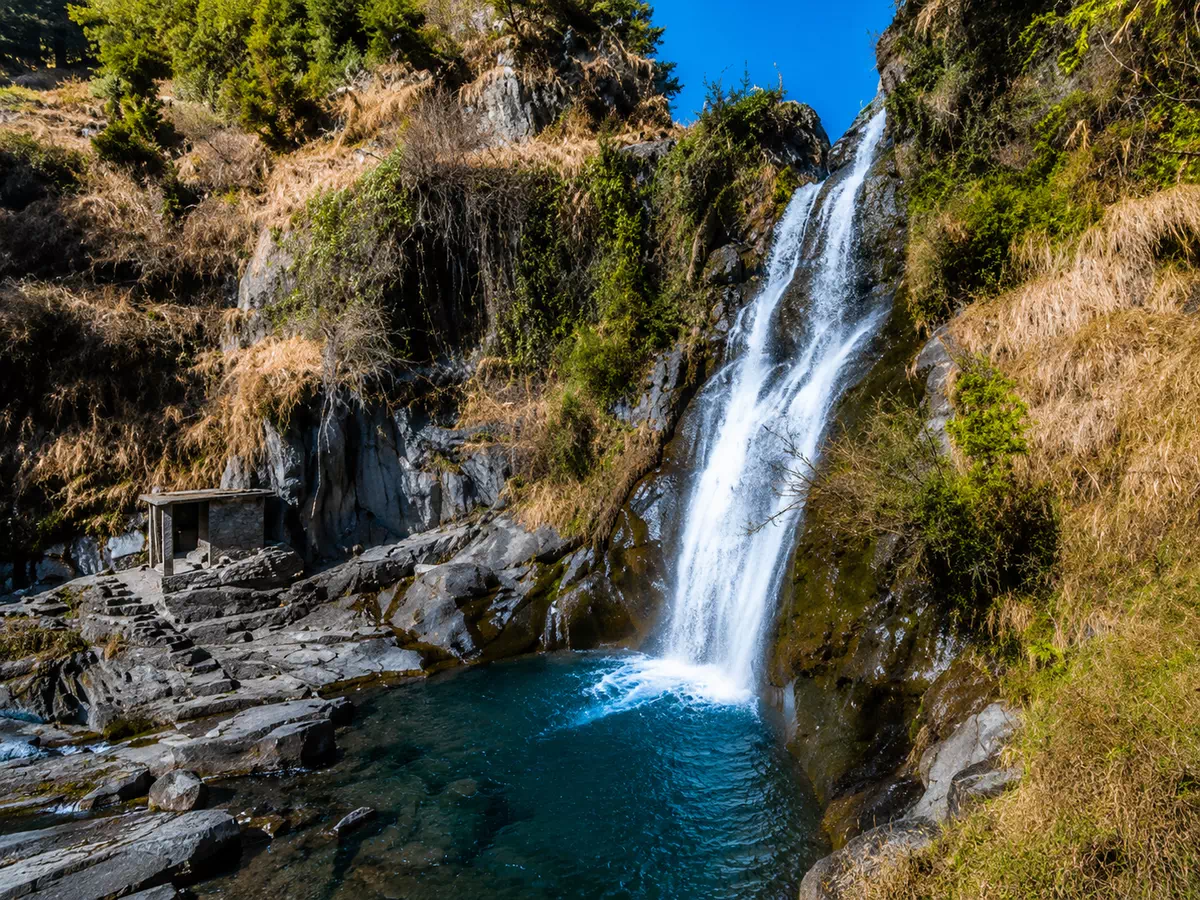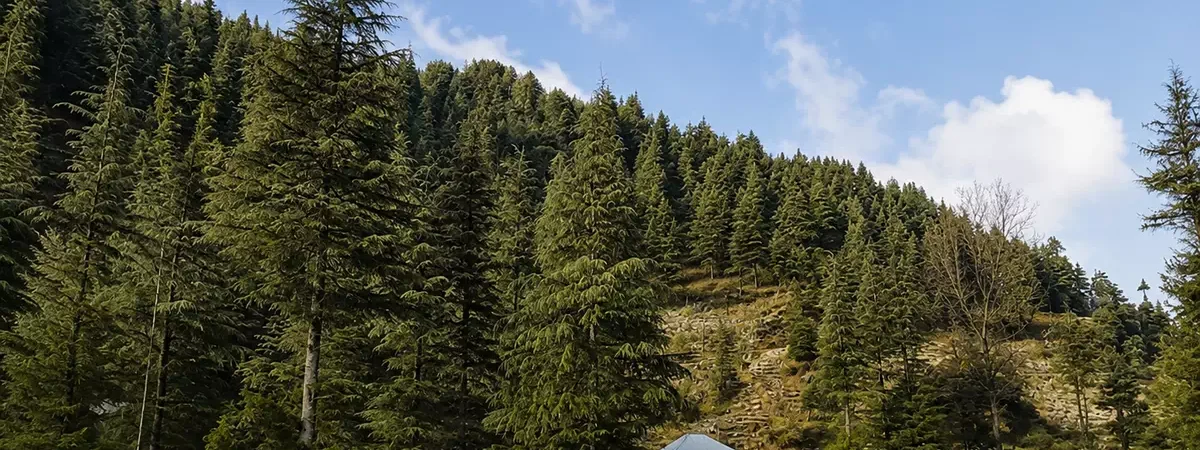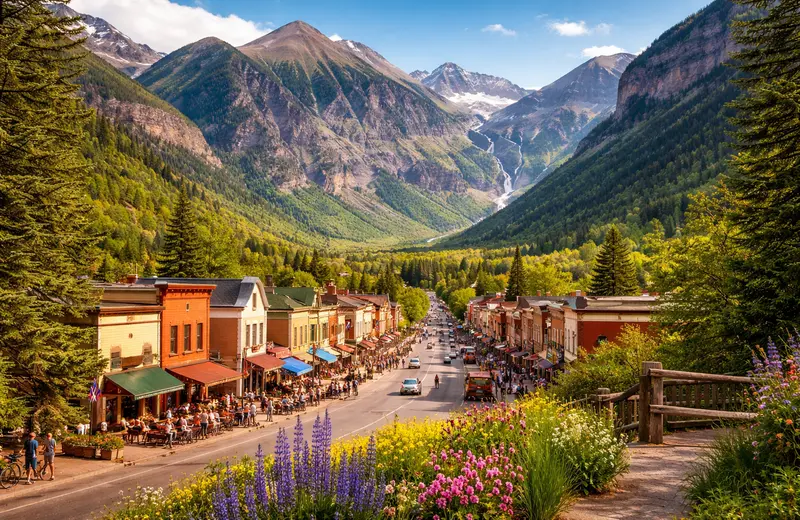
Barot Valley sits in the Mandi district of Himachal Pradesh at an altitude of around 1,829 metres, pressed against the Uhl River, ringed by cedar and pine. Most people driving through Himachal on their way to Manali or Kasol don't stop here. Some have never heard of it. That is, depending on your point of view, either the problem or the whole point.
A quiet Himalayan valley shaped by a British-era hydel project, known among anglers for its trout water and among trekkers as the gateway to Rajgundha and Billing — Barot Valley, Himachal Pradesh remains one of the few places in the region that hasn't yet been turned into a weekend package.
At a Glance — Barot Valley
| Detail | Info |
|---|---|
| Location | Mandi district, Himachal Pradesh |
| Altitude | ~1,829 m (6,001 ft) |
| Distance from Mandi | ~65 km |
| Distance from Chandigarh | ~277 km |
| Nearest Railway Station | Jogindernagar (~40 km) |
| Nearest Airport | Kullu-Bhuntar (~100 km) |
| Best Time to Visit | April–June and September–November |
| Known For | Trout fishing, trekking to Billing/Rajgundha, Nargu Wildlife Sanctuary, Shanan Hydel Project |
| Avoid | Peak monsoon (July–August) due to landslide risk |
Why Barot Valley Exists at All
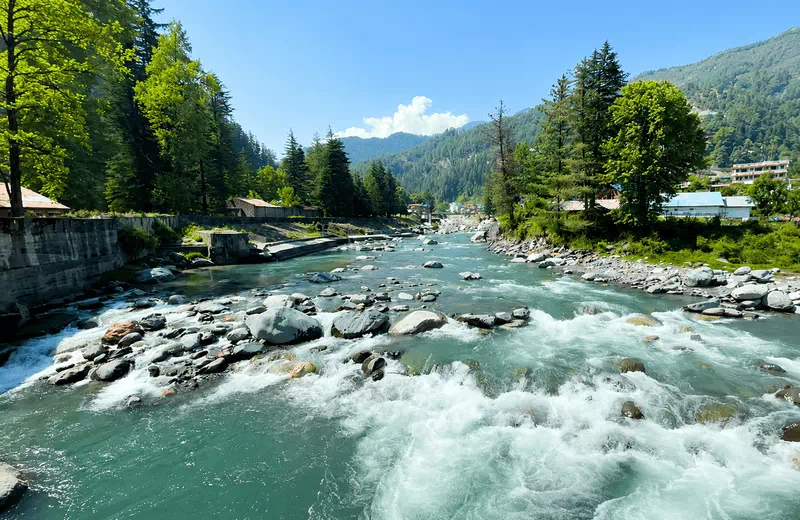
This is not a resort town that grew from tourism. Barot was built in the 1920s as a settlement for workers on the British-era Shanan Hydel Project — a hydroelectric project on the Uhl River signed into a 99-year lease in 1925, engineered under Colonel B.C. Batty. The 110 MW Shanan Power House at Jogindernagar, with its original British machinery still in place, remains one of the oldest operational hydroelectric projects in India. The two reservoirs created under the project still sit above the village, adding a quiet industrial history to what is otherwise a deeply natural landscape.
The road to Barot itself only opened in 1975. Before that, the village was largely cut off. That late opening is one reason the place still has the feel of somewhere that wasn't designed for visitors — the narrow road, the small market, the handful of homestays. It's not a planned hill station. It just became one, slowly.
When to Go — An Honest Season Breakdown
The peak window for Barot Valley travel is April to June and September to November. These two stretches are when the weather cooperates, the roads stay clear, and outdoor activities — trekking, fishing, camping — are actually enjoyable.
April to June brings temperatures between roughly 15°C and 25°C. The snow on surrounding ridges is retreating, the forests are green without being waterlogged, and the Uhl runs clean enough for good fishing. This is the most comfortable time, and the one most trekkers target for the Barot–Rajgundha–Billing route.
September to November is the post-monsoon window. The hillsides are still lush, the air is clear, and between October and November the valley takes on a golden quality from the deodar light in late afternoon. It's arguably the better season for photography.
Monsoon (July–August) is a different matter. The landscape turns deep green and the valley becomes beautiful in a moody way that attracts a certain type of traveler. But landslides on the approach road from Ghatasni are a real risk, not a theoretical one. If you go during this period, check road conditions locally before starting the drive and do not push if the road has been blocked recently.
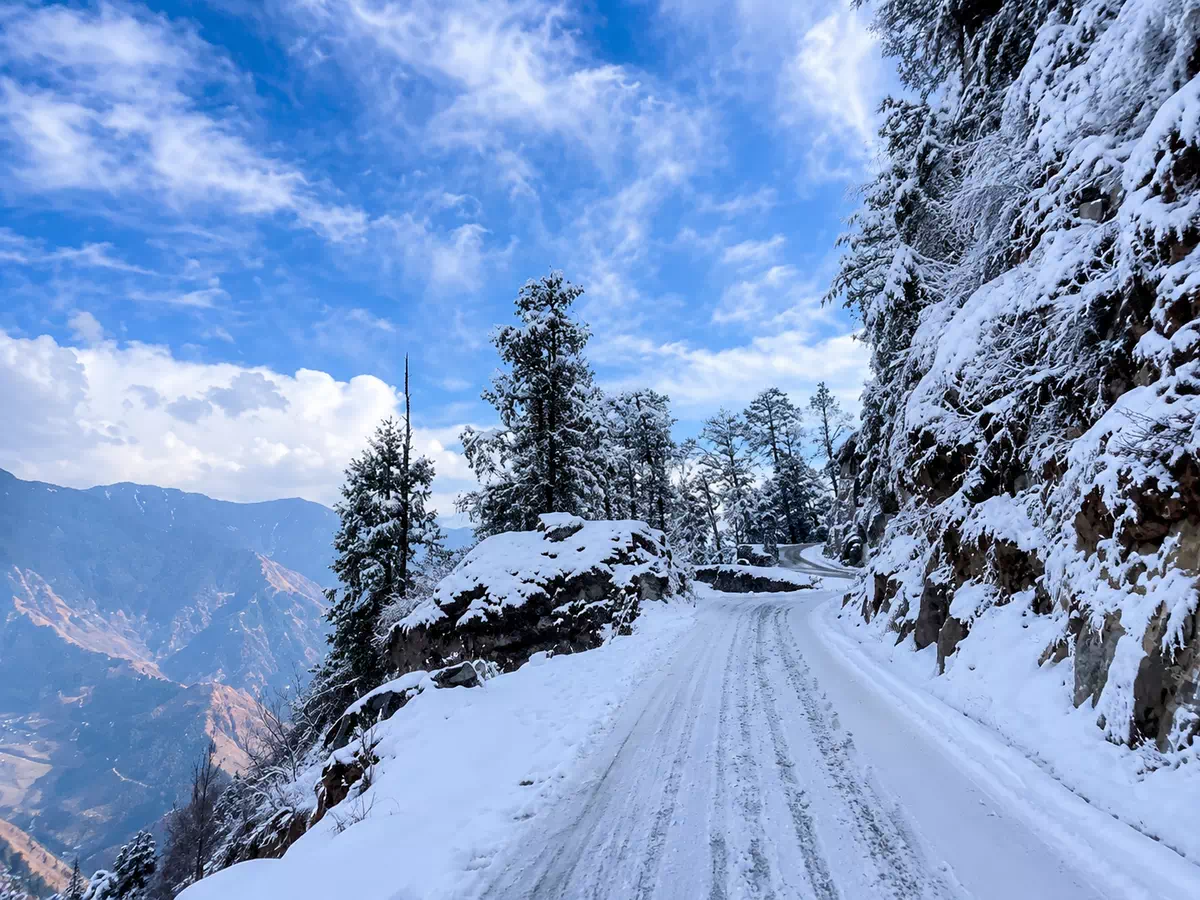
Winter (December to February) brings occasional snowfall and temperatures dropping close to or below freezing. The valley itself may or may not get snow, but the approach road can become difficult. If you want a snow experience from Barot, come in January and check conditions with locals in Jogindernagar before driving in.
The honest recommendation: go in April–May or October. You get the weather, the trout season, and none of the crowd pressure that Manali or Kasol see during the same windows.
How to Reach Barot Valley
The most used route comes via Jogindernagar, which is about 40 km from Barot. The road branches off the Mandi–Jogindernagar highway at Ghatasni, then rises through Jhatingri village before descending into the valley. It is a narrow mountain road — expect it to take around 1.5 to 2 hours from Jogindernagar, depending on road conditions and traffic from oncoming vehicles.
By Train: The nearest railway station is Jogindernagar, connected to Pathankot (via the narrow-gauge Kangra Valley Railway) and to Chandigarh and other major points via onward connections. From Jogindernagar, you hire a taxi or take shared transport to Barot. There is also a funicular trolley from Jogindernagar that reduces the direct distance to about 12 km, though it is not always operational — confirm locally before counting on it.
By Air: The closest airport with reliable connectivity is Kullu-Bhuntar, around 100 km away. Flights operate from Delhi and Mumbai. From the airport, taxis and shared cabs are available to Barot, usually via Mandi or Jogindernagar. Gaggal Airport near Dharamshala is another option at roughly 110 km, but the Kullu route tends to offer easier onward transport.
By Road from Delhi: The distance is approximately 530 km, typically 13 to 15 hours depending on your route and stops. Most people drive via Chandigarh and then Mandi, or via Chandigarh and then Jogindernagar.
From Chandigarh: Around 277 km, roughly 8 to 9 hours by road.
From Mandi: 65 km, about 2 to 2.5 hours. This is the most direct approach.
If you are using public transport, plan the Jogindernagar leg in advance. Buses from Chandigarh, Mandi, and Pathankot serve Jogindernagar. From there, shared taxis to Barot are available but not frequent — morning departures give you the most options.
Those planning a broader Himachal trip can combine Barot with nearby destinations. If you are exploring offbeat places near Manali for a peaceful vacation, Barot makes a natural stop given its location between Mandi and the Kullu valley. Or if you're arriving by bus, the guide to reaching Manali by bus from Delhi and Chandigarh covers the route before your Barot detour.
What to See and Do in Barot Valley
The Uhl River and Trout Fishing
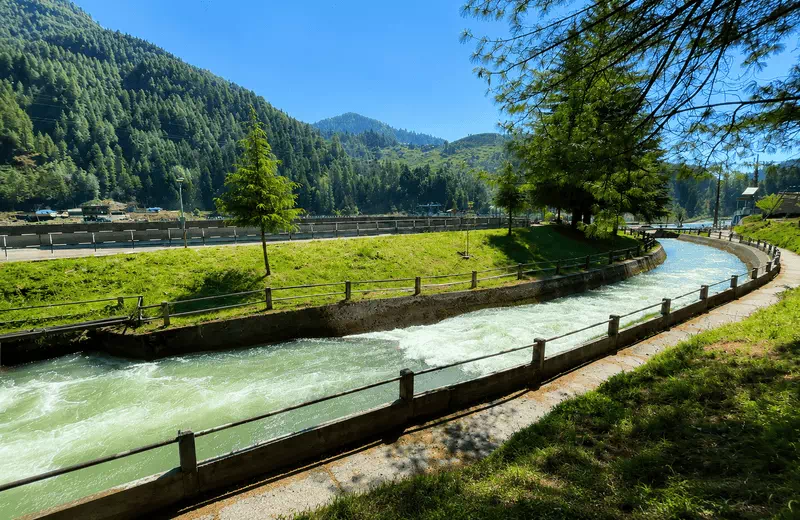
The Uhl is the reason most serious anglers make the trip. The river runs cold and clear through the valley floor, and it carries both rainbow and brown trout. The Fisheries Department manages a trout farm here — visitors can pay a small entry fee (confirm current rates locally, as these change) to see the hatchery and breeding tanks, including the incubation display. Fishing in the river requires a permit from the Fisheries Department; as of recent reports the daily per-rod permit cost is modest (typically under Rs 200, but verify before you go since rates are subject to change). Spring and early summer are the best fishing months, when the water temperature is right and the fish are active.
Treks from Barot: Rajgundha and Billing
Barot is the starting point for several trekking routes, including one of the more satisfying in this part of Himachal. The Barot to Rajgundha trek is a one-day or overnight route through forests and open meadows at higher altitude, with views of the Dhauladhar range on clear days. From Rajgundha, trekkers continue to Billing, which is the main launch site for paragliding in Himachal Pradesh and one of the top paragliding sites in the world. The Barot–Rajgundha–Billing route covers roughly 20 km one way, with an elevation gain of around 1,500 metres. It is manageable for fit beginners but should not be attempted without a guide if you are unfamiliar with the terrain.
Other routes from Barot go deeper — the Barot to Bada Bhangal trek is a multi-day high-altitude route considered challenging even for experienced trekkers, crossing remote passes and staying in basic shelters. This is not a route to attempt casually.
For those interested in a broader look at trekking and camping in Tirthan Valley — which shares a similar offbeat character in the Kullu-Mandi belt — the two can be combined as part of a longer Himachal itinerary.
Nargu Wildlife Sanctuary
Directly across the Uhl River from the village, Nargu Wildlife Sanctuary spreads over approximately 278 square kilometres of forest and ridgeline. The sanctuary is home to the Himalayan monal (Himachal Pradesh's state bird), Himalayan black bear, ghoral, and leopard. Forest rest houses at Thaltuckhod and Silbandhwari sit inside the sanctuary, and a trek route cuts through the deodar and pine forest all the way to the Kullu valley. For wildlife spotting, early morning walks from the riverbank crossing point are the standard approach. The national parks of Himachal Pradesh give broader context on the state's protected areas if you are planning a wildlife-focused trip.
Entry and trekking into the sanctuary: check with the local forest office in Barot before entering, as permit requirements can vary. This is especially relevant for overnight stays at the rest houses.
Shanan Hydel Project and the Reservoirs
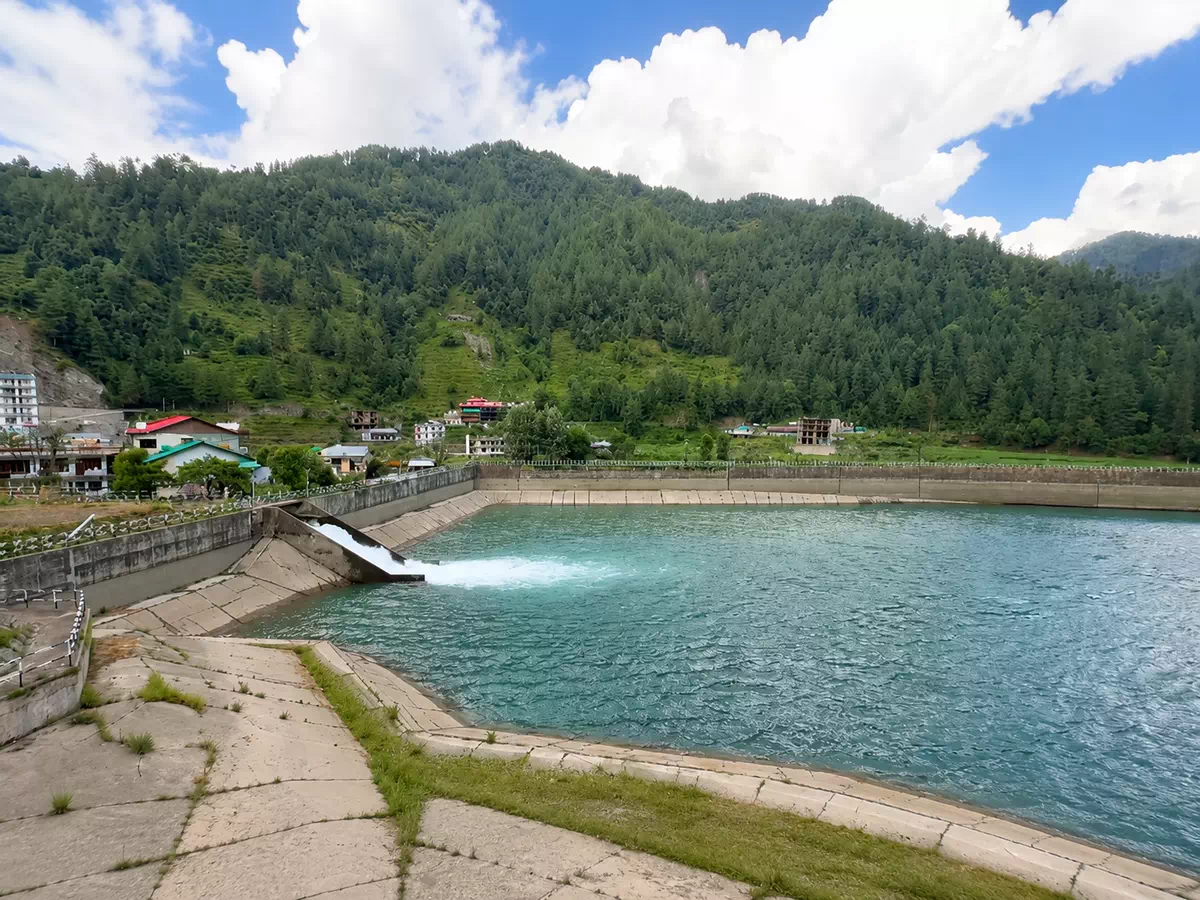
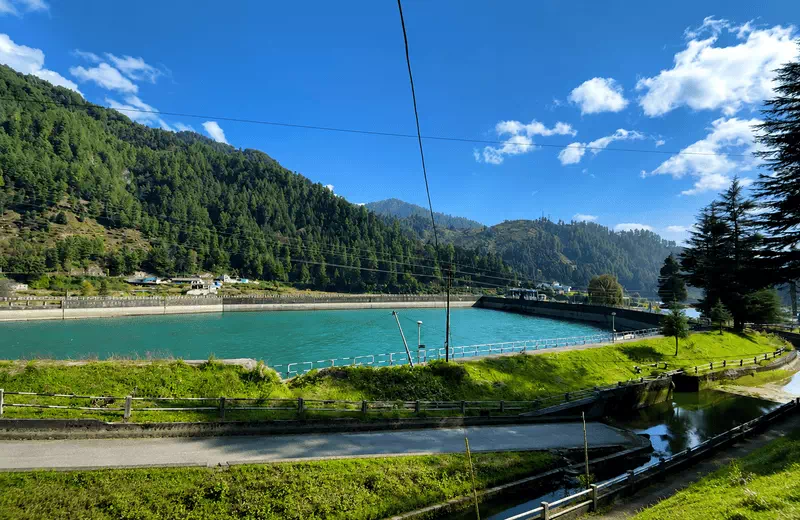
Three artificial lakes, including the main reservoir on the Uhl, sit above the village near Dhrangan. The largest of these is the Barot Reservoir. The views from the reservoir edge — water below, ridge above — are among the most photographed spots in the valley. The reservoir was built as part of the Shanan project, and the original British-era infrastructure still functions. A visit to the power house area in Jogindernagar, where the original machinery is preserved, adds historical context if you have time on your way in or out.
Chuhar Valley: The Valley Behind the Valley
Barot sits inside the larger Chuhar Valley in Mandi district, and the surrounding area has its own rhythm that most short-stay visitors miss entirely.
Jhatingri is the first place worth a stop on the road in from Ghatasni. It sits at the hilltop before the descent into Barot, surrounded by deodar trees wide enough that two people can't wrap arms around them. The ruins of the old summer palace of the Mandi royal family stand here — the original structure is largely gone, but the location makes sense immediately. A viewpoint near the ruins gives a clear look down into the Barot Valley below and the ridge of the Dhauladhar across it.
The Hurang Narayan Temple in the Chuhar Valley is the region's most significant religious site — and one of the more genuinely unusual ones in Himachal. The presiding deity, Hurang Narayan, is the most revered god of the Chauhar Ghati. The village of Hurang has strict rules that have been followed for centuries: no tobacco or leather items can be brought inside the village, and the forest around it can only be used with the deity's permission. These are not tourist regulations. They are the actual customs of a functioning community.
Two festivals tie the region to the wider Himachal calendar. The Mandi Shivaratri Fair — held annually in February or March on the 13th night of the waning moon in the Hindu month of Phalguna — is one of the most significant religious gatherings in the state. Around 200 deities from temples across Mandi district, including three major deities from Chuhar Valley, are brought to Mandi town in procession for the seven-day fair. If your trip falls around Shivaratri, the spectacle of idol processions from the villages around Barot heading toward Mandi is unlike anything you'll find in a planned itinerary.
The second is the Kahika Fair at Hurang village, held once every five years. The fair is connected to the myth that the Nad (the deity's ritual priest) dies and is reborn during the ceremony. The date is not fixed to a calendar — confirm locally if you have specific interest in attending.
For travelers with an extra day, the drive through Chuhar Valley's smaller villages — watching the terraced wheat fields on the lower slopes, the apple orchards higher up, and the occasional glimpse of the Uhl far below — is a better use of an afternoon than staying in Barot and staring at a phone with no signal.
Suggested Itinerary
2 nights / 3 days is the minimum to feel like you've actually been to Barot rather than just passed through it.
Day 1: Arrive Barot by afternoon. Settle in. Walk down to the Uhl riverbank before sundown — the sound of the water hitting the boulders is the first thing that signals you are somewhere genuinely different. Evening at your homestay or camp.
Day 2: Morning trout fishing or an early walk to the reservoir. After lunch, take the route across the Uhl towards the Nargu Wildlife Sanctuary edge — you don't need to trek deep into the sanctuary for a good experience, the forest begins almost immediately after crossing. Return by late afternoon.
Day 3: Start early for the trek to Rajgundha. A fit hiker can reach Rajgundha and return to Barot in a single day (roughly 6 to 7 hours including rest). Those continuing to Billing would need to arrange transport or stay at Rajgundha. Depart Barot in the evening.
If you have 4–5 days, add a half-day exploration of Chuhar Valley's villages, a full morning at the trout farm, and if the season aligns, an attempt at the first stretch of the Bada Bhangal route with a guide.
Places to Stay and What to Eat
Barot is not a place with large hotels or resort complexes. The accommodation falls into three categories: homestays, small guesthouses, and riverside camps. The total number of listed properties across all categories is small — book in advance for April–June and October, when rooms fill faster than you'd expect for a place this quiet.
Homestays and Guesthouses
Malhotra Home Stay Barot Valley in Multhan village, on the banks of the Uhl, is one of the more consistently reviewed options in the area. The family cooks all meals, the property is clean, and the river is about 30 feet from the door. It suits travelers who want home-cooked food and a simple, no-fuss stay without paying camp prices.
River View Homestay is another river-adjacent option with rooms that look directly onto the Uhl. The kind that makes sense once you're there — wake up to water sound, not a parking lot.
Hotel Raj Kamal sits on the bank of the Uhl and has rooms with a dam and mountain view. It is one of the few proper guesthouses in the village with a small restaurant attached. For travelers who want a private room with a door key and a fixed menu rather than a family-run arrangement, this is the practical middle-ground option.
Barot Palace is a 2-star property in the village with free WiFi and parking. It is the most straightforwardly hotel-like option in Barot — predictable, no surprises in either direction.
Camps
Wild Highs Resort runs premium Swiss cottage camps beside the Uhl River. The cottages are solid structures, not tents — heated, with proper bathrooms. The food draws consistently strong mentions in reviews: home-cooked style, generous portions, and they'll prepare fresh trout if you've caught or sourced any. It is priced higher than a homestay but the gap is justifiable for what it delivers. Contact: +91 9816047543.
Barot Waterfall Camps and Domes offers a more packaged camp experience with a garden, sauna, and hot tub — a slightly different proposition for travelers wanting something between budget camping and a proper resort.
The Elevated Option
Colonel's Barot Highland Retreat sits at a different altitude — literally. Perched at roughly 7,250 ft on the Fula-ri-Dhar ridge above the valley, it offers a bird's-eye view of the Barot Valley below and the Kangra Valley on the other side. The property is owned and run by a retired Army officer and is selective about guests — families, couples, and corporate groups are welcome; it is not a party destination and is clear about that. Rooms are spacious, meals are included, and the property serves trout. For the right type of traveler, this is the single most distinctive stay option in the Barot area.
Booking ahead matters more than it seems. Barot's total accommodation inventory is small, and good spots — especially riverside camps and the Colonel's retreat — fill up on peak-season weekends. Don't assume availability.
What to Eat
The honest picture: dining options outside your accommodation are limited to a small cluster of dhabas in the Barot market. Tea, Maggi, omelettes, and basic thali are what's available. There is no café culture here, no bakeries, and no restaurant that runs a proper evening menu beyond what your stay provides.
What the homestays and camps serve is worth paying attention to, though. Trout cooked in Himachali style — marinated simply, pan-fried in mustard oil with minimal spicing so the fish doesn't get buried — is a dish specific to this valley. Barot is one of the few places in India where you eat trout that was in the river two hours ago. Siddu — steamed wheat bread stuffed with walnuts, poppy seeds, or lentils, eaten with ghee — is the standard Himachali bread that shows up at homestay breakfasts and sometimes dinners. Chana Madra, a yogurt-based chickpea curry cooked in ghee with spices, is the reliable vegetarian option at most places. If a homestay offers to cook the local version of dham — a full traditional Himachali feast of dal, rajma, rice, and curd dishes — say yes without hesitation.
Cash is essential. There is no ATM in Barot village — the nearest reliable ones are in Jogindernagar or Mandi. Withdraw before you enter the valley. Most homestays, camps, and dhabas operate on cash only, and mobile payment apps depend on a signal that isn't always there.
Budget Breakdown
These are approximate figures. Costs for stays, transport, and entry fees should be verified locally or with your accommodation before your trip, as they change over time.
| Category | Budget Option | Mid-Range Option |
|---|---|---|
| Accommodation (per night) | Rs 500–800 (homestay, basic) | Rs 1,200–2,500 (better homestay or camp) |
| Food (per day) | Rs 300–500 (dhabas + homestay meals) | Rs 600–1,000 (camp meals included) |
| Transport (Chandigarh → Barot, one way) | Rs 600–900 (shared cab + bus) | Rs 2,500–4,000 (private taxi) |
| Trout fishing permit (per rod/day) | ~Rs 200 (verify locally) | Same |
| Trout farm entry | ~Rs 100 (verify locally) | Same |
| Trek guide (Rajgundha, per day) | Rs 800–1,200 | Rs 1,500–2,000 |
A 3-night trip on a budget — shared transport, homestay, meals, day fishing, one trek — typically works out to Rs 4,000 to Rs 7,000 per person. This is one reason Barot has started attracting budget travelers who've found Kasol or Manali too expensive. For broader budget backpacking across India, Barot fits naturally into a Himachal circuit.
Travel Tips That Are Actually Useful
The road from Ghatasni to Barot is single-lane for long stretches. Driving at night is not advisable if you are unfamiliar with the route. If you arrive in the dark the first time, go slowly — the drop-offs are real and the road markings are minimal.
Phone connectivity is patchy. BSNL tends to work best in the valley, while Jio and Airtel have variable signal. Do not rely on Google Maps for real-time navigation once you are past Ghatasni — download the offline map section before leaving Mandi or Jogindernagar.
Clothing layering matters more than most people plan for. Even in summer, evenings drop sharply and the valley floor can be 8 to 10 degrees cooler than Mandi by nightfall. Carry a proper fleece or light down jacket regardless of the season.
The trek to Rajgundha involves some river crossings that can be difficult if water levels are high after rain. Check conditions with local guides before starting. Trekking shoes with ankle support are necessary — sandals and trainers are not appropriate for this terrain.
Show Image
If you are planning a remote working stint, Barot is increasingly being considered as a quiet workation destination — the slow pace and natural setting suit focused work — but connectivity is genuinely unreliable. Read through a practical guide to workations in the mountains before committing to it as a work base.
Barot is among the most compelling entries in any serious list of underrated hill stations in India — and it fits naturally alongside offbeat villages where mass tourism hasn't reached yet. The two together give good context for how Barot compares to other quiet Himachal pockets like Kasol or the villages of Kasol's surrounding area.
Photography: What to Shoot and When
The best light in Barot is early morning and the hour before sunset. After sunrise, a ground mist tends to sit in the lower valley for about 45 minutes before the sun burns it off — the effect from the reservoir edge looking down into the cedar cover below is the shot most photographers come here for.
The Uhl River at midday is worth shooting in high summer when the light comes straight down and the water goes translucent green over the riverbed boulders. The same spot at dusk has a different quality — the water looks silver and the far bank goes dark quickly.
For wildlife photography, the Nargu Sanctuary edge (early morning, across the Uhl) gives occasional sightings of the monal in the lower forest. Long lenses and patience required.
The trout farm is an underrated photography stop. The breeding hatchery tanks, the mesh structures, the workers moving between them — it is a working place, not a tourist set piece, and the photographs from there tend to look more interesting than standard landscape shots.
Conclusion
Barot Valley, Himachal Pradesh does not try to impress you. There are no curated experiences here, no main market built around visitor footfall, no Instagram sunset spots with a chai stall positioned for the frame. What it has is a cold river that holds trout, a ridge with a genuine trek route, a forest that begins almost as soon as the road ends, and a pace of life that feels restorative within about six hours of arriving.
The place is still quiet. That will almost certainly change as more people find it. Your next step is simple: book a few nights at a riverside homestay, confirm the road is open, and go before the crowd catches up.