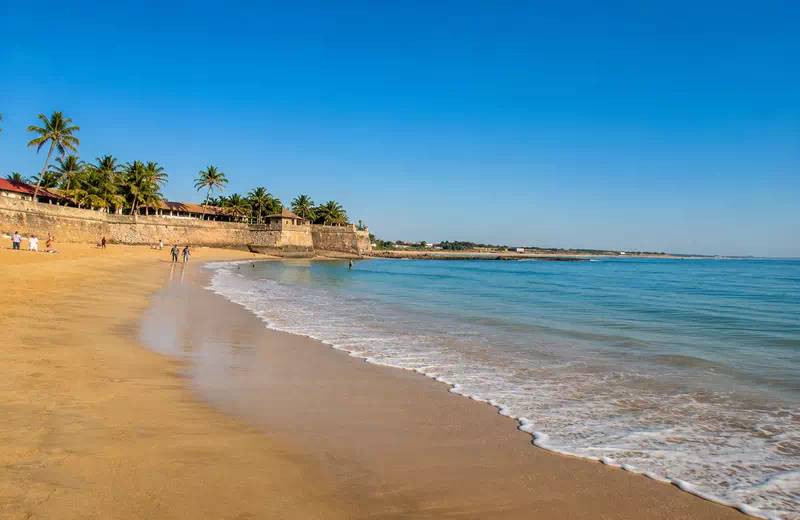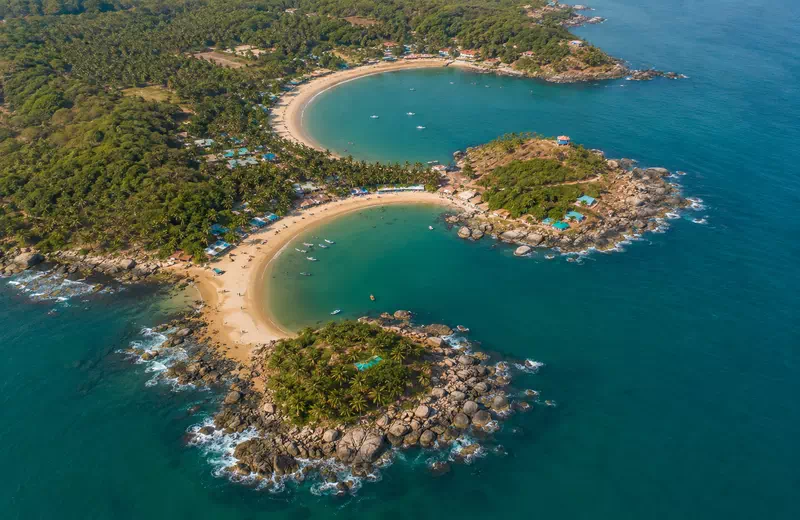
Ask anyone in Kolkata where they went for their last beach weekend, and the answer is almost always one of two names: Digha or Mandarmani. They sit thirty-odd kilometres apart on the same stretch of Bay of Bengal coastline in Purba Medinipur district, yet they've grown into fairly different places. Digha is the old favourite, a proper town with a railway station, a new temple drawing pilgrims, and decades of Bengali family holidays behind it. Mandarmani is the newer, quieter cousin, known mostly for one thing: a beach long and firm enough to drive a car on. This guide covers both, since most people end up visiting them together anyway.
Two beaches, one coastline, and just enough distance between them to feel like separate trips.
| At a Glance | Digha | Mandarmani |
|---|---|---|
| District | Purba Medinipur, West Bengal | Purba Medinipur, West Bengal |
| Distance from Kolkata | About 185 km | About 180-190 km |
| Distance Between Them | Roughly 30 km apart | Roughly 30 km apart |
| Known For | Old Digha's promenade, New Digha's Jagannath Temple | India's longest drivable beach, red crabs |
| Best Time to Visit | October to February | October to March |
| Nearest Railhead | Digha railway station (on-site) | Digha or Contai, about 30 km away |
| Vibe | Busy, family-oriented, well-developed | Quieter, resort-driven, weekend crowd on Fri-Sat |
Digha or Mandarmani, or Both?
Digha has been West Bengal's default beach holiday since long before Mandarmani existed as a destination at all. British administrator Warren Hastings reportedly called it the Brighton of the East in a letter home, back when the town was still known as Beerkul, and that old-resort character hasn't fully gone away even with all the recent development. It has a working fishing economy, a genuine town centre, and now a large new Jagannath Temple that has turned New Digha into something closer to a pilgrimage stop than a pure beach town.
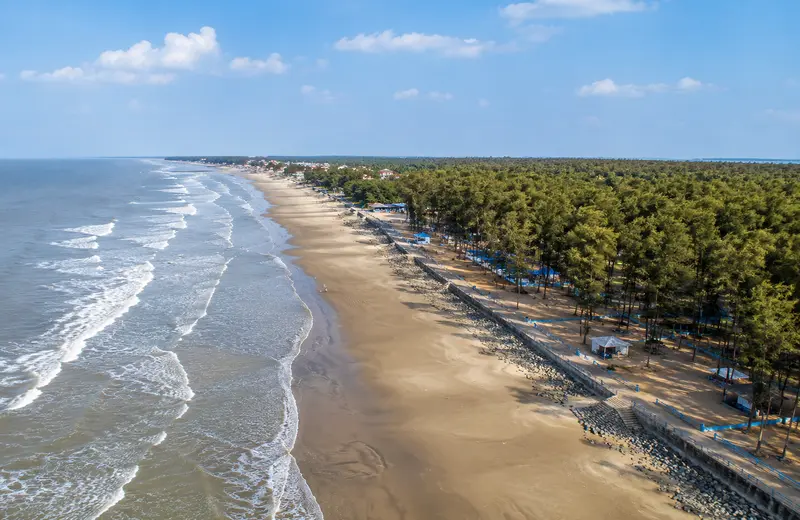
Mandarmani, by contrast, is barely a couple of decades old as a tourist spot. It grew up around one specific feature: a firm, flat beach long enough to drive along, which nothing else on this coast really offers. It skews toward resorts rather than a proper town, and weekday visits look nothing like the Friday-Saturday crowds that show up from Kolkata.
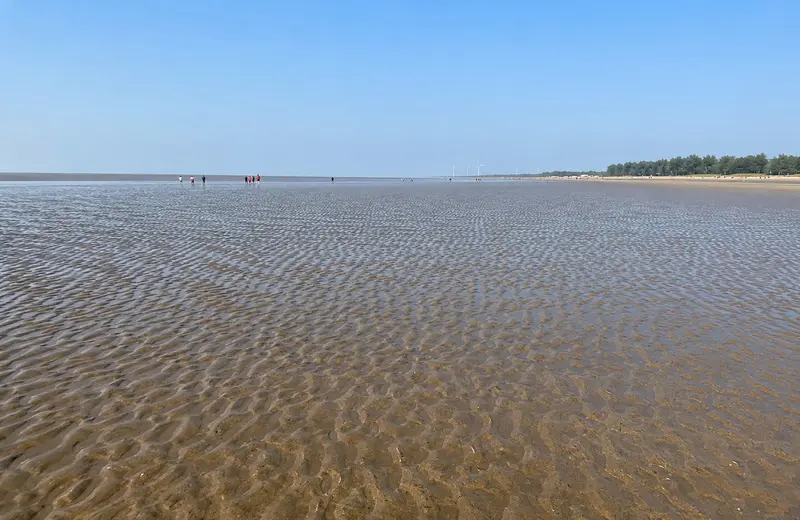
If this is your first trip to the region and you have more than a night to spare, doing both makes sense, since they're close enough that splitting a short trip between them barely adds to your total travel time. For a longer coastal circuit, the comparison point further south is Odisha's Puri Beach, and Mandarmani's flat, receding tide is often compared to Chandipur Beach, where the sea famously pulls back for kilometres. Both are within striking distance if you're building a longer eastern-coast trip rather than a weekend one.
Best Time to Visit Digha and Mandarmani
October through February is the window that actually works. Temperatures sit in a comfortable range through winter, the sea stays calm, and the casuarina-lined promenades are pleasant to walk without the humidity that builds up by April. March edges into warmer, muggier days, and by June the southwest monsoon arrives with rough surf and heavy rain that make both beaches genuinely unpleasant, not just less scenic.
Weekends bring a different crowd entirely. Mandarmani in particular fills up on Friday and Saturday evenings with visitors driving down from Kolkata, and the beach can feel closer to a fairground than a getaway. Travel on weekdays if a quiet stretch of sand matters more to you than nightlife.
Monsoon does have its defenders, mostly for the drama of the waves rather than for swimming or sunbathing. If you're set on travelling during the rains, it's worth redirecting toward destinations built around monsoon scenery instead. Best Places to Visit in India During Monsoon is a better fit for those dates than either of these two beaches.
How to Reach Digha and Mandarmani from Kolkata
Kolkata is the starting point for both, and the routes diverge slightly once you're out of the city.
Digha has its own railway station, and several daily trains run from Howrah and Sealdah, with the Tamralipta Express the best-known option. The ride covers around 185 kilometres in roughly three to three and a half hours, which makes Digha one of the easier long-weekend rail trips out of Kolkata. Buses and self-driven cars take the same distance in about four to four and a half hours by road, depending on traffic through the districts along the way.
Mandarmani has no railway station of its own. The nearest railheads are Digha and Contai, both around thirty kilometres out, so most visitors either take a taxi onward from Digha station or drive the whole way from Kolkata, a trip of roughly four to four and a half hours covering about 180 to 190 kilometres. If you're combining both towns, the common pattern is training into Digha first and hiring a car for the shorter Digha-Mandarmani leg.
Neither town has an airport. Flights land at Kolkata's Netaji Subhas Chandra Bose International Airport, and everything onward runs by road or rail from there. If your own trip starts somewhere other than Kolkata, it's worth building in time to actually see the city rather than treating it as a pass-through; 15 Best Places to Visit in Kolkata covers what's worth a stop before you head to the coast.
Things to Do in Digha
Old Digha is where the town's original character still shows. The beach here is rockier and busier, lined with fish-fry stalls, kite sellers, and the shell-jewellery stands the area has been known for since long before mass tourism arrived. It gets genuinely crowded on weekends and holidays, but that crowd is part of what people come back for, a kind of noisy, lived-in beach experience that New Digha's cleaner stretches don't quite replicate.
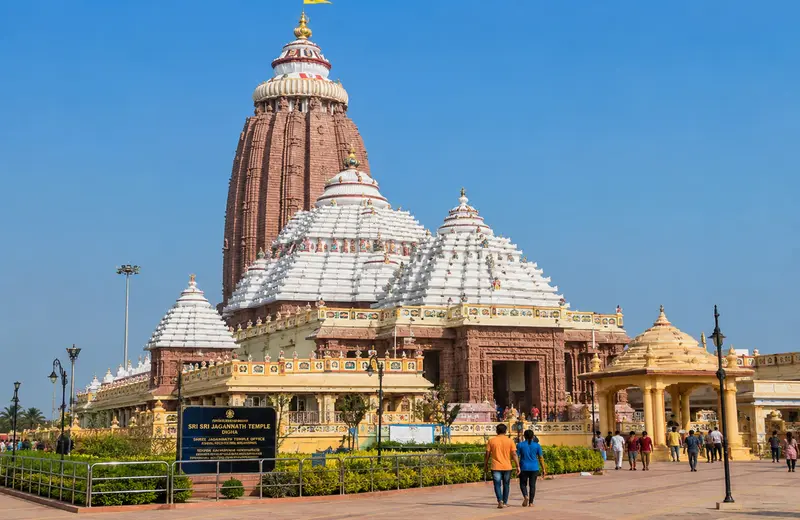
New Digha, a short drive away, is the more planned half of town, wider promenades, newer hotels, and calmer beach access. It's also where the recently built Jagannath Temple sits, a large structure modelled on the original shrine in Puri and built in the Kalinga architectural style, housing deities of Jagannath, Balabhadra, and Subhadra. Whatever your interest in the temple's religious side, it has genuinely reshaped Digha's tourism, drawing visitors who might never have come for the beach alone. Check current darshan timings locally, since temple hours and crowd patterns shift with the season and with festival dates.
Beyond the beach and the temple, Amarabati Park offers a manicured, family-friendly break with a small lake and a short ropeway ride, and the Marine Aquarium and Research Centre is worth an hour if you want context on the coastline's marine life rather than just a view of it. Chandaneshwar Temple, dedicated to Shiva, sits a short trip away for anyone extending the day. Water sports here run the standard coastal roster: banana boat rides, jet skiing, and speedboat trips, mostly clustered along the New Digha stretch.
Things to Do in Mandarmani
Mandarmani exists because of one feature: a beach hard and flat enough to drive a car along for roughly thirteen kilometres, widely described as the longest drivable stretch of sand in India. Driving it is the obvious draw, though it's worth doing thoughtfully.
Repeated vehicle traffic on Mandarmani's beach compacts the sand and leaves litter and oil residue behind over time. A slow walk or a cycle ride shows you the same red crabs and open horizon without the same impact, and several local operators now discourage casual sand driving for exactly this reason.
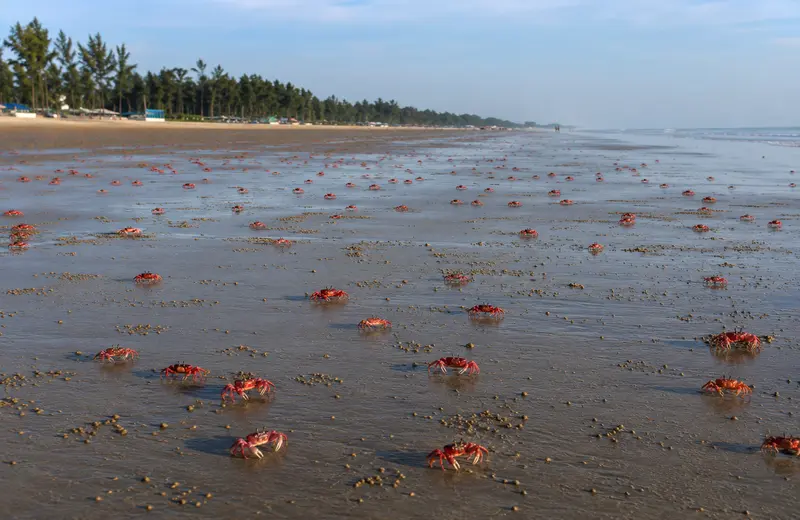
Those red crabs are Mandarmani's other signature. They come out in numbers on the hard-packed sand, particularly toward the mohana, the point where the beach ends and a river meets the sea. Fishing settlements sit on one side of that river mouth, dense jhau trees on the other, and it's one of the few spots on this coast that feels genuinely unscripted rather than built for tourists.
Water sports mirror Digha's: jet skiing, banana boats, speedboat rides, along with ATV rentals that have become popular in the last few years. Evenings tend to mean beachside shacks serving fried fish and simple Bengali seafood while the sun goes down over the water, which is reason enough on its own for a lot of repeat visitors.
A Simple Digha-Mandarmani Itinerary
| Day | Focus |
|---|---|
| Day 1 | Train from Kolkata to Digha, check in, evening walk on Old Digha beach |
| Day 2 | Morning at New Digha, Jagannath Temple visit, afternoon at Amarabati Park |
| Day 3 | Drive to Mandarmani, beach drive or cycle ride, sunset at the mohana |
| Day 4 | Morning at leisure in Mandarmani, drive or train back toward Kolkata |
Three days works if you're tight on time and want to prioritise one town over the other. Four gives both places roughly equal attention without feeling rushed.
Where to Stay
Digha has the deeper hotel inventory of the two, ranging from basic lodges near Old Digha's bus stand to mid-range chains and newer beachfront properties in New Digha. Rooms are genuinely cheap by Indian beach-town standards, and even during peak winter weekends it's rarely impossible to find something, unlike more permit-gated or seasonally capped island destinations elsewhere in the country.
Mandarmani has leaned harder into resorts than budget lodges, with a run of beachfront properties, some quite upscale, lining the stretch closest to the drivable sand. Prices climb noticeably on weekends and during the winter peak, so a Tuesday night booking and a Saturday night booking for the same room can look like two different destinations entirely. Book ahead regardless of which town you choose; both fill up fast around long weekends and the winter wedding-and-holiday season.
What to Eat
This coast runs on Bengali seafood, and both towns lean into it hard. Expect fried and curried fish, prawns cooked in mustard, and whatever the day's catch happens to be, sold at beachside shacks that set up plastic tables right on the sand. Mandarmani's shacks near the mohana are particularly known for simple, fresh preparations rather than elaborate menus, while Digha's more established restaurants offer a wider spread that stretches into standard Bengali and pan-Indian fare for anyone not in the mood for fish twice a day.
Street food fills the gaps between meals in Old Digha especially, with fish fry stalls doing steady business through the evening. Tap water isn't reliably drinkable at either destination, so stick to bottled or filtered water as a default.
Budget: What a Digha-Mandarmani Trip Costs
This is genuinely one of India's more affordable beach breaks, which is a large part of why it stays so popular with Kolkata families and college groups. A basic two- or three-night package covering hotel, transfers, and sightseeing commonly starts somewhere in the five to eight thousand rupee range per person, and independent budget travel can come in lower if you're booking trains and lodges separately rather than through a package operator.
Mid-range hotel rooms in Digha typically run somewhere in the low thousands per night, while Mandarmani's resort-heavy market pushes costs up, particularly for beachfront properties on weekends. Train tickets from Kolkata are inexpensive regardless of season, which keeps the overall trip cost down even when hotel prices climb.
None of these figures are fixed, and hotel rates in particular swing hard between weekday and weekend, and between off-season and the winter holiday rush. Treat any number here as a planning range and check current rates directly with a hotel or package operator before booking.
If a genuinely tight budget matters more than comfort, this region compares well against most of India's other coastal options. How to Travel in India for 5 Days Under Rs.10,000 lays out a broader budget framework that maps reasonably well onto a Digha-Mandarmani trip specifically.
Travel Tips You Shouldn't Skip
Book trains well ahead of long weekends and winter holidays. The Kolkata-Digha route is one of the busier short-haul lines out of the city, and tickets on named trains like the Tamralipta Express sell out days in advance during peak season.
Swimming conditions vary more than people expect between the two towns. Digha's main beach has a genuine undertow in places, and lifeguard presence is inconsistent outside the most developed stretches. Mandarmani's shallow, hard-packed sand is generally gentler, but check locally before letting children swim unsupervised at either.
Carry cash for the smaller shacks, rickshaw rides, and local markets, since card acceptance is patchy outside hotels and larger restaurants. Both towns get genuinely crowded and noisy on weekends and around festivals, so if quiet matters to you, shift your visit to a weekday even if it means adjusting work leave around it.
Sunscreen and a hat are worth packing regardless of season, since the coastal sun is stronger than the mild winter temperatures suggest. If beach driving in Mandarmani interests you, ask your hotel about current rules and tide timings rather than assuming any stretch of sand is drivable at any hour.
Photography Tips
Sunrise works better than sunset at Digha, since the beach faces roughly east and the early light hits the water directly, especially from the quieter stretches near New Digha before the day's crowds arrive. Mandarmani flips that logic: its long, flat beach and the mohana make for striking evening shots, with the tide pulling back to leave wet sand that mirrors the sky.
Low tide is the better window for red crab photography in Mandarmani, when the animals are most active on the exposed sand. A slower shutter speed captures the waves well along Digha's rockier stretches, and a simple phone camera is usually enough for both locations; neither destination demands specialised gear the way a coral reef or mountain trip might.
The Takeaway
Digha and Mandarmani work best as a paired trip rather than an either-or decision, and the short distance between them means the extra planning is minimal. Book your train to Digha and your hotel dates around whichever weekend or weekday split suits your budget, since prices and crowds shift noticeably between the two. From there, split your days between Old Digha's noisy charm, New Digha's temple and parks, and Mandarmani's drive-in beach and red crabs, and you'll have covered what this stretch of Bengal's coast actually does well.