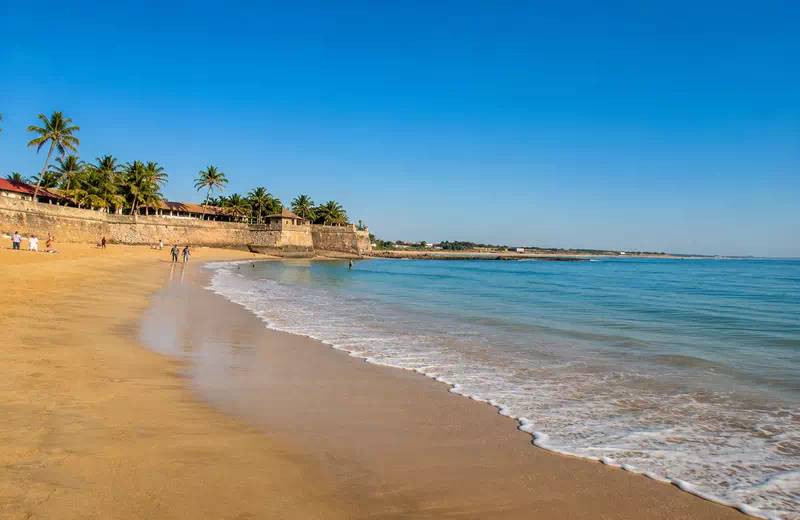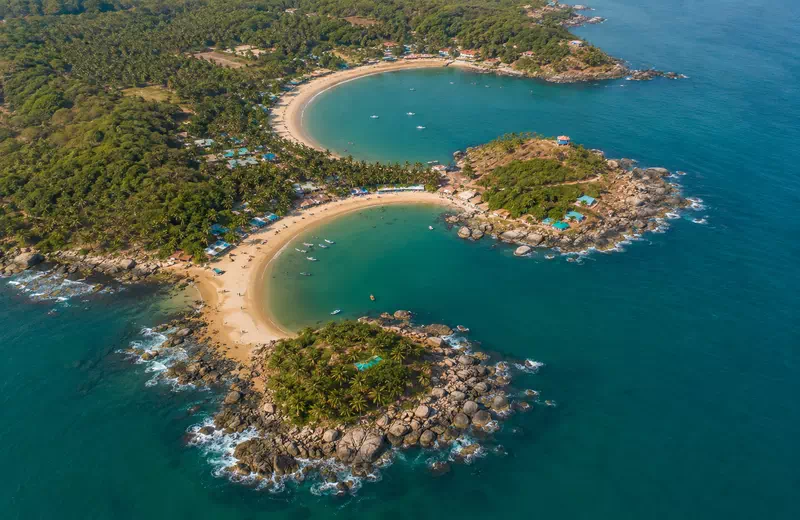
Where Agatti Fits Into an Indian Beach Trip
Goa gets you a coastline. Gokarna gets a quieter version of the same coastline, minus the crowds. Agatti gets you something structurally different: an actual coral atoll, where the beach is really just the visible edge of a reef system built up over thousands of years. Anyone who has already worked through the Goa-or-Gokarna decision and wants a trip that looks nothing like the usual options should start looking here instead.
The closer comparison is with the Andaman and Nicobar Islands, India's other major island group, covered a little later in this guide. What sets Agatti apart even from Andaman is how contained it feels. No elevation, no forest, just a narrow strip of coconut palms ringed by a lagoon calm enough to wade into on your first morning. Numbers stay low too, since the permit system and a small aircraft's seating cap the flow of visitors, so it sits comfortably alongside the secret beaches most Indian travellers never quite get around to visiting.
Reaching Agatti also means accepting a slower kind of trip. Mobile signal is patchy, shopping is limited to a few general stores, and entertainment mostly means a book and the sound of water. Isolated Islands in India Perfect for Remote Travelers is worth a read if that sounds appealing rather than like a problem to solve, since Agatti belongs on that list for exactly those reasons.
Best Time to Visit Agatti
October through May is when Agatti actually works as a beach destination. The sea calms down enough for boats to run on schedule, the lagoon settles for snorkelling, and flights out of Kochi operate without the disruption that monsoon weather brings. December and January bring the most bookings, partly because school holidays line up with pleasant daytime temperatures in the high twenties. March through May gets hotter and more humid, but divers often prefer this stretch since underwater visibility tends to peak before the rains arrive.
Skip Agatti between June and September unless your travel dates are fixed. During the southwest monsoon, boat services outside the lagoon are frequently suspended, inter-island transfers switch to helicopter where available, and even the ferry from Kochi can be delayed by rough seas for days at a stretch.
If your leave falls squarely in monsoon season, it makes more sense to redirect the trip entirely. Best Places to Visit in India During Monsoon covers destinations that are actually built around the rains instead of shutting down because of them.
How to Reach Agatti Island
Kochi is the only realistic starting point for a trip to Agatti. Every flight, every passenger ship, and every permit checkpoint runs through Cochin International Airport or the port at Willingdon Island, regardless of which city you are flying in from. Budget a connecting flight into Kochi first if you are not already departing from Kerala.
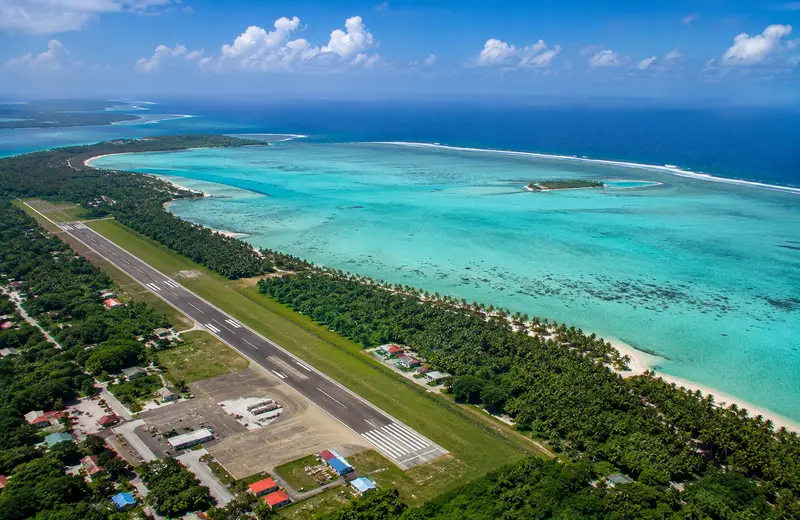
The flight itself takes around ninety minutes and flies on small turboprop aircraft, since Agatti's runway is short. Seats are limited by the aircraft's size rather than by demand, so a route that looks routine on paper sells out weeks ahead of peak season. Airlines operating the Kochi-Agatti sector have changed more than once in recent years, so confirm the current operator and schedule when you book rather than assuming last season's flight times still apply.
Travelling by sea is the slower, cheaper alternative. Passenger ships run by the Lakshadweep Administration cover the same route in fourteen to twenty hours depending on sea conditions, with cabin classes ranging from bunk-style dormitories to air-conditioned rooms. It suits travellers with flexible dates far more than anyone on a long weekend.
Since Kochi is unavoidable either way, it's worth building in a spare day on the Kerala coast rather than treating it as a pure layover city. Kovalam Beach sits close enough to the airport for an easy add-on, and travellers who prefer arriving a day early sometimes look at how to reach Varkala Beach from Kochi instead, since the cliffside town makes a relaxed stop before an early-morning flight to Agatti.
The Lakshadweep Entry Permit: What to Sort Out Before You Book
No one reaches Agatti without a Lakshadweep Entry Permit, and that includes Indian citizens visiting their own country. The rule dates back to a 1967 regulation designed to protect the islands' ecology and the culture of communities that have lived there for generations, and it still applies to every non-native visitor today.
Indian nationals apply through the official ePermit portal, uploading identity proof and basic travel details under the tourist category. Processing has historically taken anywhere from about a week to two weeks, so applying well before you lock in flights avoids a scramble later. Foreign nationals go through additional verification and are currently permitted on a smaller set of islands, Agatti, Kadmat, and Bangaram among them, rather than the full archipelago that Indian citizens can access.
Requirements around sponsorship and police clearance for Lakshadweep permits have been simplified in recent updates to the system. Rules like this shift periodically, so check the current checklist on the official portal before assuming last year's process still applies.
Fees are modest and get adjusted from time to time, so treat any number you see quoted online as a rough guide rather than gospel, and confirm the current fee on the portal itself. Once approved, the permit is generally valid for about thirty days, and airline staff at Kochi will check a printed copy alongside your ID before you board.
Things to Do in Agatti's Lagoon and Beyond
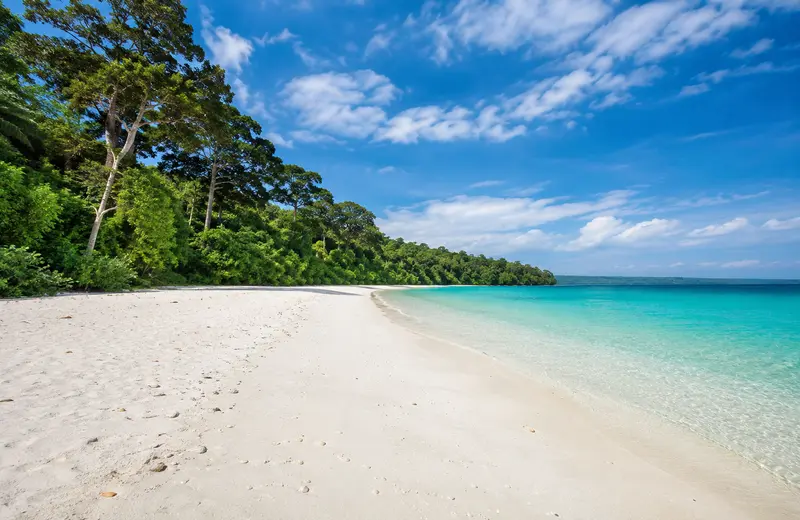
Most of what happens in Agatti happens within a few hundred metres of the shore. The lagoon itself is the main attraction, and locals call the calm stretch on the eastern side, near the jetty and the main resort, Lagoon Beach. It's shallow enough in places to wade out toward the sandbar without needing a boat at all. Snorkelling here doesn't require much skill. Masks and fins are rented cheaply from resorts and dive operators, and even first-timers usually spot parrotfish and clownfish within the first few minutes, sometimes a reef shark cruising past in the distance.
Scuba diving goes further out toward the reef wall, where underwater visibility is generally better than what you'd find along most of mainland India's coast. Glass-bottom boat rides exist for anyone who wants the same view without getting wet, gliding slowly over coral formations while a guide points out what's swimming beneath the hull. Kayaking and canoeing stick to the shallows and suit a slower morning. Kitesurfing and windsurfing are available too, wind conditions permitting, for visitors chasing something more physical than a float in calm water.
On land, a bicycle is the easiest way to see the rest of the island. Agatti runs a little over seven kilometres tip to tip and rarely more than a few hundred metres wide, so a slow ride through its coconut groves and fishing settlements takes you past a Muslim-majority community whose daily rhythm still runs on tides and prayer times rather than tourist schedules. At the southern tip, a narrow 200-metre channel separates Agatti from Kalpitti, a tiny uninhabited islet that makes an easy half-day boat trip if you want a stretch of sand with genuinely nobody else on it.
This is where the Andaman comparison teased earlier actually plays out. Havelock Island and its Elephant Beach, along with Swaraj Dweep, sit in the Bay of Bengal and pair their beaches with real forest and elevation behind them. Agatti has none of that. What it offers instead is a lagoon so contained by the reef that the water rarely gets choppy, which makes it a gentler introduction to snorkelling for anyone who found Andaman's currents a little intimidating.
A Simple 4-Day Itinerary
| Day | Focus |
|---|---|
| Day 1 | Arrive at Agatti Airport, settle in, an easy evening walk along Lagoon Beach |
| Day 2 | Snorkelling or a beginner scuba session in the morning, glass-bottom boat ride in the afternoon |
| Day 3 | Full-day trip to Bangaram and Thinnakara by speedboat |
| Day 4 | Cycle around Agatti's village side, a short boat hop to Kalpitti, then departure |
Extend this by a day or two for a rest day between water activities. Sun and salt water add up faster than most people expect on a first island trip.
Day Trip to Bangaram and Thinnakara
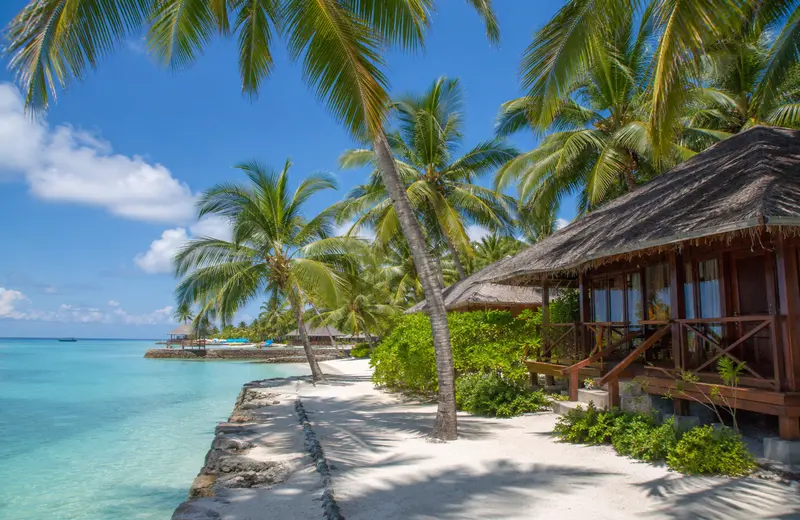
Bangaram sits about forty-five minutes away from Agatti by speedboat and is uninhabited apart from the guests and staff at its resort. It's often described as the more upscale sibling in the group, with a private-island feel that Agatti, as a working fishing community, doesn't try to replicate. Thinnakara lies another fifteen to twenty minutes further on, sharing the same lagoon system and offering an even quieter beach for a few hours of doing absolutely nothing.
A day trip usually includes snorkelling stops, a packed lunch, and time to walk a beach that most days sees more crabs than people. Overnight stays are possible too, and Bangaram is one of the few spots in the entire Union Territory where alcohol is sold legally to tourists, which makes it a popular add-on for travellers who found Agatti's dry rules a bit restrictive.
Where to Stay in Agatti
Accommodation on Agatti has grown considerably from the days when a single government-run resort was the only option. Guesthouses and small beachside properties have opened steadily over the past several years, sitting alongside longer-established names like Agatti Island Beach Resort, which remains one of the more recognisable stays on the island. Room counts everywhere are small by mainland standards, often under thirty, so availability during December, January, and the April-May window disappears fast.
Budget travellers typically end up in AC guesthouse rooms a short walk from the beach, while mid-range and upscale visitors book beachfront cottages with direct lagoon access. Whichever category you fall into, treat any listed rate as a starting point and confirm what's actually included, since permit assistance, meals, and airport transfers are sometimes bundled in and sometimes billed separately.
What to Eat in Agatti
Food here leans heavily on what the sea and the coconut palm provide. Fish curries built on coconut milk form the backbone of most meals, served alongside grated coconut chutneys and plain rice. The flavour sits close to Kerala's Malabar coast, which makes sense given how much cultural overlap exists between the two coastlines. Most stays run on a meal-inclusive basis rather than an à la carte model, since Agatti doesn't have an independent restaurant scene the way a mainland beach town does.
Vegetarian food is available everywhere, though it's worth flagging dietary preferences to your resort in advance rather than assuming variety on the day. Bottled and purified drinking water is standard at every property, given how limited the freshwater supply is on an island this size.
Budget: What a Trip to Agatti Actually Costs
Costs in Agatti swing widely depending on where you stay and how you get there, and the packaged nature of most trips makes it hard to build a true backpacker budget the way you could in Goa or Gokarna. As a rough guide, a three to four day trip in a basic guesthouse, excluding flights, tends to fall somewhere between fifteen and thirty thousand rupees per person. Mid-range packages with a beachfront cottage and a couple of guided water activities generally land between forty-five and sixty thousand, while a stay built around Bangaram's private-island resort can comfortably clear one lakh per person once meals and transfers are factored in.
Flights add a separate and fairly significant cost. A round trip from Kochi typically runs eight to twelve thousand rupees in the off-season and considerably more during the October-to-March peak, so booking early does more for your budget here than on almost any other Indian beach trip.
Inter-island boat transfers, extra water sports sessions, and the permit's processing fee are not always bundled into a quoted package price. Ask specifically what's included before comparing two operators on cost alone.
Since none of these figures are fixed by regulation, treat them as a planning range rather than a quote, and check current package pricing directly with a resort or a registered tour operator closer to your travel dates.
Travel Tips You Shouldn't Skip
Carry more rupees than you think you'll need before you land. Agatti's single ATM is unreliable, and most transactions with boat operators, small vendors, and even some guesthouses depend entirely on cash.
Card acceptance is generally limited to the larger resorts, and even that isn't guaranteed, so budget in cash from the start rather than treating it as a backup plan.
Mobile coverage is patchy at best, with only a couple of carriers reaching the island and connections dropping in and out depending on where you're standing. Treat it as a genuine break from constant connectivity rather than a problem to solve, and let people at home know in advance that replies might be delayed by a day or two.
Alcohol isn't sold or consumed openly on Agatti itself, in keeping with Lakshadweep's broader restrictions, though tourists can legally drink at a handful of designated spots elsewhere in the archipelago, Bangaram among them. Single-use plastic is banned across the islands too, so pack a refillable bottle instead of relying on bottled water at every meal. A couple of local rules are easy to overlook: plucking coconuts from the trees and nude sunbathing are both prohibited, and locals take both seriously even when a visitor assumes they're minor.
Solo travellers generally do fine here, since the permit system and the island's small scale mean everyone passes through the same handful of checkpoints and resorts anyway. If this would be your first solo trip anywhere in India, Solo Travel in India for Beginners is worth reading before you land, since its advice on documentation and backup planning applies just as much to an island permit system as it does to a city.
Pack reef-safe sunscreen and a hat rather than assuming you can buy either locally. Sunglasses too, since Agatti's shopping is limited to a few small general stores.
Photography Tips for Agatti
The most reliable shot in Agatti doesn't require a boat at all. Request a window seat for the flight in from Kochi; the final approach over the reef and runway is one of the more dramatic landings in Indian aviation. On the ground, early morning and the hour before sunset give the lagoon its most photogenic colour, somewhere between pale green and deep turquoise depending on cloud cover and tide.
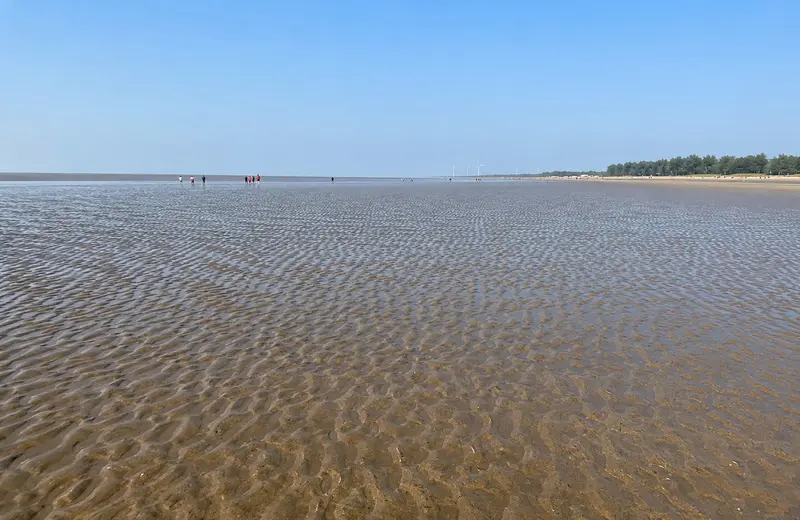
Low tide exposes the sandbar off Lagoon Beach, which photographs well with a person standing on it for scale against the surrounding water. A waterproof case or a cheap action camera is worth carrying for snorkelling shots, since underwater visibility is good enough here to capture coral and fish without professional gear. For a wider view of the reef without getting in the water, the glass-bottom boat rides double as a decent vantage point if you can brace a phone steady against the glass.
The Takeaway
Agatti rewards planning far more than spontaneity. The lagoon, the reef, and the quiet village pace are only a couple of hours from Kochi by air, but the permit process and Agatti's small aircraft mean the logistics need sorting weeks, not days, before you travel. Start with the entry permit and your Kochi-Agatti flight together, since one is often needed to confirm the other. Once those dates are locked in, build the rest of the trip around them: pick a resort, block out a Bangaram day trip, and leave at least one day unplanned for whatever the lagoon looks like when you actually get there.