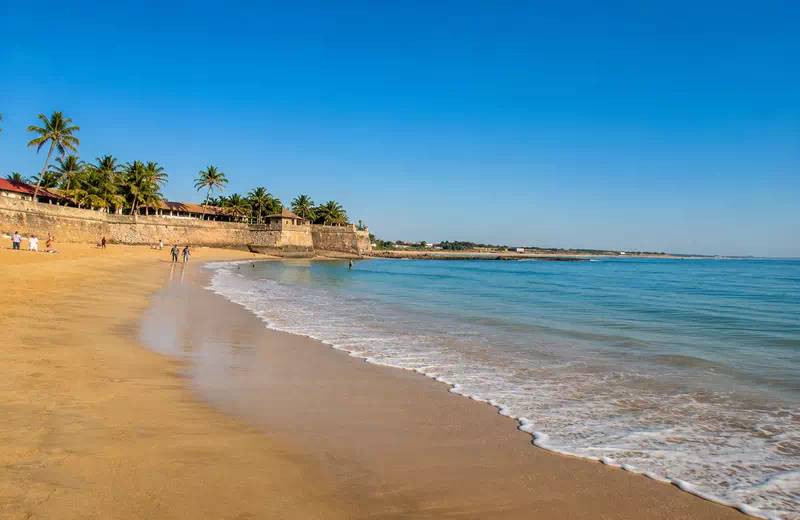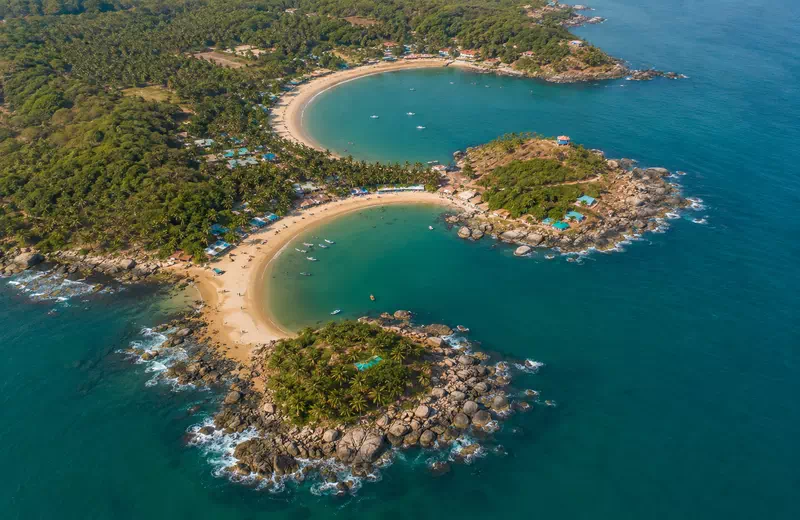
Most people picture Kovalam Beach as one strip of sand. It is actually three. Sitting near Thiruvananthapuram at the southern tip of Kerala, Kovalam is a run of crescent-shaped coves, each with its own mood, strung along a coconut-lined coast. One is loud with cafés and surfboards. One belongs to fishermen and early-morning light. One is a long, quiet stretch backed by cliff-top resorts. Add a red-and-white lighthouse you can climb for the sunset, some of the most respected Ayurveda centres in the country, and warm water that suits both first-time swimmers and surfers, and you have one of India's oldest beach getaways still doing it well.
The short version: Kovalam is three beaches in one, best from October to March, ideal for gentle swims, beginner surfing, lighthouse sunsets and a proper Ayurvedic reset.
Kovalam at a glance
Here is the quick snapshot before the detail.
| Detail | What to know |
|---|---|
| Location | Near Thiruvananthapuram, southern Kerala |
| The three coves | Lighthouse Beach, Hawa Beach, Samudra Beach |
| Distance from airport | About 15 km from Trivandrum airport, 30–40 min |
| Best time | October to March for swimming; monsoon for Ayurveda and surf |
| Known for | Vizhinjam Lighthouse, Ayurveda, surfing, seafood |
| Good to know | Swim only between the safety flags; currents can be strong |
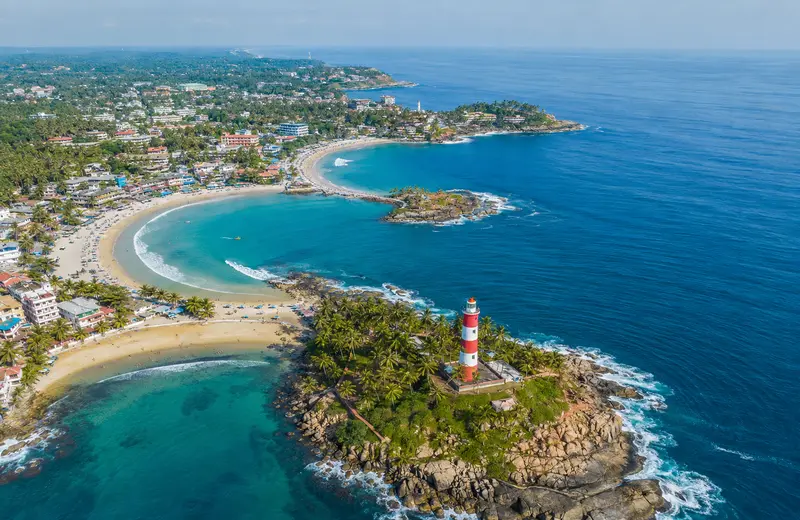
The three coves, and how they differ
The name Kovalam means "grove of coconut trees," and the beach has drawn travellers since the 1930s, with a bigger boom in the 1970s when European visitors put it on the map. Today its character is best understood cove by cove.
Lighthouse Beach is the southernmost and the liveliest. This is the postcard Kovalam, with the striped lighthouse standing over it, a paved promenade behind, and a wall of cafés, surf shacks, guesthouses and souvenir stalls. The swimming here is the safest of the three, with designated zones and lifeguards, which is why families and first-timers gravitate to it.
Hawa Beach sits just north, separated by a rocky promontory. It takes its name from the steady sea breeze, hawa, and it runs quieter than its neighbour. Fishermen still launch catamarans from here at dawn, and the old-world pace, thatched huts and returning boats give it a gentler feel. It was once known as Eve's Beach, a nod to a bygone era that has long since passed.
Samudra Beach is the northernmost, largest and least touristy. Backed by cliff-top luxury resorts, it feels more natural and unspoilt, though the waves and currents run stronger here, so swimming needs more care. Come for a long walk and the quiet rather than the crowd.
Wherever you swim in Kovalam, read the coloured flags first. Green means safe, yellow means caution, red means stay out. Undercurrents can be strong, especially at Samudra and through the monsoon, and the calmest water is usually between 7 and 10 in the morning.
Climbing the Vizhinjam Lighthouse for the sunset
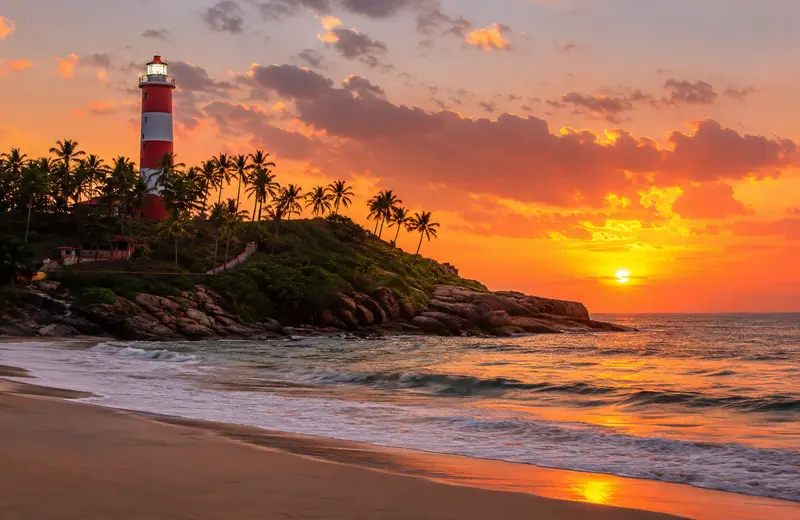
The landmark that gives the main beach its name is worth the climb. The Vizhinjam Lighthouse stands on Kurumkal hill at the southern end of Lighthouse Beach, painted in bold red and white bands, and it has watched over this coast since the early 1970s. A lift and a spiral staircase both lead up to the gallery, where the view opens across the Arabian Sea and the green coastline in both directions.
Try to time it for late afternoon so you catch the sky changing colour from the top. Opening hours, the closed day and the small entry fee can change, so confirm locally before you plan your evening around it.
Surfing and water sports
Kovalam has quietly become one of South India's friendlier places to learn to surf. The three coves catch swells differently, which is part of the appeal. Lighthouse Beach gets long, rolling waves that suit beginners and children, and its surf schools run lessons with boards, rash guards and instructors used to first-timers. Hawa Beach throws slightly stronger breaks for those with a little more confidence, while Samudra offers a quieter, more private stretch to practise on.
The water stays warm enough year-round that you will not need a wetsuit, and the bigger monsoon swells from June to September draw more serious surfers. That same season, though, makes ordinary swimming dangerous, so keep the two apart in your head. Beyond surfing, you will find kayaking, parasailing, catamaran rides and the odd jet ski, mostly run by private operators for a separate fee.
Ayurveda and wellness by the sea
This is the other half of Kovalam's identity. The town is one of Kerala's leading Ayurveda hubs, with everything from a quick beachfront oil massage to residential programmes that run one to four weeks. Some of the long-established retreats here, including names often cited among the earliest dedicated Ayurveda resorts, offer proper physician-led treatment rather than spa-style pampering.
The key is choosing well. Look for government-certified or registered centres with qualified practitioners, and treat a genuine therapeutic programme as a medical experience, not a beauty treatment.
Counterintuitively, the monsoon is considered the best season for Ayurveda. The cool, humid air is thought to make the body more receptive to therapy, and prices tend to be lower, so a rainy-season visit can pair a serious wellness programme with real value.
Best time to visit Kovalam
The sea, not the calendar, decides the right season here. October to March is the sweet spot, with dry weather, calm seas that are safe for swimming, and comfortable temperatures roughly in the mid-20s to low-30s Celsius. This is peak season, so expect higher prices and more people.
April and May turn hot and humid but suit budget travellers, with fewer crowds and lower room rates, and mornings and evenings that stay pleasant. From June to September the monsoon brings dramatic high seas where swimming is usually prohibited, yet this is prime time for Ayurveda and for surfers chasing the swell. If you are building a wider rainy-season route, these places to visit in India during the monsoon put Kovalam's wet season in context.
How to reach Kovalam
Getting here is refreshingly simple, which is part of the draw. Thiruvananthapuram International Airport sits about 15 km away, a 30 to 40 minute taxi ride, and it connects to major Indian cities as well as parts of the Middle East and Southeast Asia. The Thiruvananthapuram railway station is a similar distance, well linked to the rest of Kerala and beyond. From Kochi it is roughly a 220 km drive of four and a half to five hours, easy to combine with stops along the coast.
Once you are in Kovalam, auto-rickshaws shuttle between the three coves for a small fare. Kovalam also works neatly as the coastal finale to a southern Kerala loop. Many travellers pair it with the backwaters and the hills, and this guide to the best places to visit in Munnar helps you slot the tea country in before you hit the sand.
What to eat, and a taste of local culture
Seafood is the obvious move. Beachfront shacks let you pick your fish and choose how it is cooked, and the ones worth ordering include karimeen, the pearl spot fish, served in a banana leaf, alongside grilled kingfish and prawn curry rich with coconut. For an evening off the sand, nearby venues stage Kathakali and Kalaripayattu, Kerala's dramatic dance and martial-art traditions.
If you want to compare Kovalam's developed buzz with something calmer, the palm-backed quiet of Marari Beach further up the coast makes a good counterpoint, as does the cliff-top scene at Varkala, reachable from Kochi.
Easy day trips from Kovalam
You do not have to go far to break up the beach days. The famous Padmanabhaswamy Temple in Thiruvananthapuram is about 16 km away, and closer still are the Vizhinjam rock-cut cave temple and the freshwater Vellayani Lake. For backwaters without the long haul north, Poovar Island lies roughly 30 km south, and the land's-end drama of Kanyakumari is a doable day trip at about 85 km.
Kerala's temple trail runs deep if that is your thing, and this roundup of the most famous temples in Kerala pairs well with a Kovalam base. Beyond the beaches, more of Kerala's coast is worth a look too, from the drive-on sands of Muzhappilangad to the quieter beaches around Kozhikode.
Safety and a few honest tips
Kovalam is generally safe and well set up for tourists, and it is often rated a comfortable choice for solo travellers, including women, thanks to friendly locals and decent facilities. Still, a little care goes a long way. Respect the flag system, do not swim outside the marked zones, and be extra cautious at Samudra and in rough weather.
The other thing to watch is your wallet at the busier end. Souvenir and clothing prices along Lighthouse Beach carry a heavy tourist markup, so negotiate firmly or head to fixed-price cooperatives instead. For general ground rules that apply neatly here, this list of safe solo travel destinations in India for women is worth a read before you go.
Wrapping up
Kovalam Beach rewards travellers who treat it as three places, not one: Lighthouse for the buzz and the safe swim, Hawa for the fishermen and the quiet, Samudra for the long walk. Add a lighthouse sunset, a surf lesson, a proper Ayurvedic programme and a plate of banana-leaf fish, and you have a full trip in a small radius. Keep the flags in mind, come between October and March if swimming is the goal, and pick a certified Ayurveda centre if wellness is. Your next step is easy. Fix your dates around the season you want, book a stay on the cove that matches your pace, and let the Arabian Sea do the rest.