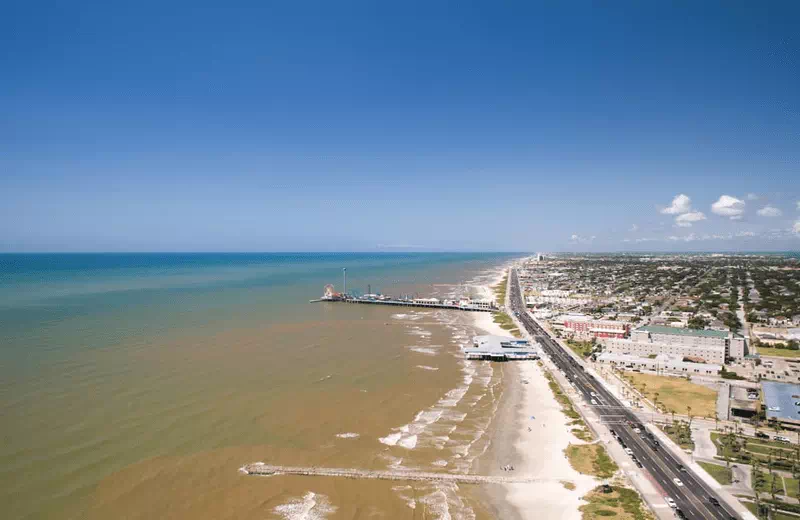
Most people picture Texas as cattle, oil, and big cities. Then they cross a short ferry ride and end up on a sandbar full of golf carts, signed fish scales on a 19th-century inn wall, and 18 miles of beach you can actually drive your car onto. That is Port Aransas, Texas, sitting on the northern tip of Mustang Island, and it does not behave like the rest of the Lone Star State. Locals just call it Port A. You will probably start doing the same by day two.
This is a working fishing town that learned to host beach vacations without losing its accent. There is no boardwalk full of chain rides, no skyline. What you get instead is warm Gulf water, fried shrimp eaten with sandy feet, dolphins surfing the wake behind cargo ships, and a pace that drops the second your tires roll off the ferry.
A practical guide to reaching Port Aransas, timing your trip, and spending your days on Mustang Island without wasting one of them.
| At a Glance | Details |
|---|---|
| Where | Northern tip of Mustang Island, Texas Gulf Coast |
| Nearest airport | Corpus Christi International (CRP), roughly 30–45 minutes away |
| Getting on the island | Free 24-hour ferry from Aransas Pass, or the Hwy 361 causeway via Corpus Christi |
| Best time | Late April to early June, and October–November |
| Known for | Fishing, beach driving, golf carts, Texas SandFest |
| Beach driving permit | Around $12, valid the rest of the calendar year |
| Vibe | Casual, slow, family-friendly, a little salty |
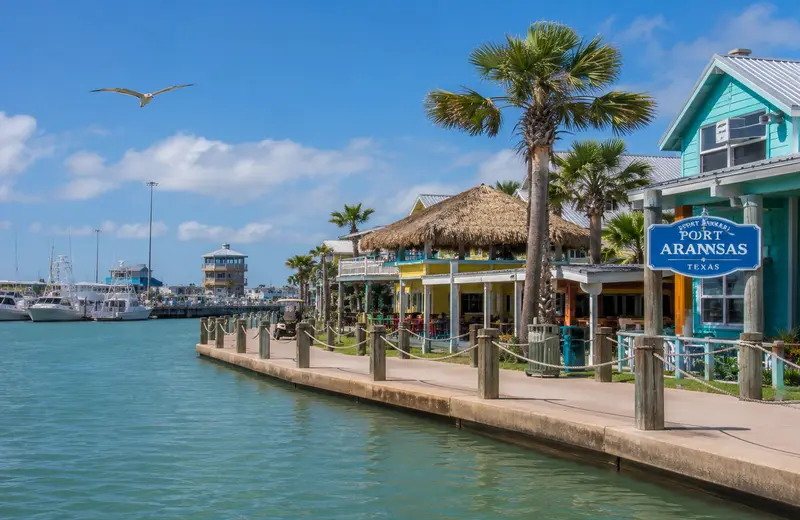
Why Port Aransas Feels Different From the Rest of the Texas Coast
Texas has a long shoreline and several beach towns competing for your weekend. Galveston pulls the Houston crowd with its historic Strand and pleasure pier. Way down south, South Padre Island leans into spring break energy and high-rise condos. Port Aransas plays a quieter game. It is small, it is flat, and it has decided that golf carts are a perfectly reasonable way to get to dinner. The town has more than five thousand of them rolling around, which tells you most of what you need to know about the speed of life here.
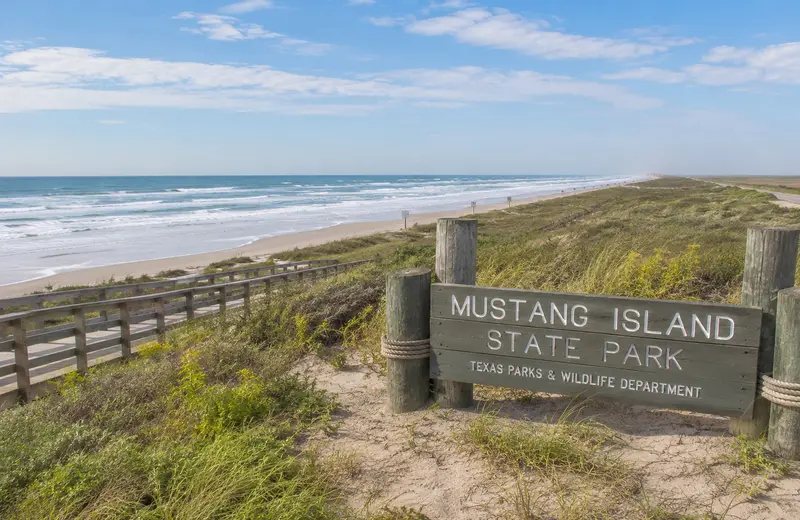
The beach itself is the headline. Roughly 18 miles of wide, hard-packed sand run down Mustang Island, and on most stretches you can drive right up, park beside your umbrella, and unload the cooler without a long walk. That single feature changes how a beach day works for families hauling chairs, boards, and a toddler who refuses to carry anything.
Port Aransas also carries a real title that locals take seriously: it is widely known as the "Fishing Capital of Texas." That is not marketing fluff stapled on last year. The town grew up around tarpon fishing more than a century ago, back when it was literally named Tarpon, Texas. National travel writers regularly fold Port A into their "best beach towns" and "best Texas beaches" roundups, and if you are weighing it against other top beaches around the country, its mix of cheap entry, easy water, and small-town character holds up well.
Best Time to Visit Port Aransas
Port Aransas works year-round, but the trip you get depends a lot on the month you pick.
Spring is the local favorite, and for good reason. From March through May the air sits in the 70s and low 80s, the Gulf warms up enough to swim by late April, and the beaches are lively without being shoulder-to-shoulder. The catch is timing around Texas Spring Break, which usually lands in the middle weeks of March and packs the island with college and family crowds. Come in late April or May and you skip the worst of that rush while keeping the good weather. April is also when Texas SandFest takes over a half-mile of beach with sand dragons, Viking ships, and ten-foot busts of famous faces.
If you want the sweet spot, aim for late April through early June. The water has warmed into the upper 70s, days are long and sunny, spring break has cleared out, and room rates have not yet jumped to peak summer prices.
Summer, June through August, is when Port A fills up completely. Gulf water hits the mid-80s and feels like a warm bath, sunsets stretch past 8:30 in June, and the fishing calendar explodes with tournaments nearly every weekend. The trade-offs are real heat, thick humidity, higher prices, and long ferry lines on weekends. Families on school break love it anyway because the energy is exactly the point.
Fall is the quiet reward. Once school starts, crowds thin out, humidity drops, and the water stays warm into October. The town runs a month of "Beachtober" events, and the Harvest Moon Regatta sailing race finishes in the Port Aransas harbor, which is a fun thing to watch from the jetty. Winter is the calmest and cheapest season, popular with "Winter Texans" who settle in for weeks. It may be too cool for long swims, but it is prime time for birding, dolphin cruises, and beach walks with the place nearly to yourself.
Hurricane season on the Gulf runs June through November, with the highest risk from August into October. Most weeks pass without any trouble, but if you book in that window, keep an eye on the National Hurricane Center forecast and check your rental's cancellation policy before you go.
How to Reach Port Aransas
Port Aransas is closer to the big Texas cities than first-timers expect, and getting onto the island is half the fun.
If you are flying, Corpus Christi International Airport (CRP) is your closest option, about 30 to 45 minutes away by car, with rental desks from the usual national brands. Larger airports in San Antonio and Austin give you more flight choices if you do not mind a longer drive afterward.
Driving is how most visitors arrive. From San Antonio you are looking at roughly three hours; from Houston or Austin, about three and a half; and from the Dallas–Fort Worth area, closer to six. If you are mapping a coast trip out of central Texas, Port A slots neatly into a list of weekend escapes within striking distance of Austin.
There are two ways to actually get onto Mustang Island. The first is the JFK Causeway: you drive through Corpus Christi, cross onto North Padre Island, then take State Highway 361 north into Port Aransas. The second, and the more memorable one, is the free ferry from the mainland town of Aransas Pass. The Texas Department of Transportation runs it around the clock, seven days a week, at no charge. Each boat carries about twenty vehicles across the Corpus Christi ship channel in under ten minutes, and dolphins often show up alongside the railing. On busy summer weekends and holidays the wait can stretch out, so arriving early in the morning or later in the evening saves you the longest lines.
Once you are on the island, a car works fine, but the local move is renting a golf cart. They are street-legal here and ideal for short hops between the beach, shops, and restaurants. Just remember the one firm rule: golf carts are not allowed on Highway 361, and on the beach the speed limit is 15 mph since the sand counts as a Texas roadway. Worth knowing too: Corpus Christi is an easy day trip back across the water, with the Texas State Aquarium and the USS Lexington museum, plus its own run of Corpus Christi beaches if you want to compare shorelines.
The Beaches and Best Things to See
The beach is the main event, but Port Aransas hides a surprising amount of nature and history for a town this small.
Port Aransas Beach is the long central stretch, miles of sand with lifeguards in season, restrooms, showers, and a dog-friendly area. It is free to walk on. If you want to drive and park on the sand, you need a beach parking permit.
Buy your beach parking permit before you settle in. It runs about $12, stays valid through the rest of the calendar year, and is sold at local gas stations, convenience stores, and the welcome center. You only need it to drive and park on the beach or to fish; walking on from a nearby rental is free.
Mustang Island State Park sits just south of town and protects roughly five miles of undeveloped coastline. It is open daily from 8 a.m. to 5 p.m., charges a small per-adult day-use fee (kids 12 and under get in free), and offers camping, paddling trails, and some of the best birding around. The park fills up, so reserving a day pass or campsite through Texas Parks & Wildlife ahead of time is smart. Confirm the current entry fee on their site, since it changes.
For a true escape, catch the passenger jetty boat from Fisherman's Wharf out to San Jose Island, known to locals as St. Jo's. This 21-mile barrier island is privately owned but open to the public, with no cars, no buildings, and famously good shelling and fishing along the jetty. The round-trip boat fare is modest, around $20, though you will want to confirm the current price and schedule before you go. Bring water and bags for shells, because there is nothing out there but sand, birds, and you.
Birders have a genuinely special spot at the Leonabelle Turnbull Birding Center, where a free boardwalk runs over a brackish marsh past roseate spoonbills, herons, egrets, and a resident alligator the locals call Boots. Just outside town, the Port Aransas Nature Preserve at Charlie's Pasture covers more than 1,200 acres of marsh and salt flats with boardwalks and trails. Port A sits on a major migratory flyway, which is why birders treat the whole island as a destination in itself.
If the weather turns or you are traveling with curious kids, the University of Texas Marine Science Institute runs the Patton Center, where eight large aquaria and hands-on displays show off Gulf marine life. Admission is free. Over at Roberts Point Park, a 50-acre spot on the ship channel, an observation tower gives you a front-row view of dolphins bow-surfing in front of tankers, and free concerts run there one Friday a month in the warmer half of the year.
Then there is the history, and it is better than a small beach town has any right to claim. The Tarpon Inn opened in 1886 and is the oldest surviving lodging on Mustang Island, rebuilt after a fire and a brutal 1919 hurricane and still taking guests today. Its lobby walls hold more than 7,000 tarpon scales, each one signed and dated by the angler who landed the fish. The most famous belongs to Franklin D. Roosevelt, who fished these waters in 1937. A few blocks away, Farley Boat Works, founded in 1915 to build boats for the tarpon fishery, reopened as a living exhibit of the Port Aransas Museum, where you can watch the iconic Port A skiff being built by hand. Out on Harbor Island, the Lydia Ann Lighthouse, dating to the 1850s, is reachable only by boat or kayak tour and makes a great photo.
A short ferry-and-drive away on North Padre Island, Malaquite Beach within Padre Island National Seashore gives you a wilder, more remote stretch of the longest undeveloped barrier island on Earth, well worth a half-day if you want emptier sand.
Fishing, Dolphins, and Time on the Water
You cannot really understand Port A without getting on the water, even for an hour.
The fishing reputation is earned. Anglers pull redfish, speckled trout, flounder, and black drum from the bays, piers, and surf, and offshore charters chase bigger game like snapper. The Horace Caldwell Pier stretches more than 1,200 feet into the Gulf and is an easy, cheap way to drop a line without a boat. Charters and guides run constantly for every skill level, so first-timers are not left guessing. If you plan to fish, Texas requires a fishing license, and a short-term all-water option is inexpensive, though the exact cost shifts year to year and is worth checking with Texas Parks & Wildlife.
Not an angler? The dolphin-watching cruises are the gentlest way to spend a morning, often passing the lighthouse and the ferry crossing where pods reliably show up. Calmer bay waters are also ideal for kayaking and stand-up paddleboarding, while the Gulf side brings surfing, boogie boarding, and parasailing for anyone craving more of a rush.
Where to Eat in Port Aransas
This is a seafood town, and your best meals here came out of the Gulf recently.
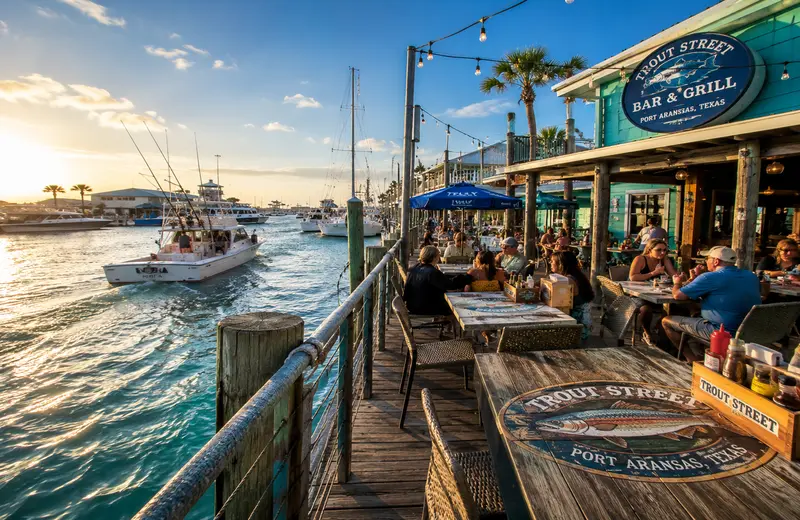
For a classic waterfront sit-down, Trout Street Bar & Grill and Virginia's on the Bay both put you over the harbor with fresh fish, shrimp, and a view of boats coming in. A signature Port A move at several spots, including Virginia's, is the "bring your own catch" deal, where the kitchen cooks the fish you reeled in that day. For something casual and family-friendly, Fins Grill & Icehouse does burgers, fish tacos, and po-boys with harbor views. The Crazy Cajun, around since 1987, serves boiled shrimp and crawfish dumped straight onto paper-lined tables, mallets and bibs included.
When you want to slow down and spend a little more, Tortuga's Saltwater Grill turns out creative, globally inspired seafood in a setting that is still beach-town comfortable. For a real occasion, Roosevelt's at the Tarpon Inn pairs fine dining with all that old fishing history around you. There is good food beyond seafood too, from the family-run Italian at Venetian Hot Plate to hearty Tex-Mex breakfasts at San Juan. One honest tip: eat a little early in peak season, because the popular places build long waits once the dinner crowd rolls in off the beach.
Where to Stay
Port Aransas leans heavily toward vacation rentals and beachfront condos rather than big resorts, which suits the town's character. Condo complexes like Sea Gull, Sandcastle, and The Dunes put you on or near the sand with pools and full kitchens, ideal for families who want to cook a few meals and spread out. These book up months ahead for spring break and summer, so plan early.
For a splurge, Palmilla Beach Resort offers upscale beachfront stays alongside an Arnold Palmer–designed golf course set right against the dunes. For something with soul, the historic Tarpon Inn gives you simple rooms opening onto long porches, rocking chairs, and a front-row seat to the town's past. Budget travelers have the usual reliable chains near the beach, plus camping at Mustang Island State Park and several RV parks if you want to keep costs low and the Gulf close.
A Simple Weekend in Port Aransas
If you only have a couple of days, this rhythm covers the essentials without rushing.
| Day | Plan |
|---|---|
| Day 1 | Roll off the ferry, grab your beach permit, claim a spot on Port Aransas Beach, swim and shell in the afternoon. Sunset seafood dinner over the harbor at Virginia's or Trout Street. |
| Day 2 | Early dolphin cruise or pier fishing, late morning at the Leonabelle Turnbull Birding Center, lunch in town, afternoon golf-cart cruise to the shops and the Tarpon Inn. Casual Cajun boil for dinner. |
| Day 3 | Jetty boat to San Jose Island for quiet beachcombing, or a slower morning at Mustang Island State Park before you head home. |
Stretch it to five days and you can add a Corpus Christi day trip, a stretch of remote sand at Malaquite Beach, and a lazy day doing nothing but the beach.
Budget: What a Port Aransas Trip Actually Costs
Port Aransas can be cheap or fancy depending on how you play it. These are ballpark ranges in US dollars to help you plan; prices shift with season and demand, so treat them as a guide rather than a quote.
| Expense | Budget | Mid-range | Higher-end |
|---|---|---|---|
| Stay (per night) | $90–$140 motel/RV | $180–$320 condo | $400+ beachfront/resort |
| Food (per person, per day) | $25–$40 | $50–$80 | $100+ |
| Beach parking permit | ~$12 (rest of year) | — | — |
| Ferry | Free | Free | Free |
| Activity (cruise, park, charter) | $10–$30 | $40–$90 | $150+ fishing charter |
A few easy ways to spend less: travel in the shoulder seasons or winter when rentals drop sharply, book a condo with a kitchen and cook breakfast, use the free ferry and free beach walk-ons, and lean on no-cost attractions like the birding center, the Marine Science Institute, and the nature preserve. Larger groups almost always save by splitting a vacation home over booking separate hotel rooms.
Travel Tips Before You Go
A little prep makes Port A smoother. Pack reef-safe sunscreen, a wide-brimmed hat, and a light windbreaker, because the island is breezy year-round and the spring and fall evenings cool off fast. If you intend to drive on the sand, sort your beach permit early and stick to the marked, hard-packed routes near the water rather than the soft dunes, where vehicles get stuck. Cash is handy for the jetty boat and small vendors, though cards work most places; there are ATMs in town, but the island runs on island time, so do not count on one appearing the moment you need it.
Safety here is mostly common sense. Rip currents can pull hard along the Gulf, especially after storms, so swim near lifeguard areas and read the colored beach flags before you go in. Watch kids closely where cars and pedestrians share the sand. There is no big-city scam scene to worry about, but in peak season the main risks to your trip are simpler ones: not booking your rental early enough, and underestimating the summer ferry wait. Phone reception is generally fine, and emergencies route through 911 like anywhere in the US.
Best Spots for Photos
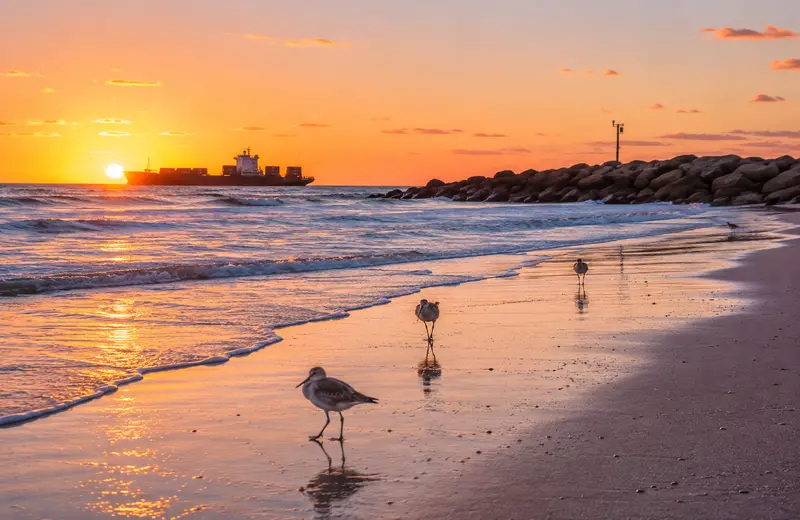
Sunrise on the Gulf side is the easy winner: soft light, fewer people, and shorebirds working the tide line. The jetties and Roberts Point Park reward patience with dolphins surfing behind the big ships. During SandFest in April, the half-mile of sculptures is its own gallery, and the porch and tarpon-scale lobby of the Tarpon Inn shoot beautifully in late-afternoon light.
Final Word
Port Aransas wins the Texas coast not by being the biggest or the flashiest, but by staying exactly what it is: a small fishing island that lets you drive onto the sand, eat shrimp with your toes in the dirt, and slow all the way down. Get there by the free ferry if you can, time your trip for late spring or fall, sort your beach permit, and let the golf-cart pace do the rest. The next move is simple. Pick your dates around the season that fits you, book your stay early, and start your first morning with a sunrise walk on the beach before the island wakes up.