Charleston and Savannah get the magazine covers. Beaufort, sitting quietly between them, gets the people who actually want to slow down. This is the South Carolina Lowcountry at its most unhurried: streets shaded by live oaks heavy with Spanish moss, white-columned homes from before the Civil War, shrimp boats working the tidal creeks, and a downtown small enough to cross on foot in twenty minutes. This Beaufort SC travel guide covers when to come, how to get here, what to eat, and how to use the town as a base for the sea islands and two of the South's most famous cities nearby.
A practical guide to Beaufort, South Carolina — the antebellum, moss-draped coastal town that most travelers drive past on their way to somewhere louder.
At a Glance
| Detail | Quick Answer |
|---|---|
| Where | Port Royal Island, the Lowcountry, coastal South Carolina |
| Known for | Antebellum homes, Spanish moss, Gullah culture, fresh shrimp |
| Founded | 1711 — the second-oldest city in South Carolina |
| Pronounced | "BYOO-fert" (not like Beaufort, NC, which is "BOH-fert") |
| Nearest airport | Savannah/Hilton Head (SAV), about an hour's drive |
| Best time | Spring and fall for mild weather and smaller crowds |
| Signature food | Shrimp and grits, Frogmore stew, she-crab soup |
| Don't miss | Waterfront Park, Hunting Island, the sea islands |
A Town That Both Hollywood and History Claim
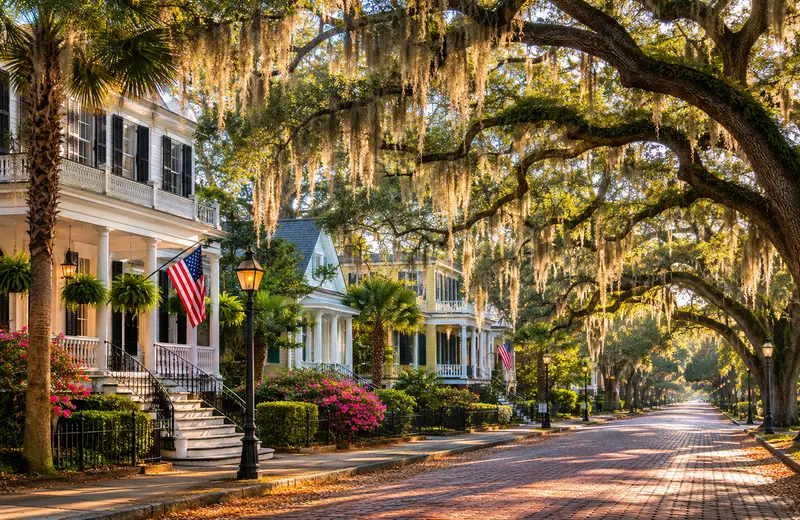
Beaufort was founded in 1711 and named after a British duke, which makes it the second-oldest city in South Carolina after Charleston. The history is not tucked away in a museum here; it is the town itself. The entire downtown is a National Historic Landmark district, with dozens of pre-Civil War homes still lived in, their porches facing the water and their gardens spilling over old brick walls. Walking Bay Street and the quiet lanes behind it feels closer to a film set than a tourist stop, which is fitting.
That last part is literal. Filmmakers have used Beaufort for decades, and the list of movies shot here runs from Forrest Gump and The Big Chill to The Prince of Tides and The Great Santini. The author Pat Conroy lived in the area and set much of his work in the Lowcountry, and the town keeps a small literary center in his honor. If you came expecting a sleepy backwater, the architecture and the cinematic streets reset that idea fast.
The deeper story belongs to the sea islands just outside town. This was a center of Gullah culture, the language and traditions carried by the descendants of enslaved West Africans who stayed on these islands after emancipation. On nearby St. Helena Island, the Penn Center grew from one of the first schools in the country for formerly enslaved people, and it remains a touchstone for Gullah heritage today. Visiting here, and listening, adds a weight to Beaufort that the pretty houses alone do not carry. In the way it wears its centuries openly, Beaufort has something in common with America's oldest city down in Florida, though Beaufort stays far quieter about it.
Beaufort rewards slowness. The point is not to tick off attractions but to walk under the oaks, sit on the seawall, and let the pace of the Lowcountry rub off on you.
Best Time to Visit Beaufort
Spring is the sweet spot. From March through May the azaleas and the famous Lowcountry light are at their best, the humidity has not arrived, and the patio tables fill up at a comfortable temperature. Fall, roughly September into November, runs a close second, with warm days, cooler evenings, and thinner crowds once summer travel winds down.
Summer is hot and sticky, and that is worth being honest about. July and August bring real heat, heavy humidity, afternoon thunderstorms, and the bugs that come with marshland. It is still a fine time for the beach and the water, just plan your walking for mornings and evenings. Summer is also festival season: the Beaufort Water Festival takes over the waterfront for about ten days in July with concerts, a boat parade, and air shows, so the town is at its liveliest and its most booked.
There is more on the calendar if you time it right. A Gullah cultural festival and a local food-and-arts celebration land in spring, the shrimp harvest gets its own festival over in neighboring Port Royal in the fall, and a literary festival runs later in the year. One practical note that has nothing to do with fun: this stretch of coast sits in the Atlantic hurricane belt, and late summer into early fall is the active window, so it is smart to keep an eye on the forecast and your travel insurance if you visit then.
Want the town at its prettiest with the fewest people? Aim for April or October. You get warm water, open patios, and room to breathe on Bay Street.
How to Reach Beaufort
Beaufort does not have its own commercial airport, so most trips start at one nearby. The closest is Savannah/Hilton Head International, roughly an hour southwest by car. Charleston International is the other common gateway, about an hour and a half north. The small Hilton Head Island airport sits even closer if your route works out that way.
By car is how nearly everyone actually arrives, and it is easy. From the main coastal interstate you cut east on the highways that run through the marsh toward the coast, crossing the bridges onto Port Royal Island and into town. Once you are here, downtown, the waterfront, and most restaurants are walkable, though you will want the car for the beaches and the sea islands.
If you are set on the train, know its limits. There is no passenger rail station in Beaufort itself; the nearest one is up in Yemassee, about a half-hour drive away, which works only if you are connecting from a longer Amtrak journey. For most people, flying into Savannah or Charleston and renting a car is the simplest plan. Either way, you are likely passing through Savannah's historic district on the way, which is reason enough to build in a stop.
Where to Eat: Lowcountry Cooking Done Right
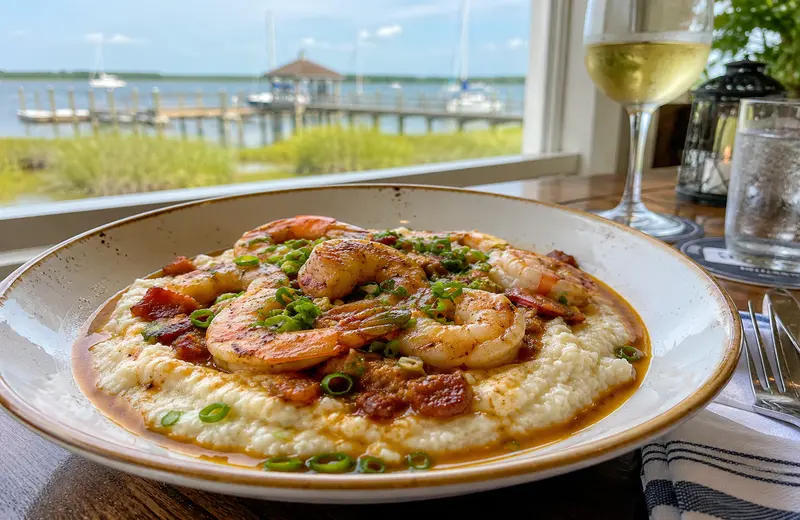
The food in Beaufort is built on one thing above all: shrimp pulled from the local creeks. Get that into your head and the menus start making sense. The dish to try first is shrimp and grits, which began as a fishermen's breakfast and is now served all day, creamy stone-ground grits under a pile of seasoned local shrimp. You will find a good version at the casual spots overlooking the water and a more polished one at the fine-dining tables on Bay Street.
The other essential is Frogmore stew, also called Lowcountry boil or Beaufort stew. It is a one-pot pile of shrimp, smoked sausage, corn on the cob, and new potatoes, and the name comes from the Frogmore community out on St. Helena Island. Order it where it is made fresh and you are eating the single dish that represents this town better than any other. Round things out with she-crab soup, a rich crab bisque you will see up and down the coast, and a shrimp burger, which is exactly what it sounds like and a local obsession.
For sit-down meals, the waterfront has casual kitchens with marsh and river views as well as a couple of dressier rooms doing seafood, steak, and a raw bar. A longtime downtown café is the breakfast-and-lunch institution locals send you to, and a market-café in an old civic building does biscuits, sandwiches, and Lowcountry pantry goods you can take home. Out on the sea islands, the legendary roadside shrimp shack draws people for its shrimp burger alone, and that one tends to be cash only, so come prepared.
Things to Do in Beaufort SC
The heart of a visit is the waterfront and the streets behind it, and a lot of the best things to do in Beaufort SC cost little or nothing. Henry C. Chambers Waterfront Park runs along the river downtown with porch swings, wide lawns, and a view of the marina, and it hosts markets and live music through the year. From there, Bay Street puts galleries, boutiques, and cafés within an easy stroll.
To put the architecture in context, a guided walking or horse-drawn carriage tour is the classic move, and the small history museum in the old arsenal fills in the rest. History buffs can tour a restored antebellum merchant's home downtown and pay respects at the national cemetery, laid out in 1863 and holding more than nineteen thousand graves. For something active, the Spanish Moss Trail is a paved rail-to-trail path that runs for miles through the marsh, good for a walk or a rented bike.
The water itself is half the appeal. Kayak and boat tours leave from the downtown marina to wind through the tidal creeks, where dolphins, herons, and oyster beds are common sights. If you would rather keep your feet dry and a rod in hand, the Lowcountry is full of easy pier fishing and dock spots where the catch comes without the boat.
The Sea Islands and Hunting Island
Beaufort is the gateway to a cluster of sea islands, and a trip that skips them misses the best scenery in the area. The headliner is Hunting Island State Park, about sixteen miles east and the most-visited state park in South Carolina. Its long beach backs onto a maritime forest, and Boneyard Beach is lined with the bleached, fallen trunks of trees the tide has reclaimed. The park's nineteenth-century lighthouse is the only one in the state you can climb, and the view from the top is worth the steps.
St. Helena Island, on the way out, is the cultural core of the area, with the Penn Center and a slower, rural rhythm. Farther out, Daufuskie Island is reachable only by boat and rewards the effort with empty beaches, art studios, and Gullah history. If you want more sand than Hunting Island offers and fewer people, the quieter Edisto Beach up the coast is an easy add to a Lowcountry road trip.
Give Hunting Island a full half-day. Climb the lighthouse early, walk the Boneyard at low tide, and bring water and bug spray, because the maritime forest earns its name.
Easy Day Trips from Beaufort
Part of Beaufort's appeal is its address, smack between two heavyweight destinations. Savannah is about forty-five minutes south, close enough to spend a day among its squares and historic streets and be back for dinner. Charleston sits an hour and a half north, a bigger day out but doable, and its barrier islands are some of the finest beaches in the region. Sullivan's Island, just outside Charleston, makes a relaxed beach stop, and you can read up on Sullivan's Island before you go.
Closer to home, Hilton Head Island is about thirty-five minutes away for golf, broad beaches, and resort dining if you want a change of pace from small-town quiet. Any of these turns a Beaufort base into a much bigger trip without long drives.
A Simple Weekend Plan
With one day, keep it downtown. Start with shrimp and grits at a local café, walk Bay Street and the waterfront, take a carriage or walking tour for the history, and spend the late afternoon on a creek kayak tour before a seafood dinner on the water.
With two days, give the second one to Hunting Island: the lighthouse, the beach, and the Boneyard, with a stop on St. Helena Island for Gullah history and a shrimp burger on the way back. A third day leaves room for a Savannah or Charleston day trip, or a slower morning poking through galleries with a long lunch and no agenda, which is arguably the most Beaufort thing you can do.
Travel Tips Worth Knowing
Beaufort is refreshingly easy after bigger cities. Downtown is flat and walkable, parking is far simpler than in Charleston or Savannah, and the historic core is compact. You will still want a car for the sea islands and the beaches.
Pack for heat and the outdoors if you come in the warm months. Sunscreen, a hat, and bug spray matter, especially near the marsh at dawn and dusk, and a light layer helps for breezy boat tours. Most places take cards, but a few of the smaller island spots run cash only, so keep some on hand. There is little in the way of tourist scams here; the bigger thing to plan around is the weather, both the summer heat and the late-summer storm season.
One small thing that marks you as a visitor instantly: the name. Say it "BYOO-fert," with the first part rhyming with "new." Get that right and the locals will assume you have been before.
The Wrap-Up
Beaufort works precisely because it is not trying to be Charleston or Savannah. It is a real, lived-in Lowcountry town with deep history, genuine food, and the sea islands at its doorstep, and it asks only that you slow down enough to notice. Come in spring or fall, base yourself downtown, give a full day to Hunting Island and the sea islands, and leave time for an unhurried meal by the water. The easiest next step is to pick your season and book a place in the historic district, since walking out your door into those moss-draped streets is the whole experience in miniature.