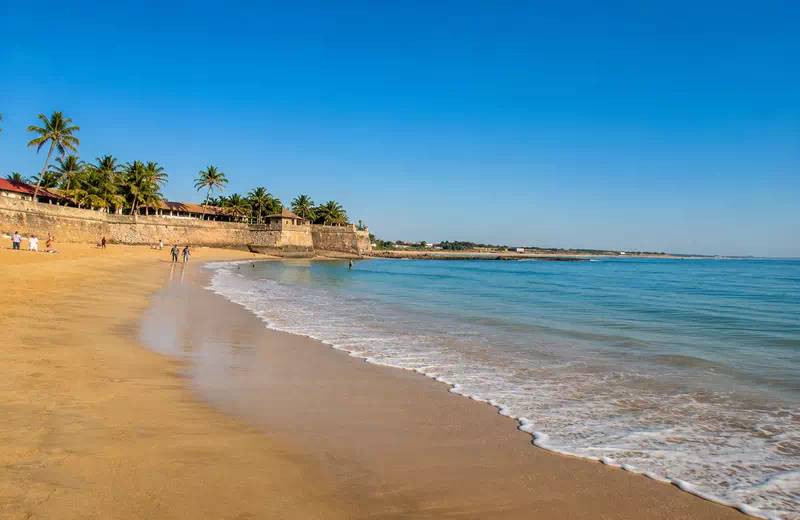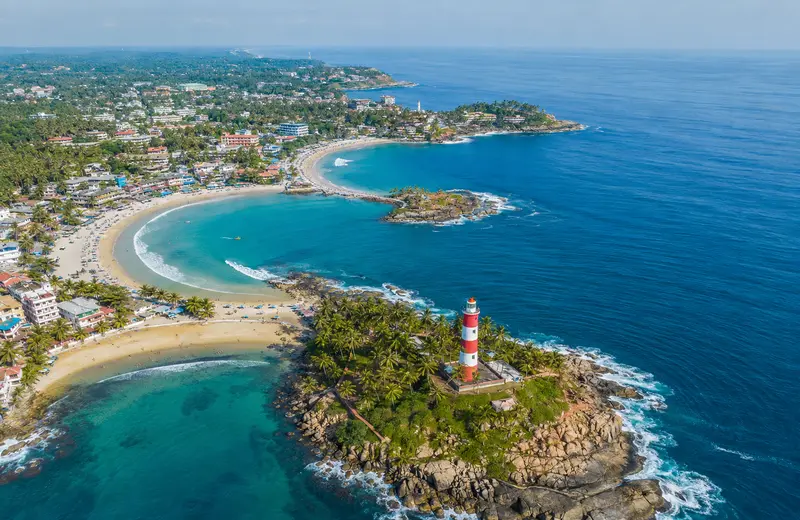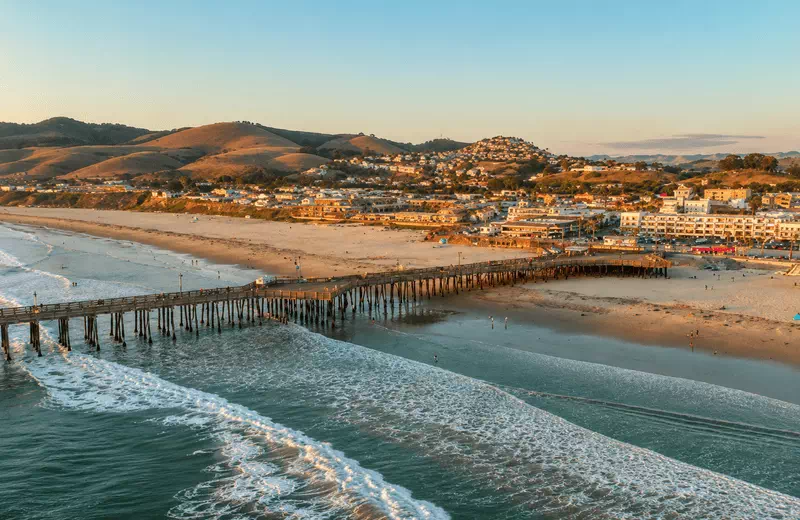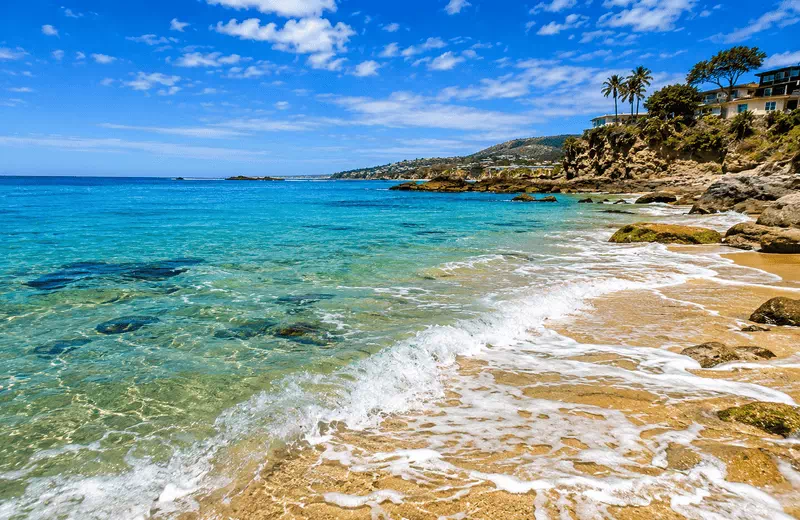
Gokarna pulls off a rare trick. It is an ancient Shiva pilgrimage town and a barefoot backpacker coast at the same time, and the two rarely get in each other's way. Pilgrims take a holy dip near the temple while, a short walk south, travellers string hammocks between palms and wait for the sea to glow blue at night. The draw is a chain of five beaches, each tucked into its own rocky cove, linked by a cliff-and-forest trail that lets you walk from one to the next. This Gokarna beaches guide runs through all five, the trek that ties them together, how to get here, and how to do it without tripping over the town's spiritual side.
The short version: Gokarna is a quieter, cheaper, more spiritual alternative to Goa, best from October to March, built for slow beach days, a coastal trek, and sunsets from Om Beach.
Gokarna's five beaches at a glance
Here is the whole coast in one look before the detail.
| Beach | How to reach | Vibe | Swimming |
|---|---|---|---|
| Gokarna Main Beach | By road, in town | Pilgrims, surfers, trek start | Strong currents, care needed |
| Kudle Beach | By road / short walk | Shacks, cafés, sunsets, backpackers | Generally safe by day |
| Om Beach | By road | The all-rounder, water sports, cafés | Generally safe by day |
| Half Moon Beach | Trek or boat only | Secluded, no shops or signal | No lifeguards, care needed |
| Paradise Beach | Trek or boat only | Remote, camping, glowing waves | No lifeguards, be cautious |
Two Gokarnas: temple town and backpacker coast
Gokarna sits in Karnataka's Uttara Kannada district, where the Western Ghats roll down to meet the Arabian Sea. Its fame rests on two very different pillars. One is the Mahabaleshwar Temple and its revered Atmalinga, which draws Hindu pilgrims from across the country. The other is a beach scene that took off with backpackers looking for the calm that Goa had started to lose.
That mix is the whole appeal. You get cleaner, quieter, cheaper beaches than Goa, wrapped around a working temple town with deep roots. If you are actively choosing between the two coasts, this honest Goa or Gokarna comparison lays out who each one suits.
The five beaches, one by one
Gokarna Main Beach is where the town meets the water. Pilgrims come here for a ritual dip before the temple, and in recent years surf schools have set up along its long, wave-friendly shoreline. It is also the northern starting point of the beach trek. Currents can be strong, so swim with care.
Kudle Beach is the first proper beach-holiday stretch, a wide golden curve backed by shacks, cafés and cheap guesthouses. It runs on slow-travel energy, with morning yoga, long walks and sunset drum circles in peak season. Falling asleep to the waves in a beachfront shack is the reason people linger here for weeks.
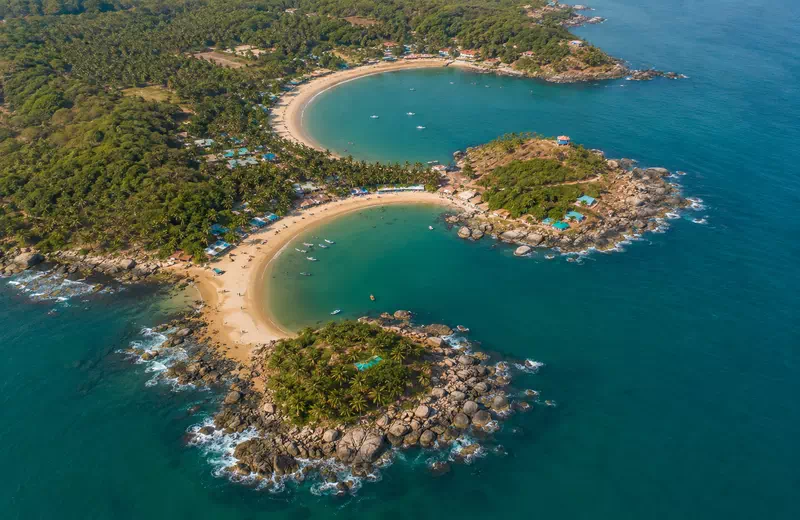
Om Beach is the icon, and the one most travellers use as a base. Its name comes from its shape: two crescents of sand that, seen from above, trace the Om (ॐ) symbol. This is the most set-up of the beaches, with water sports, cafés, restaurants and the most reliable phone signal, and the sunset from its northern end is among the best on this coast.
Half Moon Beach is a small crescent reachable only on foot or by boat, roughly twenty minutes' walk from Om. That inaccessibility is the point. There are no permanent shops and little to no signal, just clean sand and, on a busy day, a handful of other people.
Paradise Beach sits at the far end of the trail, with no road to it at all. You arrive by boat or a sweaty cliff trek, and that barrier is exactly what keeps it wild. It is the beach most people remember longest, known for camping and, on certain nights, glowing water. The cove looks calm, but there are no lifeguards and the sea can hide rocks and currents, so be careful.
The Gokarna beach trek: the best way to see them all
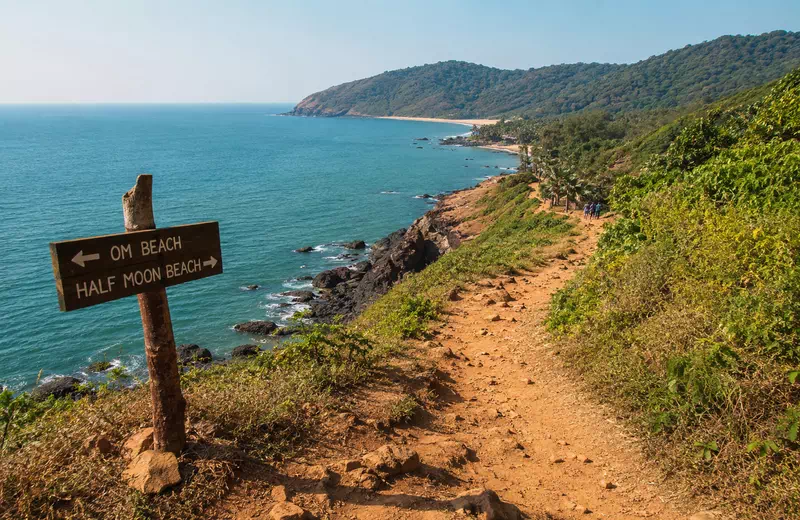
The trek is what makes Gokarna special. Instead of roads, a coastal trail links the beaches over rocky hills, through forest patches and along cliff edges with the sea always in view. Most people walk south from Gokarna Main Beach, through Kudle and Om, then on to Half Moon and Paradise, covering roughly six to seven kilometres in three to four hours with swim and photo breaks.
It is not a hard trek, but a few things make it smoother. Wear proper shoes rather than flip-flops, since the trail turns rocky and steep in places, and carry at least a couple of litres of water. The stretch from Half Moon to Paradise is the toughest, with some boulder scrambling near the start.
Start the trek in the morning and be off the cliff sections before dark. Parts of the trail pass through forest with no lighting, and the rocks near the coves are risky at night. If you would rather not walk both ways, boats run between the beaches by day, with the last return usually in the early evening.
The glowing sea: bioluminescence at Gokarna
One of Gokarna's quiet thrills is bioluminescence. On some post-monsoon nights the waves light up an electric blue as you disturb the water, most visible on dark new-moon nights away from café lights. Paradise Beach and the smaller hidden coves are the classic spots for it. There are no guarantees with a natural phenomenon, but when it happens, it is unforgettable in the literal sense.
Beyond the sand: temple, forts and diving
Gokarna is more than its coast. The Mahabaleshwar Temple houses the Atmalinga, a granite Shiva linga tied to a legend about the demon king Ravana carrying it from Mount Kailash, and it counts among Karnataka's important Shaivite pilgrimage sites. Entry is free and it is open daily, with separate morning and evening darshan windows that are worth confirming locally before you go.
Because this is a living pilgrimage town, a little respect goes a long way.
Keep beachwear for the beach. In town and at the temple, dress modestly and cover up, and check the current entry rules, since some temples ask for traditional dress or restrict who may enter the inner shrine. Treating the temple side of Gokarna with care is part of visiting well.
Further out, Mirjan Fort and the strange rock formations of Yana make good half-day trips, and serious divers head to Netrani Island, a couple of hours away near Murudeshwar. If you want to fold a coastal temple stop into the journey, the Udupi Krishna Temple sits along the same coast to the south.
Best time to visit Gokarna
Season matters here more than most places, because the trek and the swimming both depend on it. October to March is the window, with pleasant weather, calmer seas and dry trails. December and January are peak, busiest and at their best, while February and March thin out the crowds a little.
April to June turns hot and humid, though room rates drop and budget travellers do fine. The monsoon from July to September brings lush green hills but rough seas and slippery trails, so the trek and open-water swimming are best skipped then. That said, the glowing waves tend to follow the monsoon, so the shoulder weeks can reward you.
How to reach Gokarna
Gokarna has no airport of its own. The nearest is Dabolim in Goa, about 140 to 145 km away and a three-and-a-half to four-hour taxi ride, with Mangalore further south as a backup. By train, the small Gokarna Road station sits around 10 km from town but only limited trains stop there, so many travellers use Ankola or Kumta and take a taxi or bus in. Overnight buses, both state-run and private, connect Gokarna with Bangalore, Mangalore, Goa and beyond.
If you are coming from Karnataka's capital, this guide on how to reach Gokarna from Bangalore by bus breaks down the overnight options. Drivers on the coastal route can also string it together with the scenic Goa to Karwar road trip, since Karwar sits just up the coast. Once you are in town, autos and rented scooters handle the short hops to Kudle and Om, while the far beaches come down to trekking or a boat.
Safety and respectful travel
Most of Gokarna is safe and relaxed, and it is a longtime favourite with solo travellers, including women, for exactly that reason. The sea, not the crime rate, is the thing to respect. Om and Kudle are generally fine for a daytime swim, Main Beach has stronger currents, and Half Moon and Paradise have no lifeguards, so never swim alone at the remote beaches.
Carry cash, since ATMs thin out fast beyond the main beaches, and keep your bag light on the trek. For broader ground rules that fit Gokarna's backpacker scene well, this list of safe solo travel destinations in India for women is a useful read. If your travel style leans toward quiet, undeveloped coves like Half Moon and Paradise, you will probably enjoy these secret beaches in India too.
Wrapping up
Gokarna works best when you give it time and take it on foot. Base yourself at Om or Kudle, walk the trail through the coves, catch a sunset from Om Beach, and if the timing is kind, wade into a glowing sea at Paradise after dark. Balance the beach days with a respectful visit to the temple, come between October and March, and keep the remote-beach swims cautious. Your next step is simple. Pick your base beach, sort your route in by bus, train or a Goa-airport taxi, and block at least two or three unhurried days. For more low-key coastlines in this vein, these cheapest beach destinations you can visit instead of Goa and monsoon-friendly spots across India are worth a look.