Kolkata — India's "City of Joy" — is one of those rare destinations that leaves a mark on every traveler who visits. The capital of West Bengal, it sits on the east bank of the Hooghly River and is home to over 14 million people in the greater metro area. But Kolkata is not defined by its size. It is defined by its soul — the aroma of street food at dawn, the sound of temple bells echoing across the river, the roar of 66,000 fans at Eden Gardens, and the quiet dignity of its colonial architecture standing tall after centuries.
This is a city that gave the world Rabindranath Tagore, Swami Vivekananda, Subhas Chandra Bose, and Mother Teresa. Its streets carry memories of the Bengal Renaissance, the British Raj, and a creative energy that never really slows down. Whether you are a first-time visitor looking for the best places to see in Kolkata or planning a 3-day trip and want to make the most of your time, this guide walks you through the 15 must-visit places in Kolkata — from grand marble monuments to sacred riverside temples — with updated timings, entry fees, and practical tips for every season.
1. Victoria Memorial
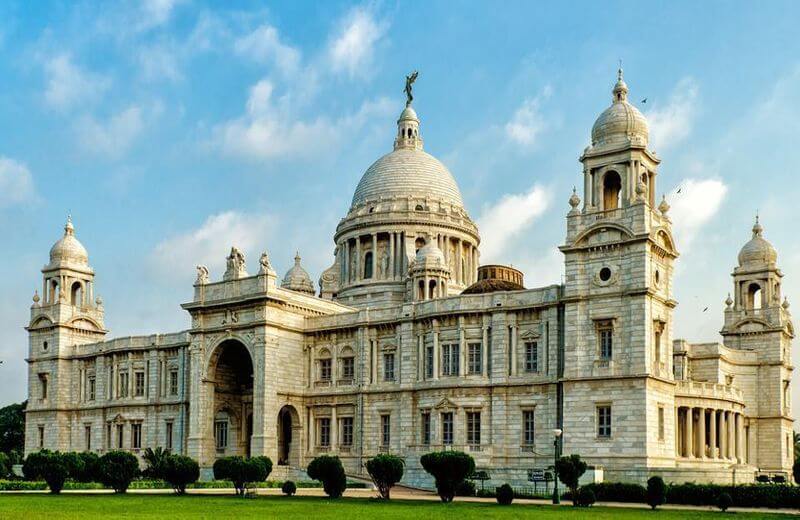
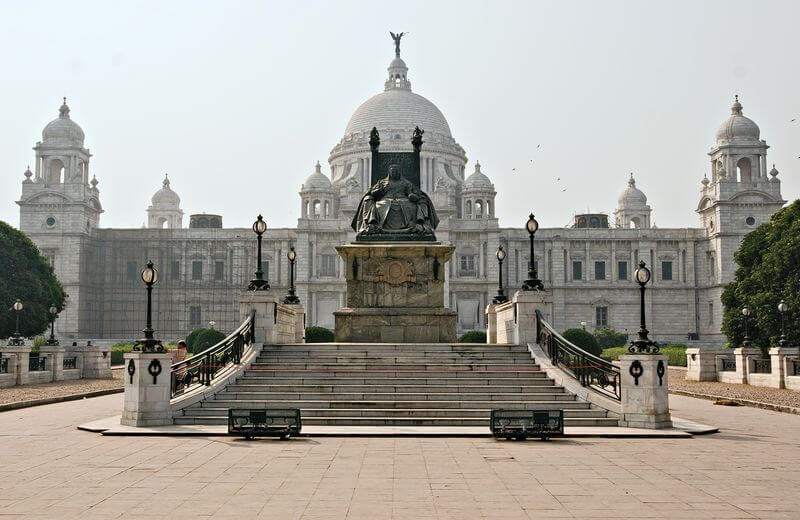
Victoria Memorial is the crown jewel of Kolkata and one of the most visited monuments in India. Built between 1906 and 1921 in memory of Queen Victoria, this grand white marble structure stands 184 feet tall and is made entirely from Makrana marble sourced from Rajasthan — the same marble used in the Taj Mahal. Set inside a sprawling 64-acre garden, the Memorial is as beautiful outside as it is inside.
The museum inside houses 25 galleries including the Royal Gallery, the Calcutta Gallery, the National Leaders Gallery, and a stunning sculpture collection. Together they tell the story of British India and the Bengal Renaissance through paintings, maps, manuscripts, and artefacts. If you are visiting Kolkata for the first time and wondering where to start, Victoria Memorial is the answer.
On Tuesday to Sunday evenings, a Light and Sound Show brings the history of Kolkata alive against the lit-up backdrop of the memorial — one of the best things to do at Victoria Memorial with family. The garden opens at 6:00 AM, perfect for morning walkers and photographers who want soft golden light on the marble dome.
Timing: Garden — 6:00 AM to 6:00 PM daily. Museum — 10:00 AM to 5:00 PM (closed Mondays).
Entry Fee: ₹50 for Indian visitors, ₹500 for foreign nationals. Light & Sound Show — ₹100.
2. Alipore Zoological Gardens
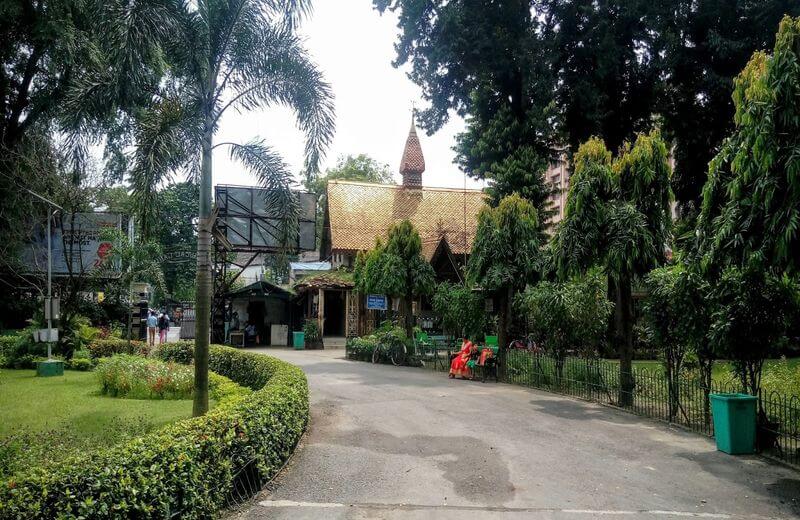
Alipore Zoological Gardens is India's oldest operating zoo, open to visitors since January 1, 1876. Spread across 46.5 acres in the heart of Kolkata, it is home to more than 108 species of animals, birds, and reptiles. Whether you are planning a family day out or looking for budget-friendly things to do in Kolkata, the zoo is a great choice.
Some of the most popular residents here are the Royal Bengal Tiger, the African Lion, the Asiatic Lion, giraffes, elephants, jaguars, the Indian one-horned rhinoceros, cassowaries, emus, and the magnificent Great Hornbill. The zoo also has a separate aquarium that you can visit with an additional ticket.
The zoo originally opened its gates on New Year's Day in 1876 under the formal proposal of Lieutenant-Governor Sir Richard Temple. On that first day alone, over 81,000 people visited — which tells you just how eagerly Kolkata welcomed it. Today it remains one of the top free-to-explore spots for nature lovers in the city.
During December and January, the zoo is open every day including Thursdays. For the rest of the year, it remains closed on Thursdays. Plan your visit on a weekday morning to avoid weekend crowds.
Timing: 9:00 AM to 5:00 PM (closed Thursdays, except in December–January).
Entry Fee: ₹50 for adults, ₹20 for children under 5 years.
3. Belur math
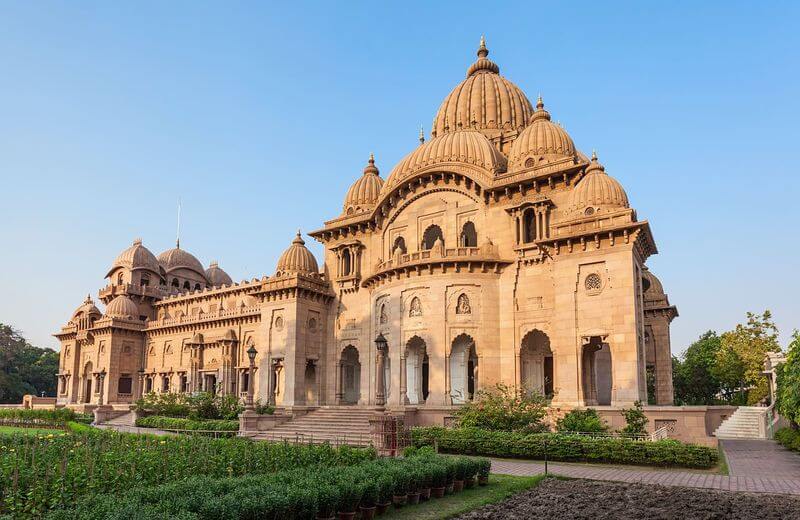
Belur Math is one of the most peaceful and spiritually uplifting places you can visit in Kolkata. Located on the western bank of the Hooghly River in the town of Belur, it is the global headquarters of the Ramakrishna Math and Mission — a spiritual organisation founded by Swami Vivekananda in 1899 following the teachings of Sri Ramakrishna Paramhansa.
The campus spreads across 40 acres along the river and includes temples dedicated to Sri Ramakrishna, Swami Vivekananda, and Sarada Devi. The main Ramakrishna Temple, consecrated on January 14, 1938 — on the day of Makar Sankranti — is a masterpiece of architecture. Its design blends Hindu, Christian, and Islamic elements seamlessly: the ground plan resembles a Christian cross, the entry arch follows Islamic proportions, and the overall form is inspired by Hindu temple traditions. The temple stands 112.5 feet tall over an area of 32,000 square feet.
The late President of India Dr. APJ Abdul Kalam described Belur Math as a place of national heritage and importance. Entry is free, and the atmosphere throughout the day is one of complete calm. The annual Durga Puja celebration at Belur Math is also one of the most spectacular in all of West Bengal — if you happen to be in Kolkata during Navaratri, do not miss it.
Timing: Summer — 6:30 AM to 11:30 AM and 4:00 PM to 9:00 PM. Winter — 6:30 AM to 11:30 AM and 3:30 PM to 8:30 PM. Museum closed on Mondays.
Entry Fee: Free.
4. Birla Mandir
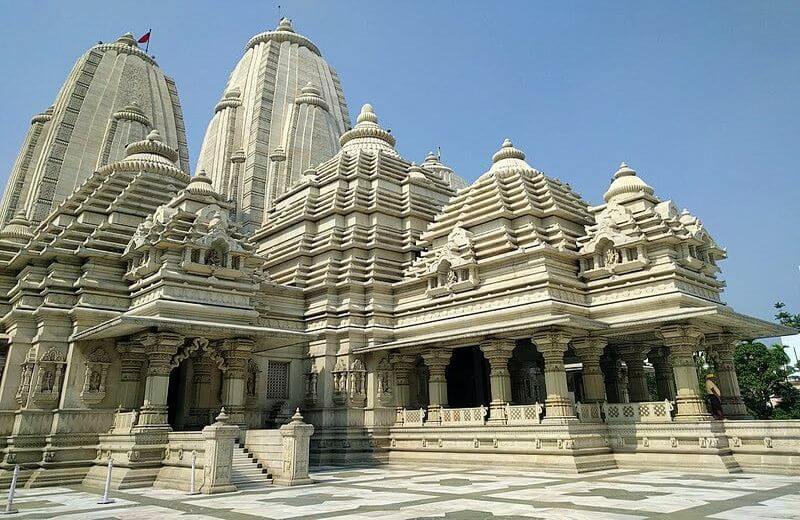
Birla Mandir in Kolkata is one of the most beautiful Hindu temples in eastern India. Situated on Asutosh Chowdhury Avenue, it was built by the famous Birla family — the same industrialist family behind several celebrated temples across India including the Birla Mandir in Jaipur and Hyderabad.
Construction of this temple began in 1970. It took 26 years to complete, and on February 21, 1996, the pran pratishtha (consecration ceremony) was performed by Swami Chirananda Maharaj. The main shrine is dedicated to Radha and Krishna, with subsidiary temples to Goddess Durga on the left and Lord Shiva in meditation on the right.
What makes Birla Mandir worth visiting is not just its religious significance but its architectural beauty. The white stone work is intricate, the surroundings are clean and serene, and the evening atmosphere during aarti is genuinely moving. It is a wonderful place to visit in Kolkata if you are looking for a quiet, spiritual experience away from the city's hustle.
Timing: Morning — 7:00 AM to 12:00 PM. Evening — 3:00 PM to 9:00 PM.
Entry Fee: Free.
5. Dakshineswar Kali temple
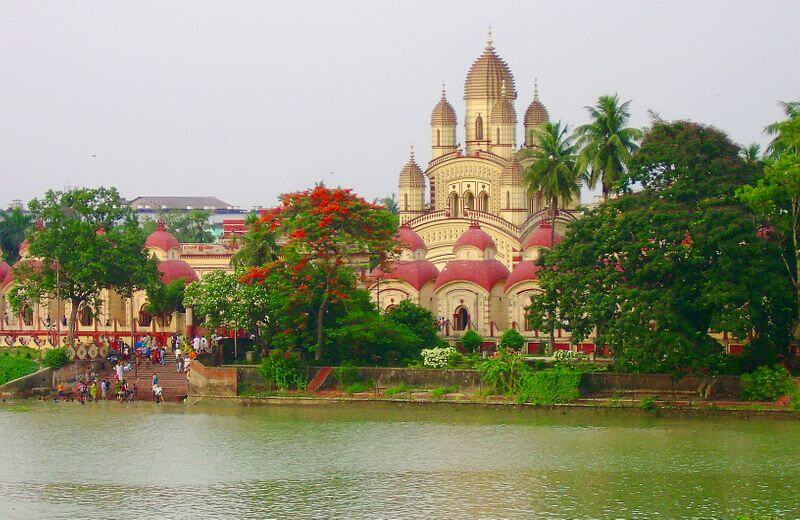
The Dakshineswar Kali Temple is one of the most sacred temples in West Bengal and attracts thousands of devotees every single day. Situated on the eastern bank of the Hooghly River just north of Kolkata, this temple was built in 1855 by the philanthropist Rani Rashmoni — a remarkable woman who rose to become one of Bengal's most respected figures.
The temple is dedicated to Goddess Bhavatarini, a form of Kali, and follows a Navaratna (nine-towered) architectural style that is typically Bengali in character. The main temple structure measures 46 feet square at its base and rises to a height of over 100 feet. Within the complex are also twelve Shiva temples along the ghat and a Radha-Krishna temple to the northeast.
This is the same temple where Sri Ramakrishna Paramhansa served as a priest for many years and had his famous spiritual experiences. Visiting Dakshineswar is therefore not just a religious experience — it is also a step into one of the most significant chapters in the history of Indian spirituality. Tuesdays and Saturdays are considered especially auspicious and tend to draw the largest crowds.
If you are coming from central Kolkata, you can take the metro to Dakshineswar station or a ferry from Belur Math, which makes for a beautiful river crossing.
Timing: Summer — 6:00 AM to 12:30 PM and 3:30 PM to 9:00 PM. Winter — 6:00 AM to 12:30 PM and 3:00 PM to 8:30 PM.
Entry Fee: Free.
6. Eden gardens
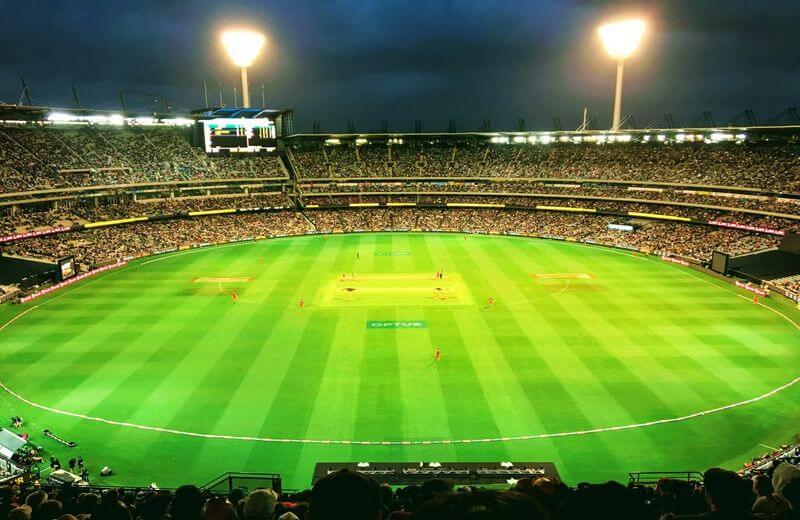
Eden Gardens is not just a cricket stadium — it is a pilgrimage site for cricket lovers across India. Established in 1864, it is the oldest cricket stadium in the country and the second largest in the world by seating capacity, with room for 66,000 spectators. When Kolkata Knight Riders play an IPL home game here, the atmosphere is unlike anything else in Indian sport.
The ground has hosted some of the most iconic moments in cricket history. India's famous 2001 Test match comeback against Australia under VVS Laxman and Rahul Dravid happened here. The 1987 Cricket World Cup final was played here. The ground is owned by the Indian Army and operated by the Cricket Association of Bengal.
If there is no match scheduled during your visit, you can still visit the open gardens around the stadium. However, access to the stadium interior requires a CAB (Cricket Association of Bengal) permit on non-match days. For match days, tickets range from ₹200 to ₹28,000 for regular international matches, and ₹750 to ₹60,000 during IPL season. The nearest metro station is Esplanade on the Blue Line, about 1.1 kilometres away.
Timing: Public gardens — 5:00 AM to 11:30 PM. Stadium access on non-match days requires CAB permit.
Entry Fee: Free (garden). Match tickets vary by seat category.
7. Fort William
Fort William is Kolkata's most important historical military structure. The fort was built between 1758 and 1781 by Robert Clive following the Battle of Plassey, at a cost of approximately £2 million. It covers a massive area of 70.9 hectares and features a star-shaped design with six ceremonial gates: the Chowringhee Gate, Plassey Gate, Calcutta Gate, Water Gate, St. George's Gate, and the Treasury Gate.
The original Fort William (a smaller structure built around 1701–1706) stood on a different site. After the Battle of Plassey and the infamous Black Hole of Calcutta incident in 1756, the British decided to build a far more powerful and better-positioned fortress. The new Fort William was so formidably designed that it has never been captured in battle.
Today, the fort is the headquarters of the Eastern Command of the Indian Army and is not open to regular tourists. However, the vast open Maidan surrounding it — one of the largest urban parks in Asia — is free to visit and gives you a wonderful sense of the fort's massive scale. The Maidan itself hosts cricket matches, football games, morning walks, and seasonal fairs every day.
Timing: Not open to the public (active army base). The Maidan around it is open all day, free of charge.
8. Howrah Bridge
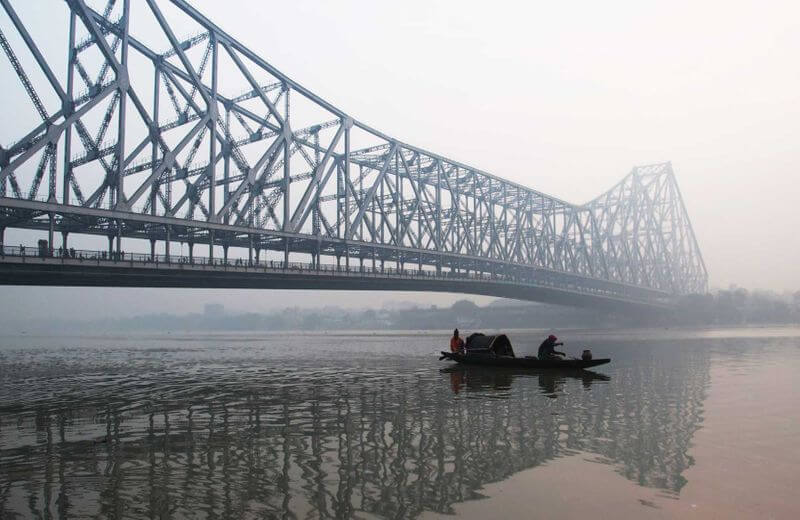
Howrah Bridge — officially named Rabindra Setu since 1965 in honour of Rabindranath Tagore — is the symbol of Kolkata. Built and inaugurated on February 3, 1943, this massive cantilever bridge spans the Hooghly River and connects Kolkata with the city of Howrah. At 705 metres in length and 82 metres in height, it is the sixth longest cantilever bridge in the world.
What makes Howrah Bridge remarkable from an engineering standpoint is that it was built entirely without nuts or bolts — the entire structure is held together by rivets. Over 26,500 tonnes of high-tensile steel were used in its construction. Every single day, more than 1,00,000 vehicles and over 1,50,000 pedestrians cross this bridge, making it one of the busiest bridges on the planet.
Visiting Howrah Bridge at different times of day gives a completely different experience. At sunrise, the morning mist over the Hooghly and the flower sellers at Mullick Ghat nearby create one of the most photographed scenes in all of India. At night, the illuminated bridge reflected in the river is equally stunning. The bridge is free to cross on foot, and you can also take a boat ride from Princep Ghat for a different perspective.
Timing: Open 24 hours, every day.
Entry Fee: Free.
9. Jorasanko Thakur Bari
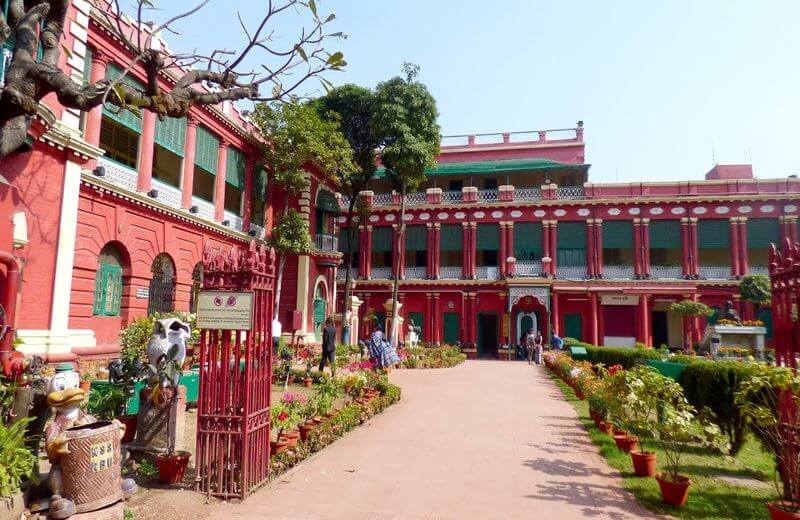
Jorasanko Thakur Bari is the ancestral home of the Tagore family and one of the most culturally significant buildings in India. Located in the Jorasanko area of north Kolkata, this is where Rabindranath Tagore — India's first Nobel laureate, awarded the Nobel Prize for Literature in 1913 — was born on May 7, 1861. Today the building serves as the campus of Rabindra Bharati University, and a portion of it has been preserved as a museum dedicated to Tagore's life and work.
The museum collection inside Jorasanko Thakur Bari is genuinely moving. You will find Tagore's personal belongings, manuscripts, letters, paintings, and photographs that trace his extraordinary life — from his childhood in this very house to his travels across Europe, Southeast Asia, and beyond. For anyone who has read Gitanjali, Gora, or any of Tagore's poems, standing in the room where he grew up is a powerful experience.
The Thakur Bari also witnessed the Bengal Renaissance — a period in the 19th and early 20th century when Bengal led India's cultural, intellectual, and artistic transformation. Walking through its rooms is like walking through that history. The building's architecture itself, with its inner courtyards, painted ceilings, and period furniture, is worth spending time in.
Timing: 10:30 AM to 4:30 PM (closed Mondays and national holidays).
Entry Fee: Approximately ₹10 for Indian visitors, ₹150 for foreign nationals.
10. Marble Palace Mansion
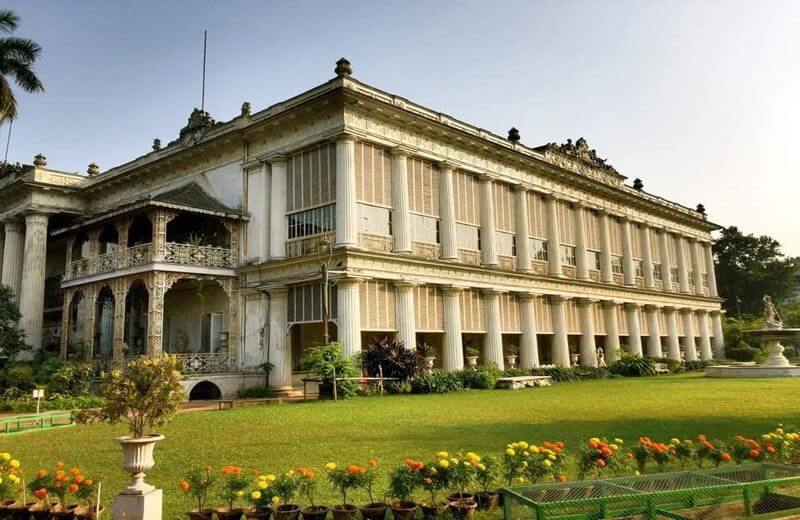
Marble Palace is one of Kolkata's best-kept secrets and one of the most unusual attractions in the entire country. Built in 1835 by Raja Rajendra Mullick — a wealthy Bengali merchant and connoisseur of the arts — this 19th-century mansion at 46 Muktaram Babu Street in north Kolkata is a jaw-dropping blend of Italian marble, European art, and colonial-era grandeur.
The mansion gets its name from the Italian marble that lines almost every surface — the floors, the walls, the staircases, and the pillars. Inside, you will find a remarkable private collection of European paintings, sculptures, Egyptian artefacts, Chinese porcelain, Belgian crystal chandeliers, and oil portraits of the Mullick family. There are peacocks and other exotic birds wandering the garden courtyard, which adds to the surreal atmosphere.
What makes visiting Marble Palace a little special is that you cannot simply walk in. You need to collect a free entry pass from the West Bengal Tourism office before your visit. The mansion is still owned and lived in by the descendants of Raja Rajendra Mullick, which means you are walking through someone's living family home — one that happens to be filled with centuries of history.
Timing: 10:00 AM to 4:00 PM (closed Thursdays and national holidays).
Entry Fee: Free (pass required from West Bengal Tourism office at BBD Bag).
11. New Market Kolkata
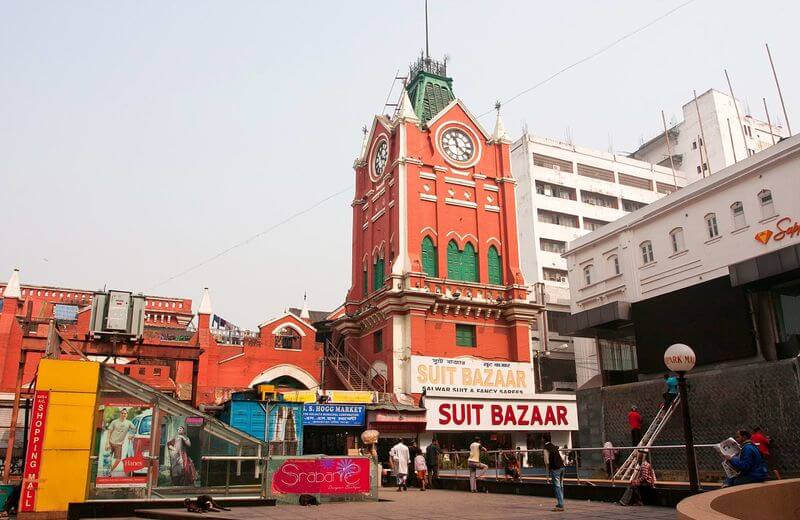
New Market — officially the Sir Stuart Hogg Market — is one of Kolkata's oldest and most beloved shopping destinations. It opened its doors on January 1, 1874, and has been a favourite of locals and tourists ever since. Located on Lindsay Street near the Esplanade area of central Kolkata, it is a sprawling complex with over 2,000 shops selling everything you can imagine — clothes, spices, fresh produce, meat, fish, baked goods, electronics, and souvenirs.
The market was officially renamed Sir Stuart Hogg Market on December 2, 1903, after the then-chairman of the Kolkata Municipal Corporation. But locals have always called it "New Market" or "Hogg saheber baazar" and still do. While modern air-conditioned malls have come up all around Kolkata, New Market retains a charm that no mall can replicate.
One place you absolutely must visit inside New Market is Nahoum & Sons — a legendary Jewish-owned bakery that has been operating since 1902. Their fruit cakes, marzipan, and rum balls are among the most famous baked goods in Kolkata. The bakery is a piece of living history and a reminder of the city's once-thriving Jewish community. Most shops in New Market are closed on Sundays, so plan your visit on a weekday morning.
Timing: 10:00 AM to 8:00 PM (most shops closed Sundays).
Entry Fee: Free.
12. Park Street Kolkata
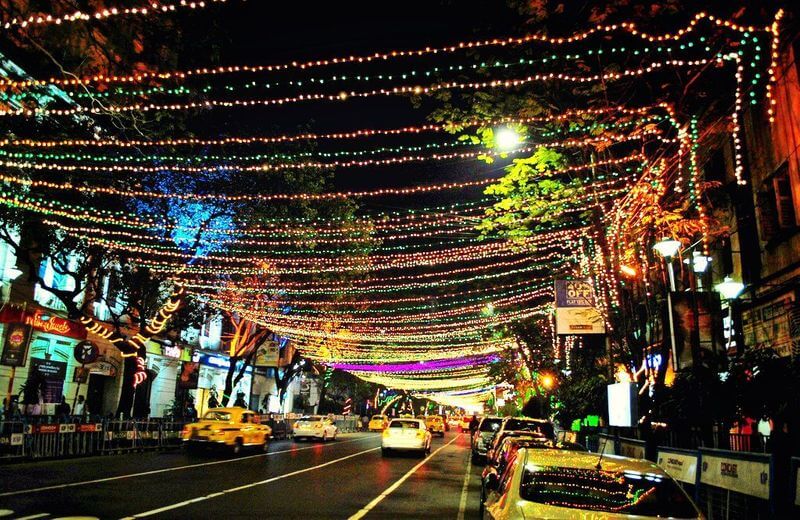
Park Street is the beating heart of Kolkata's food, nightlife, and social scene — and one of the most famous streets in India. Officially renamed Mother Teresa Sarani by the Kolkata Municipal Corporation, it runs from Jawaharlal Nehru Road down toward Park Circus, cutting through some of the city's most vibrant neighbourhoods.
This is where Kolkata's legendary restaurant culture was born. Peter Cat — famous for its chelo kebabs — has been here since 1975. Mocambo, with its red-and-white checkered tablecloths and continental menu, has been packing in diners since 1956. Flurys, the iconic Swiss-style patisserie and tearoom at the corner of Park Street, has been serving breakfast and afternoon tea since 1927. Eating on Park Street is not just about food — it is about experiencing Kolkata's culture of unhurried pleasure and good conversation.
During Christmas and New Year, Park Street transforms completely. The entire stretch is decked out in thousands of lights, street stalls sell cake and wine, and locals and tourists pour in for what is arguably the most festive street celebration in the city. If you are visiting Kolkata in late December, spending an evening on Park Street is an absolute must.
Timing: Open 24 hours.
Entry Fee: Free.
13. Princep Ghat
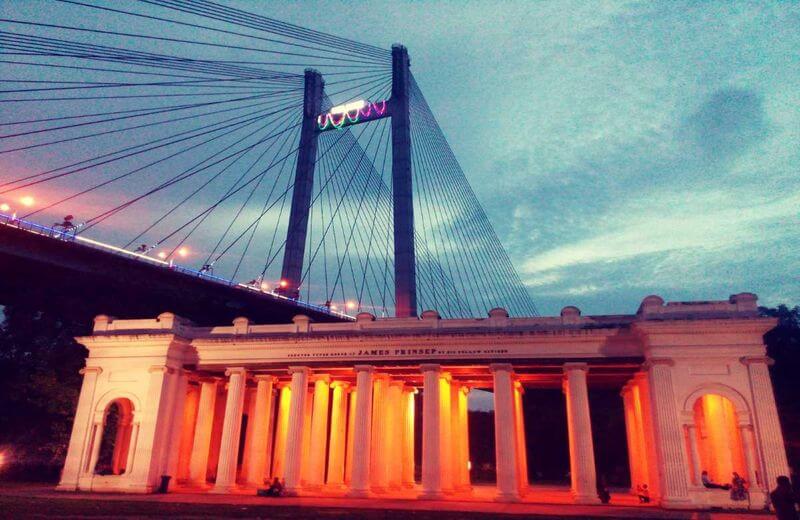
Princep Ghat is one of the most scenic riverside spots in Kolkata — and honestly one of the most underrated. Situated along the eastern bank of the Hooghly River just south of the Howrah Bridge, this beautifully renovated ghat is named after James Prinsep, the English scholar and orientalist who deciphered the ancient Brahmi and Kharosthi scripts of India.
The ghat was renovated and reopened to the public on May 24, 2012, and the transformation has been remarkable. The 2-kilometre riverfront stretch now features illuminated fountains, manicured gardens, lamp-lit pathways, and renovated stone ghats where visitors can sit and watch the river. In the evenings, the lights reflecting off the water and the cool river breeze make it one of the most pleasant places to simply sit and relax in the entire city.
Boat rides from Princep Ghat are popular with both tourists and locals. For ₹20 to ₹50 you can take a short ride on the Hooghly and get a completely different view of Howrah Bridge and the Kolkata skyline. Longer rides to the Botanical Garden or across to Howrah are also available. On weekends, you will find food stalls, families, and photographers all making the most of this beautiful stretch.
Timing: Open 24 hours.
Entry Fee: Free. Boat rides from ₹20 to ₹50.
14. South Park Cemetery
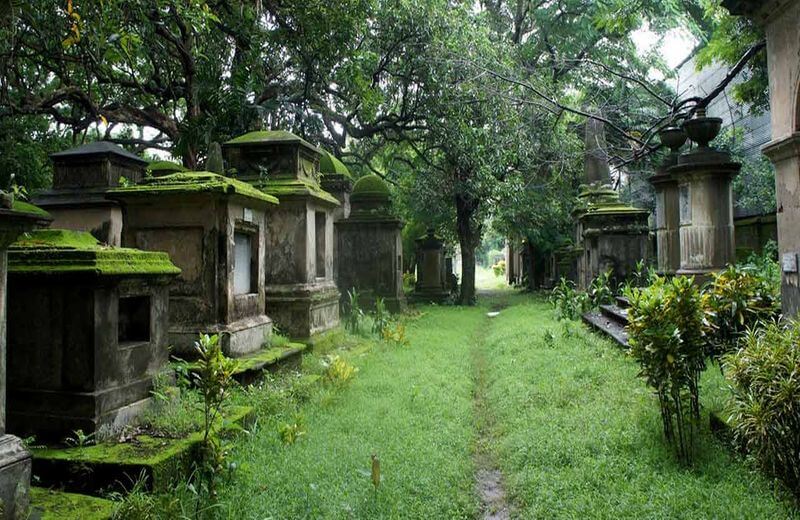
South Park Street Cemetery is one of the most atmospheric and historically significant places in Kolkata. Established in 1767, it is one of the oldest Christian cemeteries in India and was once described as the largest Christian burial ground outside of Europe and America. Today it is protected and maintained by the Archaeological Survey of India.
Walking through South Park Street Cemetery feels like stepping into another century. The graves, tombs, and mausoleums are grand and architecturally striking — many are built in neoclassical and gothic styles, with detailed carved inscriptions, Corinthian columns, and pyramid-shaped monuments. The epitaphs on the stones tell the stories of British officers, merchants, missionaries, and colonists who died far from home, many of them very young.
Despite its age and the weight of history it carries, the cemetery has a peaceful quality to it. Large trees shade the pathways, and the whole place is surprisingly well-maintained. It was immortalised in Satyajit Ray's famous story "Gorosthane Sabdhan" (Beware of the Cemetery), which was later filmed here as well. If you are a history buff, a photographer, or simply someone who appreciates unusual and beautiful places, this cemetery should be on your Kolkata itinerary.
Timing: 9:00 AM to 5:00 PM daily.
Entry Fee: Free.
15. Writers Building
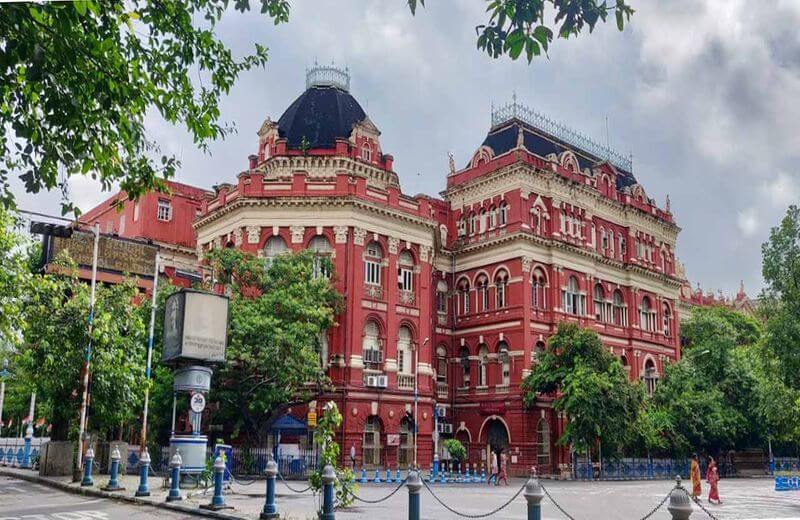
Writers Building is one of the most historically significant addresses in Kolkata and in all of India. The building was designed by Thomas Lyon in 1777 and gets its name from the "writers" (clerks) of the British East India Company who worked here in the colonial era. Over the centuries it became the secretariat of the West Bengal state government, housing over 34 government departments and approximately 6,000 employees across a built-up area of roughly 5,50,000 square feet.
The building witnessed one of the most dramatic events of the Indian independence movement when, in 1930, three young revolutionaries — Binay Basu, Badal Gupta, and Dinesh Gupta — entered Writers Building and shot the Inspector General of Prisons in protest against the brutal treatment of political prisoners. This act of defiance is remembered every year on December 8 as Binay-Badal-Dinesh Day (BBD Day) in West Bengal.
In recent years, Writers Building has undergone an extensive restoration project led by the Indian National Trust for Art and Cultural Heritage (INTACH), with an investment of approximately ₹400 crore. The project aims to restore the building's original neo-classical heritage facade while modernising the interior. The building is not open to tourists, but the imposing red facade in the BBD Bag area is worth seeing from the street.
Timing: Exterior viewable any time. Interior is a government office (weekdays only, ~9:00 AM to 5:30 PM).
Best Time To Visit Kolkata
The best time to visit Kolkata is between October and February, when the weather is at its most comfortable and the city is alive with festivals and events.
Winter (November to February) is the ideal season. Temperatures drop to a pleasant 12°C to 18°C, mornings are slightly foggy but clear up beautifully by midday, and the city is in a festive mood throughout. December is especially wonderful — Christmas on Park Street is a Kolkata institution, and the New Year celebrations draw visitors from across India. The Kolkata Book Fair, usually held in late January or early February, is one of the largest book fairs in the world and a unique cultural experience.
Summer (March to May) brings intense heat. Temperatures regularly climb to 38°C to 41°C in May, and the humidity makes it feel even hotter. The city experiences brief but violent pre-monsoon storms known as Kalbaisakhi (Nor'westers), which offer temporary relief. If you must visit in summer, plan your sightseeing for early mornings and evenings.
Monsoon (June to September) brings heavy rainfall — Kolkata receives about 1,582 mm of rain annually, most of it during these months. Some low-lying areas of the city experience waterlogging. However, the city turns lush and green, and Durga Puja — the biggest festival of the year — falls in October, right at the end of monsoon season. If you want to experience Durga Puja, which is truly a once-in-a-lifetime spectacle, aim for late September or early October.
Best Month to Visit: November or December for the most comfortable weather and the most festive atmosphere.
How To Reach Kolkata
Kolkata is one of the best-connected cities in India, and getting here is straightforward whether you are coming from within India or from abroad.
By Air: Netaji Subhas Chandra Bose International Airport (IATA: CCU) is located in Dum Dum, approximately 17 kilometres north of central Kolkata. It handles both domestic and international flights, with direct connections to major Indian cities and international hubs across Southeast Asia, the Middle East, and beyond. From the airport, you can reach the city by prepaid taxi, Uber or Ola, or via the metro Yellow Line (opened August 2025) which connects the airport to Noapara station, where you switch to the Blue Line to reach Esplanade or Park Street in about 30 minutes. Metro fares range from ₹5 to ₹50.
By Train: Kolkata has two major railway stations — Howrah Junction (one of the busiest stations in Asia) on the west bank of the Hooghly, and Sealdah Station on the east bank. Superfast trains like the Rajdhani Express, Shatabdi Express, and Duronto Express connect Kolkata directly to Delhi, Mumbai, Chennai, Bengaluru, and other major cities. If you are travelling from nearby states like Bihar, Jharkhand, or Odisha, there are frequent and affordable intercity trains available.
By Road: National Highway 19 (the historic Grand Trunk Road) connects Kolkata to Delhi via Bihar and Uttar Pradesh. State transport buses operate daily services to and from cities like Bhubaneswar, Patna, Siliguri, and Dhanbad. Private luxury coaches are also widely available. Within the city, Uber, Ola, yellow taxis, auto-rickshaws, and the Kolkata Metro make getting around easy and affordable.