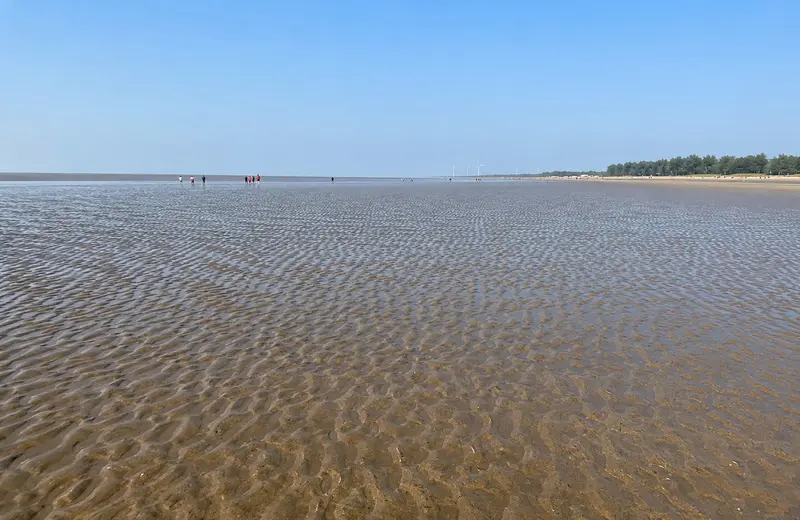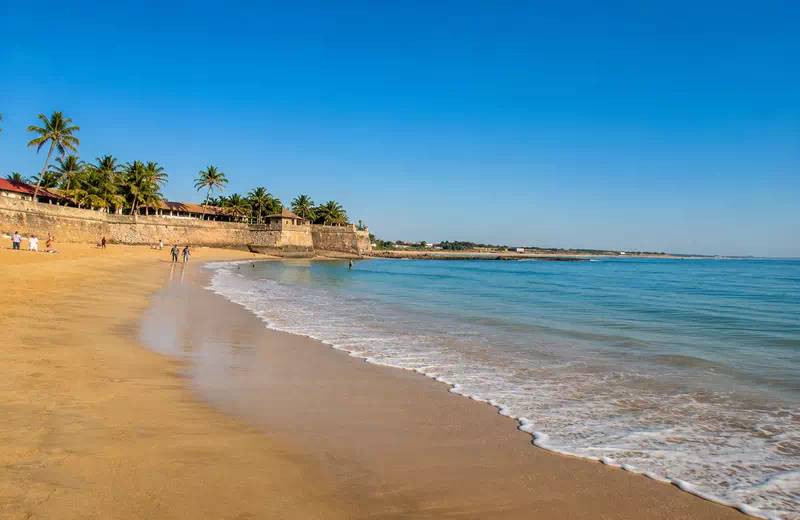
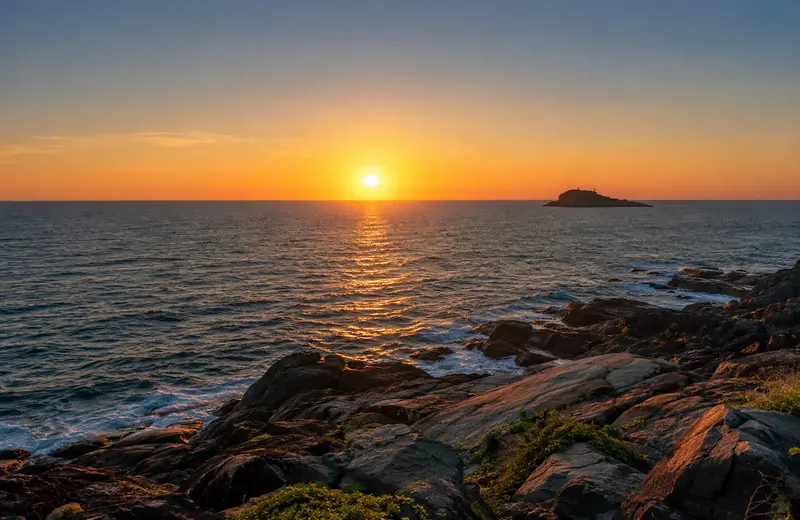
Stand on the rocks at Kanyakumari at the right hour and you can watch the sun rise over one stretch of water and, if you stay long enough, watch it set over another from the same spot. That single fact — sunrise and sunset visible from one unmoving patch of shoreline — is rare enough on its own. Add the claim that three separate seas converge right here, at the exact tip of the Indian mainland, and it's easy to see why this small Tamil Nadu town has pulled in pilgrims, poets, and curious travelers for generations.
Most people come for the geography lesson. They leave remembering the light.
Kanyakumari, formerly called Cape Comorin, marks the southernmost point of mainland India. It's where the Bay of Bengal, the Arabian Sea, and the Indian Ocean are traditionally said to meet, a spot known locally as Triveni Sangam. Whether that meeting is a strict oceanographic fact or a beautifully told cultural belief is a question worth unpacking honestly, and this guide gets into that further down. Either way, the town itself — its temple, its rock memorial a few hundred metres offshore, its market lanes selling seashell trinkets — has enough going on to fill two or three unhurried days.
At a Glance: Kanyakumari
| Detail | Information |
|---|---|
| Location | Kanyakumari district, Tamil Nadu (southernmost tip of mainland India) |
| Nearest Airport | Trivandrum International Airport, roughly 85-100 km away |
| Nearest Railway Station | Kanyakumari (station code CAPE), in the town itself |
| Vivekananda Rock Memorial Entry | Around ₹20 per person |
| Ferry to the Rock | Runs roughly 8 AM to 4 PM, ticket price varies by operator |
| Best Time to Visit | October to March |
| Known For | Sunrise-sunset views, meeting of three seas, Vivekananda Rock Memorial |
Ferry prices and exact timings shift by season and operator, so confirm the current rate at the jetty counter or with the tourism office before you plan around a specific number.
The Three Seas Question: What's Actually Going On
Here's the part most travel write-ups skip. From a strict oceanographic standpoint, the Indian Ocean is the larger body, and both the Bay of Bengal and the Arabian Sea are technically arms of it rather than fully separate seas — so the idea of three distinct waters meeting at one visible line isn't something you'll find backed by marine geography in a textbook sense. What is true is that Kanyakumari sits at a genuine geographic hinge point, the place where India's east and west coastlines complete their curve and give way to open ocean, with no major landmass between here and Antarctica.
Locally and culturally, though, the three-seas idea runs deep, and it's not just tourism marketing. Regular visitors and several long-time locals describe being able to spot subtle color differences in the water on a clear day — a muddier tone from one direction, a deeper teal from another — though this depends heavily on weather, tide, and how much you want to see it. Treat the "three seas" framing as the poetic, deeply-held version of the story rather than a lab-verified boundary line, and you'll enjoy the place more, not less.
Whatever the exact science, nowhere else in India lets you watch a sunrise and a sunset from the same unmoving spot on the same evening.
Best Time to Visit
October through March is the stretch worth planning around. The sea stays calmer during these months, which matters more than it sounds like it should, since the ferry to Vivekananda Rock Memorial simply doesn't run when the water gets rough. Skies are clearer too, so your odds of an unobstructed sunrise or sunset go up considerably.
Peak crowd season lands around Christmas and New Year, when domestic tourist numbers spike and the ferry queues stretch well past an hour. If you're the sort who'd rather trade a little weather uncertainty for thinner crowds, April through early June brings heat and humidity that can be tough by midday, but mornings are still workable.
Avoid the core monsoon months of June through September if you can help it. Rain arrives heavy and sudden, seas turn choppy enough that ferry access to the Rock Memorial gets suspended for stretches at a time, and outdoor sightseeing turns into a logistics puzzle rather than a relaxing trip.
How to Reach Kanyakumari
Getting here is more straightforward than the "southernmost tip of India" framing might suggest.
By air: There's no airport in Kanyakumari itself. Trivandrum International Airport is the nearest option, roughly 85-100 km away depending on the exact route, and well connected to major Indian cities along with a handful of international routes. From the airport, you're looking at around two to three hours by taxi or bus.
By train: Kanyakumari has its own railway station, right in town, with the station code CAPE. Direct trains connect from Chennai, Madurai, Coimbatore, Trivandrum, and several other South Indian cities. If a scenic route matters to you as much as the destination, it's worth checking whether your route overlaps with any of the country's standout scenic train journeys, since a few southern routes pass through genuinely striking countryside on the way down.
By road: Kanyakumari connects well by bus and private taxi from Trivandrum (roughly 85-90 km), Madurai, and Chennai (a considerably longer haul of over 700 km, better split across a day or two rather than driven straight through). State transport buses run frequently from most nearby cities, and the roads themselves are generally in decent condition.
Things to See and Do
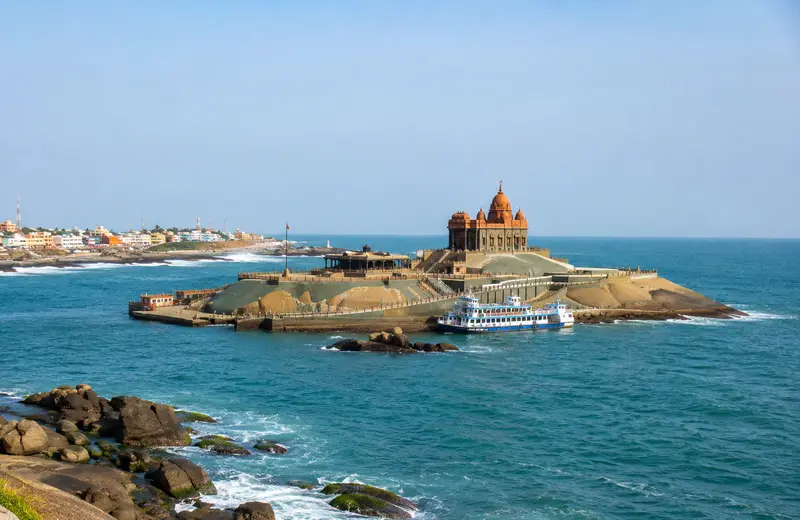
The Vivekananda Rock Memorial is the main draw beyond the beach itself, sitting on a small island roughly 500 metres offshore where Swami Vivekananda is said to have meditated before his famous 1893 trip to Chicago. Reaching it means taking a short ferry ride, usually around ten to fifteen minutes each way, with the boat also stopping near the towering Thiruvalluvar Statue dedicated to the Tamil poet-philosopher. Lines build up fast after mid-morning, so arriving close to the first ferry of the day is the difference between a smooth visit and a long, hot wait in a queue. Footwear comes off before entering the meditation hall, and there's usually a designated stand to leave shoes at, so plan for that if you're wearing anything complicated to lace back up.
The Kumari Amman Temple, dedicated to the goddess Kanya Kumari, sits right by the shore and is one of the town's oldest religious sites. Nearby, the Gandhi Memorial Mandapam marks the spot where Mahatma Gandhi's ashes were kept for public viewing before being immersed in the sea, and its architecture deliberately echoes temple design from Odisha. For a broader sense of how this fits into India's wider religious landscape, it's worth browsing a list of the country's most significant temples, several of which follow a similarly layered history of myth, colonial-era renaming, and modern pilgrimage.
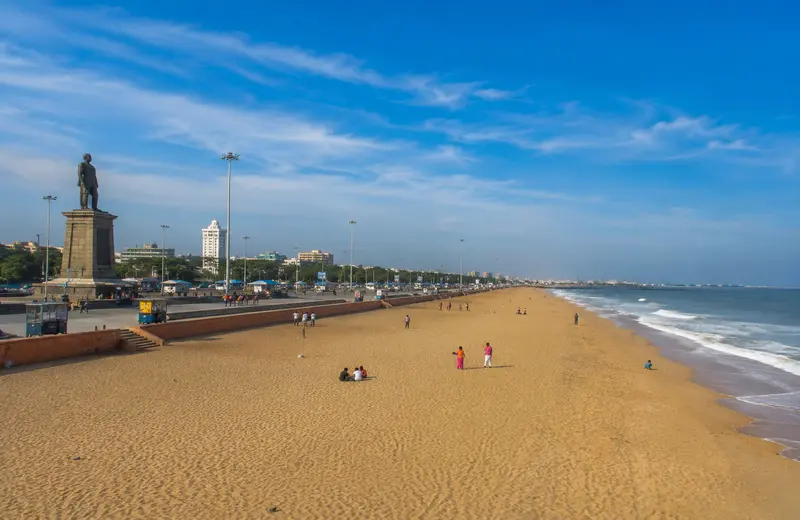
Sunset Point and the main shoreline promenade are where most visitors end up in the evening, watching the light change over the water while vendors sell shell jewelry and roasted peanuts along the walkway. A short distance away, Sanguthurai Beach offers a calmer, cleaner alternative if the main beach's crowds and rocky shore aren't your pace, while Sothavillai Beach has a small viewing tower and a quieter feel overall.
If you have an extra half-day, Padmanabhapuram Palace — a 17th-century wooden fortress that once housed the Travancore royal family — sits within reach and is worth the detour for the woodwork alone. The Suchindram Temple, known for its unusual dedication to the combined Trinity of Brahma, Vishnu, and Shiva, makes a similarly worthwhile stop if temple architecture interests you. For travelers drawn to the meditative side of a trip like this rather than just the sightseeing checklist, it's worth reading about some of India's quieter spiritual retreats, since Kanyakumari's own blend of temple, memorial, and shoreline sits in a similar register.
Budget: What a Kanyakumari Trip Actually Costs
Kanyakumari is one of the more affordable well-known destinations in South India, and most of your spending goes toward the ferry, food, and a place to sleep rather than entry fees. The Vivekananda Rock Memorial itself costs around ₹20 to enter, with the ferry ride priced separately and varying by operator and ticket class — a standard queue ticket costs noticeably less than a VIP or express option that skips the line.
Food is inexpensive by most standards. A proper South Indian thali meal at a mid-range local restaurant costs a small amount, and simple vegetarian eateries near the temple and bus stand serve dosas, idlis, and filter coffee for even less. Street food along the shoreline promenade — roasted corn, peanuts, ice cream — adds up to pocket change over a full evening.
Accommodation ranges widely. Basic lodges and dharamshalas near the temple and railway station offer no-frills rooms at budget rates, mid-range hotels with sea-facing balconies cost more but still stay reasonable by national standards, and a handful of higher-end options near the shoreline push into a genuinely premium bracket. If you're planning this as part of a couple's getaway rather than a solo or family trip, it's worth glancing at some budget-friendly honeymoon options across South India, since Kanyakumari's sunrise-sunset draw makes it a quieter, less obvious alternative to the usual hill-station circuit.
Since hotel rates and ferry pricing shift with season and demand, don't lock in any specific number from this guide — check current rates directly before booking.
Where to Stay
Most travelers base themselves within walking distance of the beach and temple, which puts the railway station, bus stand, and main sightseeing spots all within a short auto ride. Rooms facing the sea cost more, understandably, but the difference matters here — a sunrise view straight from your window is a genuine reason to pay slightly more in this particular town. Budget travelers and pilgrims often stay closer to the temple itself, where dharamshalas and simple lodges cluster together and prices stay noticeably lower.
Travel Tips
Pack light layers rather than heavy ones — mornings can carry a cool sea breeze even when the daytime heat is significant, and the walk up to the meditation hall on the Rock Memorial gets warm fast once the granite heats up under the sun. Carry small denominations of cash, since ferry counters, shell-shop vendors, and small eateries don't always handle cards or digital payments smoothly. Modest clothing matters at the temple and memorial, covering shoulders and knees, so plan your outfit with that in mind rather than discovering the dress code at the entrance.
Arrive at the ferry jetty early if the Rock Memorial is on your list — by mid-morning during peak season, wait times can stretch past an hour, and the queue only grows through midday. Sea conditions occasionally suspend ferry service altogether, particularly during the monsoon window, so build a backup plan into your day rather than assuming the boat will run on schedule. If you're traveling on your own, it's a manageable and generally comfortable place to do so, though it helps to look through general guidance on solo travel destinations in India before you commit to a full itinerary, particularly around late-evening transport options once the shoreline promenade empties out.
Nearby Places Worth Combining With Your Visit
Kanyakumari sits at one end of a stretch of South India that rewards a slower, multi-stop itinerary rather than a single-day dash. Rameswaram, a considerable drive north, pairs naturally with a visit here and brings you close to Dhanushkodi, the eerie, wind-scoured ghost-town beach at the edge of the Adam's Bridge shoal — a strange, quiet counterpoint to Kanyakumari's more crowded shoreline.
Heading the other direction toward Kerala opens up a completely different kind of beach experience. Kovalam, with its three curved coves and lighthouse views, sits a comfortable few hours away and offers a more conventional resort-beach setup if you want a couple of relaxed days after the temple-and-memorial pace of Kanyakumari. Marari Beach, further along the coast, trades crowds for a quiet fishing-village atmosphere beside the Alleppey backwaters, which makes for a good decompression stop if Kanyakumari's tourist volume during peak season starts to wear on you.
Wrapping Up
Kanyakumari earns its place on a South India itinerary less through any single spectacular sight and more through the sum of its parts — a genuinely rare sunrise-sunset vantage point, a rock memorial with real historical weight, and a shoreline that's been pulling in pilgrims and travelers for longer than most modern tourist circuits have existed. Plan your visit for the October-to-March window, get to the ferry jetty early if the Rock Memorial matters to you, and give the town at least a full day rather than treating it as a rushed stop between Trivandrum and Madurai. The most useful next step is checking the current ferry schedule and any monsoon-related service updates for your travel dates before you finalize your route.