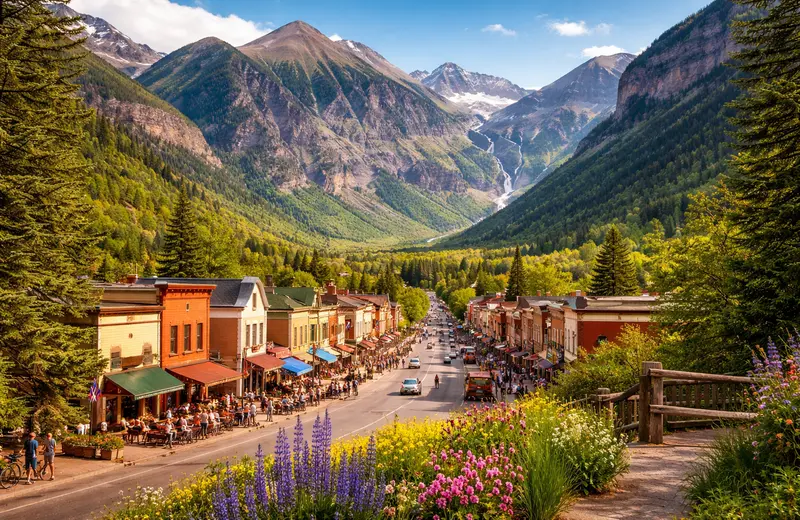
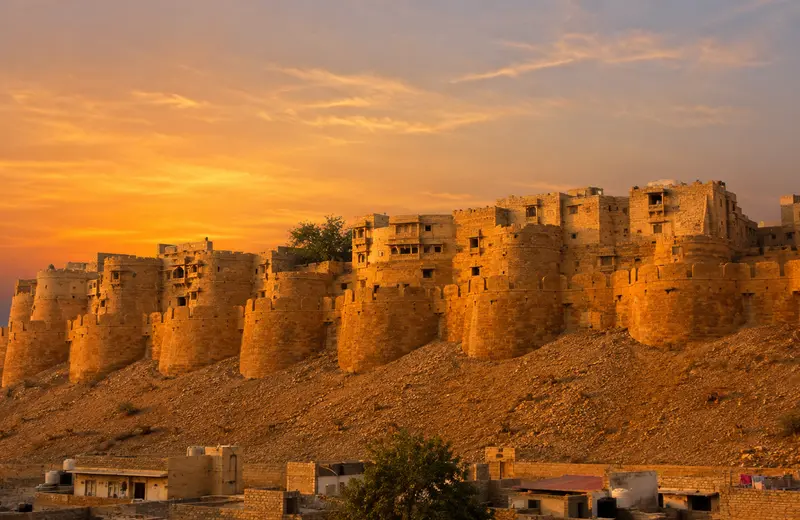
Jaisalmer looks like it was built from the desert itself, and in a sense it was. The entire old city is cut from the same golden sandstone that surrounds it for miles in every direction, which is why the fort at its center glows a genuine amber at sunset rather than the orange-tinted marketing photo you'd expect. Beyond the city walls, the Thar Desert takes over completely: dunes that shift shape overnight, a night sky with almost nothing to compete with it, and a silence that most first-time visitors aren't quite prepared for.
A sandstone fort still lived in after nearly nine centuries, and a desert close enough to reach it on a camel by sunset.
Jaisalmer at a Glance
| Location | Western Rajasthan, close to the India-Pakistan border |
| Founded | 1156 AD by Rawal Jaisal, a Bhati Rajput ruler |
| Best time to visit | October to March |
| Nearest major airport | Jodhpur (JDH), roughly 280–300 km away |
| Jaisalmer's own airport | Seasonal, limited flights, mostly in winter |
| Sam Sand Dunes distance | Around 40–42 km west of Jaisalmer city |
| Known for | Jaisalmer Fort, camel and jeep safaris, desert camps under open skies |
Best Time to Visit Jaisalmer
October through March is the only real window for a comfortable trip. Daytime temperatures sit in a genuinely pleasant range for sightseeing and desert excursions during these months, while nights, especially out at the dunes, turn cold enough that a proper jacket stops being optional. December and January bring the coldest desert nights, sometimes close to freezing at Sam after dark, which surprises visitors who associate deserts purely with heat.
April through June should be avoided almost entirely. Temperatures regularly climb past 40°C in the shade, and the open desert offers no real relief from either the heat or the sun.
Winter also happens to be when the Jaisalmer Desert Festival takes place, a multi-day cultural event featuring folk music, turban-tying competitions, and camel-related events held against the fort as a backdrop. Exact dates shift each year since they follow the lunar calendar, so confirm the current schedule with Rajasthan Tourism if the festival itself is a reason for your trip.
How to Reach Jaisalmer
Jaisalmer sits far enough into western Rajasthan that getting there takes real planning, regardless of which route you choose.
By air, Jaisalmer has its own small civil airport, but service is seasonal and limited, generally running only during the cooler months with a small number of routes to cities like Delhi and Jaipur that aren't guaranteed to operate daily. The more dependable option is flying into Jodhpur Airport, roughly 280 to 300 kilometers away, which has consistent daily connections to Delhi, Mumbai, and other major cities, followed by a taxi or bus for the remaining four-to-five-hour drive.
By train, Jaisalmer Railway Station sits close to the city center and connects directly to Delhi, Jaipur, Jodhpur, and Mumbai, with several overnight options that save a day of travel by letting you sleep through the journey. The Jodhpur-Jaisalmer route in particular runs a shorter five-to-six-hour journey if you're coming from that direction rather than from further afield. For travelers who enjoy scenic rail routes generally, Best Train Journeys in India for a Scenic Ride covers other routes worth comparing, including some of the more storied luxury train circuits that pass through this part of Rajasthan.
By road, Jaisalmer connects to Jodhpur, Bikaner, and Jaipur via national highway, and state-run buses run regularly between these cities, generally the cheapest option if time isn't the priority. The Jodhpur-Jaisalmer road stretch in particular takes about five to six hours and passes through increasingly open, sparse terrain that gives a useful preview of what's waiting at the desert itself.
A Simple Itinerary
Two days covers Jaisalmer's essentials at a brisk pace: day one for the fort, havelis, and Gadisar Lake within the city, and day two for a half-day trip out to Kuldhara followed by an evening camel safari and overnight desert camp at Sam.
Three days lets the trip breathe, adding a full day dedicated purely to the desert side, ideally including both a morning visit when the dunes are quieter and the evening safari and camp experience, rather than compressing everything into a single rushed excursion.
Five days or more opens up a genuine Rajasthan loop, pairing Jaisalmer with nearby desert-state destinations. Pushkar, Rajasthan: Lake, Ghats and the Camel Fair and Places to Visit in Udaipur in 2 days both make natural additions if you're building a longer Rajasthan circuit rather than a single-city trip.
Jaisalmer Fort: Inside the Living Fort
Jaisalmer Fort, founded in 1156 AD by Rawal Jaisal, is what most people picture when they think of this city, and the reality holds up. Built entirely from yellow sandstone that turns a genuine gold color at sunrise and sunset, it's earned the nickname Sonar Qila, the Golden Fort, and it remains one of the very few forts in the world still actively inhabited, with residents, shops, guesthouses, and temples operating within its walls rather than existing purely as a preserved monument. It's recognized as a UNESCO World Heritage Site under the broader Hill Forts of Rajasthan listing.
Wandering the fort's narrow lanes takes a couple of hours at minimum, longer if you stop to explore the Jain temples inside, a cluster of intricately carved structures dating back centuries that offer a quieter, more contemplative counterpoint to the fort's busier main streets. For travelers drawn to this kind of layered spiritual architecture, Best Spiritual Retreats in India for a Peaceful Getaway covers other destinations with a similarly contemplative character.
Staying inside the fort itself sounds appealing, and plenty of guesthouses offer exactly that, but the fort's aging drainage system has struggled under the weight of modern plumbing and tourist demand for decades. Consider staying just outside the walls instead, and treat the fort as somewhere you visit rather than sleep.
The Havelis: Patwon Ki Haveli, Nathmal Ki Haveli & Salim Singh Ki Haveli
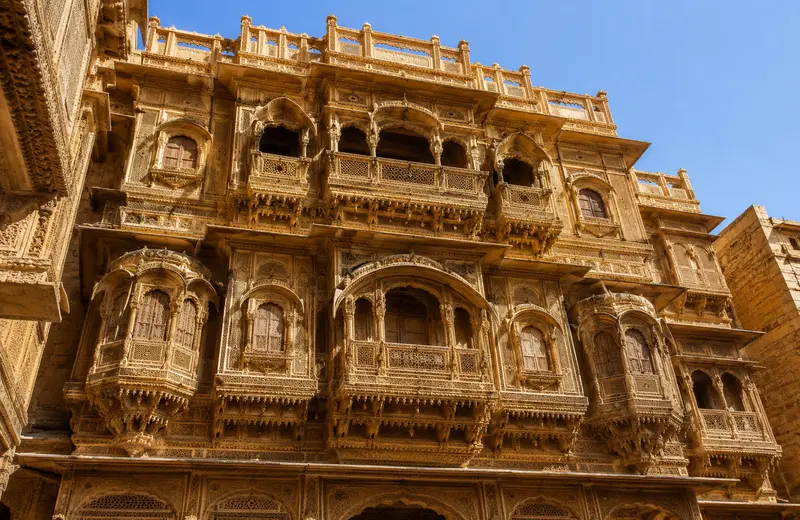
Patwon Ki Haveli is a cluster of five havelis built by the wealthy Patwa family, merchants who made their fortune trading gold and silver thread used in embroidery. The largest and most detailed of the five was built by Guman Chand Patwa starting in 1805, taking him and his sons roughly five decades to complete. The mirror work, carved jharokhas, and painted interiors are dense enough that a rushed walkthrough genuinely undersells the place; budget at least an hour if the architecture interests you at all.
Nathmal Ki Haveli and Salim Singh Ki Haveli, both a short walk from Patwon Ki Haveli, round out the city's most recognized haveli cluster, each with its own distinct carving style and history. Combining all three into a single morning is a common and efficient way to see Jaisalmer's haveli architecture without spreading it across multiple days.
Gadisar Lake
Gadisar Lake, a man-made reservoir originally built to secure Jaisalmer's water supply in a region with almost no natural surface water, remains one of the more atmospheric stops in the city, particularly at sunrise when the fort's silhouette catches the first light behind the water. The lake was renovated and expanded by Maharawal Gadsi Singh in the 14th century, and its banks are lined with small temples, shrines, and chhatris built by Jaisalmer's noble families over subsequent generations. Rowboats, paddle boats, and shikaras are all available for a slow loop around the lake, and winter months bring a reliable population of migratory birds that make the early morning visit worthwhile even without the boat ride.
Kuldhara: The Abandoned Village
About 18 kilometers from Jaisalmer sits Kuldhara, a village that local legend says was abandoned overnight by its Paliwal Brahmin residents in the early 19th century, leaving behind a genuinely eerie cluster of ruined stone houses that stretch across a surprisingly large area. The specific reasons behind the abandonment sit somewhere between documented history and local folklore, with popular retellings leaning heavily into a reputation for being cursed or haunted. Whatever the true explanation, walking through the ruins in late afternoon light, with no crowds and mostly just wind for company, is a genuinely different experience from the fort's busier lanes back in town.
The site is best visited during daylight hours as part of a broader day trip rather than alone after dark, both for practical safety reasons on the somewhat isolated approach road and because the ruins themselves are far more visually rewarding in good light than they are as a nighttime thrill-seeking stop.
Desert National Park & the Great Indian Bustard
Desert National Park stretches across parts of both Jaisalmer and neighboring Barmer district, combining sand dunes, rocky terrain, and seasonal saline lake beds into one of the larger protected desert ecosystems in the country. It's most significant as a habitat for the critically endangered Great Indian Bustard, one of the heaviest flying birds in the world and a species now confined to only a handful of remaining strongholds in India. Sightings aren't guaranteed on any given visit, since the bustard population here is genuinely small and the birds are naturally wary, but the park's broader mix of desert wildlife, including chinkara gazelle and various raptors, makes it worthwhile even without a bustard sighting. Top 5 National Parks in Rajasthan: A Complete Wildlife Guide covers this park alongside Rajasthan's other major wildlife destinations if you're building a broader nature-focused itinerary around the state.
Sam Dunes vs Khuri Dunes: Choosing Your Desert Safari
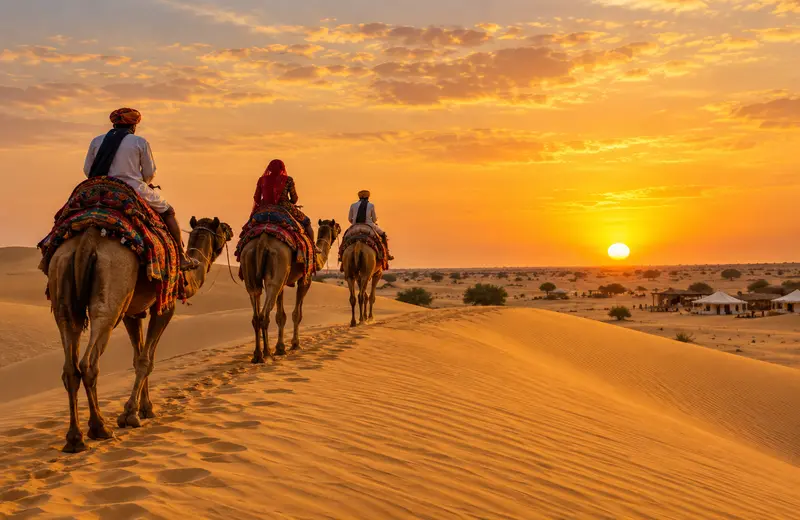
Sam Sand Dunes, roughly 40 to 42 kilometers west of Jaisalmer, is the single most visited dune formation in the region and the default choice for most first-time visitors, offering the widest range of camp options, camel and jeep safari operators, and evening cultural performances. That popularity comes with a tradeoff: Sam gets genuinely crowded during peak season evenings, with dozens of camps operating within sight of each other along the main dune stretch.
Khuri, a quieter dune village a comparable distance from Jaisalmer in a different direction, offers a noticeably less commercialized version of the same experience, with fewer camps, smaller crowds, and a setup that leans more toward an actual village stay than a tourist camp cluster. It's the better choice if solitude matters more to you than convenience or the widest range of camp amenities.
Both locations offer the same two core safari options: a camel safari, which moves at a genuinely slow pace and suits travelers who want the classic desert-crossing experience without rushing it, and a jeep safari, which covers more ground faster and appeals to families or anyone less comfortable on an animal for an extended stretch. Many camps offer both as part of a single package, letting you experience the camel ride for the sunset approach and skip straight to a vehicle for the return trip.
Desert Camps: What to Actually Expect
Camp quality varies enormously between operators, from simple tented setups with shared facilities to genuinely comfortable "glamping" tents with proper beds and attached bathrooms. A typical evening at camp follows a fairly consistent pattern regardless of budget level: arrival before sunset, a camel or jeep ride out onto the open dunes to watch the sun go down, return to camp for a folk music and dance performance around a bonfire, dinner, and then the main event, a night sky essentially free of light pollution given how far the desert sits from any major city.
Research camps before booking rather than choosing based on the first search result, since quality and pricing both vary widely and genuine reviews are the most reliable way to avoid a disappointing setup. A round-trip taxi from Jaisalmer to the Sam dunes area runs a modest, fairly standard fare, so factor that into whichever camp package you're comparing.
Budget Breakdown
Jaisalmer runs affordable by Indian tourism standards outside of the desert camp portion specifically, where prices climb sharply based on comfort level. Budget camel safaris with basic overnight camping start at a modest per-person rate, while mid-range camps with proper tents and better food land considerably higher, and true luxury desert camps with attached bathrooms and premium service sit higher still. Entry fees at the fort and havelis remain inexpensive for Indian nationals and noticeably higher for foreign visitors, a common structure across Rajasthan's heritage sites.
None of these figures hold steady for long, since desert camp pricing in particular shifts with season and demand, so treat any specific number as a planning reference rather than a fixed guarantee, and confirm current rates directly with camps before booking. For a sense of what a genuinely tight overall Indian trip budget looks like, How to Travel in India for 5 Days Under Rs.10,000 – Real Budget Breakdown is a useful reference, though a proper desert camp night will likely push a Jaisalmer-specific budget somewhat higher than that baseline.
Where to Stay and What to Eat
Accommodation in Jaisalmer splits roughly into three categories: heritage guesthouses inside or just outside the fort walls, mid-range hotels scattered through the newer parts of the city, and the desert camps themselves for anyone spending a night at Sam or Khuri. Staying just outside the fort strikes a reasonable balance between atmosphere and practicality, given the fort's aging infrastructure noted earlier.
Rajasthani food here leans heavily into what the desert climate and limited water access have historically demanded: dishes built around lentils, millet, and preserved vegetables rather than fresh produce. Dal baati churma, a combination of lentils, baked wheat balls, and a sweet crumbled dessert, is the dish most closely associated with the region, alongside ker sangri, a tangy preparation of desert beans and berries that rarely appears outside Rajasthan. Most desert camps serve a fairly standard vegetarian thali as part of the overnight package, so if you're hoping for a wider taste of local cuisine, plan at least one proper sit-down meal in Jaisalmer city itself rather than relying entirely on camp food.
Travel Tips
Jaisalmer's relationship with water is worth understanding before you arrive. This is one of the most genuinely water-scarce cities in India, historically dependent on Gadisar Lake's rainwater harvesting and now supplied largely through the Indira Gandhi Canal from far outside the region. Being mindful of water use, particularly at desert camps where supply is trucked in rather than piped, is a reasonable courtesy rather than an inconvenience.
Cash remains genuinely important here, especially once you're outside the main city and heading toward the dunes, since smaller camps, local drivers, and roadside stops don't reliably run card machines. Pack layers regardless of how hot the days feel, since desert nights drop temperature fast once the sun goes down, and a jacket that felt unnecessary at 4 p.m. becomes essential by 9. A handful of well-chosen apps make a genuine difference navigating unfamiliar desert roads with patchy signal, and Top Travel Apps in India Every Traveler Must Have is worth checking before you go. If you're drawn to this kind of open desert landscape more broadly, How to Plan a Budget Trip to Rann of Kutch in 2025 and What to Pack for a Kutch Rann Utsav Camping Trip cover a comparable desert-camping experience in Gujarat's Rann of Kutch, worth comparing if you're deciding between the two.
Capturing Jaisalmer in Photos
The fort photographs best in the hour around sunrise and sunset, when the sandstone genuinely earns its "golden" reputation rather than reading as plain beige under harsh midday light. Shoot from Gadisar Lake for a classic wide shot of the fort's silhouette reflected in the water, and save a second session for wandering the fort's interior lanes in late afternoon, when low light angles into the narrow streets and picks out the carved detail on doorways and balconies. Out at the dunes, the golden hour just before sunset is the obvious highlight, but the real reward for staying out after dark is the night sky itself; a wide-angle lens and a tripod let you actually capture what the naked eye sees out here, a density of stars that most visitors have genuinely never encountered before.
Who Should Visit
Jaisalmer suits travelers who want a proper desert experience without needing serious off-grid survival skills, along with history enthusiasts drawn to a genuinely lived-in medieval fort rather than a roped-off museum piece. It works well for couples and families alike, given the range of camp comfort levels available, though very young children may find the long travel times and desert heat during shoulder-season visits more taxing than a typical city trip. For solo travelers specifically, Solo Travel in India for Beginners: Safest Destinations & Honest Tips is worth a look before finalizing plans, since desert camp logistics work a bit differently than a typical city stay. Travelers who dislike heat, long road transfers, or basic camp facilities will likely find this a more demanding trip than Rajasthan's more urban destinations, and should weigh that honestly before committing several days to it.
The Bottom Line
Jaisalmer earns its reputation, provided you time the trip for the cooler months and treat the desert portion as more than a rushed afternoon add-on. Give the fort and havelis a proper half-day rather than a rushed hour, choose Sam or Khuri based on whether you want convenience or quiet, and spend at least one night at a desert camp rather than doing a same-day sunset trip and heading back. Do that, and the combination of a nine-century-old living fort and a desert sky with almost nothing between you and the stars becomes the trip most people actually came for.