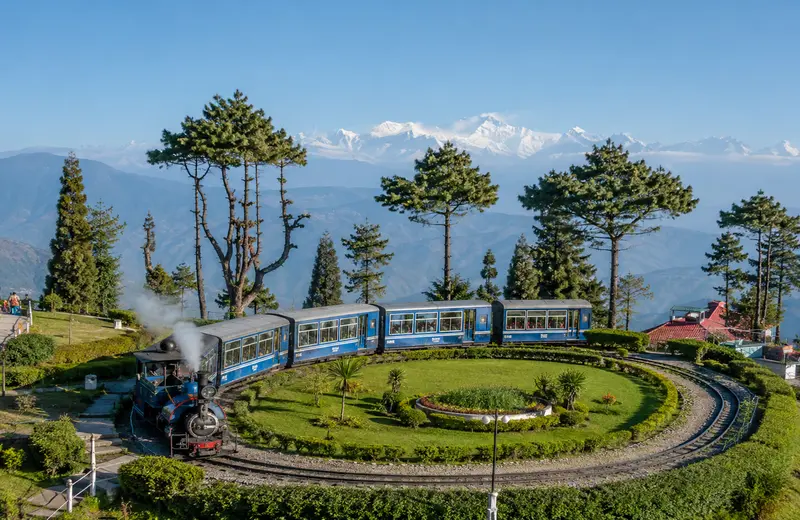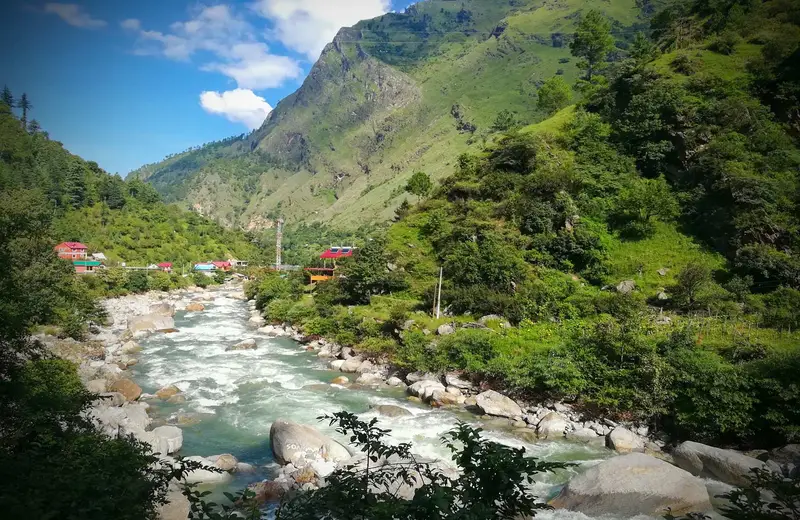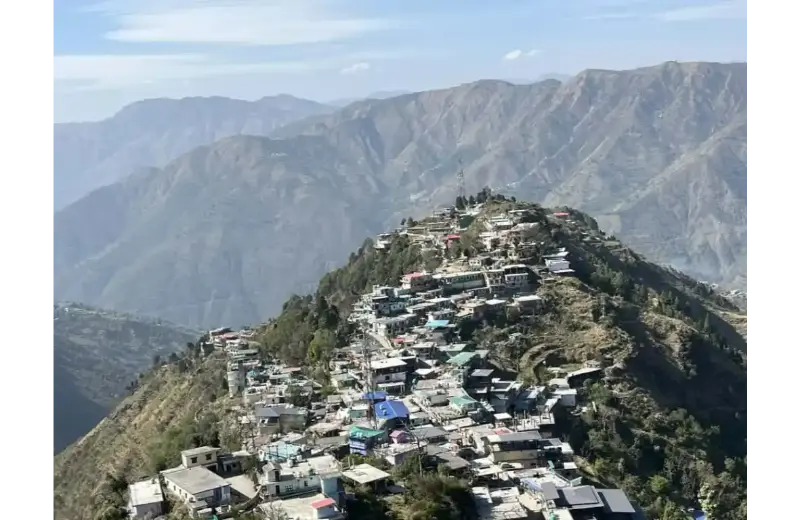
Sikkim runs on paperwork the way other Himalayan states run on altitude. Before you get anywhere near a glacial lake or a border pass here, you'll need to understand which permit applies to which road, because the rules genuinely differ depending on where you're headed and whether you're carrying an Indian or foreign passport. That sounds like a headache, and it can be if you show up unprepared, but once you know the system, Sikkim delivers one of the most rewarding short Himalayan trips in the country: a capital city stacked with monasteries, a lake sacred to two religions, and a road that climbs to within a stone's throw of Tibet.
A pedestrian street lined with momo stalls, a monastery that's the seat of a lineage of Tibetan Buddhism, and a mountain pass where India and China still meet face to face.
Sikkim at a Glance
| Capital | Gangtok, at roughly 1,650 meters elevation |
| Nearest airport | Bagdogra (IXB) in West Bengal; Sikkim's own Pakyong airport has limited flights |
| Nearest railhead | New Jalpaiguri (NJP), roughly 120–150 km from Gangtok by road |
| Permits | Not required for Gangtok itself; required for Tsomgo Lake, Nathula, and North Sikkim |
| Best time to visit | March to June and September to November |
| Tsomgo Lake altitude | Around 12,000–12,400 feet |
| Nathula Pass altitude | Around 14,100–14,450 feet, on the India-China border |
Best Time to Visit Sikkim
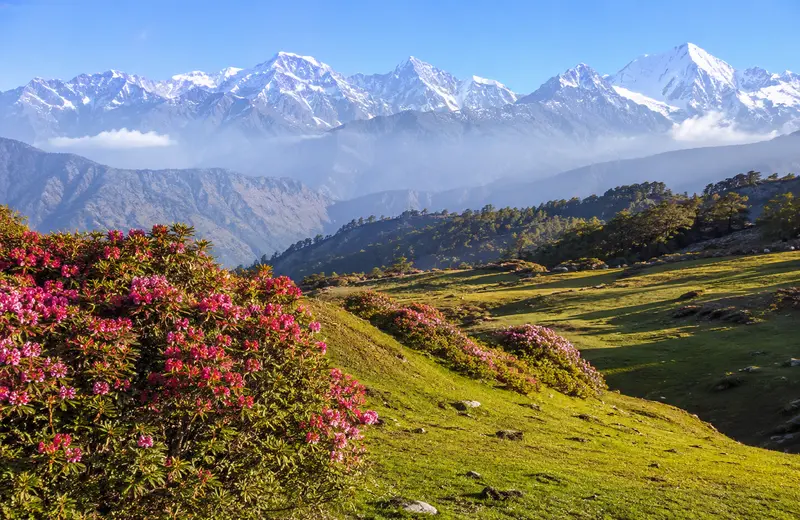
March through June brings warming days, blooming rhododendrons along the Tsomgo Lake road, and generally clear Himalayan views before the summer haze sets in. This window also lines up with peak wedding and holiday season for domestic travelers, so book accommodation and permits well ahead if you're planning a spring trip.
September through November is the second strong window, arriving right after the monsoon clears out. Skies tend to be at their sharpest during this stretch, and it's also prime trekking season for routes further into the state.
Monsoon season, roughly June through August, brings heavy rain, landslide risk on mountain roads, and frequent cloud cover that can hide the views you came for. Nathula in particular closes without much notice during and after heavy snow or landslide conditions, so build flexibility into any monsoon or winter itinerary.
Winter, December through February, keeps Gangtok itself relatively mild but turns Tsomgo Lake and the Nathula road genuinely cold, occasionally snow-covered, and sometimes closed outright depending on conditions that week. If watching the lake freeze over is part of the appeal, January through early March is generally when that happens, though it's weather-dependent rather than guaranteed on any specific date.
How to Reach Gangtok
Sikkim has no rail network of its own, and its own airport, Pakyong, currently operates a limited flight schedule connecting mainly to Kolkata and Guwahati, so most travelers still route through neighboring West Bengal.
By air, Bagdogra Airport is the more reliable option, connected by daily flights from Delhi, Kolkata, Mumbai, and several other major cities. From Bagdogra, the drive to Gangtok covers roughly 124 kilometers and takes about four to five hours along NH10, following the Teesta River for a good stretch of the route.
By train, New Jalpaiguri is the nearest major railhead, linked to Delhi, Kolkata, and other cities by long-distance trains. From NJP, the road journey to Gangtok runs a similar four-to-five-hour range, covering roughly the same distance as from Bagdogra since both sit close together near Siliguri.
By road, shared jeeps and buses connect Gangtok to Darjeeling, Siliguri, and Kalimpong, and this remains the most budget-conscious way to travel between hill towns in the region if flights and private taxis aren't in the budget. If you're combining this trip with a stop in the neighboring hill station, a shared jeep between the two towns is a common and straightforward add-on.
Permits: What You Actually Need
This is the part of a Sikkim trip most travelers underestimate, and the rules genuinely differ by nationality and destination, so it's worth reading carefully rather than assuming your Darjeeling experience carries over.
Indian citizens don't need any permit to enter Sikkim or visit Gangtok, Pelling, Namchi, Ravangla, or most of West and South Sikkim. A Protected Area Permit (PAP) becomes necessary specifically for Tsomgo Lake, Nathula Pass, and destinations further into North Sikkim such as Lachen, Lachung, and Yumthang Valley. This permit is arranged through a registered tour operator or a police check post in Gangtok, typically processed within a day, and requires a government-issued photo ID such as a voter card, driving license, or passport. Aadhaar alone is generally not accepted for this purpose, so carry an alternative ID.
Foreign nationals, including OCI cardholders, face a more involved process. As of a policy change implemented in January 2026, Sikkim moved to a fully digital system for foreign travelers, discontinuing physical permits at border checkpoints entirely. Foreign nationals must now apply online, in advance of arrival, through the government's e-FRRO portal for the permits that cover both general entry to restricted zones and specific protected areas like Tsomgo Lake.
Foreign nationals and OCI cardholders are permitted to visit Tsomgo Lake with the correct permit, but Nathula Pass itself, along with Gurudongmar Lake and the Zuluk circuit, remains entirely off-limits to non-Indian citizens regardless of permit type or group arrangement.
Given how recently this online system was introduced, treat the exact application steps and processing times as something to verify directly through the official portal or a registered Sikkim tour operator before finalizing travel dates, since procedures this new tend to get refined as they're rolled out.
A Simple Itinerary
Two nights in Gangtok covers the essentials at a comfortable pace: a day for the city's monasteries and MG Marg, and a full day trip out to Tsomgo Lake and Nathula Pass, permits allowing. This is a tight but workable plan if your total time in the region is limited.
Three to four nights lets you spread the Tsomgo Lake and Nathula excursion across a less rushed day, add a visit to Rumtek Monastery on a separate morning rather than squeezing it in, and leave room for a genuine rest day to adjust to the altitude before the higher-elevation excursion.
Five nights or more opens up onward travel into North Sikkim toward Lachen, Lachung, and Yumthang Valley, or west toward Pelling and the Khangchendzonga views on that side of the state. This longer version requires additional permits and a proper travel agent arranging the logistics, since North Sikkim's road network and permit checkpoints are considerably more involved than a simple Gangtok base.
Gangtok: Monasteries, MG Marg & City Life
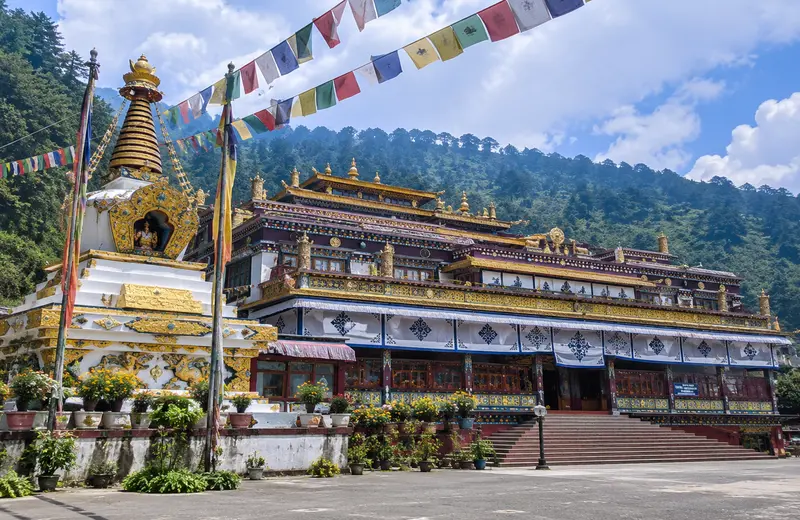
Rumtek Monastery, about 23 kilometers outside town, is the largest monastery in Sikkim and serves as the seat of the Karmapa Lama within the Karma Kagyu lineage of Tibetan Buddhism. Its golden stupa, detailed wall paintings, and morning prayer ceremony make it worth timing a visit around, and a taxi from Gangtok generally runs a modest, fixed fare each way. Photography is restricted in certain interior areas, so ask before assuming it's allowed.
Enchey Monastery, whose name translates roughly to "the solitary temple," sits much closer to the city center and belongs to the Nyingma order of Vajrayana Buddhism. It's a smaller, quieter stop than Rumtek and easy to combine with a half-day covering multiple in-town sites.
Namgyal Institute of Tibetology houses a genuinely significant collection of old manuscripts, ritual objects, and artifacts documenting the close historical relationship between Sikkim and Tibetan Buddhist culture, set inside a building built in the Tibetan architectural style. For travelers with a broader interest in the region's Buddhist heritage, Best Spiritual Retreats in India for a Peaceful Getaway covers other destinations with a similar contemplative character.
MG Marg functions as Gangtok's social center, a pedestrian-only street lined with shops, cafés, and momo stalls that stays lively well into the evening. It's less a single attraction than a place to slow down between sightseeing stops, and it's genuinely one of the better spots in town for a relaxed dinner or an evening walk.
Beyond these, Hanuman Tok, maintained by the Indian Army roughly 11 kilometers from the city, and the Flower Exhibition Centre, best visited during the March-to-June flowering season, round out a fuller day of in-town sightseeing if you have the time.
Tsomgo Lake: The Glacial Lake on the Way to the Border
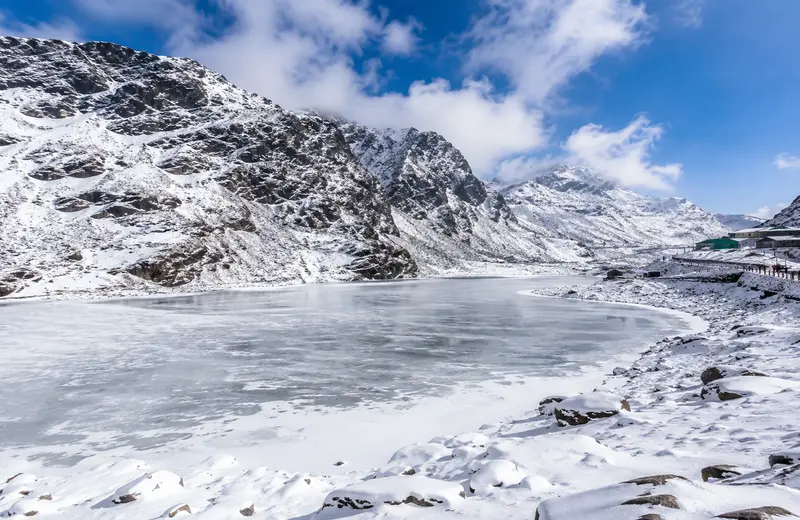
Tsomgo Lake, also called Changu Lake, sits at roughly 12,000 to 12,400 feet, about 40 kilometers from Gangtok along the road toward Nathula. It's a glacial lake, oval in shape and roughly a kilometer long, fed by snowmelt from the surrounding peaks, and it holds genuine religious significance for both local Buddhist and Hindu communities. Between January and March the lake often freezes over almost entirely, while warmer months bring a clearer, mirror-like surface that reflects the surrounding ridgeline.
Yak and mule rides are available at the lakeside for those who want the classic photo, and a handful of small stalls sell hot food and drinks given how cold the air gets even on a sunny day. Foreign nationals with the correct permit can visit Tsomgo Lake, making it the furthest point along this route accessible to non-Indian travelers, since Nathula itself remains restricted to Indian citizens only.
Nathula Pass: Standing on the Indo-China Border
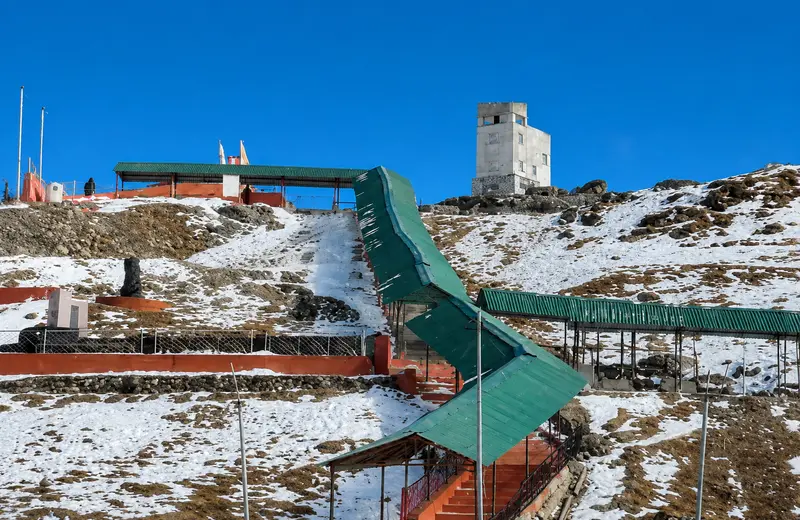
Roughly 54 to 56 kilometers from Gangtok, and about 17 kilometers further along the same road past Tsomgo Lake, Nathula Pass sits at an altitude of around 14,100 to 14,450 feet on the India-China border. It's one of only three officially recognized trading posts between the two countries and one of the designated meeting points between the Indian Army and the People's Liberation Army, a detail that gives the site a genuinely different atmosphere from a typical scenic viewpoint.
The pass typically operates from around 8 a.m. to 3 p.m. and is closed at least one day a week, commonly Monday, though exact closure days and hours are worth confirming locally since they can shift. Photography is restricted in sensitive areas near the border itself, and only Indian citizens holding the correct permit are allowed to visit, a rule enforced without exception regardless of group size or travel arrangement.
The altitude here is high enough that some visitors feel short of breath or mildly lightheaded. Move slowly, drink water, and don't treat the short walk from the parking area to the viewpoint as a race.
The road itself passes through alpine terrain and counts among the higher motorable routes in the world, and most day trips combine Nathula with a stop at Tsomgo Lake and the nearby Baba Harbhajan Singh Mandir, a memorial shrine dedicated to an Indian Army soldier, on the way back to Gangtok.
Budget Breakdown
Sikkim runs a bit pricier than some other Himalayan hill destinations, largely because the permit system pushes most travelers toward organized transport and registered operators rather than fully independent budget travel. Beyond accommodation and food, which can be managed affordably with guesthouses and local eateries, the Tsomgo Lake and Nathula day trip itself carries a meaningful added cost once you factor in the permit fee, the mandatory vehicle permit, and a local driver for that specific route, since private cars without local registration generally aren't allowed past certain checkpoints.
None of these figures are fixed for long, since permit fees and vehicle costs shift over time, so treat any specific number you find as a planning reference and confirm current rates with a registered Sikkim tour operator before you commit to dates. For a broader sense of what a tight overall Indian trip budget looks like, How to Travel in India for 5 Days Under Rs.10,000 – Real Budget Breakdown is a useful reference point, though a Sikkim-specific trip involving the permit-zone excursions will likely run higher than that baseline given the added transport requirements.
Where to Stay and What to Eat
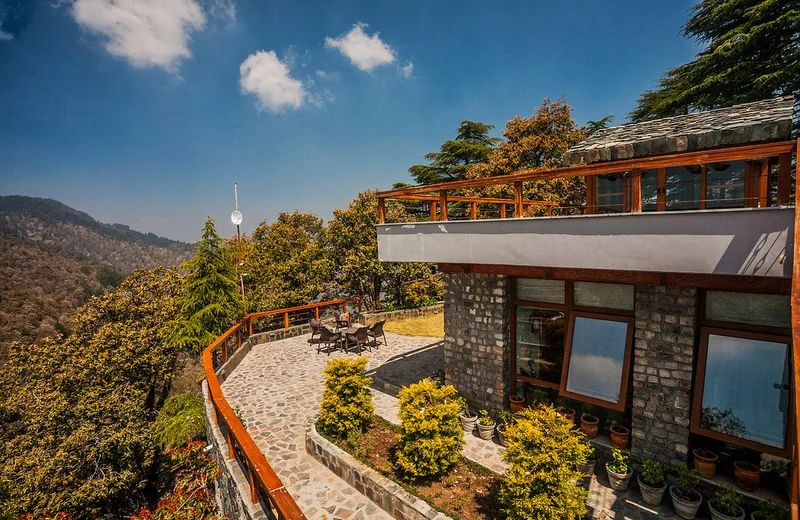
Most travelers base themselves in Gangtok, where accommodation ranges from simple guesthouses near MG Marg to higher-end hotels with Kanchenjunga-facing rooms on the city's upper ridges. Staying within walking distance of MG Marg keeps evenings convenient, while properties further out trade a short taxi ride for quieter surroundings and better unobstructed views.
Food here blends Sikkimese, Tibetan, and Nepali influences in a way that feels distinct even from neighboring Darjeeling. Momos and thukpa are the obvious starting points, but phagshapa, a slow-cooked pork and radish dish, and gundruk soup, made from fermented leafy greens, are worth seeking out at a proper local eatery rather than a tourist-facing menu. Chhurpi, a firm local cheese meant to be chewed slowly rather than bitten through, and tongba, a warm fermented millet drink traditionally sipped through a bamboo straw, round out the more distinctly regional side of Gangtok's food scene. MG Marg and the surrounding New Market area hold the highest concentration of solid, casual restaurants if you'd rather wander and pick somewhere that looks good than plan meals in advance.
Sikkim also holds the distinction of being India's first fully organic state, a designation that shapes a fair amount of its food and farming tourism. Eco Friendly Travel Destinations in India for Sustainable Holidays covers more of this angle if sustainable travel is part of what draws you here.
Travel Tips
Carry multiple physical copies of any permit you're issued, since they get checked repeatedly at checkpoints along the Tsomgo Lake and Nathula road, and network connectivity in that stretch of high-altitude terrain is unreliable enough that a screenshot alone isn't a safe backup. Pack proper cold-weather layers regardless of season for the Tsomgo Lake and Nathula excursion specifically, since temperatures at that altitude run far colder than Gangtok itself even in the warmer months.
Cash matters more here than in bigger Indian cities, particularly once you're outside central Gangtok, since smaller guesthouses, local drivers, and permit offices don't reliably run card machines. A handful of well-chosen travel apps go a long way in unfamiliar mountain terrain with patchy signal, and Top Travel Apps in India Every Traveler Must Have is worth checking before you arrive. If you're considering extending the trip further into the Northeast, Dawki River in Meghalaya and Jorhat & Majuli, Assam: Tea Gardens and the World's Largest River Island both sit within a broader Northeast circuit worth considering.
Who Should Visit
Sikkim suits travelers who don't mind a bit of bureaucracy in exchange for genuinely uncrowded, high-altitude scenery, along with anyone drawn to Tibetan Buddhist culture, monastery visits, or the novelty of standing at an actively used international border crossing. It works reasonably well for families and slower-paced travelers too, given Gangtok's manageable size and pace, though the Tsomgo Lake and Nathula day itself involves a long day of driving and altitude that's worth planning around rather than treating casually. For remote workers considering a longer stay, Work From Anywhere in India: Hill Stations With Reliable Internet & Peace is worth a look before committing to Gangtok as a base. Travelers who want to move fast without pre-planning permits, or who are visiting on a foreign passport with only a day or two to spare, will find the logistics here genuinely more demanding than a typical Indian hill-station trip, and should build in buffer time accordingly. For comparison, Cheapest Way to Reach Leh Ladakh and How to Reach Ziro Valley, Arunachal Pradesh both cover other Indian border regions with their own permit systems, if this kind of restricted-zone travel is a pattern you're planning around rather than a one-off.
The Bottom Line
Sikkim rewards travelers who plan the permit side of the trip properly and treat it as part of the itinerary rather than an afterthought. Base yourself in Gangtok for at least two nights, sort out the Tsomgo Lake and Nathula permits through a registered operator well ahead of your travel dates, and build in a weather buffer given how quickly conditions on that road can change. Do that, and you get a genuinely rare mix in one short trip: working monasteries, a sacred glacial lake, and a road that ends at an actual international border crossing still in active use.