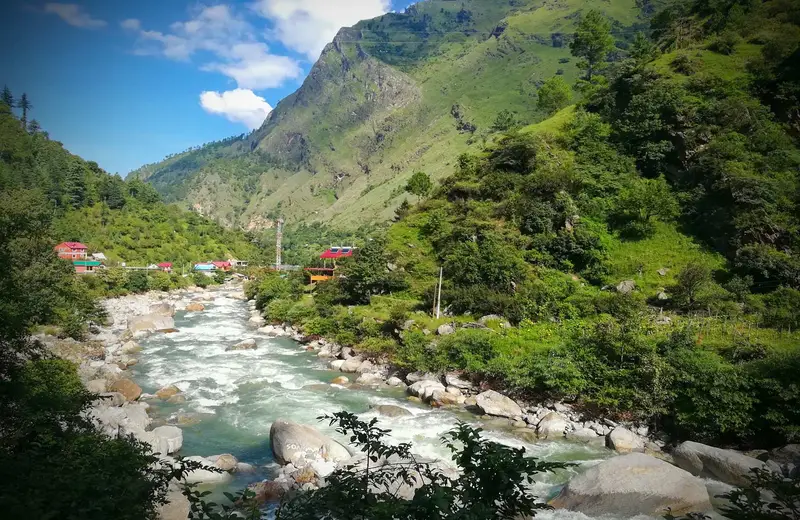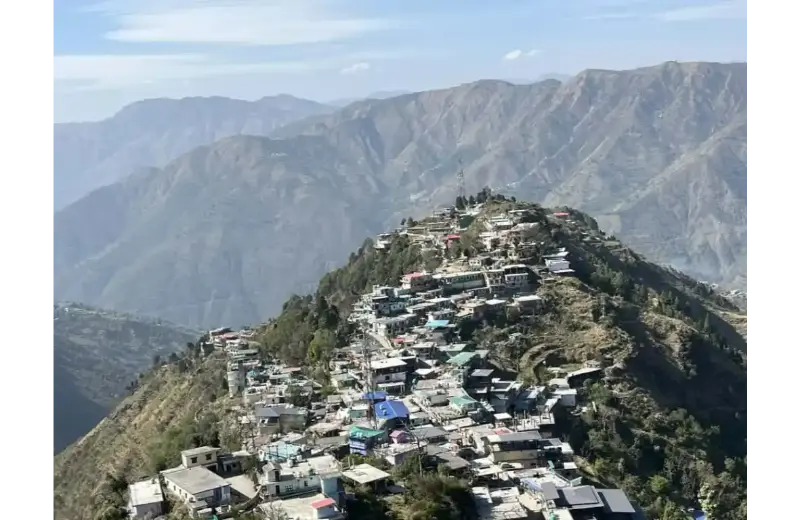
Darjeeling doesn't need much of an introduction, and that's exactly what makes it tricky to plan for. Everyone already has an image in their head: a narrow-gauge train chugging past tea bushes, mist curling around pine-covered ridges, a mountain glowing pink at sunrise. Most of that image holds up. What's harder to find online is the practical version of this trip, the one that tells you how the toy train actually works, when the mountain will and won't be visible, and how many days you genuinely need to see this hill town properly.
A narrow-gauge railway older than most countries, tea gardens still worked by hand, and Kanchenjunga showing up (or not) depending entirely on the weather.
Darjeeling at a Glance
| Location | Darjeeling district, West Bengal, at roughly 2,050 meters elevation |
| Nearest airport | Bagdogra (IXB), around 70 km away |
| Nearest major railhead | New Jalpaiguri (NJP), around 88 km away |
| Best time to visit | April to June and late September to November for clear mountain views |
| Ideal trip length | 3 to 5 days, longer if combining with Sikkim or the Dooars |
| Known for | The UNESCO-listed Darjeeling Himalayan Railway, tea estates, and Tiger Hill sunrise views of Kanchenjunga |
Best Time to Visit Darjeeling
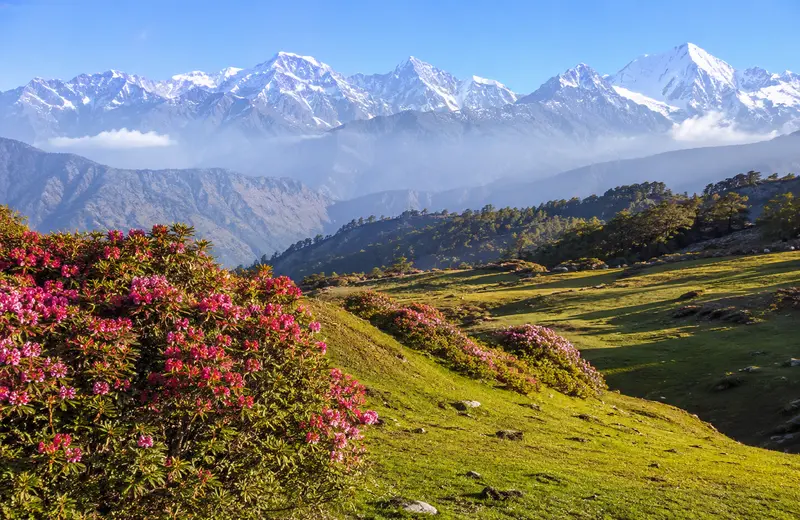
Weather decides this trip more than almost any other factor, since the entire point of coming here is the mountain view, and that view is not guaranteed. April through June brings warm days, cooler evenings, and generally the clearest skies of the year, which makes it the most reliable window for spotting Kanchenjunga from Tiger Hill or Batasia Loop. Late September through November offers a second strong window, with the monsoon cleared out and crisp autumn air that tends to produce some of the sharpest mountain visibility of the whole year.
The monsoon months, roughly June through September, bring heavy rain, frequent cloud cover, and a real risk of landslides on the access roads. If your entire trip is built around seeing Kanchenjunga, avoid this window even though the tea gardens themselves look their greenest during it.
Winter, from December through February, drops temperatures close to freezing overnight and occasionally brings light snow to the town itself. Skies can be strikingly clear on winter mornings, and this is also when crowds thin out considerably, so it works well for travelers who prioritize quiet over comfort and pack accordingly.
How to Reach Darjeeling
Darjeeling has no airport or major railway station of its own, which surprises some first-time visitors. Every route in funnels through the twin towns of Siliguri and New Jalpaiguri down on the plains.
By air, Bagdogra Airport is the nearest option, roughly 70 kilometers from Darjeeling town, connected by daily flights from Delhi, Kolkata, Mumbai, Bangalore, and several other major cities. From the airport, a taxi ride up to Darjeeling takes about three to three and a half hours along winding mountain roads, with most drivers making a short tea break in Kurseong roughly halfway up.
By train, New Jalpaiguri is the main railhead, linked to Delhi, Kolkata, and other major cities by long-distance trains. From NJP, you have two real choices: a taxi that covers the roughly 88 kilometers in about three hours, or the toy train itself, which takes seven to eight hours to complete the same climb. Most travelers take a car up and save the train experience for a shorter joy ride once they're already settled in town, which is both cheaper and considerably less exhausting than eight hours on a narrow wooden seat.
By road, shared jeeps and buses connect Darjeeling to Siliguri, Gangtok, and other nearby hill towns, and this is generally the most budget-friendly option if you're not pressed for time. For a broader sense of how Darjeeling fits into a longer Himalayan trip, especially if you're continuing toward the mountains further north, How to Reach Kashmir by Train – Latest Rail Route Explained gives a useful point of comparison for how India's hill-station rail access generally works.
The Darjeeling Himalayan Railway: Riding the Toy Train
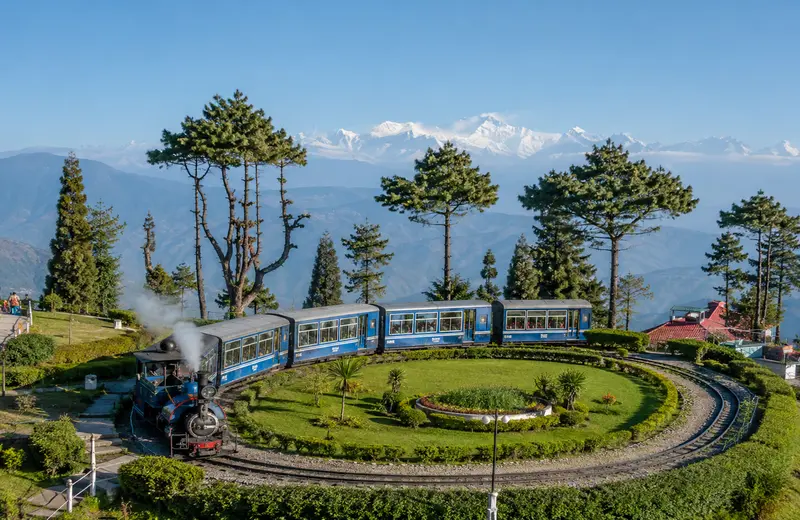
The toy train is the reason a lot of people put Darjeeling on their list in the first place, and it earns the reputation. Built between 1879 and 1881, the Darjeeling Himalayan Railway climbs from near sea level at New Jalpaiguri to over 2,000 meters using a narrow two-foot gauge track, a series of loops, and reversing zig-zags to manage the steep gradient. UNESCO recognized it as a World Heritage Site in 1999, and it remains one of the few railways in the world where vintage steam locomotives still operate on a working line.
Most visitors skip the full seven-to-eight-hour NJP-to-Darjeeling journey and instead ride the shorter joy ride between Darjeeling and Ghum, a round trip that takes roughly two hours and covers the most scenic stretch of track, including the Batasia Loop. Ghum station itself sits at close to 7,400 feet, making it the highest railway station in India, and the small railway museum there is worth the short stop if trains interest you at all.
Toy train seats, especially on the steam-hauled joy rides, fill up quickly in peak season. Book at least a day ahead through the station or a reliable local operator rather than assuming you can walk up and buy a ticket.
For travelers who specifically enjoy scenic rail journeys, Best Train Journeys in India for a Scenic Ride and India's Most Scenic Train Journeys You Should Experience at Least Once both cover other routes worth comparing against the Darjeeling line.
A Simple Itinerary
Two days is enough to hit the essentials if you're tight on time, but it moves fast. Day one covers arrival, a walk around Chowrasta and Mall Road, and an early night to prepare for a very early morning. Day two starts before dawn with the Tiger Hill sunrise, continues through Batasia Loop and Ghum Monastery on the way back, and leaves the afternoon free for a tea estate visit and the zoo or Himalayan Mountaineering Institute.
Three to four days lets the trip breathe properly. Add a full day dedicated to tea tourism, with time for a proper guided tour and tasting rather than a rushed stop, plus a slower exploration of the town's colonial-era buildings, the Peace Pagoda, and the local markets around Chowk Bazaar. This pace also builds in a buffer day in case morning clouds block the Tiger Hill view on your first attempt, since a second early wake-up is often what it takes to actually see Kanchenjunga clearly.
Five days or more opens up day trips beyond the town itself, toward Mirik's lake district, the Singalila ridge for trekkers, or onward toward Kalimpong. It's also enough time to genuinely slow down and treat a tea estate stay as more than a photo stop.
Places to See in Darjeeling
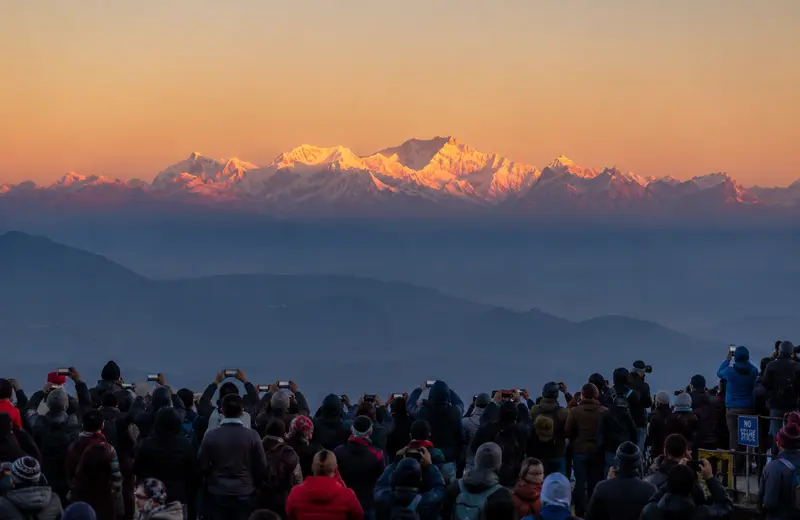
Tiger Hill is the single most popular stop, sitting about 11 kilometers from town and drawing crowds well before dawn for its sunrise views over Kanchenjunga, and on exceptionally clear mornings, a distant glimpse of Everest. Entry runs a modest fee, and most visitors book a shared jeep the evening before, since taxis leave as early as 3:30 or 4 a.m. to secure a good viewing spot before sunrise.
Batasia Loop, about 5 kilometers from the town center, is where the toy train spirals around itself to manage a steep grade, wrapped around a landscaped garden and a war memorial honoring Gorkha soldiers. It pairs naturally with a Tiger Hill morning, since most return routes pass directly through it.
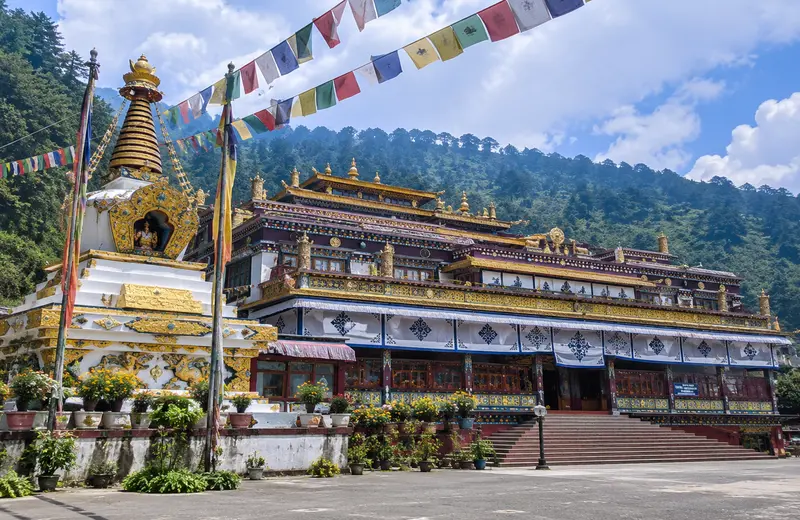
Ghum Monastery, formally the Yiga Choeling Monastery, sits near the highest point of the toy train line and houses a large statue of the Maitreya Buddha inside a modest, atmospheric prayer hall. It's one of the older Buddhist monasteries in the Darjeeling hills and a natural stop on the way back from Tiger Hill.
Padmaja Naidu Himalayan Zoological Park, at roughly 7,000 feet, ranks among the highest-altitude zoos in the country and runs a notable conservation breeding program for endangered Eastern Himalayan species, including the red panda and snow leopard. It sits beside the Himalayan Mountaineering Institute, founded in the wake of Tenzing Norgay's 1953 Everest ascent, which makes visiting both together an easy pairing.
Japanese Peace Pagoda, on the slopes of Jalapahar hill, was built under the direction of Japanese Buddhist monk Nichidatsu Fujii and inaugurated in 1992. It's a quieter, more contemplative stop than the town's busier attractions, with clear views over the valley when the weather cooperates.
Chowrasta and Mall Road form the actual heart of town, a pedestrian square lined with old colonial-era buildings, benches, and the kind of unhurried evening foot traffic that makes for good people-watching over a cup of tea. It's worth setting aside unstructured time here rather than treating it purely as a stop between sights.
Tea Gardens & Tea Tourism
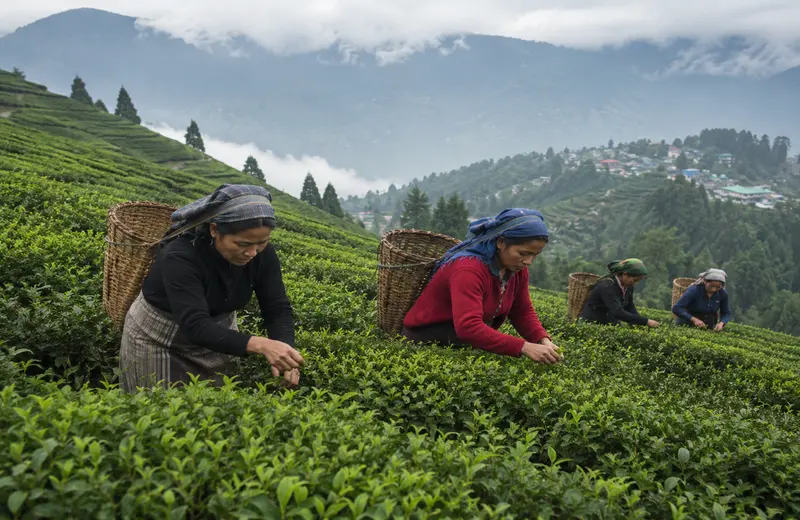
Darjeeling's tea reputation isn't marketing. The region is home to more than eighty tea gardens, and the specific combination of altitude, rainfall, and mountain air here produces a flavor profile, often described as having a muscatel note, that's genuinely distinct from tea grown almost anywhere else in the world.
Happy Valley Tea Estate, the second-oldest estate in the region, sits just a few kilometers from town at around 6,800 feet and remains one of the highest working tea factories anywhere. Established in 1854, it runs daily guided tours covering the plucking, withering, rolling, and drying process, finishing with a tasting session. The factory typically closes from November through February, since tea plucking pauses through the coldest months, so time a visit outside that window if the working factory floor matters to you.
Makaibari Tea Estate, further out near Kurseong, has built a reputation around organic and biodynamic farming methods along with a genuine homestay program, where visitors can stay directly with tea-worker families rather than in a hotel. It's a deeper, slower way to engage with tea country than a short factory tour, and it suits travelers with an extra day to spare.
If tea tourism is a major draw for your trip, it's worth comparing Darjeeling's approach against India's other major tea-growing region. Jorhat & Majuli, Assam: Tea Gardens and the World's Largest River Island covers Assam's flatter, broader tea estates, which offer a genuinely different experience from Darjeeling's steep hillside gardens. For a similar hillside plantation experience outside the tea world entirely, Coorg, Karnataka: A Coffee Estate and Hill Station Guide covers South India's answer to this kind of estate-focused hill trip.
Budget Breakdown
Darjeeling sits comfortably in the mid-range for Indian hill-station travel, cheaper than heavily commercialized destinations but no longer the bargain it was years ago, particularly during peak season. Budget travelers can manage on guesthouse stays and local eateries for a modest daily spend, while mid-range travelers booking hotel rooms with mountain views and hiring private taxis for sightseeing should expect a noticeably higher daily figure. None of these numbers are fixed, since hotel rates swing hard between peak and off-season, so treat any specific figure as a planning reference rather than a guarantee, and confirm current rates directly with accommodations before booking.
The single biggest cost lever is transport. Shared jeeps and buses run a fraction of what a private taxi costs for the same route, and sightseeing by shared jeep on a fixed local circuit, commonly sold as a five-point or seven-point tour, works out considerably cheaper than negotiating a private car for each individual stop. For a broader sense of what a tight budget looks like across an Indian trip, How to Travel in India for 5 Days Under Rs.10,000 – Real Budget Breakdown breaks down where costs typically land.
Where to Stay and What to Eat
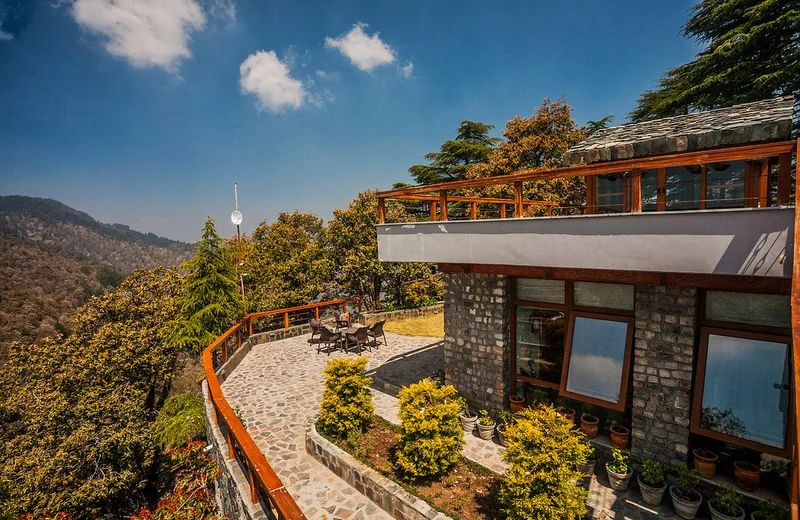
Accommodation clusters around a few distinct areas. Staying near Chowrasta and Mall Road puts you within walking distance of the town's main attractions and evening activity, while properties further out on Jalapahar or Ghum Road tend to trade convenience for quieter surroundings and, in some cases, better unobstructed mountain views. Heritage hotels built during the colonial era offer a genuinely different atmosphere from newer mid-range properties, at a correspondingly higher price point.
Food here reflects Darjeeling's layered Nepali, Tibetan, and Bengali influences more than a single regional cuisine. Momos and thukpa are the obvious starting points, dumplings and noodle soup that show up on nearly every menu in some form, alongside aloo dum, a spiced potato dish usually eaten with fried bread. Sel roti, a Nepali sweet bread, and gundruk, a fermented leafy green side dish, round out the more traditional end of the local food scene. Beyond the street stalls, a handful of colonial-era institutions, bakeries and cafés known for their breakfast spreads and baked goods, remain genuinely popular meeting points rather than just tourist stops, and they're worth a visit for the atmosphere as much as the food. And obviously, a proper cup of local first-flush Darjeeling tea, ideally bought or tasted at the source rather than a generic tourist shop, belongs somewhere on the itinerary.
Travel Tips
Pack in layers regardless of season, since mornings and evenings run noticeably colder than midday even outside of winter, and the Tiger Hill sunrise viewing in particular happens in genuinely cold pre-dawn temperatures no matter the month. Cash remains useful outside the main tourist strip, since smaller guesthouses, local eateries, and shared jeep drivers don't always run card machines, so carrying enough rupees for a day or two of expenses is a sensible habit here.
Darjeeling itself, being part of West Bengal, requires no special permit for Indian citizens. If you're planning to continue into neighboring Sikkim, however, an Inner Line Permit becomes necessary for travel beyond certain points, so plan that leg of the trip separately.
Altitude here is moderate rather than extreme, and most travelers won't notice any real effect, though the early wake-up calls and cold mornings can be tiring if you're not used to hill-town travel. A few practical apps for maps, translation, and ride-hailing go a long way in unfamiliar hill terrain, and Top Travel Apps in India Every Traveler Must Have rounds up the ones worth having installed before you arrive.
Capturing Darjeeling in Photos
Tiger Hill at sunrise is the obvious headline shot, and it rewards patience over a hurried approach: arrive early enough to claim a clear sightline before the platform fills in, and keep shooting as the light shifts, since the mountain's color changes noticeably in the minutes right around sunrise rather than staying static. Batasia Loop works well later in the morning once the crowds from Tiger Hill have thinned, when the toy train's spiral track and the war memorial garden both catch better side light. Tea gardens photograph best on an overcast morning, when soft, even light brings out the deep green of the bushes without harsh shadows cutting across the rows. For street-level shots, Chowrasta and Mall Road come alive in the early evening, when local foot traffic picks up and the old colonial-era buildings catch warm light against the darkening hillside behind them.
Who Should Visit
Darjeeling suits travelers who genuinely want to slow down, whether that's tea enthusiasts, train and railway fans, or anyone looking for a Himalayan trip that doesn't require serious trekking gear or altitude acclimatization. Families generally do well here too, given the manageable pace and range of low-intensity activities. It's a solid choice for remote workers as well, and Work From Anywhere in India: Hill Stations With Reliable Internet & Peace is worth checking if a longer stay with some work mixed in appeals to you. Travelers chasing serious high-altitude trekking or fast-paced nightlife will likely want to look elsewhere, or treat Darjeeling as a calmer bookend to a more adventure-focused Himalayan trip.
The Bottom Line
Darjeeling delivers on its reputation more reliably than most heavily hyped destinations, provided you time the weather correctly and don't try to compress it into a single rushed day. Give it three to four days if you can, build in a buffer for cloud cover at Tiger Hill, and treat the tea gardens as more than a photo stop. Book your toy train seats ahead of arrival, and let the town's slower pace actually set the pace of your own trip rather than fighting against it.