Hampi doesn't look like anywhere else in India, and it doesn't look entirely real either. Granite boulders the size of buildings are stacked across the landscape as if someone piled them there deliberately, and scattered among them, for miles in every direction, sit the remains of what was once one of the largest cities on Earth. Most guides tell you to spend two or three days here and leave it at that. The honest answer depends on what you actually want out of the trip, and that's worth working out before you book anything.
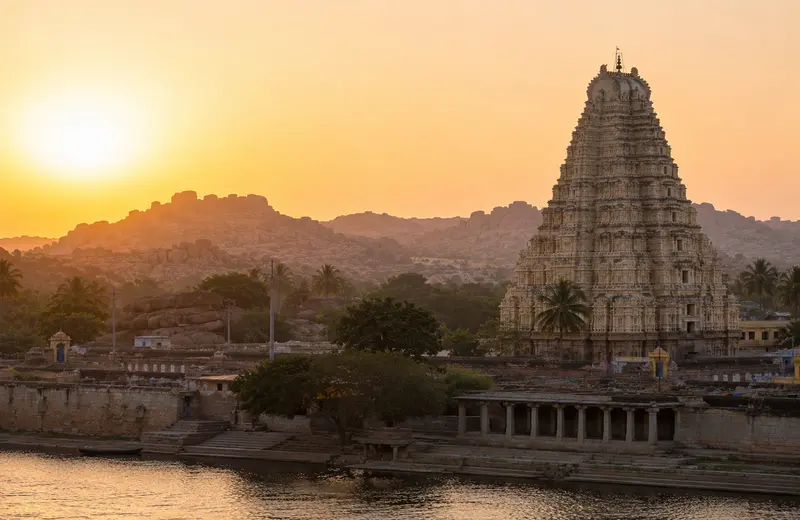
A 16th-century capital reduced to ruins in a single military campaign, spread across a landscape of granite boulders that geology arranged long before any king did.
Hampi at a Glance
| Location | Bellary district, northern Karnataka, on the Tungabhadra River |
| Historical role | Capital of the Vijayanagara Empire, 14th to 16th century |
| UNESCO status | World Heritage Site, over 1,600 surviving monuments |
| Nearest railway station | Hospet Junction, roughly 13 km away |
| Nearest airports | Hubli (around 160 km) or Bengaluru (around 350–375 km) |
| Best time to visit | October to February |
| Typical trip length | 2 to 4 days, depending on how deep you want to go |
Best Time to Visit Hampi
October through February brings the most comfortable temperatures for a destination that involves a lot of walking across exposed, sun-baked terrain with very little shade. Mornings are cool enough for an early temple visit, and evenings settle into a pleasant warmth that makes the sunset boulder-climbing ritual genuinely enjoyable rather than something you're enduring.
March through May should be approached with real caution. Temperatures regularly climb past 40°C, and Hampi's landscape offers almost no natural shade once you're away from the main temple complexes.
The monsoon months, roughly June through September, turn the surrounding countryside a genuine green that contrasts sharply with the golden-brown boulders, and photographers who don't mind occasional rain sometimes prefer this season specifically for that reason. It's a real tradeoff, though, since some paths and bouldering routes become slippery, and a handful of monuments are harder to explore comfortably in wet conditions.
How to Reach Hampi
Hampi has no airport or major railway station of its own, so every route funnels through nearby Hospet.
By train, Hospet Junction is the practical gateway, roughly 13 kilometers from Hampi, with regular services connecting to Bengaluru, Hyderabad, Goa, and Mumbai. This is the most common way independent travelers arrive, and a short auto-rickshaw or taxi ride covers the remaining distance into Hampi itself.
By air, Hubli Airport sits closer at around 160 kilometers away, though flight frequency and route options are limited. Bengaluru's international airport, roughly 350 to 375 kilometers away, offers considerably better connectivity to major Indian and international cities, at the cost of a longer road transfer afterward.
By road, a self-driven trip from Bengaluru takes about six hours and passes through increasingly rural countryside that makes for a scenic approach in its own right. Regular buses also connect Hampi to Hospet, Hubli, and Bengaluru for travelers who'd rather not drive. For travelers focused on getting there specifically from Pune, How to Reach Hampi from Pune – Best Routes & Travel Tips breaks down that particular route in more detail, and if a longer road trip through Karnataka appeals to you, Best Road Trips in India for Bikers and Travelers covers other routes worth considering alongside it.
How Many Days Do You Actually Need
Two days covers Hampi's essential circuit at a reasonably brisk pace: the sacred center around Virupaksha Temple on day one, and the royal center around Vittala Temple and the Stone Chariot on day two, with a sunset stop at Matanga Hill or Hemakuta Hill worked into whichever day makes sense geographically. This works if your total travel time is limited, though it leaves little room for the boulder landscape itself beyond what you pass on the way between monuments.
Three days lets the trip breathe properly, adding a dedicated half-day for either bouldering, a coracle ride on the Tungabhadra, or a slower exploration of Virupapura Gaddi across the river, plus a genuine buffer for the heat, since Hampi's spread-out monuments mean more walking between sites than a typical single-location heritage visit.
Four days or more suits travelers who want to actually experience the landscape rather than just check off monuments, with time for the climb up Anjaneya Hill across the river, a proper bouldering session in one of the permitted zones, and enough slack in the schedule to simply sit somewhere quiet and watch the light change on the rocks, which is arguably as much a part of Hampi as any single ruin.
The Sacred Center: Virupaksha Temple & Hemakuta Hill
Virupaksha Temple, dedicated to Shiva in his form as Virupaksha, is the one genuinely living element in a landscape otherwise defined by ruins. Unlike almost everything else in Hampi, it has functioned continuously as an active place of worship for centuries, predating the Vijayanagara Empire itself and surviving the destruction that leveled most of the rest of the city. A small water channel diverted from the Tungabhadra River still runs through the temple complex, historically used to prepare food offerings for the deity, a detail that speaks to how long this specific site has been in continuous use.
Entry is inexpensive, with a modest additional fee for carrying in a still camera, and the temple is open roughly from sunrise to sunset. Just beside it, Hemakuta Hill holds a cluster of smaller temples that predate the main Vijayanagara-era structures, and it doubles as one of the better sunset viewpoints in central Hampi, close enough to reach on foot from Virupaksha Temple without needing transport. For travelers drawn to India's living religious sites more broadly, Best Spiritual Retreats in India for a Peaceful Getaway covers other destinations with a similar contemplative pull.
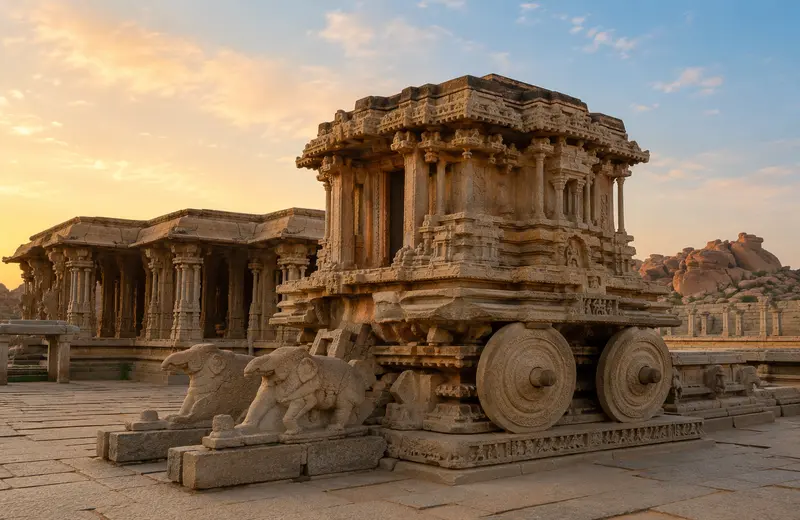
The Royal Centre: Vittala Temple, Stone Chariot & the Musical Pillars
A few kilometers from the sacred center, the Vittala Temple complex holds Hampi's single most photographed structure: the stone chariot, carved in the 16th century under King Krishnadevaraya, reportedly inspired by the stone chariot at Konark's Sun Temple in Odisha. Though partially damaged over the centuries, restoration work has preserved its core structure, and it remains a genuine sculptural achievement rather than just a photo backdrop.
The temple's mandapas hold a second, less famous but equally impressive feature: sets of carved stone pillars that produce different musical notes when struck, a detail that continues to draw genuine fascination even though striking the pillars is no longer permitted to protect them from further wear.
Private vehicles aren't allowed near the Vittala Temple itself, to limit vibration damage to the ancient structures. Plan to walk, cycle, or take one of the battery-powered shuttles from the main road, and budget extra time accordingly.
One entry ticket to Vittala Temple also covers the nearby Zenana Enclosure, Elephant Stables, and Lotus Mahal, all part of what's collectively known as the Royal Centre, so it's worth planning your route to hit all four in a single visit rather than backtracking later.
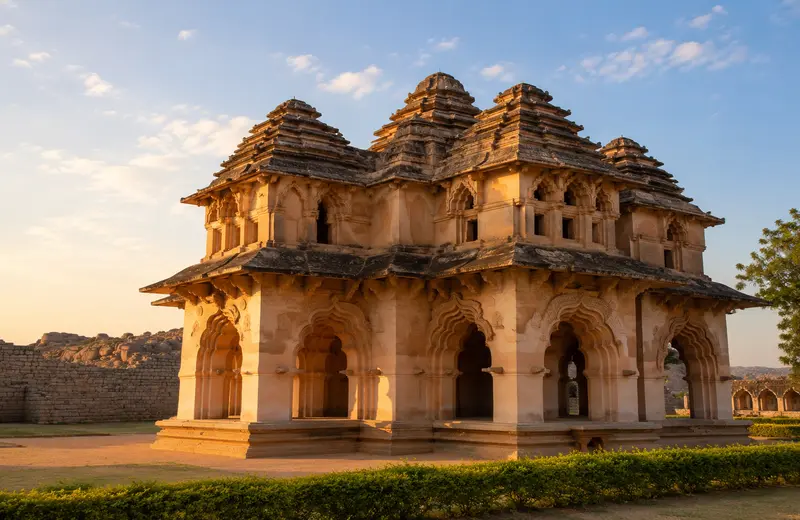
Lotus Mahal & the Elephant Stables
Lotus Mahal, also called Kamal Mahal, is one of the few Hampi structures that survived the 1565 destruction of the city largely intact, likely because its purpose within the royal women's quarters made it less of a target than the temples and treasuries. Its arched, two-story design blends Hindu and Indo-Islamic architectural influences in a way that's genuinely distinct from anything else in Hampi, and the shape does resemble a half-open lotus bud when viewed from the right angle, which is where the name comes from.
Nearby, the Elephant Stables consist of eleven domed chambers built to house the royal elephants, arranged in a long, symmetrical row that photographs well from a distance and gives a real sense of the scale the Vijayanagara court operated at.
Boulders, Bouldering & the Landscape Itself
The granite boulders scattered across Hampi aren't incidental scenery; they're a genuine draw in their own right, and the region has built a real reputation among international rock climbers as a bouldering destination. Climbing is restricted to specific permitted zones, commonly cited as areas around Hanumanahalli and Sanapur, both a short distance from the main monument cluster, and equipment rental is available locally through operators based in Hampi Bazaar and Virupapura Gaddi.
Even without climbing gear, simply walking among the boulder formations, particularly in the golden hour before sunset, gives a sense of the landscape that a monument-only itinerary misses entirely. Coracle rides on the Tungabhadra River, using the traditional round reed-and-hide boats still built locally, offer another way to experience the terrain from the water rather than on foot.
Matanga Hill, Anjaneya Hill & Sunset/Sunrise Points
Matanga Hill, the highest point within central Hampi, takes about thirty minutes to climb from near Hampi Bazaar and rewards the effort with a genuinely sweeping view over the ruins and boulder fields, making it one of the most reliable sunset spots in the area, if also one of the more crowded ones during peak season.
Across the river, Anjaneya Hill in Anegundi involves a longer climb, roughly 575 steps, to a hilltop temple associated in local tradition with the birthplace of Hanuman. It's a more physically demanding outing than Matanga Hill, but it trades some of the crowding for a quieter, more rural approach through Anegundi village itself, which retains a slower pace than the more tourist-dense areas around Hampi Bazaar.
Hampi Bazaar vs Virupapura Gaddi: Where to Stay
Most visitors base themselves in one of two areas, and the choice shapes the whole feel of the trip.
Hampi Bazaar, closest to Virupaksha Temple, puts you within easy walking distance of the sacred center and the main market street, with a range of budget guesthouses and a genuinely lively atmosphere in the evenings.
Virupapura Gaddi, commonly called Hippie Island, sits across the Tungabhadra and has developed its own distinct identity: laid-back cafés, a slower pace, and a backpacker-oriented scene that's noticeably different from the more temple-focused energy on the main side of the river. It requires crossing by coracle or a seasonal bridge depending on water levels, which adds a small logistical step but also a bit of separation from the busier tourist circuit. For travelers planning around this kind of budget-conscious, backpacker-friendly base, Best Budget Friendly Backpacking Destinations in India covers other Indian destinations with a similar traveler scene.
Travelers who prefer more conventional hotel infrastructure often base themselves in Kamalapura or Hospet instead, trading some proximity to the ruins for better road access and a wider range of mid-range and upscale accommodation.
Budget Breakdown
Hampi runs affordable relative to most Indian heritage destinations, particularly on the accommodation side, where budget guesthouses in Hampi Bazaar or Virupapura Gaddi cost a fraction of what a comparable room would run in a more commercialized tourist town. Monument entry fees stay modest for Indian nationals, though foreign visitors pay a considerably higher rate at the ticketed sites, a common structure across India's ASI-managed heritage properties.
The main variable cost is transport within Hampi itself, since the site is genuinely spread out and walking everything isn't realistic in the heat. Renting a bicycle or scooter for a day or two, or hiring an auto-rickshaw for a half-day monument circuit, adds a modest but worthwhile cost to an otherwise budget-friendly trip. None of these figures hold steady for long, so treat any specific number as a planning reference and confirm current rates locally. For a sense of what a genuinely tight overall Indian trip budget looks like, How to Travel in India for 5 Days Under Rs.10,000 – Real Budget Breakdown is a useful reference point.
What to Eat
Hampi Bazaar and Virupapura Gaddi both run a fairly international, backpacker-influenced food scene alongside local Karnataka staples, a reflection of just how many long-term travelers pass through this specific stretch of the country. Simple South Indian breakfasts, thalis, and local rice-and-curry combinations are easy to find at local eateries, while the cafés on Virupapura Gaddi in particular lean toward a more global backpacker menu of banana pancakes, muesli bowls, and slow-brewed coffee.
Hampi's core monument zone sits within a protected heritage area, and alcohol sale and consumption face real restrictions here that don't always apply the same way elsewhere in Karnataka. Rules and enforcement can vary by exact location and change over time, so it's worth checking current local policy rather than assuming a given guesthouse or café serves alcohol.
Travel Tips
Dress modestly when visiting Virupaksha Temple and other active religious sites, covering shoulders and knees as a baseline courtesy regardless of the heat. Carry more water than feels necessary, since Hampi's monument sites are spread far enough apart that dehydration sneaks up on people who underestimate how much walking a "quick monument visit" actually involves. Cash remains useful outside the main guesthouse and café strips, particularly for smaller vendors, bicycle rentals, and coracle rides. A handful of well-chosen travel apps make navigating between spread-out sites considerably easier, and Top Travel Apps in India Every Traveler Must Have is worth checking before you arrive.
If Hampi is part of a longer Karnataka trip, it pairs naturally with the state's hill-country side further south. Coorg, Karnataka: A Coffee Estate and Hill Station Guide and Nandi Hills A Complete Guide To This Adventure Retreat both offer a genuinely different landscape and pace if you're building out a broader itinerary rather than a single-destination trip.
Capturing Hampi in Photos
Sunrise and sunset both transform the boulders here in a way that flat midday light simply doesn't, turning the granite a warm gold-orange that's the reason so many photographers specifically plan around these two windows. Matanga Hill at sunset delivers the most reliable wide shot of the ruins against the boulder landscape, while the Vittala Temple's stone chariot photographs best in the softer light of early morning, before the site fills with tour groups. For anyone interested in the human side of Hampi rather than just the monuments, the coracle boatmen on the river and the everyday rhythm of Hampi Bazaar's market street offer a genuinely different set of shots from the temple-and-boulder images most visitors come away with.
Who Should Visit
Hampi suits history enthusiasts who want ruins they can actually walk through rather than view from behind a rope, photographers drawn to a landscape unlike almost anywhere else in India, and backpackers who'll appreciate Virupapura Gaddi's slower, more social pace. Rock climbers and bouldering enthusiasts have a genuine reason to extend their stay here beyond the typical monument circuit. For solo travelers specifically, Solo Travel in India for Beginners: Safest Destinations & Honest Tips is worth a look, since Hampi's backpacker infrastructure makes it a genuinely comfortable solo destination. It's a more demanding trip for travelers who struggle with heat and extended walking, or who need tightly organized, air-conditioned sightseeing rather than a spread-out, self-paced site.
The Bottom Line
Hampi rewards travelers who give it more than a rushed day trip from Hospet. Plan for at least two full days, three if you want room for the boulders and the river rather than just the temples, and time your visit for the cooler months if you have any flexibility at all. Do that, and what you're left with is a genuinely rare combination: one of history's great fallen capitals, laid out across a landscape that would be worth visiting even if the ruins weren't there at all.