Varanasi doesn't ease you in. Within an hour of arriving, you'll likely see a wedding procession, a cremation, a temple bell, and a man selling kachori from a cart that hasn't moved in maybe thirty years. This is one of the oldest continuously inhabited cities on earth, built along a curve of the Ganga where Hindus have come to bathe, pray, and die for thousands of years. Nothing about that is staged for visitors. It's simply what the city does, and travelers are welcome to watch, participate, or both.
This guide covers what a first visit actually needs: which ghats matter, when the Ganga Aarti happens, how Sarnath fits in, and what a realistic two-day plan looks like.
Here's the shape of a Varanasi trip at a glance.
| What to Know | Details |
|---|---|
| Best time to visit | October to March, coolest and clearest October–November |
| Nearest airport | Lal Bahadur Shastri Airport (VNS), about 20–25 km from the city centre |
| Main railway station | Varanasi Junction (Varanasi Cantt), with Varanasi City and Kashi stations also serving the area |
| Minimum time needed | 2 full days; 3 if adding Sarnath and the old-city markets unhurried |
| Signature experience | Evening Ganga Aarti at Dashashwamedh Ghat |
| Getting around | Walking and cycle rickshaws; many lanes are too narrow for cars |
Best Time to Visit Varanasi
Winter is the easy answer, and for good reason. Between October and March, daytime temperatures sit in a comfortable 15–28°C range, which makes hours of walking along the ghats genuinely pleasant instead of punishing. October and November specifically bring the clearest skies and the lowest humidity, and this window also coincides with Dev Deepawali, when the ghats are lined with millions of small lamps roughly fifteen days after Diwali, turning the entire riverfront into something that photographs don't quite capture.
Summer in Varanasi runs hot, with temperatures climbing past 40°C between April and June. Early morning and evening visits still work, but midday sightseeing becomes genuinely uncomfortable rather than merely warm.
Monsoon, from July through September, floods sections of the lower ghats and can make boat rides unpredictable, though the city itself never really slows down. If avoiding crowds matters more than avoiding heat, the shoulder months of September and March offer a reasonable middle ground.
How to Reach Varanasi
Lal Bahadur Shastri Airport, also known by its IATA code VNS, sits in Babatpur, roughly 20 to 25 kilometres northwest of the city centre and about a 30-minute taxi ride away. It connects directly to Delhi, Mumbai, Kolkata, and several other major Indian cities, with limited international connectivity, so most foreign travelers arrive via a connecting flight through Delhi or Mumbai.
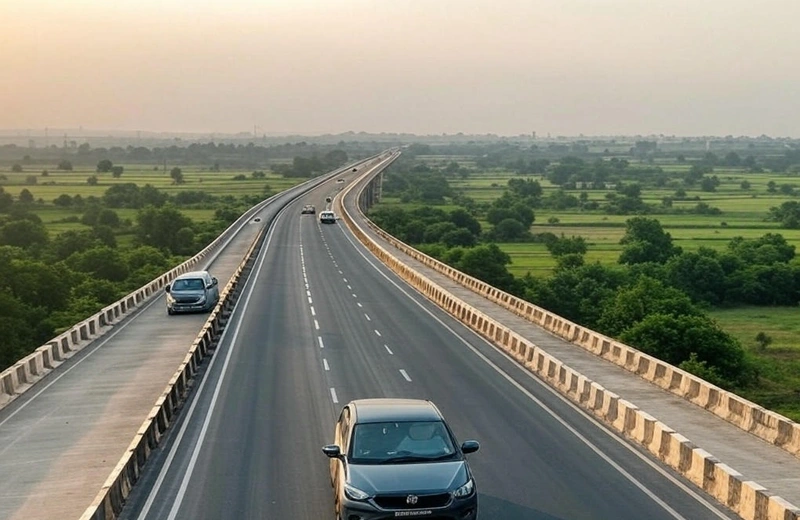
By train, Varanasi Junction, also called Varanasi Cantt, is the main railway hub, with Varanasi City and Kashi railway stations handling additional traffic. The Vande Bharat Express covers the Delhi to Varanasi route in around eight hours, while numerous other trains connect the city to Mumbai, Kolkata, and Lucknow on varying schedules and budgets. Road connectivity is solid too, with national highways linking Varanasi to Prayagraj, Lucknow, and Ayodhya, all realistic day-trip or onward-journey distances.
Once in the city, walking is genuinely the best way to see the ghats and the old quarter, since many lanes are simply too narrow for any vehicle beyond a bicycle. Cycle rickshaws handle longer stretches cheaply, and boats double as transport between ghats when walking the full riverfront would take too long.
The Ghats of Varanasi
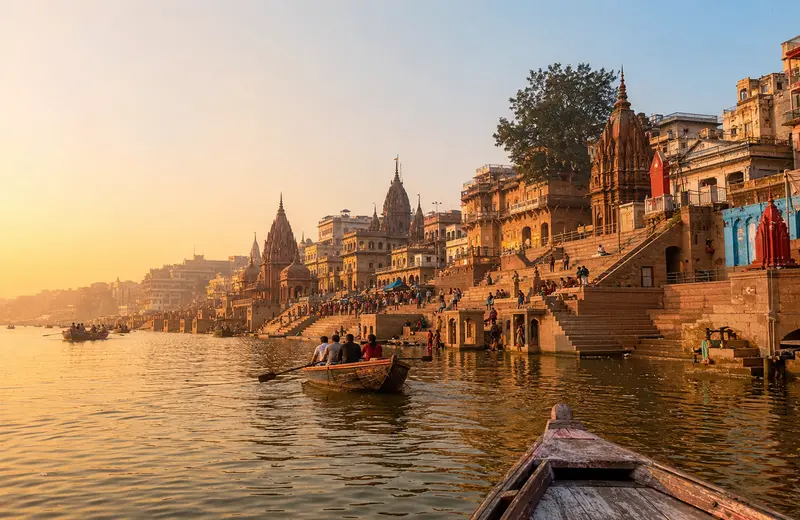
Varanasi has 84 ghats stretching along the western bank of the Ganga, each with its own history, and no visitor needs to see all of them to understand the city. A handful carry most of the weight.
Dashashwamedh Ghat is the one everybody ends up at eventually. It's the site of the nightly Ganga Aarti and generally the busiest, most photographed stretch of riverfront in the city. Manikarnika Ghat, a short walk north, is the primary cremation ghat, where funeral pyres burn continuously and have done so, according to local belief, for centuries; photography here is prohibited, and visitors are expected to observe from a respectful distance rather than treat it as a spectacle. Harishchandra Ghat, further along, is the older of the two cremation ghats and considerably quieter.
Assi Ghat, at the southern end where the (now mostly seasonal) Assi River meets the Ganga, has a different character entirely: cafes, guesthouses, and a large student population from nearby Banaras Hindu University give it a more relaxed, conversational feel. It also hosts Subah-e-Banaras, a daily sunrise gathering of yoga, Vedic chanting, and classical music that draws both locals and travelers before the rest of the city has properly woken up.
A single sunrise boat ride from Assi Ghat north to Dashashwamedh, roughly 60 to 75 minutes on the water, covers more ground than walking the same stretch and catches the ghats in the best light of the day.
Further attractions include Panchganga Ghat, associated with the mythological confluence of five rivers, and Scindia Ghat, known for a temple that has partially sunk into the riverbed under its own weight. None of these require a plan beyond showing up and walking slowly.
The Ganga Aarti Experience
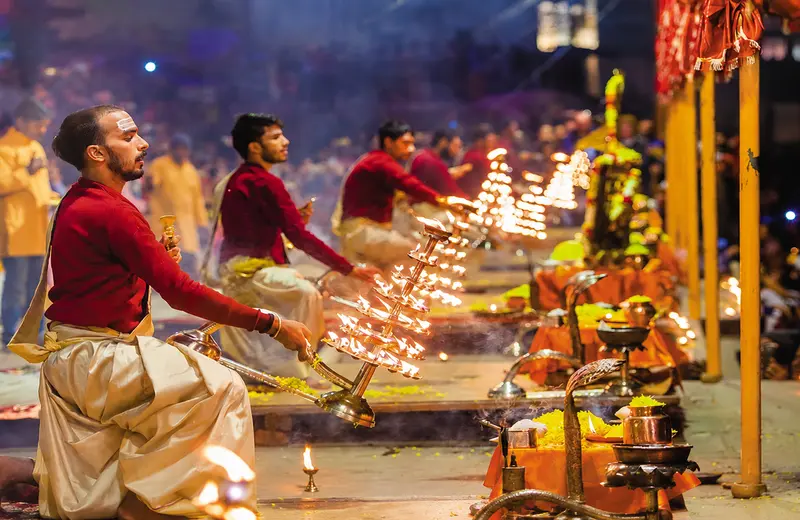
The evening Ganga Aarti at Dashashwamedh Ghat is, for most first-time visitors, the single moment that defines the trip. Timing shifts with the season, starting around 6:45 to 7:00 PM in winter and closer to 7:00 to 7:15 PM in summer, and the full ritual runs 45 minutes to an hour. Priests perform synchronized movements with large multi-tiered brass lamps while conch shells and bells sound around them, and the crowd along the steps grows dense well before the ceremony actually begins.
Three ways to watch it work differently. Standing on the ghat steps is free but genuinely crowded by evening, so arriving 45 to 60 minutes early matters if a clear view is the goal. A boat positioned on the water gives a wider, less obstructed view and is often considered the better vantage point, typically costing a modest per-person fee when shared with other travelers. Rooftop restaurants overlooking the ghat offer a third option, combining dinner with a more distant but comfortable view.
Kashi Vishwanath Temple and the City's Other Sacred Sites
Kashi Vishwanath Temple is the spiritual centre of Varanasi and one of the twelve Jyotirlingas of Lord Shiva recognized across India. Its spire is gold-plated, and the temple complex underwent a major redevelopment a few years back, connecting it directly to the Ganga at Manikarnika Ghat through a wide corridor that has made the walk from the river considerably more organized than it used to be. Photography is not permitted inside, and security checks are routine given the site's significance.
Beyond Kashi Vishwanath, a handful of other temples round out a typical circuit. Sankat Mochan Hanuman Temple, founded by the poet-saint Tulsidas, has an unusual layout where the Hanuman idol faces directly toward a Ram idol. Tulsi Manas Temple marks the spot believed to be where Tulsidas composed the Ramcharitmanas, with the epic's verses inscribed across its marble walls. Banaras Hindu University, one of the largest residential universities in Asia, holds its own New Vishwanath Temple on campus along with the Bharat Kala Bhavan museum, home to Mughal miniatures and Gandhara sculpture.
For travelers whose interest in Kashi Vishwanath extends into the broader Jyotirlinga circuit, this guide to reaching Mahakaleshwar Temple in Ujjain and this account of visiting Grishneshwar Jyotirlinga from Aurangabad cover two of the other eleven sites, both realistic additions to a longer pilgrimage itinerary. For a wider view of India's temple landscape, this roundup of India's most famous temples is also a useful reference point.
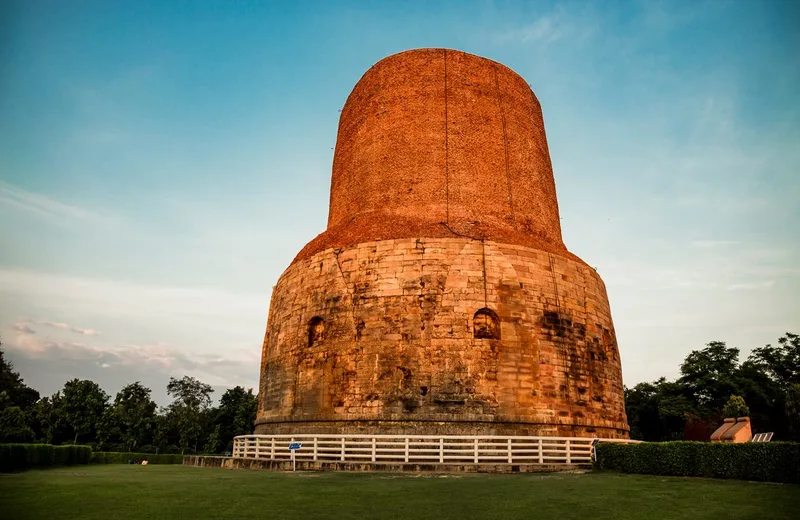
Sarnath: A Half-Day Buddhist Detour
Sarnath sits about 10 to 13 kilometres northeast of central Varanasi, a 30 to 40-minute taxi or auto-rickshaw ride, and holds a very different kind of significance. This is where the Buddha is believed to have delivered his first sermon after attaining enlightenment at Bodh Gaya, roughly 250 kilometres away, introducing the Four Noble Truths to a small circle of former companions.
The Dhamek Stupa, a cylindrical brick structure standing around 43 metres tall, marks the traditional site of that sermon and remains Sarnath's most recognizable monument, originally built under Emperor Ashoka and reconstructed during the Gupta period. Nearby, the base of the original Ashoka Pillar still stands, though the Lion Capital that once crowned it, and which later became India's national emblem, now sits in the adjoining archaeological museum. The site operates from 6 AM to 6 PM daily, while the museum keeps shorter hours and closes on Fridays, so a Friday visit is better spent on the outdoor stupa and the surrounding Buddhist temples, including the Mulagandha Kuti Vihar with its Japanese frescoes, rather than counting on the museum being open.
A half day covers Sarnath comfortably, and it pairs naturally with a morning at the Varanasi ghats before or after.
Food to Try in Varanasi
Varanasi's food culture runs on a fairly fixed daily rhythm rather than scattered specialties. Mornings start with kachori-sabzi, a fried bread served with spiced curry, followed by hot jalebi from the same stalls. Afternoons bring tamatar chaat, a distinctly Banarasi tomato-based street snack that's harder to find outside the city. Winter specifically brings malaiyyo, a delicate, foam-like milk dessert traditionally made only in the colder months and sold from carts that appear seasonally along the main lanes. Evenings, unsurprisingly, end with paan, and Varanasi's version, wrapped in betel leaf and stuffed with a range of fillings, is considered among the best in the country by people who take such rankings seriously.
Beyond street food, Vishwanath Gali is the place for Banarasi silk sarees, a craft the city has been known for across centuries, while Chowk and Thatheri Bazaar cover sweets and handcrafted brassware respectively. None of this needs planning beyond wandering the old city with an appetite.
Budget and Practical Costs
Varanasi remains one of India's more affordable major destinations, though costs shift with season and where exactly a traveler chooses to stay. Boat rides vary considerably by type: a shared sunrise boat covering the main ghats typically runs a modest per-person fee, while a private boat for a small group over 60 to 90 minutes costs more but avoids sharing space with strangers, and a full multi-hour ghat-to-ghat circuit with running commentary sits at the higher end of that range.
Sarnath's entry costs are modest for Indian nationals and higher for foreign visitors, with a combined ticket covering both the archaeological site and museum working out cheaper than paying separately. Accommodation spans the full range from basic guesthouses near Assi Ghat, popular with backpackers and students, to heritage hotels converted from old riverside havelis. As with most Indian pilgrimage cities, prices rise noticeably during Dev Deepawali and other major festival windows, so booking ahead for those specific dates matters more than it does for an ordinary winter week.
Travel Tips and Etiquette
A few points of etiquette matter more in Varanasi than in most Indian cities. Photography is prohibited at the cremation ghats, particularly Manikarnika, and this is enforced by locals as much as by any official rule; a respectful distance and no camera is simply the expected behaviour. Swimming in the Ganga isn't recommended for visitors, though a boat ride captures the same experience of being on the water without the water quality concerns that come with actually entering it.
Dress modestly when visiting temples, and expect security screening at Kashi Vishwanath given its profile. Cash still matters in the older lanes and smaller stalls, even though UPI has spread widely across the city's main markets, so carrying some physical currency avoids awkward moments at a chai stall that doesn't take cards. Evenings can turn crowded and a little chaotic near Dashashwamedh Ghat, so keeping valuables secure in a crowd is standard advice worth actually following here.
If a longer spiritual circuit is the plan rather than a single-city trip, Varanasi combines naturally with Ayodhya, a few hours away by road or rail; this guide to reaching Ayodhya Ram Mandir covers that onward leg in detail. Travelers looking to extend further into Uttar Pradesh might also find this complete guide to Kanpur useful, since it sits within a reasonable distance for a multi-city UP itinerary. And for anyone whose interest in Varanasi is less about sightseeing and more about the reflective pace of the trip itself, this list of spiritual retreats across India offers a few slower alternatives worth considering.
A Simple Two-Day Plan
Day one starts early with a sunrise boat ride from Assi Ghat toward Dashashwamedh, followed by breakfast at one of the cafes near Assi Ghat and a walk through Kashi Vishwanath Temple once the morning crowds thin slightly. The afternoon works well for Sankat Mochan Hanuman Temple, Tulsi Manas Temple, and a walk through the Banaras Hindu University campus, before returning to Dashashwamedh Ghat with enough time to secure a decent spot before the evening Ganga Aarti.
Day two is built around Sarnath: a mid-morning visit covering the Dhamek Stupa, the archaeological museum (skip this part on a Friday), and the surrounding Buddhist temples, followed by an afternoon back in the old city for Vishwanath Gali's silk shops and Chowk's sweet stalls. A quieter, less crowded final Ganga Aarti viewing from Assi Ghat, away from the Dashashwamedh crowds, makes for a calmer way to close out the trip.
The Bottom Line
Varanasi rewards travelers who slow down rather than those trying to check off a list. The ghats, Kashi Vishwanath, the evening aarti, and Sarnath together cover the essentials in two focused days, but the city's real character shows up in the unplanned parts: a conversation on the steps at Assi Ghat, a plate of kachori eaten standing up, the sound of the aarti's bells carrying across the water after dark. Book accommodation early if traveling during Dev Deepawali or the main winter season, and give the city more time than feels strictly necessary if the schedule allows it.