Ko Kret Pottery Village: How to Plan a Weekend Trip From Bangkok
Twenty kilometres north of central Bangkok, the Chao Phraya River loops around a small island where nobody drives a car. On a Saturday morning, the air smells of frying batter and wet clay. Somewhere down a narrow lane, a potter's wheel is turning. This is Ko Kret (you will also see it written Koh Kret), a man-made island that most foreign visitors skip and most Bangkok locals quietly love. Come on a weekend and the place wakes up: a market unspools along the lanes, pottery stalls open their shutters, and the smell of street food follows you the whole way round.
A car-free river island, a 200-year-old pottery tradition, and a weekend market the locals keep mostly to themselves — here is how to do Ko Kret right.
| At a glance | |
|---|---|
| Where | Chao Phraya River, Nonthaburi province, about 20 km north of central Bangkok |
| Best days | Saturday and Sunday (the market and most shops only really come alive then) |
| Best season | November to March, when it is cooler and drier |
| Famous for | Mon terracotta pottery, riverside temples, a weekend walking market, slow village life |
| Getting there | Bus, MRT Pink Line, or taxi to Pak Kret, then a short cross-river ferry |
| Ferry fare | A few baht each way, paid in cash on the island side |
| Getting around | On foot, by rented bicycle, or by motorbike taxi — no cars allowed |
| Time needed | Half a day is enough; a full day if you like to linger |
Why Ko Kret Only Makes Sense on a Weekend
Plenty of guides call Ko Kret a day trip and leave it there. The part they often bury is the timing. The island is open every day, but on a Tuesday it is half-asleep. Many pottery studios are shut, the food stalls thin out, and the famous market simply is not there. Show up Saturday or Sunday and it is a different island. The walking market runs through the most populated stretch near the main pier, the potters are working, and the riverside cafés fill up by mid-afternoon.
If you only have one shot at Ko Kret, make it a weekend. The pottery, the market, and the local crowd that gives the island its buzz all turn up on Saturday and Sunday.
So treat "weekend trip" as a real instruction, not a throwaway phrase. A few hours on the right day beats a full day on the wrong one. If you are building a longer Thailand route and want more offbeat detours like this, an easy day trip to the ancient ruins at Dong Lakhon pairs well with the same slow-travel mood.
A Canal, an Accident, and an Island
Ko Kret was not supposed to exist. Back in 1722, during the Ayutthaya era under King Thai Sa, a canal called Khlong Lat Kret was dug to straighten out a long, lazy bend in the Chao Phraya and shorten the boat route up to the old capital. Water did what water does. The shortcut widened over the years, the river claimed the cut, and the loop of land it left behind became an island. The name fits: kret points back to that shortcut canal, and Pak Kret, the district on the mainland, means roughly "mouth of the cut."
The people are the real story, though. Most residents are descendants of the Mon, an ethnic group with roots in the Irrawaddy basin of present-day Myanmar, who were given permission to settle here generations ago. They brought a pottery tradition with them, and it stuck. You still hear Mon spoken in the temples, and you still see Mon patterns pressed into the clay. That old river route they were shortening led up to Ayutthaya, where you can still visit relics of the kingdom like the famous Buddha head held in the roots of a tree at Wat Mahathat — useful context if you want to understand why this stretch of river mattered so much.
Best Time to Visit Ko Kret
Two questions decide your timing: which day, and which season.
The day is settled already. Weekends win. For the season, Thailand's central plains run hot and humid most of the year, so the comfortable window is the cool, dry stretch from roughly November through March. Mornings are pleasant, the lanes are walkable, and you are not melting by noon. The rainy months from about May to October bring heavy bursts, and because Ko Kret sits low against the river, it is genuinely prone to flooding when the water runs high. The big floods of 2011 put much of the island underwater.
During the wet season, check local conditions before you go. A low river island floods fast, and a downpour can shut the open-air market and turn the lanes to mud.
If you are visiting in the hot months, get there early. The market is far more pleasant before the midday heat settles in, and you will beat the bulk of the weekend crowd that rolls in after lunch.
How to Reach Ko Kret From Bangkok
Here is where people overthink it. Ko Kret has no bridge for visitors and no cars, so every route ends the same way: you get yourself to the Pak Kret side of the river, then cross by a small ferry.
The most common approach is to reach the pier behind Wat Sanam Nuea temple in Pak Kret. From central Bangkok you have a few ways to get to that area. Public buses run up to Pak Kret market, including the 166 from the Victory Monument area and the 505 that passes Central World; from the last stop it is a short walk, motorbike taxi, or samlor of about 500 metres down to the river. The MRT Pink Line now reaches the Pak Kret area too, leaving you under two kilometres from the pier. A taxi straight from the city is the simplest option of all, and a driver will know "Ko Kret" or "Pak Kret" without trouble. Off-peak, the drive runs around half an hour, though Bangkok traffic can stretch that out considerably.
Once you are at Wat Sanam Nuea, walk through the temple grounds to the pier behind it. The ferry crosses to the island in a few minutes and lands you right by Wat Poramaiyikawat. The fare is tiny, just a couple of baht each way, and you usually pay on the island side, so keep small coins handy.
There is also a slower, prettier option by boat. A Chao Phraya Express service connects the city with the Pak Kret area, but the direct runs are limited and timed around commuter hours rather than tourists, so they suit overnight stays more than a casual day out. Check the current schedule locally before relying on it.
Ferry fares, boat schedules, and bus numbers all change. Treat the figures here as a guide and confirm the latest details on the day, ideally with a local or at the pier itself.
Because the island runs entirely on foot, bicycle, and boat, it is a good fit if you prefer to travel without a rental car at all. For more on doing exactly that around the country, this guide on reaching offbeat places in Thailand without renting a car is worth a look.
Getting Around the Island
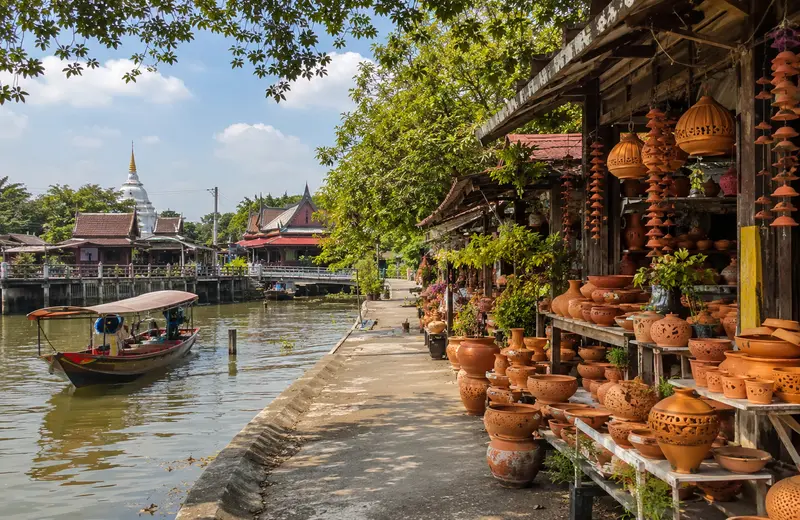
The good news once you land: getting around is the easy part. The island is roughly three kilometres across, and a single path loops the whole way round, about six kilometres in total. On foot at an unhurried pace, the full circuit takes somewhere around an hour and a half to two hours, with plenty of stops for clay pots and snacks.
If walking the loop sounds like a lot in the heat, rent a bicycle near the main pier for around 50 baht and pedal it instead. There are no cars to dodge, only the occasional motorbike, so it is a relaxed ride. Tired halfway? Motorbike taxis wait at points around the island and will run you most places for roughly 50 baht. None of them can go fast here, which makes the whole thing feel safe and slow in the best way.
The Pottery That Gives the Island Its Name
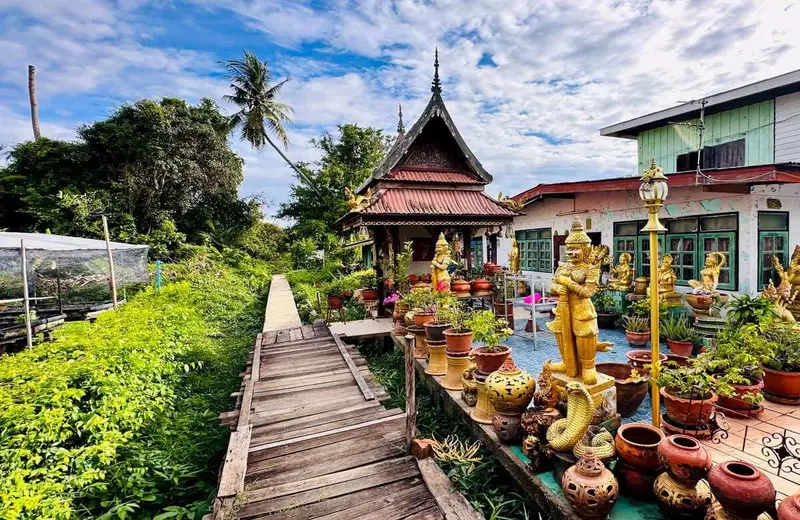
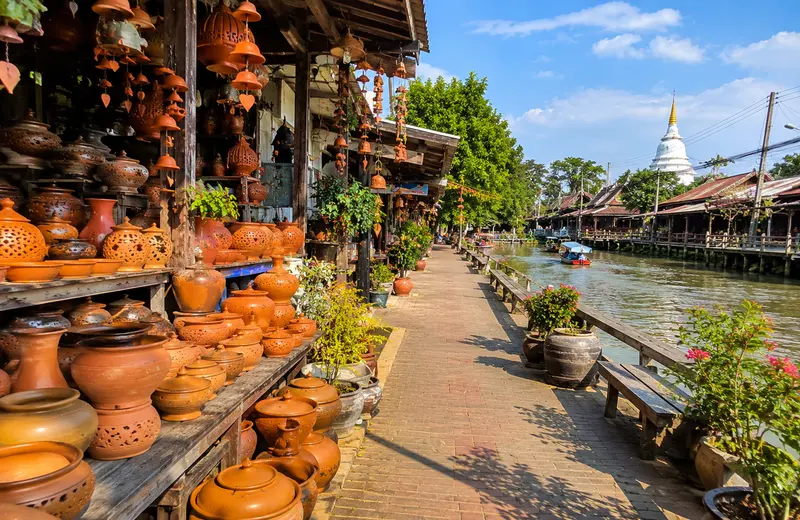
This is the reason "pottery village" is in the title, and it earns its place. Ko Kret's Mon community has been shaping clay here for more than two centuries, and the style has a name: kwan aman. The classic look is unglazed earthenware in a warm reddish-orange, the natural colour of the local river clay fired in a traditional kiln. What sets it apart is the carving. Look closely at a good piece and you will find delicate patterns cut into the surface by hand, the kind of detail that takes years to do well. Potters here have also developed a striking blackware finish, where rice husk is mixed in and burned during firing to darken the clay. No paint involved.
Pottery is woven so deeply into local identity that the carved earthenware is used as the symbol of Nonthaburi province. You will see it everywhere on the island, from tiny pieces selling for just a few baht to elaborate, large designs that run into the thousands.
To see the craft properly rather than just shop for it, head to the Kwan Aman Pottery Museum in the potters' quarter. It sits among working studios, displays older Mon pieces alongside the story of how the community settled here, and gives you the why behind the pots in the market. Several studios nearby let you watch the wheel in action, and some offer short hands-on sessions where you can shape your own piece to take home. Opening hours can shift, so it is worth confirming locally on the day.
A small carved pot makes a far better souvenir than a fridge magnet, and you are buying directly from the people keeping a 200-year-old craft alive. Carry cash; most stalls do not take cards.
Temples Worth Slowing Down For
The biggest landmark is right where the ferry drops you: Wat Poramaiyikawat (also written Wat Paramai Yikawat), the island's main temple, renamed during the reign of King Rama V. Its signature is a white, Mon-style chedi that leans noticeably toward the river, the soft riverbank soil slowly pulling it off-vertical over the decades. Inside the temple grounds you will find a large reclining Buddha and a marble Buddha image of Mon heritage, plus a small museum with old royal-era exhibits. Step in quietly; this is a living temple, not just a photo stop, and you may catch monks chanting in Mon.
Walk or cycle the loop and a few more temples reward the effort. On the northern side, Wat Sao Thong Thong keeps a late-Ayutthaya-style chedi, while Wat Phai Lom shows off a golden chedi modelled on Yangon's Shwedagon, a clear nod to the community's Burmese-Mon roots. Over on the eastern stretch, the older Wat Chimphli Sutthawat has a charming, much-restored chapel and a calmer atmosphere away from the market crush.
If your Bangkok days so far have been all Grand Palace and the city's headline sights like the riverside spires of Wat Arun, the Temple of Dawn and the Emerald Buddha at Wat Phra Kaew, Ko Kret's temples are the gentle opposite: small, local, and almost empty of tour groups.
Eating Your Way Through the Weekend Market
Come hungry. The weekend market threads through the island's narrow lanes, and a big part of the fun is grazing your way along it. Mon food is the thing to look for, often served on banana leaves or in those signature clay pots.
The dish people rave about is khao chae, a hot-season Mon speciality: cooked rice served in chilled, jasmine-scented water, eaten with a spread of little side dishes like shrimp-paste balls, stuffed peppers, and sweet shredded pork. It sounds odd and tastes wonderful on a warm day. You will also find tod mun pla krai, springy deep-fried fish cakes, alongside crispy fried tofu, stacks of Thai sweets from a stretch sometimes called the dessert lane, and cool, fragrant coconuts sold straight from the husk. The riverside eateries are the move when your legs give out — grab a table over the water, order whatever the next table is having, and let the boats drift past.
If markets and street food are what pull you to a place, you will recognise the same energy in these secret street food markets in Chiang Mai that locals keep to themselves.
Chit Beer and the Slow Side of the Island
There is a curveball here that nobody expects on a quiet temple island: a craft brewery. Chit Beer is a homebrewing pioneer perched on the eastern riverbank, and its tongue-in-cheek slogan ("It's good chit") tells you the vibe. It pours its own draughts and bottles, the kind of small-batch ales you do not expect to find on a Mon pottery island, and it only opens on weekends, usually from around midday into the evening. It tends to fill up by late afternoon as the market winds down.
That eastern strip near the arrival pier is also the most atmospheric corner overall, lined with old wooden houses, little cafés, an artist's house marked by a giant Hanuman head, and shop after shop of clay. Wander past the busy lanes, though, and the island opens out into something else entirely: banana plantations, lotus ponds, stilted walkways, sleepy wooden homes, and the odd pottery kiln. That contrast, loud market on one side and rural hush on the other, is the part most visitors remember.
A Simple Weekend Itinerary
You do not need a rigid plan, but a loose shape helps you fit everything into the cooler part of the day.
For a half-day trip, aim to land mid-morning. Start at Wat Poramaiyikawat right by the pier and have a look at the leaning chedi and the reclining Buddha. Drift into the pottery quarter next, visit the Kwan Aman museum, and watch a wheel turn. From there, follow the market lanes and eat as you go. Cross paths with a clay shop you like, buy the pot, and you are done by early afternoon before the heat and the crowd peak.
For a full day, do all of the above slowly, then rent a bicycle and ride the full loop. Stop at the quieter temples on the north and east, get pleasantly lost on a stilted side path, and circle back to the riverside for a late lunch over the water. Cap it off at Chit Beer in the afternoon, then catch the ferry back as the light softens. That is a genuinely good day out, and it costs almost nothing.
What a Ko Kret Weekend Costs
This is one of the cheapest outings near Bangkok. There is no entry fee to the island itself. Your real costs are getting there and what you eat and buy.
| Expense | Rough cost (THB) | Notes |
|---|---|---|
| Bus / MRT to Pak Kret | 20–40 | Varies by route and starting point |
| Taxi from central Bangkok | 150–300+ | Faster, depends on traffic and pickup point |
| Cross-river ferry | 2–3 each way | Paid in cash on the island side |
| Bicycle rental | ~50 for the day | Rented near the main pier |
| Motorbike taxi (hops) | ~50 per ride | If you skip the walk or cycle |
| Street food and snacks | 100–300 | Easy to eat well for very little |
| Pottery souvenir | From a few baht | Small pieces are cheap; elaborate ones cost more |
A frugal visitor can do the whole thing for a few hundred baht, transport included. Prices drift over time, so use these as ballpark figures rather than fixed numbers, and always carry enough small cash, since card payments are rare on the island.
A Few Honest Travel Tips
Cash is the big one. There are few reliable ATMs on the island and most stalls, ferries, and pottery sellers want coins and small notes, so sort that out on the mainland before you cross. Wear shoes you can walk a loop in, bring sun cover for the open lanes, and carry water in the hot months. Weekends get busy along the narrow market stretch, so slow down rather than push through; in places the lane is tight enough that mirrors are mounted on corners to stop people colliding.
Remember this is a living Mon community, not a theme park. People are going about their weekend, monks are praying in the temples, and potters are working real orders. Dress modestly at the temples, ask before pointing a camera at someone, and buy something from the makers if their work moves you. For the wider picture on visiting Thai communities thoughtfully, this guide to travelling responsibly in Thailand is a good primer.
For photos, the leaning white chedi against the river is the obvious shot, best in soft morning light before the haze builds. The pottery lanes, with their stacks of carved clay and the potters at the wheel, give you the most characterful frames. Quieter moments hide on the loop path, where wooden houses sit over lotus ponds with not a tourist in sight.
Where to Stay
Most people treat Ko Kret as a half-day or day trip and sleep back in Bangkok, which is the sensible default given how close it is. That said, a handful of small wooden homestays and guesthouses do exist on the island for travellers who want to wake up to the river instead of the city, and staying over lets you see the place empty and silent before the weekend crowd arrives. If a slow, rural overnight appeals, browse ideas like these affordable eco-friendly homestays in rural Thailand for the kind of low-key stay that matches Ko Kret's mood.
Wrapping Up
Ko Kret rewards anyone willing to time it right. Go on a Saturday or Sunday, ideally in the cooler months and early in the day, cross by the little ferry, and give yourself a few unhurried hours among the clay, the temples, and the food. It is cheap, it is close, and it shows you a side of Bangkok that the big sights never will. Your one real job is the calendar: pick a weekend, carry cash, and let the island set the pace. Next free Saturday, point yourself toward Pak Kret and cross the river.