There's one image that shows up on almost every Thailand postcard, guidebook and travel feed: a serene stone Buddha face, half-swallowed by the gnarled roots of a tree, gazing out with a quiet smile. That haunting sight lives at Wat Mahathat in Ayutthaya — one of the most important and atmospheric temple ruins in the ancient Siamese capital. Beyond the famous head, this sprawling complex of crumbling brick prangs, headless Buddhas and toppled chedis tells the dramatic story of a kingdom that once rivalled the great cities of the world. If you're planning a day trip from Bangkok or a deeper dive into Thai history, this is a stop you don't want to skip.
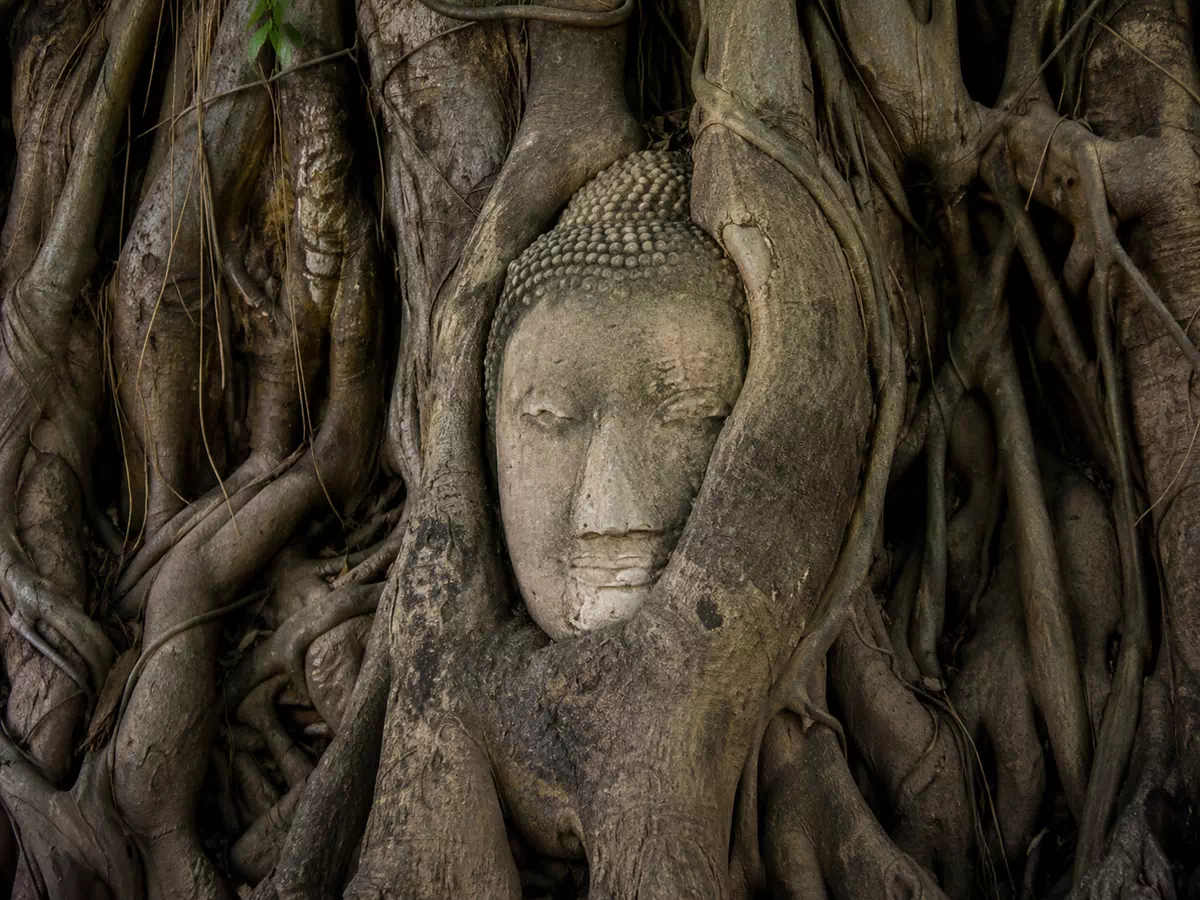
Thailand's most photographed Buddhist image, set among the evocative ruins of Ayutthaya's "Temple of the Great Relic."
At a Glance: Wat Mahathat Quick Facts
| Detail | Information |
|---|---|
| Location | Ayutthaya Historical Park, Central Thailand |
| Known for | The Buddha head entwined in tree roots |
| Built | 14th century, during the Ayutthaya Kingdom |
| Status | Part of the UNESCO-listed Historic City of Ayutthaya |
| Typical entrance fee | Around 50 baht for foreign visitors (confirm on arrival) |
| Opening hours | Roughly 8 am to 5 pm daily (verify locally) |
| Time needed | About 45 minutes to 1.5 hours |
| Distance from Bangkok | Around 80 km — a popular day trip |
The Buddha Head in Tree Roots: Ayutthaya's Iconic Image
The undisputed star of Wat Mahathat is the stone Buddha head nestled in the roots of a tree near the temple wall. Over generations, the roots have grown around the sandstone face, gently cradling it at ground level so that the Buddha seems to be emerging from the earth itself. It has become a symbol not just of Wat Mahathat but of Ayutthaya — and arguably the single most recognisable image in all of Thailand.
No one knows for certain how it got there. One popular theory says the head broke off a larger statue and the tree simply grew around it during the long decades the temple lay abandoned and overgrown. Another suggests a thief moved the head, intending to return for it, and never did. The mystery is part of the magic. The tree is usually described as a sacred bodhi — the same species the Buddha is said to have sat beneath when he attained enlightenment — which makes the image feel even more poignant.
Respect comes first: the Buddha head is a sacred object. When taking a photo, Thai custom requires that your head never be higher than the Buddha's — so crouch or sit down low beside it. Guards are usually on hand to remind visitors. A moment of care here means a lot.
The History of Wat Mahathat
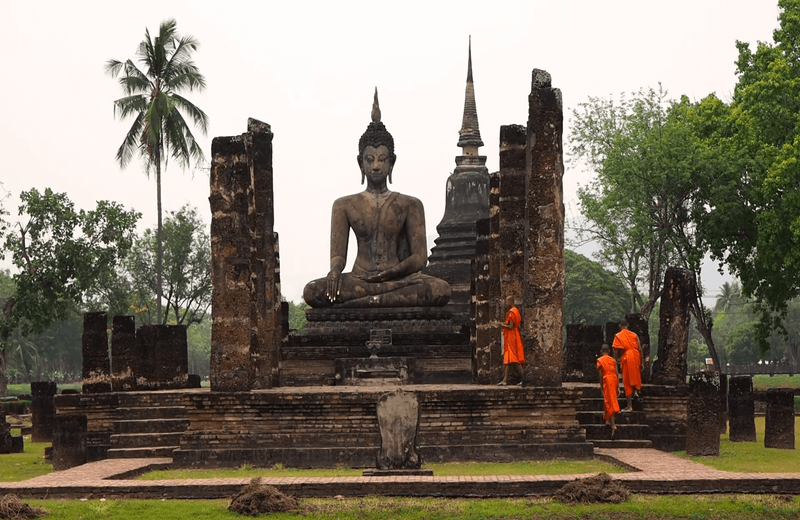
Wat Mahathat means roughly the "Temple of the Great Relic," a name it earned because it was built to enshrine sacred relics of the Buddha. Founded in the 14th century during the early Ayutthaya Kingdom, it stood at the spiritual and political heart of the capital, located close to the royal palace. This was where important state ceremonies took place and where the kingdom's most senior monks resided — making it one of the most powerful religious sites in the land.
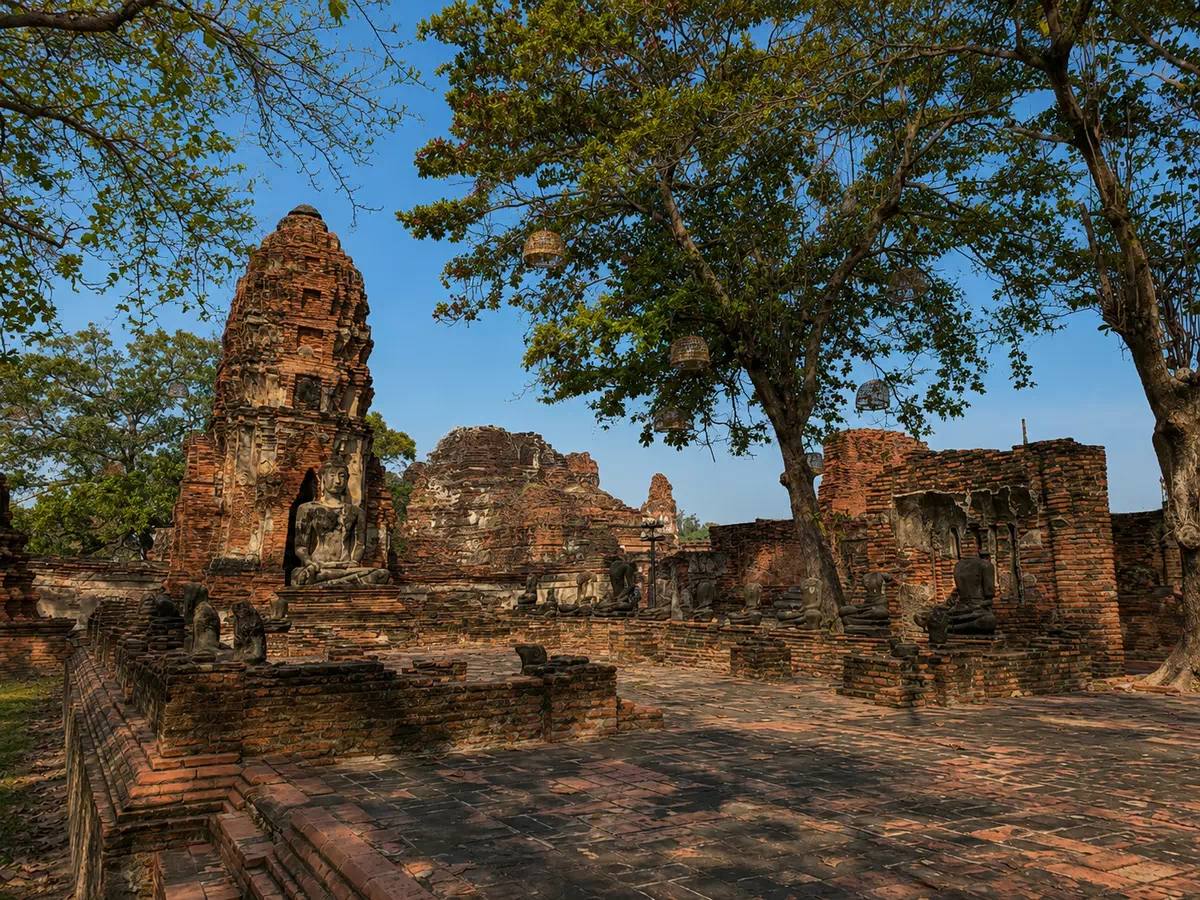
Ayutthaya itself was the second capital of Siam after Sukhothai, and at its peak it grew into one of the largest and most cosmopolitan cities on earth, a glittering trading hub connecting Asia with the West. That golden age came to a brutal end in 1767, when invading Burmese armies sacked the city, burned its temples and beheaded countless Buddha statues. Wat Mahathat was left in ruins — and the rows of headless Buddhas you see today are silent witnesses to that destruction.
What to See at Wat Mahathat
The Buddha head may draw the crowds, but the wider complex rewards a slow wander. Highlights include:
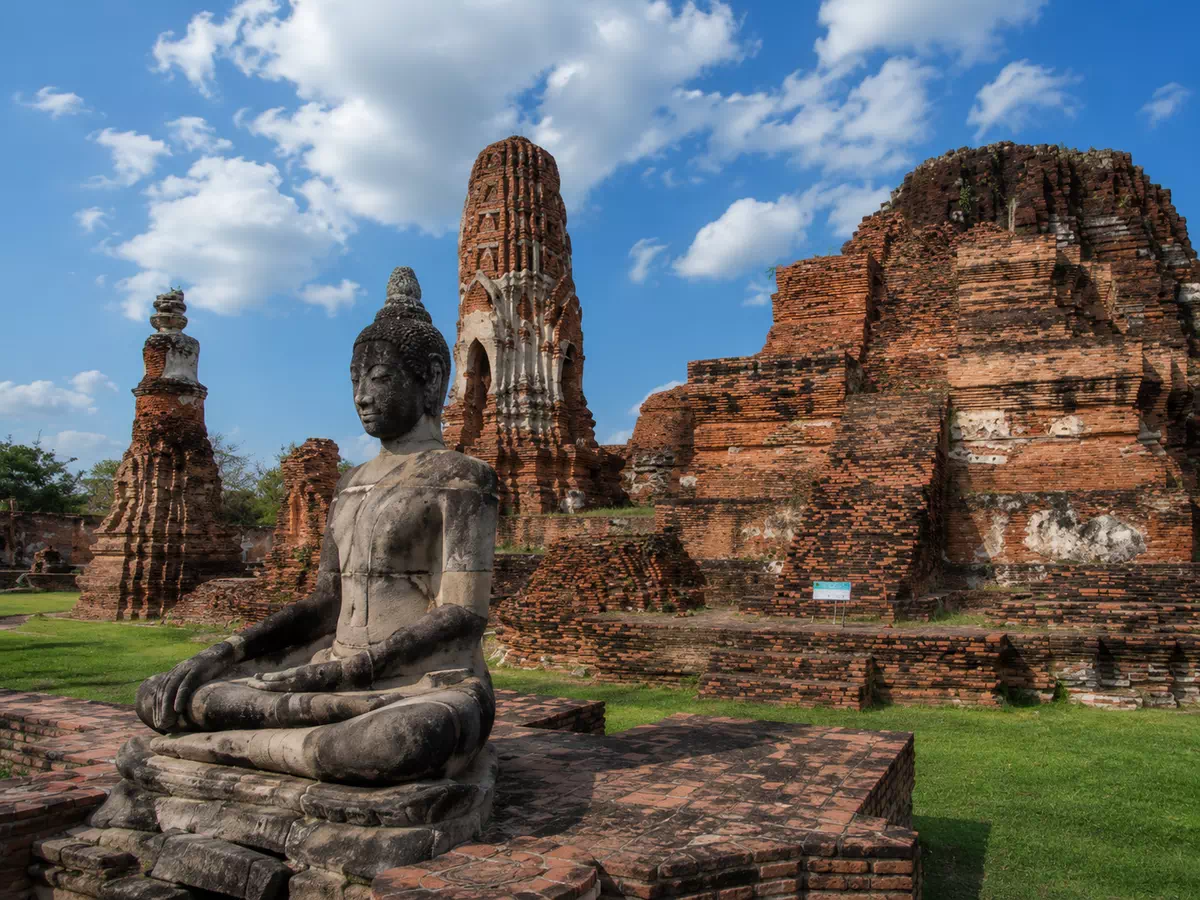
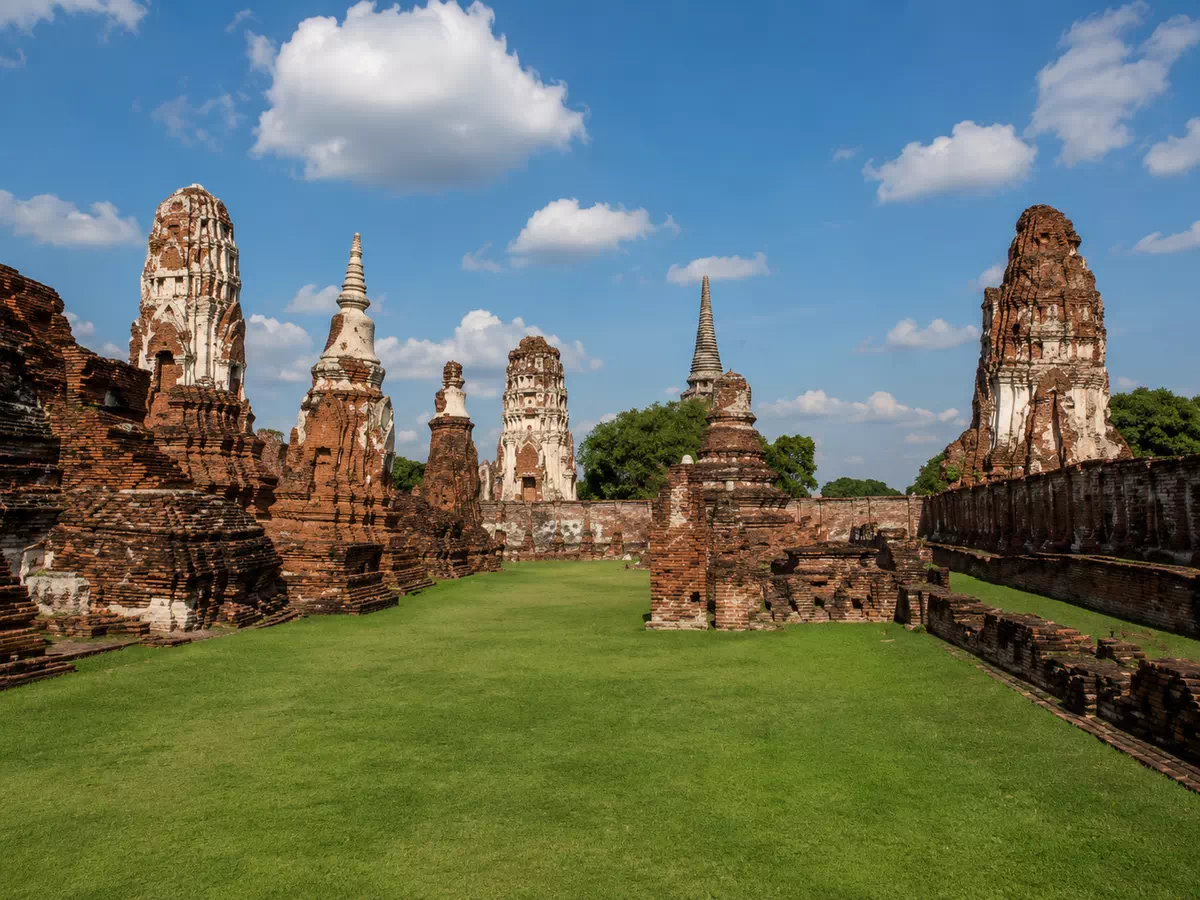
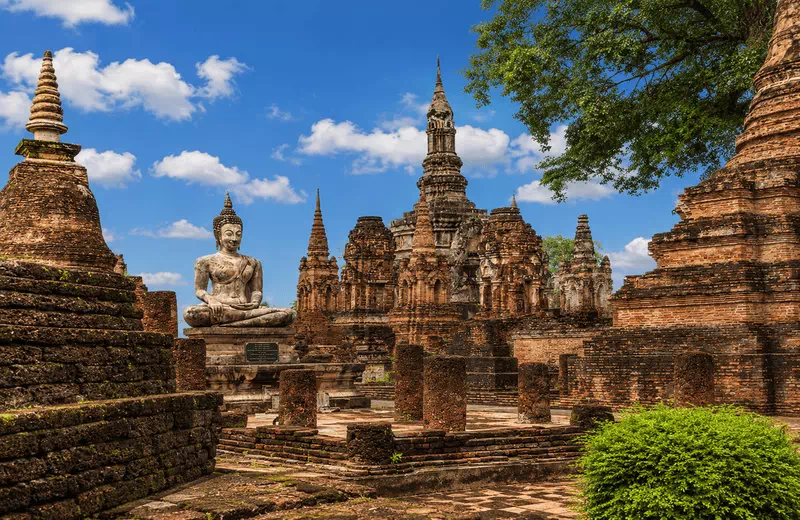
- The central prang. Once a towering Khmer-style tower that held the temple's relics, it has since collapsed, leaving a dramatic brick base and a sense of just how monumental the original must have been.
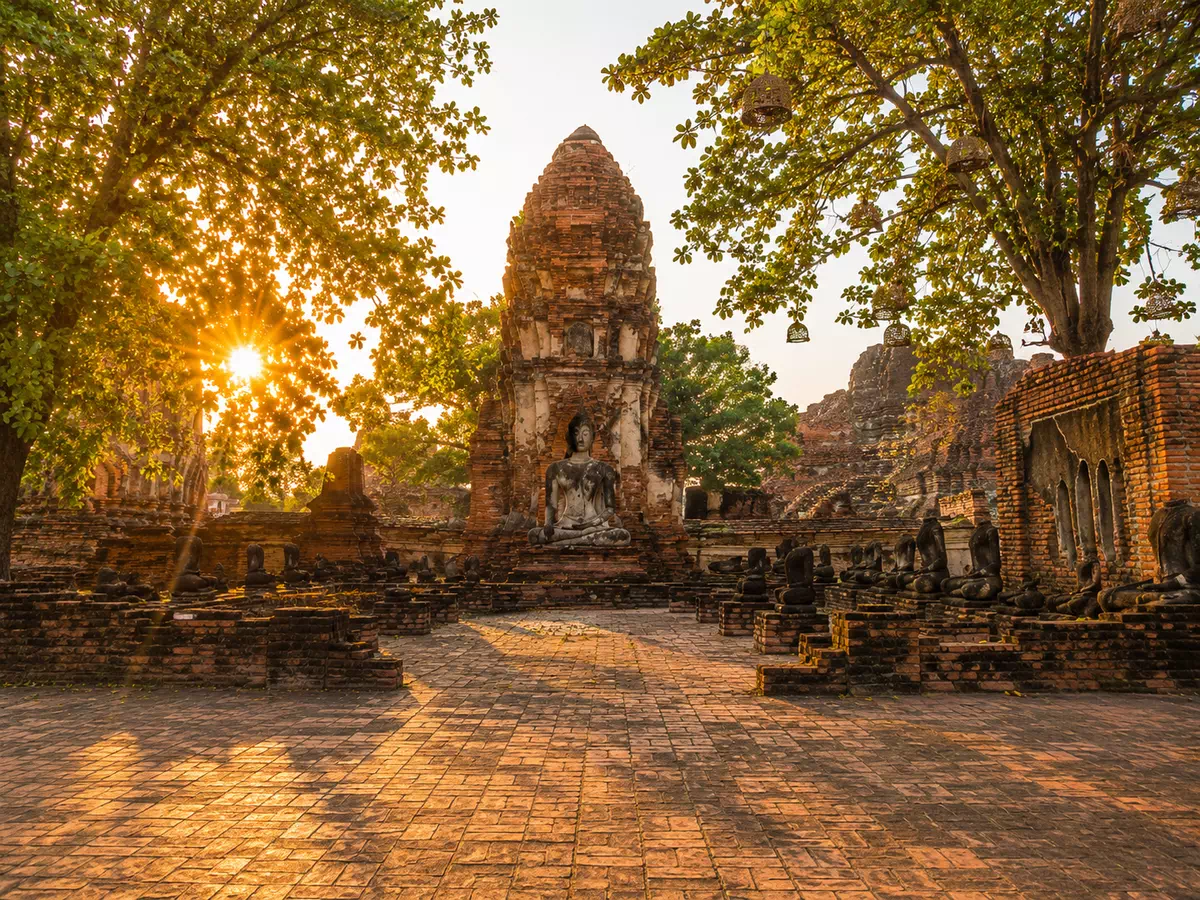
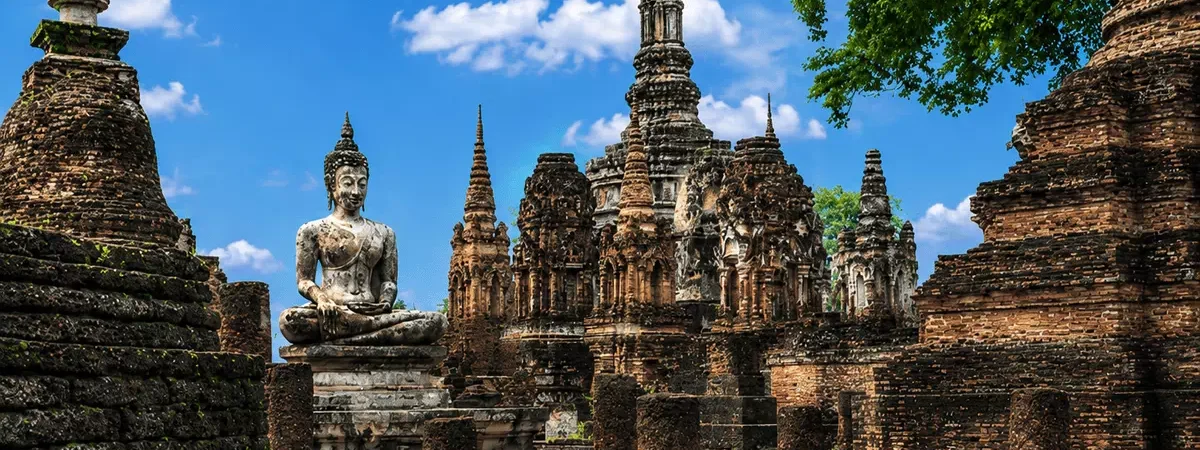
- Rows of headless Buddhas. Lining the ruined galleries, these weathered seated figures are a stark, moving reminder of the 1767 sack.
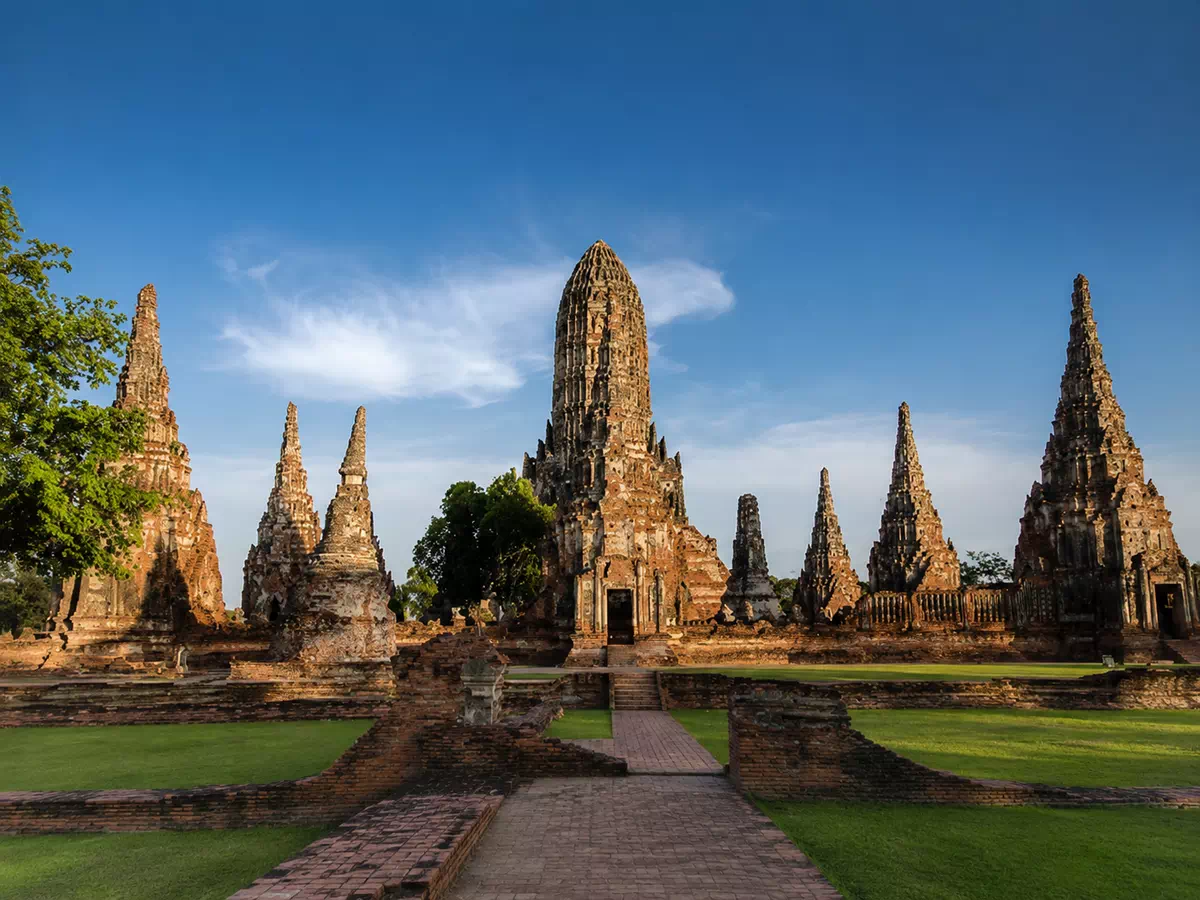
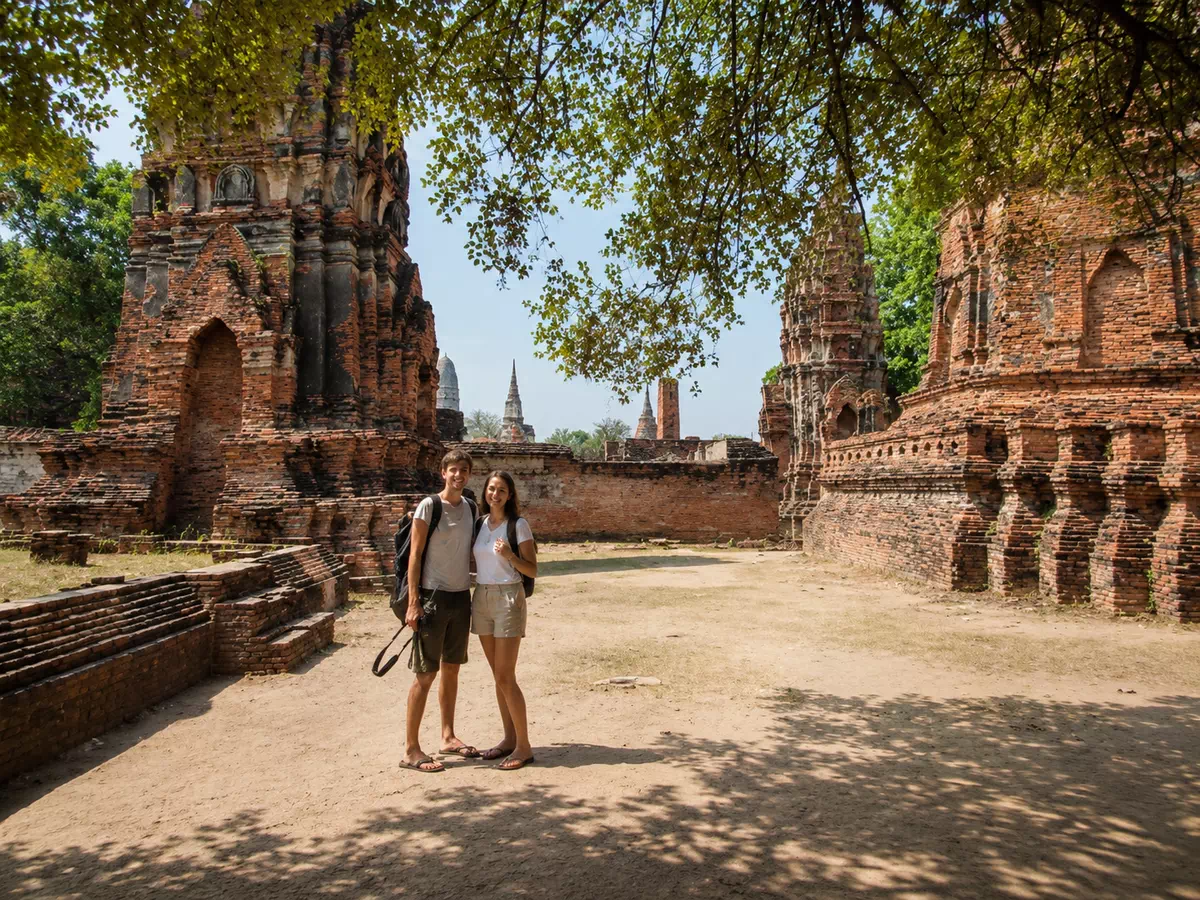
- Chedis and subsidiary ruins. Scattered stupas, prangs and crumbling walls spread across the grounds, beautiful in the soft light of early morning or late afternoon.
- The ordination hall and viharn ruins. Foundations and boundary markers hint at the grand ceremonial spaces that once stood here.
Best Time to Visit Wat Mahathat
Ayutthaya can be punishingly hot, so timing matters. The most comfortable months are the cool, dry season from around November to February, when temperatures are gentler and the skies are clear. The hot season that follows can be intense, while the mid-year monsoon brings rain and occasional flooding to the low-lying historic island.
Whatever the season, aim to arrive early in the morning or in the late afternoon. You'll dodge both the worst of the midday heat and the biggest tour-bus crowds, and the low golden light is far kinder to photos of the ruins.
Insider tip: the Buddha head is one of the first things visitors rush to, so getting there soon after opening gives you a rare chance to see it without a queue forming in front of you.
How to Reach Wat Mahathat
Wat Mahathat sits on Ayutthaya's historic island, roughly 80 kilometres north of Bangkok — close enough for an easy day trip. Your main options from the capital:
- By train: Frequent services run from Bangkok to Ayutthaya station, taking around 1.5 to 2 hours. It's cheap, scenic and a local favourite. From the station, a short ferry across the river plus a tuk-tuk gets you to the ruins.
- By minivan or bus: Vans and buses depart from Bangkok's northern transport terminals and reach Ayutthaya in roughly 1.5 to 2 hours.
- By car or taxi: Driving via the expressway takes about 1.5 hours in normal traffic and gives you the most flexibility.
- By organised tour: Many half- and full-day tours from Bangkok bundle Wat Mahathat with other top temples, sometimes including a river cruise.
Once you're in Ayutthaya, the major ruins cluster close together. Renting a bicycle is the classic, atmospheric way to get around, while hiring a tuk-tuk with a driver is a comfortable choice in the heat. If you'd rather plan your transport without a rental vehicle, this guide to getting around Thailand without renting a car is worth a look.
Entrance Fee and Opening Hours
Entry to Wat Mahathat typically costs around 50 baht for foreign visitors, with a lower rate for Thai nationals. The temple is generally open daily from about 8 am to 5 pm. The wider Ayutthaya Historical Park is free to roam, but several of the major individual temples charge their own small fees, and a combined temple pass is sometimes available if you plan to see several sites in one day.
Fees, opening hours and pass options can change, and some temples keep slightly different timings. Always confirm the current rates and hours on site or with an official source before your visit.
Other Temples and Sights Near Wat Mahathat
One of the joys of Ayutthaya is that you can string several remarkable sites together in a single visit. Right next door is Wat Ratchaburana, known for its well-preserved central prang, while nearby Wat Phra Si Sanphet and the riverside Wat Chaiwatthanaram are among the most photogenic ruins in the park.
If temples are your thing, it's easy to pair Ayutthaya with the headline sights of Bangkok. The riverside spires of Wat Arun and the dazzling Temple of the Emerald Buddha (Wat Phra Kaew) make a natural pairing with a day among the ruins, and you'll find plenty more inspiration in this roundup of Thailand's most stunning temples. For something different, the elaborately carved Sanctuary of Truth temple shows a very different side of Thai religious architecture.
Ayutthaya also slots neatly into a wider loop of day trips from the capital. History fans can pair it with the lesser-known ancient ruins of Dong Lakhon, while a gentler outing to the riverine pottery village of Ko Kret near Bangkok makes a relaxed counterpoint to temple-hopping.
Final Word: A Window Into Siam's Golden Age
Wat Mahathat is far more than a single famous photo. It's a place where you can feel the weight of history — the grandeur of a once-mighty kingdom, the violence of its fall, and the strange, quiet beauty of a Buddha face held gently in the roots of a tree. Visit early, dress and behave with respect, and give yourself time to wander beyond the crowds. The smart move is to fold Wat Mahathat into a wider Ayutthaya itinerary, then check the latest fees and hours before you go. Do that, and you'll come away with one of the most memorable experiences Thailand has to offer.