This is the island from the postcards: sheer limestone walls, a green lagoon hidden inside them, and a curve of white sand that a Hollywood film turned into one of the most photographed beaches on earth. Koh Phi Phi Le is also the island almost nobody understands before they arrive. You cannot sleep here, you cannot swim where the movie was shot, and the famous beach now comes with a one-way boardwalk, a one-hour clock, and a ranger keeping time. None of that makes it less worth seeing. It just means a good visit is the one you plan for. This guide walks through the bays, the rules that actually apply now, how to get here, and when to come.
The uninhabited island behind Maya Bay, where you trade the empty-beach fantasy for limestone cliffs, an emerald lagoon, and a visit run strictly by the clock.
| At a glance | Details |
|---|---|
| Where | Krabi Province, Andaman Sea, near Phuket |
| The island | Koh Phi Phi Le, uninhabited, about 1.3 sq km |
| Highlights | Maya Bay, Pi Leh Lagoon, Loh Samah Bay, Viking Cave |
| Can you stay? | No. It is a day trip only; no hotels or shops |
| Maya Bay swimming | Not allowed; only shallow wading at most |
| Park fee | A national park fee applies, often included in tours |
| Maya Bay closure | Shut every year through August and September |
| Best season | Dry months, roughly November to April |
What Koh Phi Phi Le Actually Is
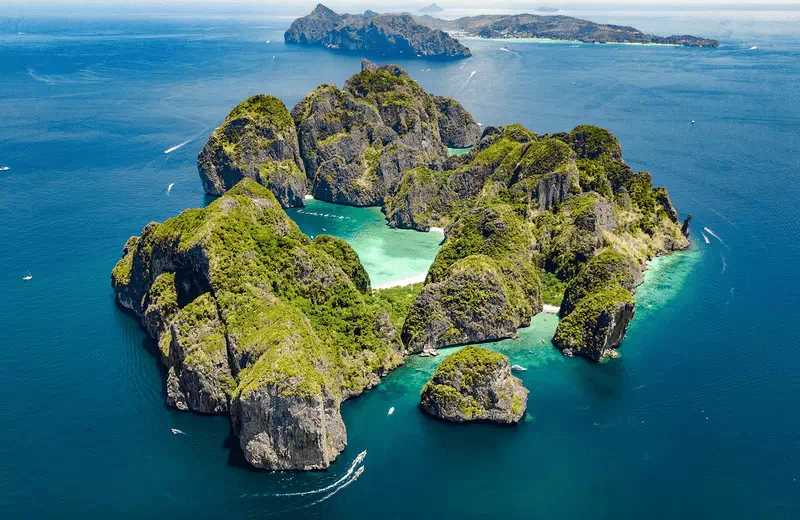
Koh Phi Phi Le is the smaller, wilder half of the Phi Phi pair, sitting about two kilometres south of its busy, hotel-covered sister, Koh Phi Phi Don. Nobody lives on it. There are no roads, no shops, and nowhere to stay, because the whole island is protected national park, and that protection is the reason it still looks the way it does.
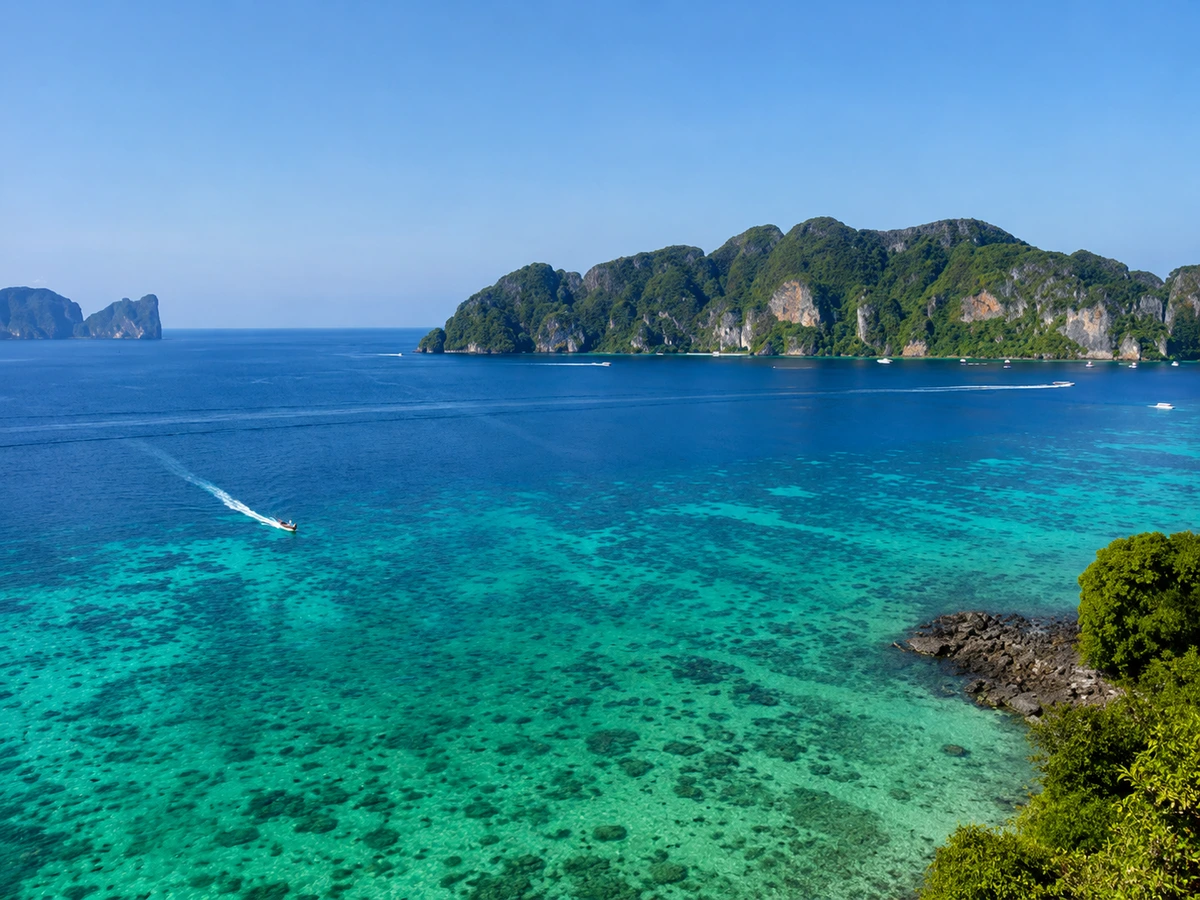
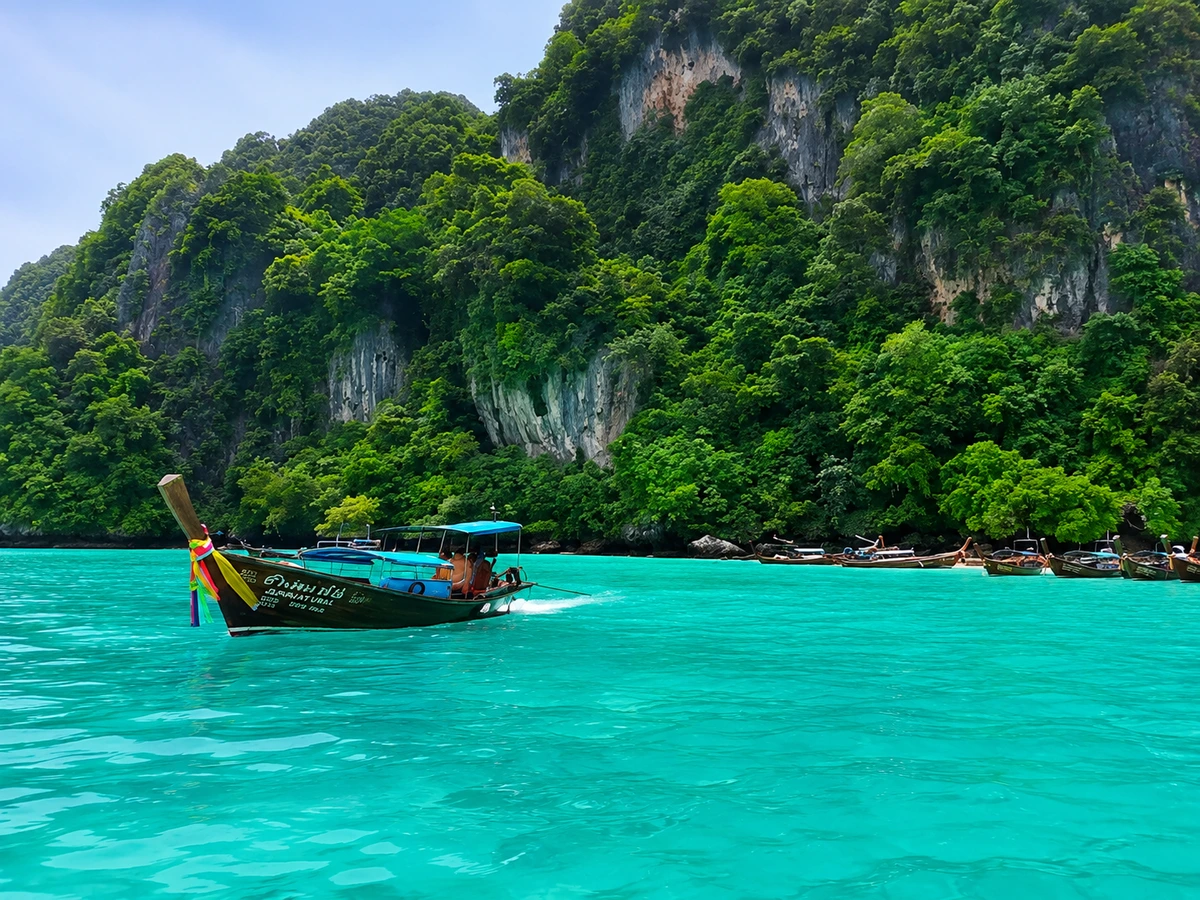
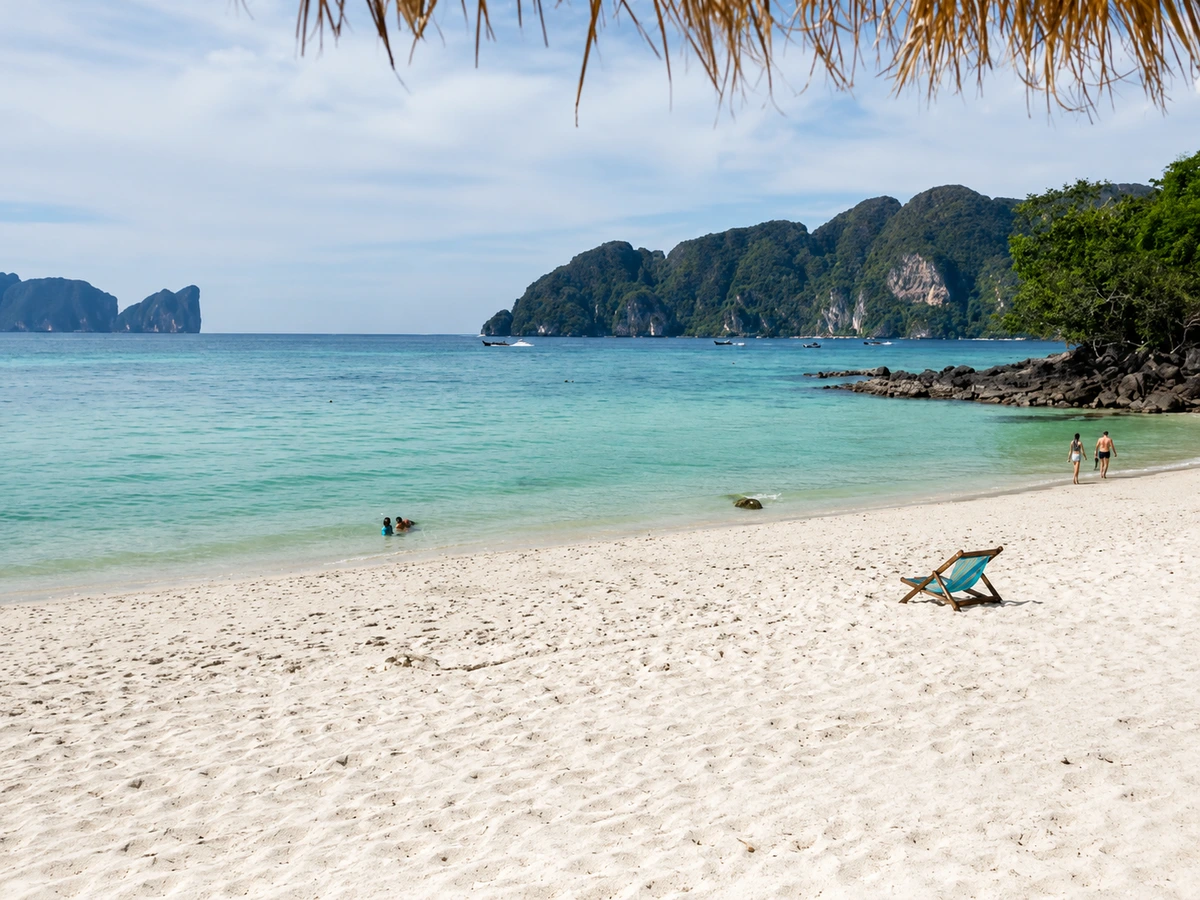
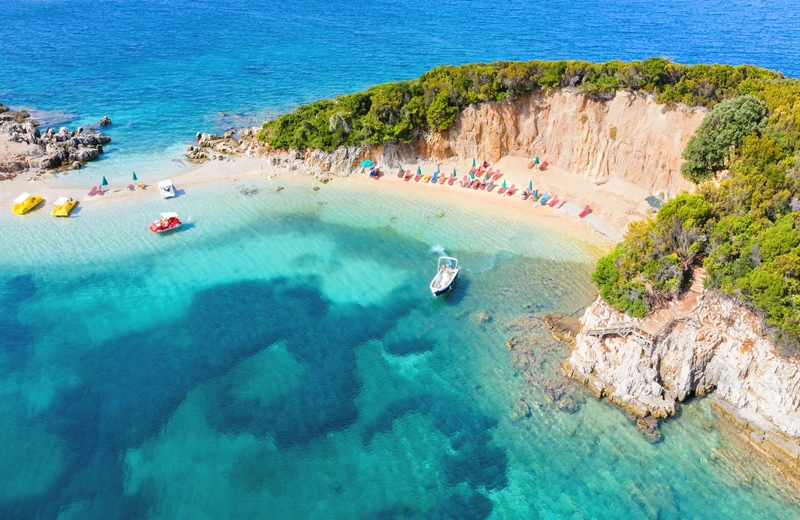
Picture a ring of near-vertical cliffs wrapped around a handful of bays, with almost no flat ground anywhere. Maya Bay and Loh Samah Bay sit at the southern end, Pi Leh Lagoon cuts deep into the eastern cliffs, and Viking Cave hides in the rock to the northeast. Every visit is a boat trip, and almost every visit ties these spots together in a single morning loop.
Maya Bay Now: The Rules Nobody Warns You About
Maya Bay is the reason most people come, thanks to the film "The Beach," and it is also where expectations and reality part ways. After years of damage from too many boats and too many feet, the bay was closed to recover, then reopened with a strict new system designed to keep it that way.
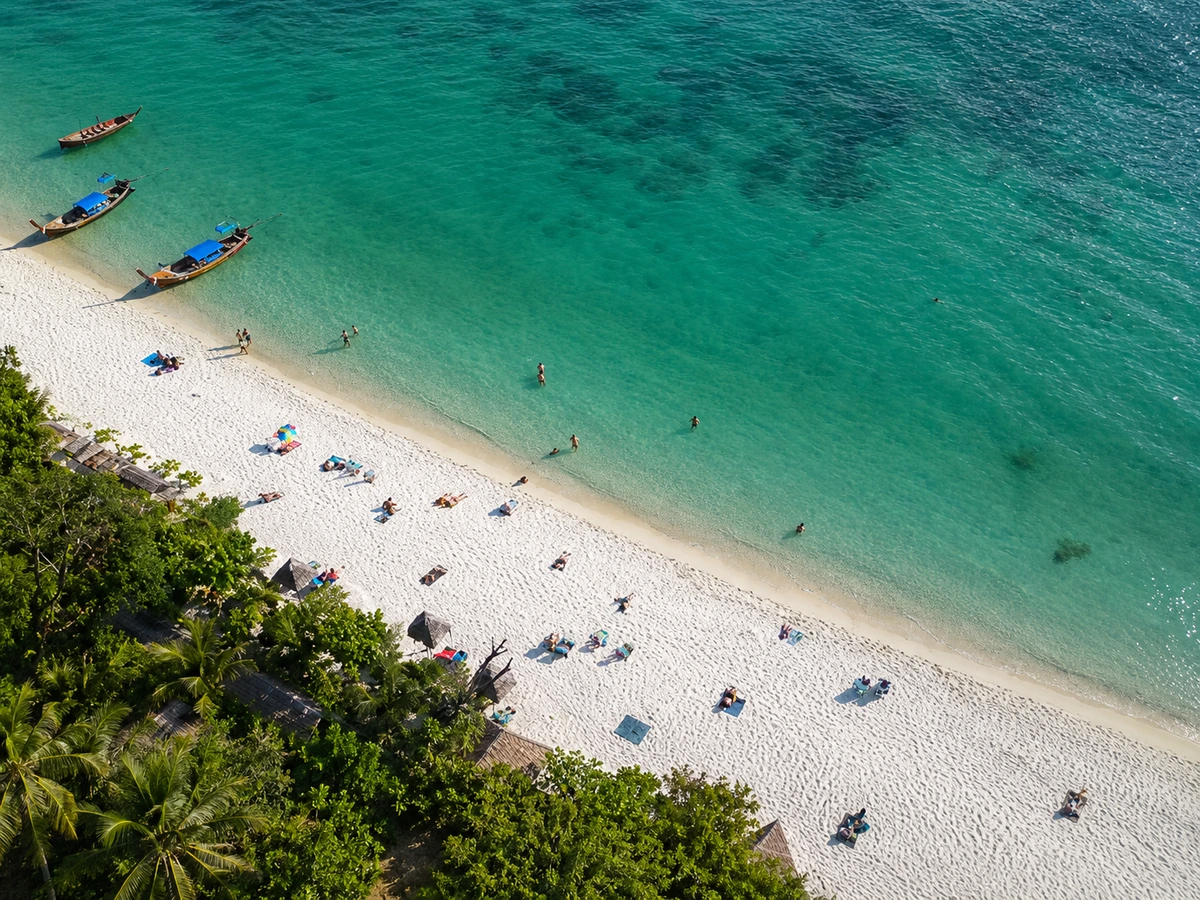
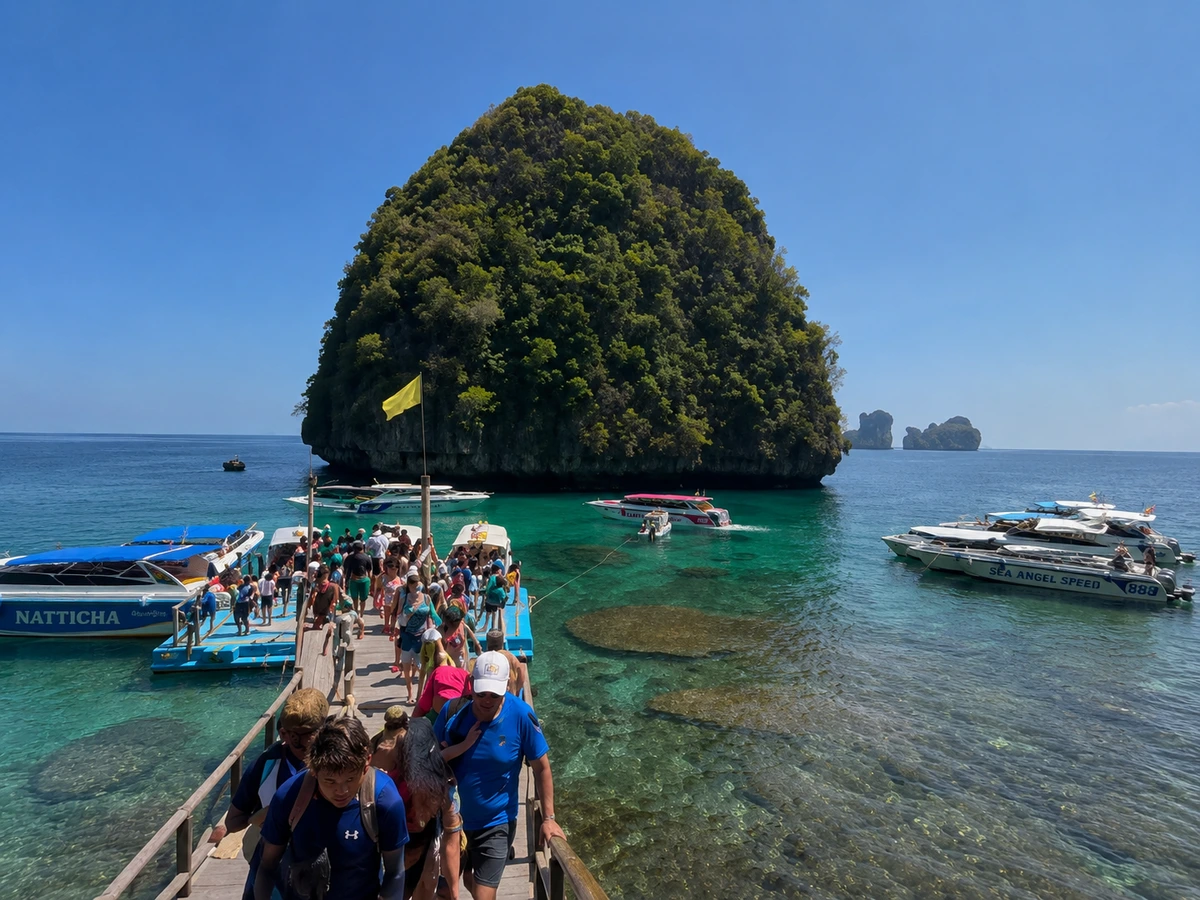
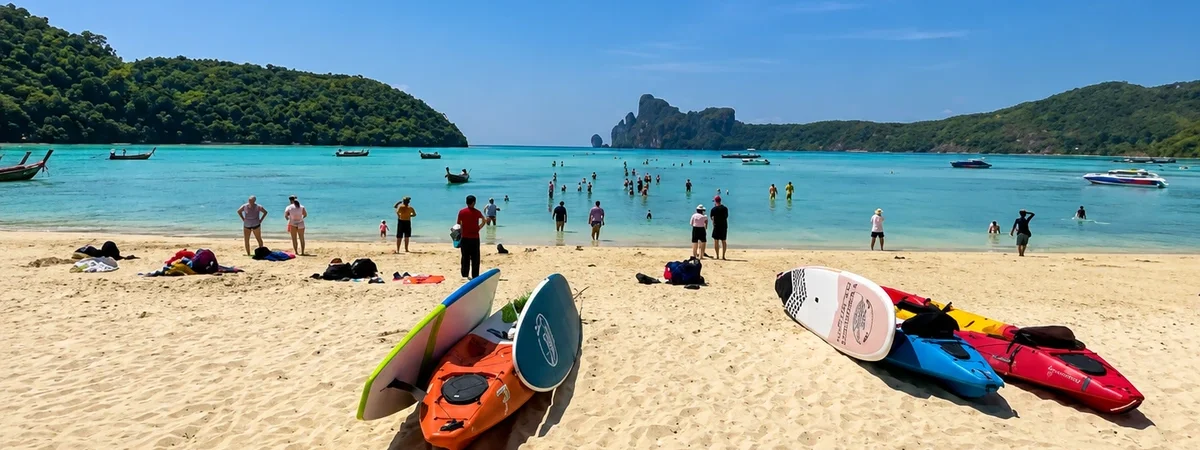
Boats no longer pull up on the sand. They dock at Loh Samah Bay around the back of the island, and you walk in along an elevated wooden boardwalk and short nature trail to reach the beach from behind. Swimming in Maya Bay is not allowed; at most you can wade ankle to knee deep in a small marked zone. Your time on the sand is capped at roughly an hour, visitor numbers are limited per slot, and rangers move groups along on schedule.
The empty desert-island shot from the movie is not on offer anymore. Replanting zones block much of the sand, you stay on a narrow strip, and on a full morning you share it with hundreds of others. Come for the cliffs and the colour of the water, not for solitude.
The bay closes completely every year through August and September for restoration and rough seas, reopening in October. Knowing that single fact saves a lot of disappointed travellers.
Pi Leh Lagoon: Where You Actually Swim
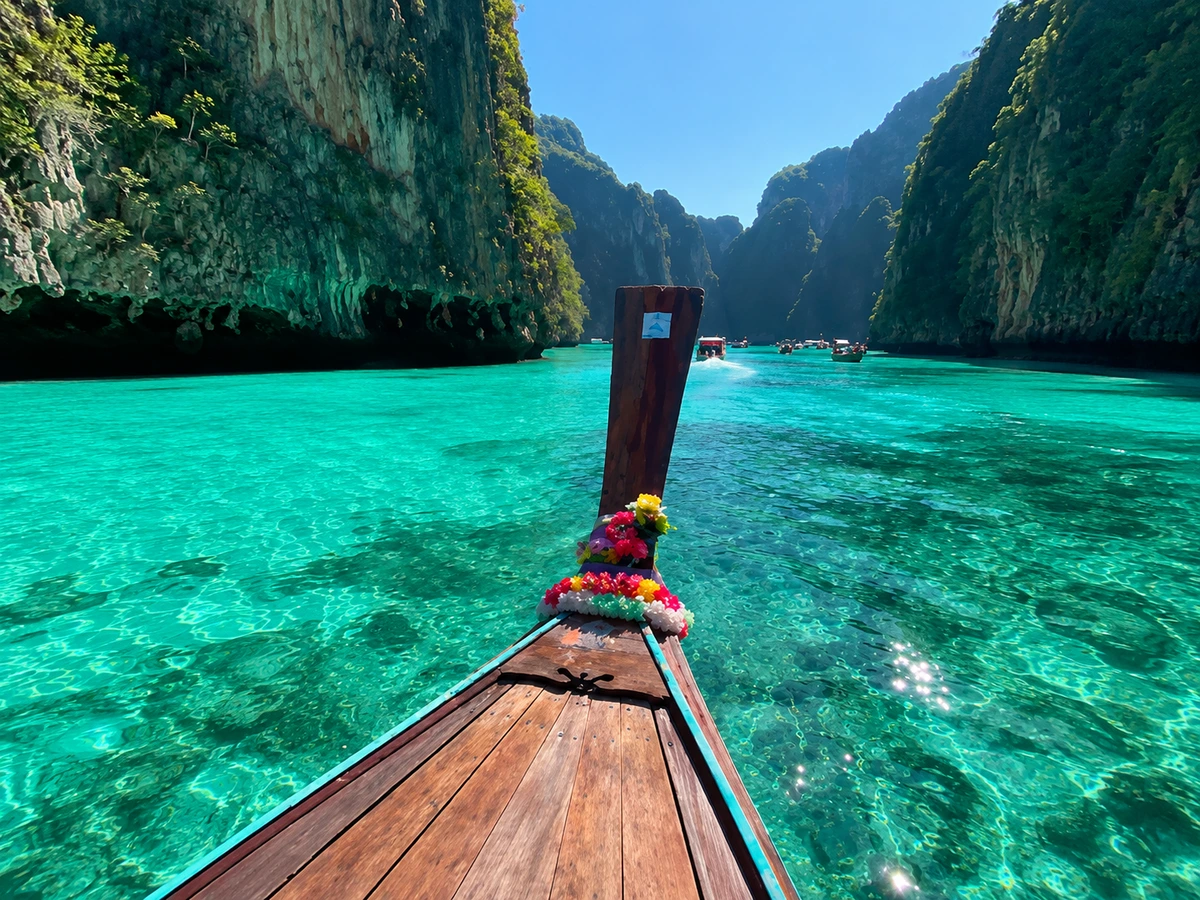
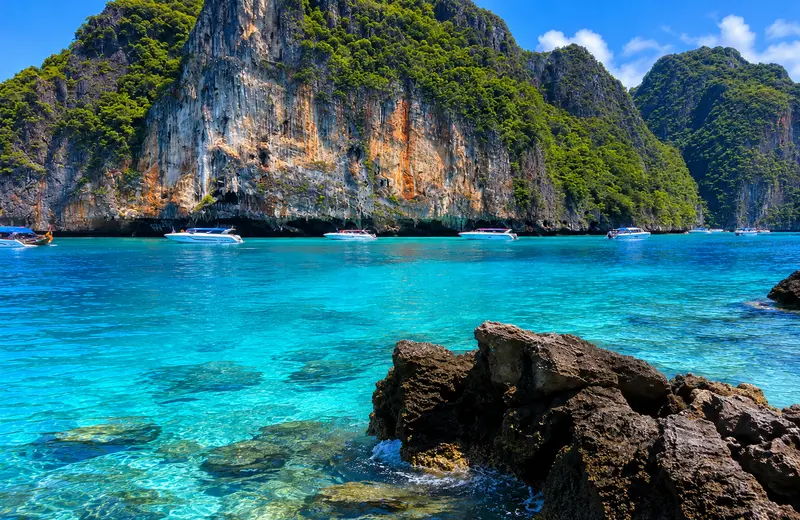
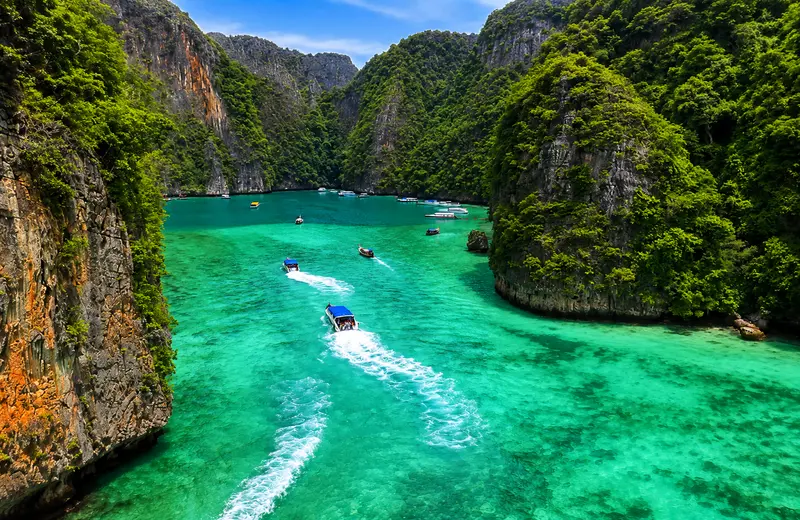
If Maya Bay is the photo, Pi Leh Lagoon is often the better experience. It is a long, narrow inlet on the eastern side, walled in by towering cliffs, filled with still, deep, green water. Here you can swim and snorkel, which is exactly what Maya Bay no longer allows, and many people leave rating the lagoon higher than the famous beach.
It gets busy, and it is now more tightly managed: boats need a park permit, must crawl through at low speed, and can only tie up to official buoys rather than dropping anchor on the coral. The payoff is a quieter, cleaner lagoon than it was a few years ago.
Loh Samah Bay and Viking Cave
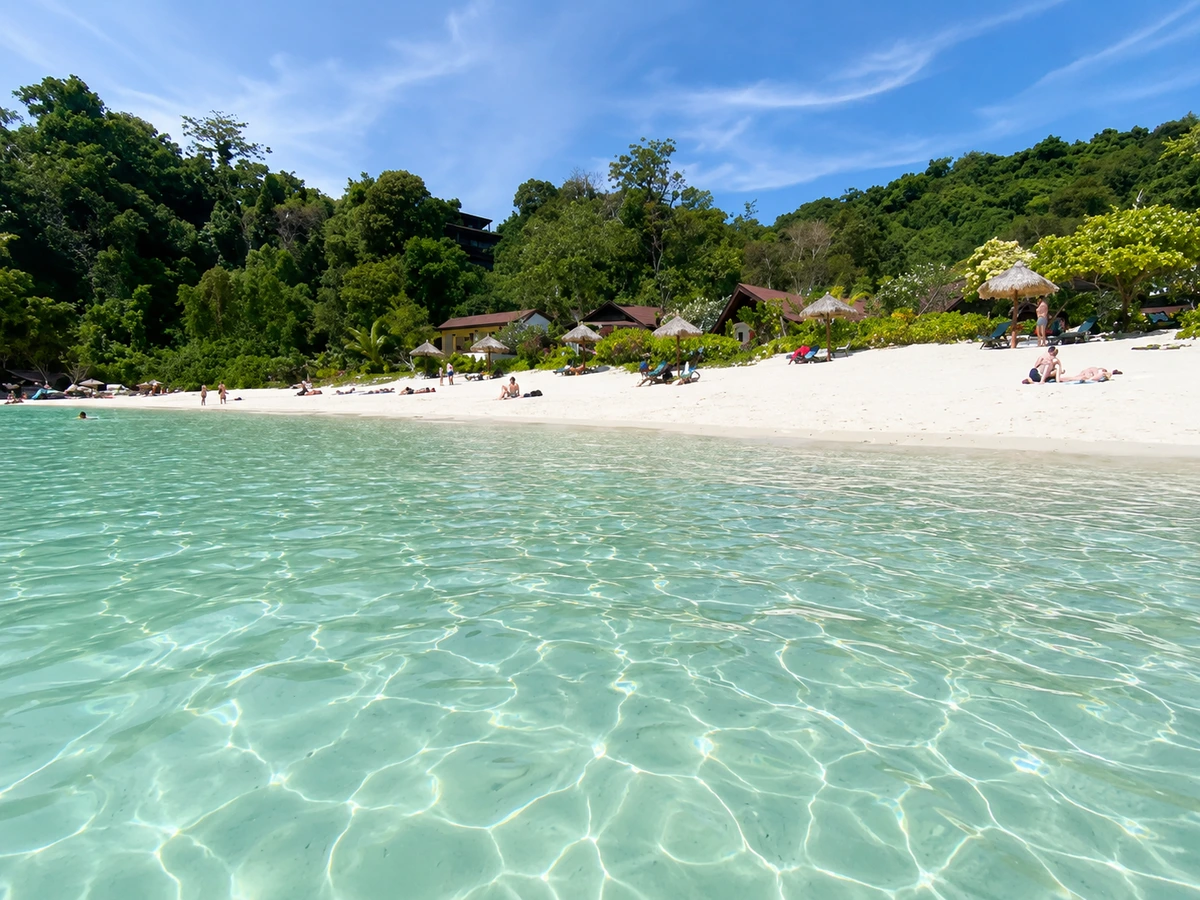
Loh Samah Bay, the back door to Maya Bay where the boats now dock, doubles as one of the better snorkelling stops, with clear water and reef close to the surface. Most tours give you time in the water here.
Viking Cave, set into the northeastern cliffs, is a quick passing stop rather than somewhere you land. You cannot go inside: it is a working harvest site where local collectors gather the swiftlet nests used in bird's nest soup, climbing fragile bamboo scaffolding up the cave walls. Boats pause offshore for a few minutes so you can see the cave mouth and hear the story behind it.
How to Visit Koh Phi Phi Le
Since you cannot stay, every trip is a day trip, and the question is only where you launch from.
The shortest hop is from Koh Phi Phi Don, just north. A longtail or speedboat reaches Phi Phi Le in fifteen to thirty minutes, and a private longtail for a few hours costs far less than a packaged tour from the mainland. From Phuket, most people join a speedboat or catamaran day tour, with the open-water crossing taking around forty-five minutes before the island stops begin. Krabi and Ao Nang run similar speedboat tours. A typical itinerary strings together Maya Bay, Pi Leh Lagoon, a snorkel at Loh Samah, the Viking Cave drive-by, and usually lunch and Monkey Beach over on Phi Phi Don.
Go as early as you possibly can. The first slot of the morning is the quiet one; by mid-morning Maya Bay is at capacity. Staying a night on Phi Phi Don and taking an early private longtail beats any day trip arriving from Phuket in the mid-morning rush.
If you are building a wider Krabi trip around this, the climbing beaches of Railay and the cliff-backed sand at Phra Nang in Ao Nang make natural mainland bases, while the laid-back island of Koh Lanta is another easy add-on.
The Park Fee and the Best Time to Go
Koh Phi Phi Le sits inside a marine national park, so every visitor pays an entrance fee, commonly charged at a higher rate for foreign adults and a reduced one for children, with Thai nationals paying less. Most organised tours fold this into the price, but independent longtail visitors pay it at the booth by Loh Samah Bay. There has been talk of raising the Maya Bay fee, so treat any figure as a guide and confirm the current rate.
Two dates decide your trip. Maya Bay is closed all of August and September, and the calm, clear-water season runs roughly November to April. Plan inside that window, and double-check current rules with your operator, since the park adjusts them often.
Where to Stay and Eat
Everything happens on the other island. Koh Phi Phi Le has no accommodation, no restaurants, and no facilities beyond basic toilets at the ranger station, so you base yourself on Koh Phi Phi Don, with its full range of hostels, resorts, bars, and restaurants around Tonsai. Eat and sleep there, and treat Phi Phi Le as the day's main outing. For anyone who wants more island time without the Phi Phi crowds, the snorkelling-and-diving draw of the Similan Islands further north is a strong companion trip, and it is worth seeing where Phi Phi Le ranks among Thailand's most beautiful beaches.
A Few Practical Tips
Wear or pack shoes you can walk in, since the Maya Bay boardwalk and rocky landings are not flip-flop territory. Use only reef-safe sunscreen, as the others are banned here and the rule protects the coral that the whole island is trying to rebuild. If you are prone to seasickness, the speedboat crossings from Phuket can be bumpy, so medicate before you board rather than after. Carry water and expect no shops. Most of all, set your expectations honestly: this is a managed, crowded, time-limited visit to a recovering ecosystem, and treating it that way, following the rangers and the spirit of responsible travel in Thailand, is what keeps it open at all.
Wrap-Up
Koh Phi Phi Le is still one of the most striking pieces of coast in Thailand, as long as you arrive understanding what it is now: a protected, uninhabited island you visit by boat, where Maya Bay is admired rather than swum, Pi Leh Lagoon is where you actually get in the water, and the clock and the crowds are part of the deal. Go in the dry season, avoid the August-to-September closure, get there at first light, and base yourself on Phi Phi Don. The simple plan: book an early small-boat trip, settle the park fee, and let the lagoon, not the legend, be the highlight.