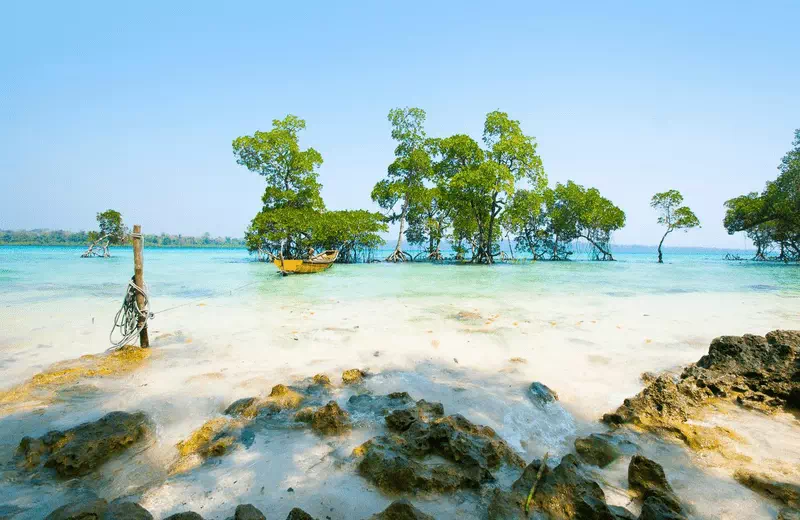
Some Thai islands greet you with thumping bass and a wall of tour touts. Koh Jum Island greets you with a longtail boat captain who is in no particular hurry, a beach with almost nobody on it, and the slightly unsettling realisation that there is no ATM anywhere on the land you just arrived at. This little island sits in the Andaman Sea off Krabi, roughly halfway between Ao Nang and Koh Lanta, and it has somehow stayed quiet while its famous neighbours filled up. If you want a beach holiday where the loudest thing all day is the tide, this is the place to understand before you book.
A slow, low-key Andaman island near Krabi where empty beaches, simple bungalows and a cash-only rhythm are the whole point.
At a Glance
| Location | Andaman Sea, Krabi Province, between Ao Nang and Koh Lanta |
| Also called | Koh Pu (the northern half), sometimes Ko Jum |
| Size | About 16 sq km, around 1,500 residents |
| Vibe | Slow, rustic, beach-and-hammock; no clubs, no party scene |
| Best time | Dry season, roughly mid-November to April |
| Nearest airport | Krabi International Airport |
| Main access | Longtail from Laem Kruat Pier; high-season ferries/speedboats from Lanta, Phi Phi, Ao Nang |
| Cash | No bank ATMs on the island; bring enough baht |
Why Koh Jum Feels So Different
Koh Jum is one island with two names. The southern, busier half is called Koh Jum; the northern half, crowned by a forested mountain, is known locally as Koh Pu, which means Crab Island. Three small villages share it, and the population is only around 1,500 people, many of them Muslim-Thai families who fish and tap rubber. That mix of fishing life and rubber groves, not resorts, is still the island's backbone.
The island stayed off the map for a long time because it had so little to offer the package-tourism machine. Mains electricity only reached Koh Jum in the late 2000s, and round-the-clock power came even later. There are no big supermarkets and, as of now, not a single 7-Eleven, which anyone who has travelled Thailand will recognise as genuinely rare. You will not find go-go bars or late-night clubs either. What is here instead: long stretches of sand, a handful of beach bars built from driftwood, warm locals, and prices that are still gentle by Thai-island standards.
Koh Jum is the kind of island where "things to do" mostly means walking the beach, swimming, reading in a hammock, and watching the sun drop behind Koh Phi Phi. If that sounds boring, this is not your island. If it sounds like a cure, read on.
Best Time to Visit Koh Jum
The dry season runs roughly from mid-November to April, and that is when the island is at its easiest. You get reliable sun, calm seas good for swimming, and the full range of boats running. February and March tend to be the driest and warmest stretch. Even in the peak weeks, Koh Jum rarely feels crowded the way Phi Phi or Phuket do, so you get high-season weather without the high-season crush.
Low season, from around May to October, is a different story. The southwest monsoon brings rain and rougher seas, many resorts close, and boat schedules thin out dramatically. The island does not shut completely, but choices for food, stays and transport shrink, and getting on and off becomes less predictable.
If you only have fixed dates and they fall in the rainy months, double-check directly with your accommodation that they are open and that boats are running before you commit to anything.
For a sense of how Koh Jum stacks up against other quiet Krabi beaches, it helps to compare it with the laid-back, slightly more developed Koh Lanta just to the south, which keeps a similar mellow feel but with more restaurants and services.
How to Reach Koh Jum
There is no airport and no bridge, so every arrival is by boat. The nearest airport is Krabi International Airport, which has good domestic links and some international flights. From there your route depends entirely on the season.
The year-round option is the local longtail from Laem Kruat Pier on the Krabi mainland. It is about an hour by road from Krabi town or the airport to the pier, usually by taxi, minibus or the local songthaew. From Laem Kruat, a large public longtail crosses to Mutu Pier on Koh Jum's east coast in roughly 30 to 45 minutes. The fare is small, in the region of 140 baht per person, though it creeps up year on year and is paid in cash on the boat. These boats double as the island's cargo service, so they run all year and leave when ready rather than to a strict clock.
In high season you have far more choice. Ferries and speedboats heading between Krabi, Koh Lanta and Koh Phi Phi will stop near Koh Jum if you book a ticket to the island, dropping you at Koh Jum Pier on the south coast. There are also speedboat links to many Andaman islands when the weather is good, which makes Koh Jum easy to slot into a longer hop down to Koh Kradan or out toward the Koh Yao Noi area. These seasonal services mostly stop in the wet months, leaving the Laem Kruat longtail as the main lifeline.
One detail trips people up. Mutu Pier sits on the east side, while almost all the resorts line the west coast, so you will need a short taxi or resort transfer across the island once you land. A pier-to-resort ride is cheap, often around 50 baht per person, and your accommodation can usually arrange a pickup if you ask in advance.
The Beaches: Long, Empty and Facing the Sunset
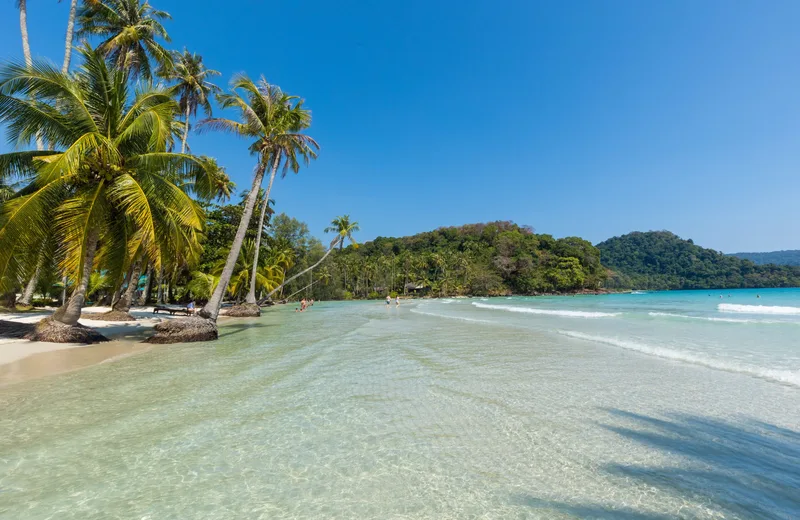
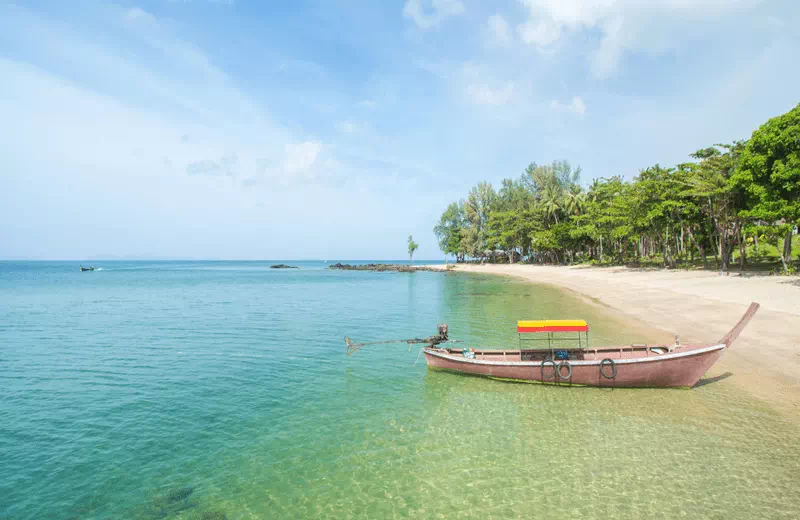
Every beach worth knowing on Koh Jum runs down the west coast, which means every one of them faces the sunset, often with the silhouette of Koh Phi Phi on the horizon. There are nine or so in total, and the joy is how often you will have a long ribbon of sand mostly to yourself.
The headline is Long Beach, known locally as Haad Yao, the island's longest at around five kilometres. You can walk it for a long time before you run out of sand or run into anyone. Golden Pearl Beach is another generous, often near-deserted stretch on the west coast where a few of the nicer resorts sit. Further along you find smaller, rockier bays like Ao Si and Ting Rai, the latter known for tidal reefs that draw small fish when the water comes in, which makes for easy snorkelling straight off the beach. Andaman Beach and a cluster of quieter northern beaches round things out as you head toward Koh Pu, where the roads turn rougher and the crowds vanish entirely.
The sand here is not the blinding talcum white of some Thai postcards, and the shores are often dotted with shells and bits of coral. That is part of the trade. What you get in return is space, silence and sunsets without a crowd jostling for the same photo. If you want to see how Koh Jum's beaches sit among the country's best, it is worth browsing a wider roundup of Thailand's most beautiful beaches to set your expectations correctly before you arrive.
Things to Do on Koh Jum
Most of your time will go on the beaches, but the island has a few genuine highlights for when you want to move.
The big one is the climb up Khao Ko Pu, the mountain on the northern half of the island, which rises to just over 400 metres. It is a steep jungle hike of a couple of hours, usually done with a guide arranged through your resort, and the reward at the top is a wide view over the Andaman Sea and the scatter of islands toward Phi Phi. Keep your eyes open on the northern roads and trails, because this is where you are most likely to spot monkeys.
Cycling suits the island perfectly. It is small and largely flat through the south, and you can rent a bicycle cheaply for the day, or a scooter if you want to reach the rougher northern tracks. Snorkelling is easy off Ting Rai and a few other reefy spots, and resorts can arrange boat trips out to better reefs and to neighbouring islands. Koh Jum's position makes it a natural launch pad for island hopping, whether that is a day out to the limestone drama of Maya Bay and Pileh Lagoon or a longer drift down the coast.
As evening comes, the social life gathers at a few beach bars built by hand from driftwood and washed-up timber, where you can get a cold beer, a fruit shake or live music while the sun goes down. It is about as far from a nightclub as you can get, which is the entire appeal.
Don't arrive expecting waterparks, big attractions or a buzzing night out. Koh Jum's best "activity" is doing very little, very well, for several days in a row.
Where to Stay and What to Eat
Accommodation on Koh Jum is mostly small bungalow resorts strung along the west-coast beaches, plus a few places set back near the central villages such as Ban Ting Rai. The range runs from basic fan bungalows that put you right on the sand for very little, through comfortable mid-range places, up to a small number of smarter villa-style resorts, with the luxury end anchored by properties on Golden Pearl Beach. Many of the simplest places are fan-only and family-run, which is a feature rather than a fault here. In high season the best-value bungalows fill up, so booking ahead is wise.
Food leans toward fresh and simple. Resort restaurants and a handful of local kitchens serve Thai dishes and plenty of seafood, often caught locally, and the island's Muslim-Thai cooking gives the food its own character. Fruit shakes, grilled fish and beach barbecues are the everyday pleasures. There is no strip of competing restaurants and no fast food, so most travellers settle into a rhythm of eating where they are staying and trying one or two village spots. If you like the idea of this kind of low-impact, locally run stay, it pairs well with the broader appeal of quiet islands like Koh Phayam further up the Andaman coast.
Budget and Money: Bring Cash
Koh Jum is not an expensive island, but it does demand a little planning, mostly around money. There are no bank ATMs on the island. Smaller businesses such as bars, restaurants and tour agents generally take cash only, and while some resorts accept cards, you should never count on it. There is usually a travel agent who will do a cash-back service, charging your card and handing you baht for a percentage fee with a daily limit, but rates are poor and it is a fallback, not a plan.
So the single most useful thing you can do is withdraw enough baht on the mainland, at the airport or in Krabi town, before you ever board the boat. As a rough guide, modest travellers can get by comfortably on a daily budget once stays are booked, with local meals, drinks and a bike rental all fairly cheap, while smarter resorts and frequent boat trips push it higher. Prices for boats, food and rooms all drift upward over time and vary by season.
Treat Koh Jum as cash-only and bring more baht than you think you need. Running short on an island with no ATM is a genuinely awkward problem to solve.
For exact, current fares, room rates and entry costs, check at the time of travel rather than relying on any fixed figure, since these change constantly.
Practical Travel Tips for Koh Jum
A few things make a Koh Jum trip smoother. Phone coverage exists but is patchy by network, and the AIS network tends to give the strongest signal across the island, which is worth knowing if you need to stay connected. Pack light but sensibly, including reef-safe sunscreen, any medicines you rely on and a power bank, since shops are limited and you cannot just nip out to a convenience store.
Thailand now requires arriving travellers to complete a digital arrival card online before they reach the country, and entry and visa rules can change, so confirm the current requirements on the official Thai immigration website before you fly. Thailand has also tightened its cannabis laws since the brief period of open sales, and recreational use is now restricted, so do not assume anything you may have read about beach bars still applies; check the current law rather than risk a fine.
Because Koh Jum is a quiet, traditional and largely Muslim community, dressing modestly away from the beach and asking before photographing people goes a long way. And if you are visiting in the shoulder or wet season, build in a buffer day for travel, because boats here bend to the weather and the cargo, not to your schedule. Travellers who enjoy reaching places the slow, local way will find Koh Jum a natural fit, much like the kind of off-grid routes covered in guides on reaching hidden corners of Thailand without renting a car.
If you do want a Krabi mainland base before or after the island, the climbing-famous cliffs and beaches around Railay make an easy add-on, since you are passing through the same gateway anyway.
The Takeaway
Koh Jum Island rewards a very specific kind of traveller: the one who measures a good day by how little happened. Quiet beaches, simple bungalows, fresh seafood and a cash-only, no-rush pace are the whole offer, and they are getting harder to find on the Andaman coast as nearby islands grow. Pick the dry season, carry enough baht, sort out your boat in advance, and let the island do the rest. The clearest next step is simple: choose your travel dates, confirm with a west-coast bungalow that suits your budget, and lock in your boat before the high-season beds fill up.