Most hill stations near Delhi greet you with a traffic jam, a mall road and a queue for the ropeway. Chakrata does the opposite. There is no cable car, no selfie point with a painted backdrop, and for long stretches no mobile signal either. What you get instead is a cantonment town sitting around 7,000 feet up in Uttarakhand's Dehradun district, wrapped in deodar cedar forest, with a waterfall so tall you hear it before you see it. If your idea of a mountain break is silence rather than a crowd, this Chakrata travel guide is built for exactly that.
The short version: Chakrata is a quiet, offbeat hill station roughly 320 km from Delhi, best for waterfalls, forest walks and doing very little in very good air.
Chakrata at a glance
Here is the quick snapshot before the details.
| Detail | What to know |
|---|---|
| Location | Dehradun district, Uttarakhand, between the Tons and Yamuna rivers |
| Altitude | Around 7,000–7,250 ft (about 2,100 m) |
| Distance from Delhi | Roughly 320 km, a full day's drive |
| Distance from Dehradun | About 90 km, 3–4 hours by road |
| Known for | Tiger Falls, Deoban forest, Budher Caves, Chilmiri Neck views |
| Best time | March–June and September–November; snow in Dec–Feb |
| Good to know | No petrol pump in town; weak mobile network; foreigners need a permit |
Why Chakrata feels different from the usual near-Delhi hill stations
Weekenders from Delhi tend to funnel into the same few places, and most of them are wonderful and completely overrun. Chakrata never got that treatment. It was set up in 1866 as a British cantonment, chosen for its high perch over the Yamuna valley, and it still carries that quiet, slightly time-frozen feel. Parts of the town remain a military zone and stay closed to the public, which is one reason it never turned into a tourist machine.
The nearest famous neighbour is Mussoorie, about a few hours away and packed most weekends. Chakrata is the anti-Mussoorie. You come here to walk under cedar trees, not to shop. If you are weighing up options and want the crowded versus calm trade-off spelled out, this roundup of hill stations near Delhi under 300 km puts Chakrata in context with the busier names.
How to reach Chakrata
Getting here takes some effort, and that effort is part of why it stays quiet.
By road is the most common way. From Delhi it is a long day's drive of roughly 320 km, usually routed through Dehradun and then Vikasnagar. From Dehradun the last stretch is about 90 km of winding mountain road that takes three to four hours, with tight bends near the top. If you would rather turn the journey itself into the trip, these offbeat road trips from Delhi under 300 km share the same Dehradun corridor.
By train, the nearest railhead is Dehradun, well connected to Delhi. By air, the closest airport is Jolly Grant in Dehradun. From either, you hire a taxi or catch a bus onward to Chakrata. There is no direct flight or train to the town itself, so plan on that final road leg no matter how you arrive. On the way up, the same corridor passes turn-offs for spots like Dhanaulti, and if you want to add one, here is how to reach Dhanaulti from Dehradun.
There is no petrol pump in Chakrata town. The nearest fuel is at Kourwa, roughly 15 km before you arrive on the Dehradun road. Fill your tank there, not later.
Best time to visit Chakrata
Chakrata runs on seasons, and the right one depends on what you want.
For pleasant days and easy trekking, March to June is the reliable window, with mild afternoons and cool nights. Autumn, September to November, is arguably the sweet spot. The monsoon has washed the air clean, the skies open up, and the Himalayan peaks show themselves clearly, which is why photographers rate this stretch highly. If crisp, clear weather is your thing, these autumn destinations near Delhi explain why post-monsoon is such a good time to be in the hills.
Winter, roughly December to February, turns cold enough to drop below freezing, and higher pockets like Deoban and Mundali can see snow. It is beautiful and quiet, though some roads may close after heavy snowfall, so keep the plan flexible. For a wider list of where the snow falls within reach of the capital, see these snowfall getaways near Delhi.
The one season to be careful with is peak monsoon, from July into September. The greenery is at its most alive, but this belt is prone to landslides and sudden roadblocks, and the drive up can get genuinely risky. If you go then, watch the forecast closely.
Chakrata tourist places and things to do
The attractions here are spread out and mostly involve walking, which suits the town's slow character.
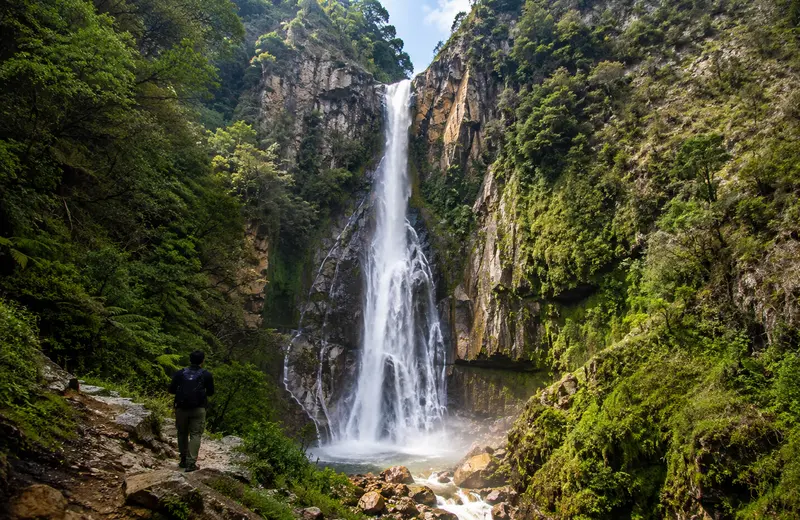
Tiger Falls is the headline sight. Often cited at around 312 feet, it is counted among the tallest waterfalls in Uttarakhand, dropping in a single white sheet into a cold pool ringed by cedar and moss. You reach it by a forest trek of roughly 5 km from the road end, and the walk through the trees is honestly half the reward. Height figures vary between sources, so treat the exact number loosely and just go see it.
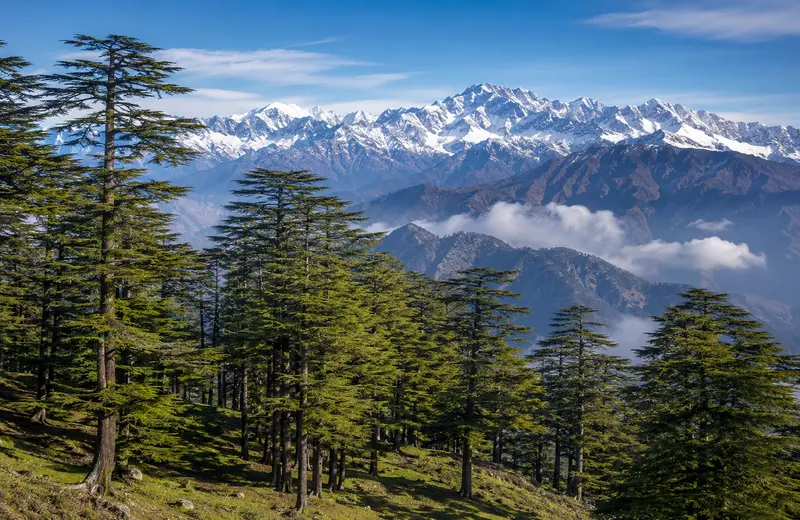
Deoban, whose name means "forest of deodars," sits about 13 km from town at a higher elevation. Old cedar trees stand in tall silver-grey ranks, broken by meadows that open onto the snow peaks. It is also one of Uttarakhand's better birdwatching spots, with the chance of sighting the Himalayan monal, the state bird, along with pheasants and laughingthrushes. Bring binoculars and patience.
Budher Caves, also called Miola Caves, are limestone caves near Moila Top, threaded with stalactites and stalagmites. Local lore ties them to the Pandavas of the Mahabharata, and villagers tell tall tales of tunnels running for many kilometres. Take the legends with a smile, take a torch and sturdy shoes seriously, and go in with a local who knows the way.
Chilmiri Neck is the viewpoint people climb for sunrise and sunset, with a sweep across peaks like Bandarpoonch and Swargarohini on a clear day. Kanasar, a deodar-shaded meadow, is the go-to for camping and bonfire nights, while Mundali draws a small winter crowd for basic skiing when the snow is good. Between the treks, the caves and the campsites, Chakrata rewards anyone happy to move on foot, and these adventure spots near Delhi for trekking and camping put it alongside similar outdoorsy escapes.
Where to stay and what to eat
Do not expect a strip of resorts. Chakrata has a modest spread of budget hotels, guesthouses and a growing number of homestays, plus campsites out near Kanasar for anyone carrying a tent. Because the total number of rooms is small, booking ahead in peak season is not optional, especially on long weekends.
Food follows the same simple logic. There are only a handful of proper restaurants, so many travellers eat where they sleep, and roadside dhabas fill the gaps with North Indian and Garhwali plates. Try the local Jaunsari and Garhwali specialities while you are here, like aloo ke gutke, the spiced fried potatoes, and bhatt ki churkani, a black-bean curry, along with rajma cooked slow on a wood fire in a village home. It is honest hill food, and it tastes better at this altitude.
How many days, and what it costs
Two nights is the sweet spot. That gives you one full day for Tiger Falls and Deoban, and a second for the caves, a viewpoint and a slow morning. Rush it into a single day and you will spend more time on the road than in the forest.
Costs stay reasonable because there is little here to splurge on. Budget rooms and homestays are easy on the wallet, food is cheap, and the main expense is usually the taxi if you are not driving yourself. A relaxed weekend for two, stay and meals included, does not need a big budget, though your transport bill depends heavily on whether you self-drive or hire a cab for the winding local runs.
Carry enough cash. ATMs are scarce and unreliable up here, card acceptance is patchy, and the mobile network drops out often. Download offline maps before you leave Dehradun.
Staying safe and a few honest tips
Chakrata is generally safe and low-key, and the real risks are practical rather than anything sinister. The roads are narrow and twisting, so an experienced driver matters, and motion-sickness medication helps on those near-360-degree bends. Pack warm layers even in summer, because temperatures swing fast once the sun drops.
Foreign nationals should note this is a cantonment and restricted zone near the border, and a permit is typically required, so check the current rules before planning. Indian travellers generally move freely, but a few military areas stay off-limits. Because signal is weak and the town is remote, tell someone your plan before heading into the forest, and do not start a trek late in the day.
For anyone travelling alone, especially women, Chakrata's quiet is a plus but its remoteness calls for a bit more prep. These safe solo travel destinations in India for women are worth a read for general ground rules that apply neatly here too.
The wrap-up
Chakrata is not the hill station for shopping, nightlife or a packed sightseeing checklist. It is the one you pick when you want deodar forests, a tall waterfall at the end of a quiet trek, and a night sky with nothing competing for it. Keep the plan simple: two nights, a full tank from Kourwa, warm layers, cash in hand, and a booking made in advance. Your next step is easy. Block a long weekend outside peak monsoon, lock your stay early, and let one of India's quietest near-Delhi escapes do the rest.