Most people come to Koh Tao to learn to dive. Then they stumble onto Sairee Beach and end up staying three nights longer than planned. This is the long, west-facing strip of sand where the whole island seems to gather: dive boats loading up at dawn, hammocks by lunch, and a slow drift toward the water's edge every evening when the sky turns orange. If you only have time to base yourself in one spot on the island, Sairee Beach Koh Tao is the easy answer, and this guide walks you through how to reach it, when to go, what to do, where to sleep, and what it all costs.
A practical, no-fluff guide to Sairee Beach on Koh Tao — sunsets, diving, nightlife, sleeping options, and the small details that save you money and hassle.
Sairee Beach at a Glance
| Detail | What to know |
|---|---|
| Location | West coast of Koh Tao, Gulf of Thailand |
| Length | Around 1.7–2 km, the longest beach on the island |
| Best for | Sunsets, learning to dive, easy snorkelling, social nightlife |
| Nearest pier | Mae Haad, roughly 5 minutes away by road |
| Getting there | Boat only, via Chumphon, Surat Thani, Koh Samui or Koh Phangan |
| Calmest seas | Roughly February to September; wettest spell around November |
| Beach entry fee | None |
| Overall vibe | Walkable, lively, easy to meet people |
Where Sairee Sits, and Why That West-Facing Direction Matters
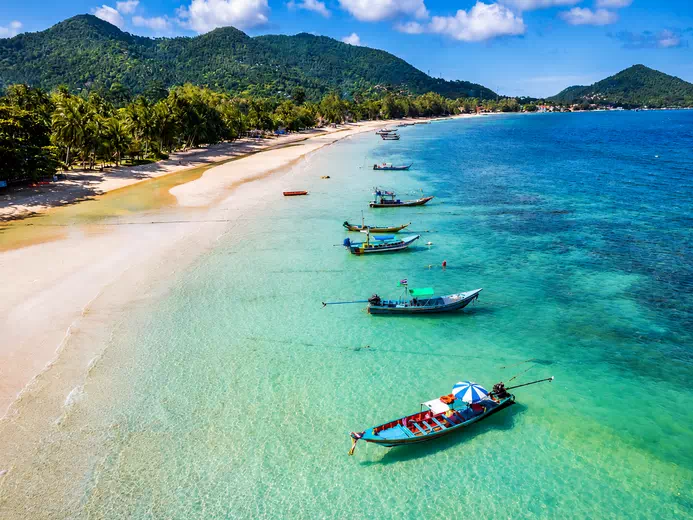
Sairee runs along the western shoreline of Koh Tao, the small island that sits in the Gulf of Thailand as part of the Chumphon Archipelago. It is the biggest and busiest beach here, and almost everything that makes Koh Tao tick is packed into the village behind it: dive schools, guesthouses, massage shops, ATMs, scooter rentals, tour desks, and a narrow beach road that is too tight for cars and belongs to pedestrians and scooters instead.
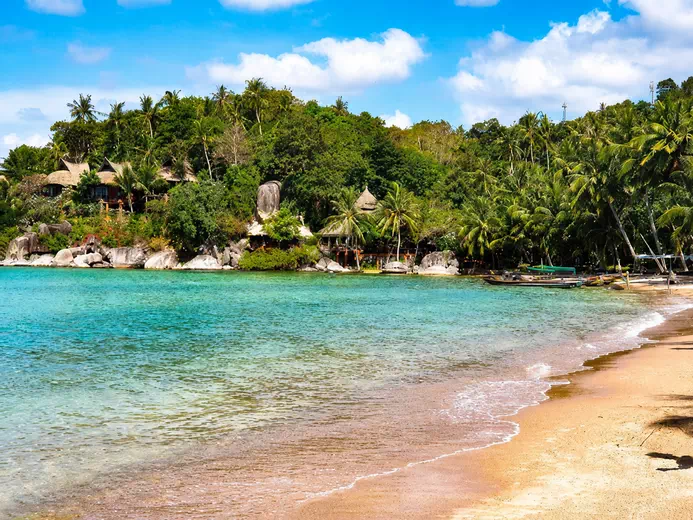
That westward angle is the reason photographers and first-timers both fall for the place. The sun drops straight into the sea in front of you, so the sunset show happens right off the sand rather than behind a hill. Bars set out beanbags and Thai cushions an hour before, drink prices dip, and the beach quietly fills up.
The single best free thing to do on Sairee is nothing at all: grab a spot on the sand around an hour before sunset and stay put. The light over the Gulf is the main event, and it costs nothing.
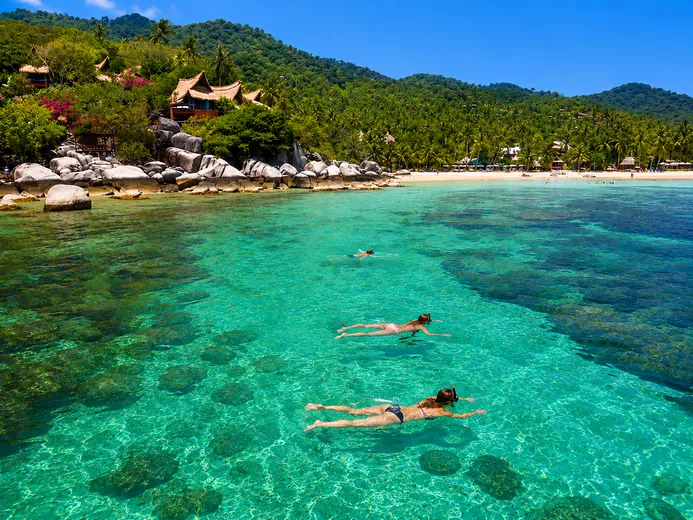
A coral reef sits surprisingly close to shore, close enough to swim out to with a mask. The catch is the tide. At low tide the water near the beach gets very shallow and rocky in places, so swimming and snorkelling are easier when the tide is higher. Worth checking a tide chart for the day you arrive.
Best Time to Visit Sairee Beach
Koh Tao is hot and humid all year, with daytime temperatures usually sitting around the low 30s Celsius and sea temperatures rarely dropping below the high 20s. Because it is a small island, the weather can flip fast, and you can get a downpour in the dry months or a run of clear days in the wet ones.
The general pattern looks like this. The calmest seas and clearest water tend to run from around February to September, which is also the prime stretch for diving. Many divers single out March to May for the best visibility and the highest chance of spotting a whale shark, while June to September stays good but a little less predictable. The wettest period builds toward November, which is usually the trickiest month for diving thanks to heavier rain and reduced visibility.
Here is the reassuring part. Koh Tao's shape means one side of the island is almost always sheltered, so dive boats keep running through the monsoon by shifting to calmer sites. Rain in the green season also tends to come as short afternoon storms rather than all-day washouts.
If you want lighter crowds and softer prices, the shoulder weeks around February and October to November often deliver, with the obvious trade-off of less settled weather. Peak demand lines up with December to April and again around July to September, and it spikes whenever the Full Moon Party on nearby Koh Phangan pulls a wave of travellers through the region.
Booking tip: ferries and dive-school beds sell out fast in high season and around Full Moon Party dates. Reserve your boat seat a few days ahead rather than winging it at the pier.
How to Reach Koh Tao and Get to Sairee Beach
There is no airport on Koh Tao, and that is part of its charm. Every route ends with a boat ride, so the question is really which gateway you start from. The three closest airports are on Koh Samui, at Surat Thani on the mainland, and at Chumphon, which has a Bangkok connection.
Chumphon is the nearest mainland point, which makes for the shortest and usually smoothest crossing, roughly an hour and three-quarters to two hours on a high-speed catamaran. Surat Thani is further south and takes longer by ferry, though it has more flight and train options. From the islands, Koh Phangan is the quickest hop at around an hour to an hour and a half, and Koh Samui is roughly two hours by high-speed ferry. Several operators run these routes, including Lomprayah, Songserm, Seatran and Boonsiri, and there are slower overnight boats from Chumphon and Surat Thani if you would rather sleep through the journey.
From Bangkok, the most popular budget choice is a combined bus-and-boat ticket: an air-conditioned coach south to a Chumphon pier, then the catamaran across. A train-and-ferry combo works too. If time matters more than money, fly Bangkok to Koh Samui, then catch a ferry onward to Koh Tao. Plenty of travellers turn the trip into an island-hopping run, pairing Koh Tao with Chaweng Beach on Koh Samui or with the party scene at Haad Rin on Koh Phangan, since the same ferry network links all three.
All boats dock at Mae Haad, the island's main pier. From there, Sairee is only about a five-minute ride. Songthaews (shared pickup taxis) wait at the pier, your accommodation may offer a pickup, or you can rent a scooter. Fares are short and cheap, but agree the price before you climb in.
Things to Do at Sairee Beach
The beach itself rewards doing very little. You can swim when the tide cooperates, rent a paddleboard or kayak from one of the bars, join a beach volleyball game, or just work your way down the sand from one cushion-strewn bar to the next. There are rope swings on a few palms and a string of cafes if you want shade and a cold drink.
Snorkelling is genuinely good for a beach this developed. The reef close to shore holds parrotfish and the odd school of bigger fish, and a mask plus the right tide is all you need. For something better, day-trippers head out to the reefs around the island and to neighbouring islets. If snorkelling-focused beaches are your thing on this trip, places like Haad Salad on Koh Phangan make an easy add-on via the same ferries.
Renting a scooter unlocks the rest of Koh Tao: viewpoints like John-Suwan, quieter bays such as Tanote and Hin Wong on the east side, and Freedom Beach in the south. The roads are hilly and some stretches are steep or sandy, so this is only a good idea if you are a confident rider (more on the rental pitfalls below).
Diving and Snorkelling: Why Everyone Learns Here
Koh Tao is the most popular place in the world to learn to scuba dive, and Sairee is the heart of that scene, with dive schools lining the village. The appeal is simple: warm, calm, shallow water, a long list of nearby sites, and prices that stay low without cutting corners on training standards.
Costs shift between schools and over time, so treat these as ballpark figures and confirm the current rate when you book. A "Discover Scuba" taster usually starts around 2,750 THB, the full PADI Open Water certification course commonly runs in the region of 11,000 to 13,000 THB, and single fun dives for certified divers often begin near 800 to 1,000 THB. Island dive centres broadly hold a minimum price, so wildly cheap quotes are worth questioning rather than chasing.
Popular sites within reach include Chumphon Pinnacle, Sail Rock, Japanese Gardens, Twins, White Rock and Shark Bay, and there is a real chance of crossing paths with a whale shark in the right season. For non-divers, snorkelling tours from Koh Tao cover several of these spots in a half or full day.
Koh Nang Yuan, the Postcard Next Door
If you have seen one photo of this area, it was probably Koh Nang Yuan: three tiny islands stitched together by a pale sandbar, sitting just off Koh Tao's northwest coast. A short, steep climb up steps and over a few boulders reaches the viewpoint that frames all three islands at once, and the snorkelling around the connecting reefs is some of the best in the Gulf.
You can only get there by boat. A taxi boat runs from Mae Haad or Sairee, or you can join a snorkelling tour that includes the stop. There is an entrance fee on arrival, somewhere in the 100 to 250 THB range and worth confirming on the day since it has risen over the years, so carry cash. The island is open to day visitors during daytime hours and closes to non-resort guests in the late afternoon. Single-use plastic is banned and bags are checked at the pier, so leave the plastic water bottles behind.
Go to Koh Nang Yuan early. Tour boats land mid-morning and the small sandbar gets genuinely crowded, so arriving before the fleet, or staying overnight at the island's single resort, buys you the quiet version of the view.
Sairee Beach Nightlife
When the sun is down, Sairee turns into the island's social spine. The bars sit right on the sand, the music starts low and builds, and fire shows light up after dark most nights.
Lotus Bar is the old reliable, marked by a famous palm that leans out low over the water. It opens for sunset drinks on the beach cushions, then runs late with DJs and a nightly fire performance that guests are sometimes pulled into. A little along the sand, Fishbowl Beach Bar plays restaurant by day and turns into one of the busier party spots after dark, with live music, beer pong and DJs. Chopper's, an Aussie-style sports bar in the village, is the usual meeting point for the Koh Tao Pub Crawl, which runs several nights a week and bundles a t-shirt, a welcome bucket and drink deals across a handful of venues. Maya Beach Club and AC Bar round things out, the latter known for pool parties.
It is the kind of nightlife that scales to your mood: a quiet sundowner on a beanbag or a loud night that ends at dawn, both available within the same few hundred metres.
Where to Stay at Sairee Beach
Sairee has the widest spread of beds on Koh Tao, from cheap social hostels to beachfront resorts, and staying here keeps you walking distance from food, dive shops and the nightlife.
At the budget end, the village is full of hostels and simple bungalows, with a few standout social spots like Savage Hostel, which has a rooftop pool that punches above its price. In the mid-range, large dive-linked resorts such as Ban's Diving Resort sit right in the centre of the action with multiple pools and on-site restaurants, and Sairee Cottage Resort offers a more low-key base. For something quieter and more upscale, the northern end of the beach holds villa-style places like Koh Tao Cabana, set a little apart from the late-night noise.
A simple rule: the closer you sleep to the central bars, the livelier and louder it is. Light sleepers should aim for the northern or southern ends of Sairee, or step one street back from the beach.
Where to Eat and What to Try
Food on Sairee runs the full range, from beachfront seafood grills to backpacker brunch cafes and proper Thai kitchens. The walking street behind the beach is where to graze in the evening, with street-food vendors and small night-market stalls turning out pad thai, grilled skewers, fresh fruit shakes and som tam for not much money.
Stick with busy local stalls for the cheapest, freshest food, and treat the beachfront bars as the splurge for the view rather than the value. Mae Haad, a few minutes away, adds a few more seaside dinner spots if you want a change of scene.
What a Sairee Beach Trip Costs
Thailand is friendly on the wallet, and Koh Tao mostly keeps that promise, though diving and boat tours are where the bigger numbers land. Everything below is in Thai baht (THB) and meant as a rough guide; prices move with season and operator, so check current rates before you commit.
| Expense | Rough cost (THB) | Notes |
|---|---|---|
| Hostel dorm bed | From a few hundred | Cheapest in shoulder months |
| Mid-range room | Mid hundreds to low thousands | Resorts and bungalows |
| Street-food meal | Low | Walking-street stalls and night market |
| Scooter rental | ~150–300 per day | Automatic; manual bikes cost more |
| PADI Open Water course | ~11,000–13,000 | Confirm what's included |
| Single fun dive | ~800–1,000 | For certified divers |
| Koh Nang Yuan entry | ~100–250 | Plus boat transfer; bring cash |
| Songthaew from pier | Low, short ride | Agree the fare first |
To stretch your budget, eat where locals eat, travel in the shoulder season, share scooter and tour costs, and book ferries and courses online in advance to dodge peak-day premiums.
Travel Tips, Safety and the Scams to Sidestep
Koh Tao is a friendly, walkable island, and most visitors leave with nothing worse than sunburn. A few specifics are worth knowing before you arrive.
Scooter rentals here have a long-running reputation for trouble, and it is the one thing to be careful about. The classic problems are inflated "damage" charges on return and shops that hold your passport until you pay. Protect yourself by renting only from a reputable place, never handing over your passport (offer a cash deposit or a photocopy instead), and filming the bike from every angle before you ride off so existing scratches are on record. Wear a helmet, both because the roads are hilly and sandy and because police do stop and fine riders without one. Good travel insurance that covers motorbikes is not optional here, partly because serious medical cases often have to be sent to Koh Samui or Bangkok.
If a rental shop insists on keeping your passport, walk away and find another. Legitimate operators accept a cash deposit or a copy. A held passport is the single most common Koh Tao headache, and it is entirely avoidable.
For nights out, the usual sense applies: keep an eye on your drink, avoid walking alone down dark lanes, sort your ride home in advance, and steer well clear of drugs, which carry heavy penalties in Thailand. Carry cash, since not everywhere takes cards and ATMs add fees. As with any beach destination, comparing a few of the best beaches in Thailand before you go helps you set expectations for crowds, water clarity and vibe.
A Simple Two-to-Three Day Sairee Plan
Day one is for settling in: arrive at Mae Haad, get to Sairee, find your feet with a slow afternoon on the sand, and claim a sunset spot before dinner on the walking street. Day two earns its keep underwater, whether that is the first half of an Open Water course, a fun dive, or a snorkelling trip out to Koh Nang Yuan, followed by a night sampling the beach bars. If you have a third day, rent a scooter (carefully) to loop the island's viewpoints and quieter east-coast bays, or take the ferry onward to a calmer beach such as Bophut on Koh Samui or the laid-back sands of Thong Nai Pan on Koh Phangan.
Wrap-Up
Sairee Beach works because it does not ask you to choose. You can learn to dive in the morning, snorkel a reef that starts a few strokes from shore, eat cheaply from a night stall, and watch the sun fall into the Gulf with a drink in hand, all without leaving one stretch of sand. It is busy and social by design, not quiet and remote, so set your expectations accordingly. Your clear next step is to lock in your ferry seat and a dive school or room a few days early, especially in high season, and let the rest of the trip find its own rhythm once you are there.