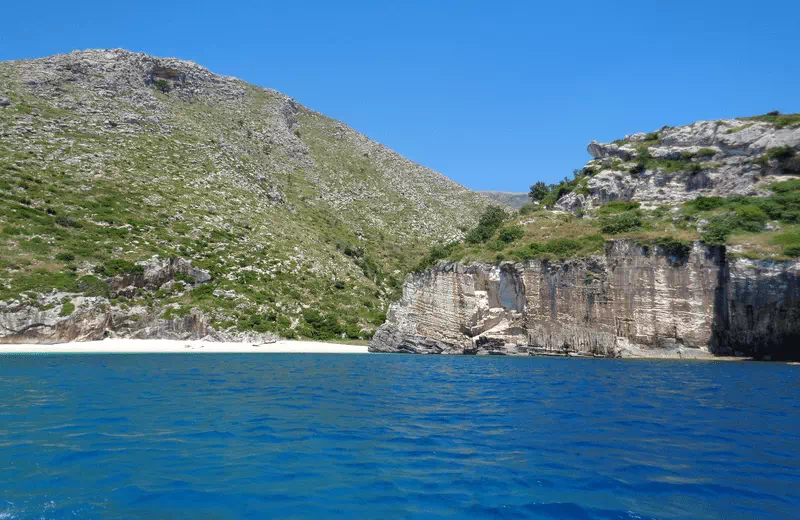
Grama Bay, nestled along the Albanian Ionian Sea Coast, is a hidden gem that offers a unique blend of history, geography, wildlife, and tourism opportunities. This secluded bay, part of the Karaburun Peninsula and within the Karaburun-Sazan Marine Park, is renowned for its pristine beauty, crystal-clear waters, and rich cultural heritage. The following article delves into the specific aspects of Grama Bay, highlighting its significance across various dimensions.
Location
Southern Europe, along the Albanian Riviera south of the Karaburun Peninsula.
History
Grama Bay's history is as captivating as its landscapes. The bay has served as a quarry since ancient times, with its stone used in the construction of nearby cities such as Orikum and possibly even transported to Italy.
The bay's walls are adorned with over 1,500 inscriptions, ranging from ancient Greek to medieval times, bearing witness to the passage of mariners who sought refuge or gave thanks to the gods for safe passage.
Notably, Byzantine Emperor John V Palaiologus is among the historical figures who left their mark here during a voyage in 1369, highlighting the bay's importance as a maritime sanctuary.
Geography
Geographically, Grama Bay is a marvel. It is located at coordinates 40°12′56″N 19°28′24″E, with a maximum width of approximately 100 meters and an average depth of around 200 meters.
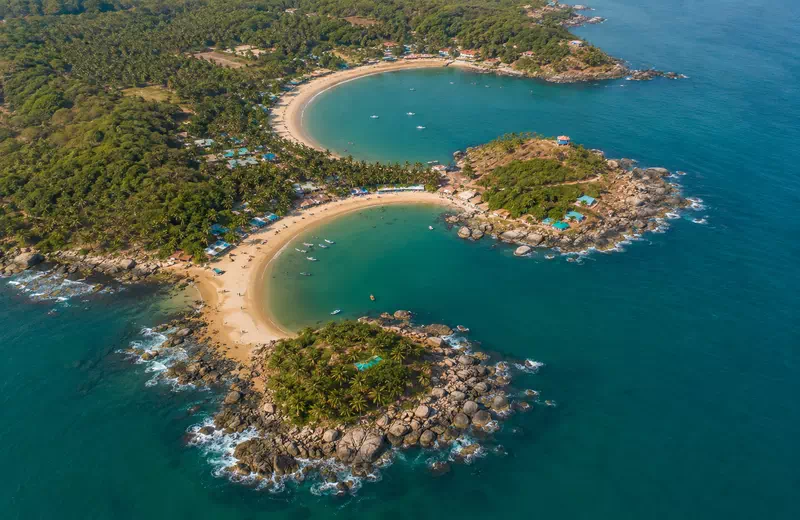
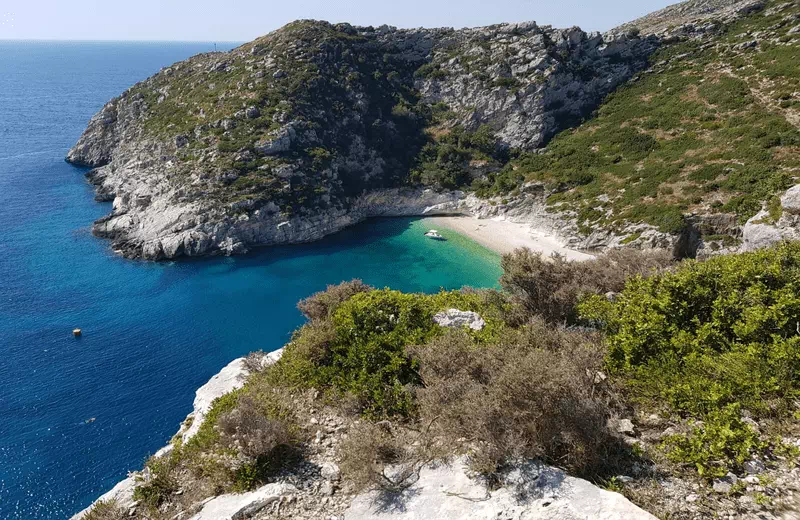
The bay is part of the western Ceraunian Mountains along the Albanian Riviera, characterized by its rugged coastline, steep cliffs, and pebbled beaches.
Its isolation and the challenging terrain surrounding it have preserved its untouched beauty, making it a coveted spot for adventurers and nature lovers.
Wildlife
The biodiversity in and around Grama Bay is of global significance. The area is home to the Mediterranean monk seal, one of the rarest seal species in the world, which finds refuge in the bay's sea caves.
These caves, along with the surrounding marine and terrestrial ecosystems, contribute to the ecological balance of the region and provide habitat for numerous globally threatened and endangered species.
Tourism
Despite its historical and natural allure, Grama Bay remains relatively untouched by mass tourism. Accessible only by boat or through a challenging hike from Palasë, the bay offers a tranquil escape for those looking to connect with nature.
The pristine beach, clear waters, and the opportunity to explore the inscriptions and surrounding landscapes attract a niche group of tourists seeking adventure and serenity.
The bay's inclusion within the Karaburun-Sazan Marine Park further emphasizes its ecological and recreational value.
In conclusion, Grama Bay is a testament to Albania's rich cultural heritage and natural beauty. Its historical inscriptions tell tales of ancient mariners, while its geography and wildlife offer a glimpse into the Mediterranean's ecological diversity. For those willing to venture off the beaten path, Grama Bay promises an unforgettable experience that combines the thrill of exploration with the peace of unspoiled nature.