There's a moment, somewhere around step 600, when your legs start asking what exactly they did to deserve this. Your shirt is soaked. A monkey is eyeing your water bottle. And someone coming back down grins and says the only thing that keeps you moving: "It's worth it." That, in short, is the Tiger Cave Temple Krabi experience — a sweaty, jaw-dropping climb to one of the most jaw-dropping viewpoints in southern Thailand. This guide walks you through every step (literally), so you know exactly what you're signing up for before you start.
Everything you actually need before you climb: the real number of steps, how to get there, what to wear, when to go, and the honest truth about whether it's worth it.
At a Glance
| Detail | What to Know |
|---|---|
| Also known as | Wat Tham Suea (วัดถ้ำเสือ), meaning "Tiger Cave Temple" |
| Where | Just outside Krabi Town, at the foot of the Khao Phanom range, Krabi Province |
| Famous for | A brutal summit staircase, a giant golden Buddha, and 360-degree views |
| The climb | Around 1,260 steps (the old sign says 1,237) |
| Entry | Free to enter and climb; a small voluntary donation applies at the cave |
| Best time | Early morning, during the cooler dry months |
| Time needed | Roughly 2.5 to 3 hours for the full visit |
What Makes Tiger Cave Temple So Famous?
Krabi has no shortage of stunning temples, but this one stands apart — and it's earned its place among the most stunning temples in Thailand. The name comes from a legend: a large cat, said to be a tiger (some locals say a leopard), once lived in the caves here, and a natural rock formation shaped like a tiger's paw print can still be seen inside.
The temple was founded in 1975 by a Vipassana meditation monk, Ajahn Jamnian Seelasettho (his name is also written Jumnean or Chamnian). He came to meditate in the cave, and the site grew into a working forest monastery and Vipassana meditation centre that's still active today. Monks and nuns live and practise here, so it's a genuine place of worship — not just a tourist photo stop.
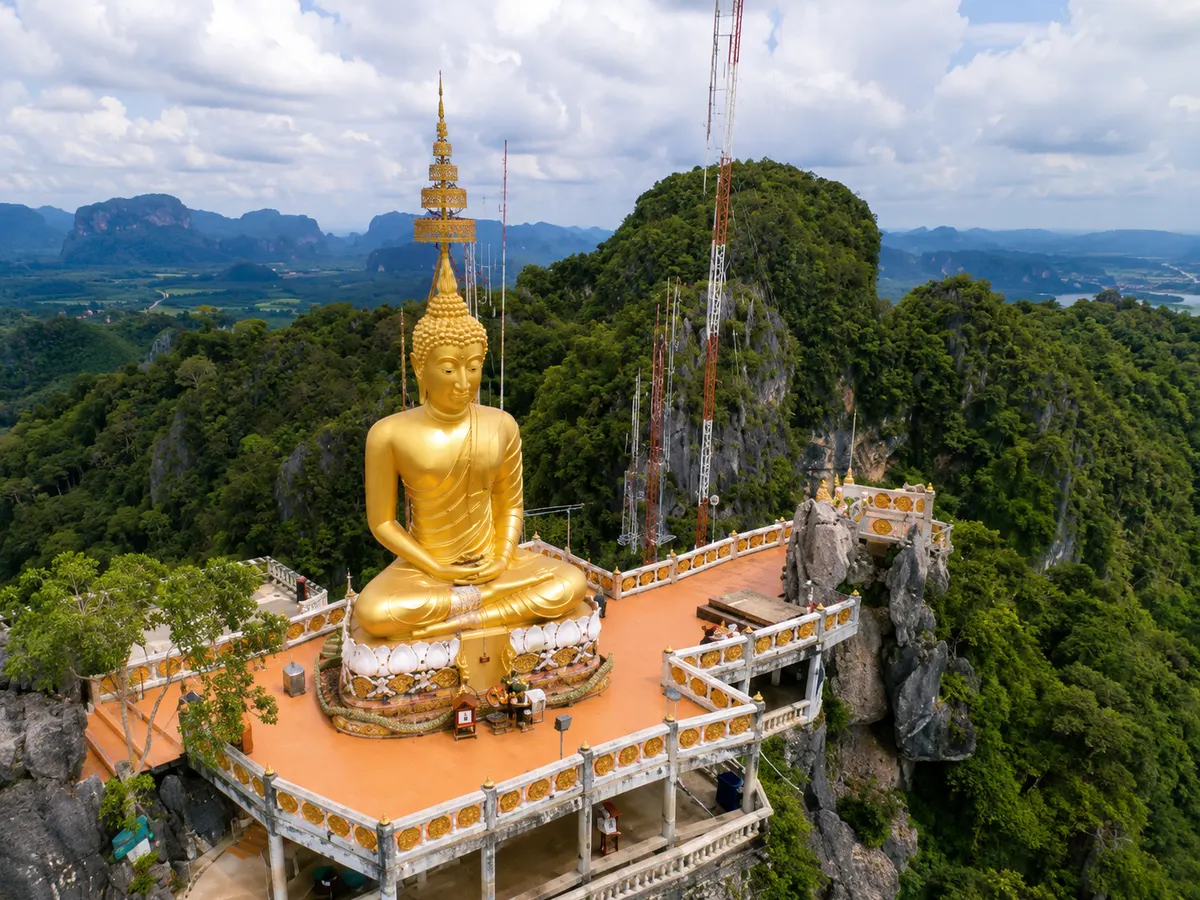
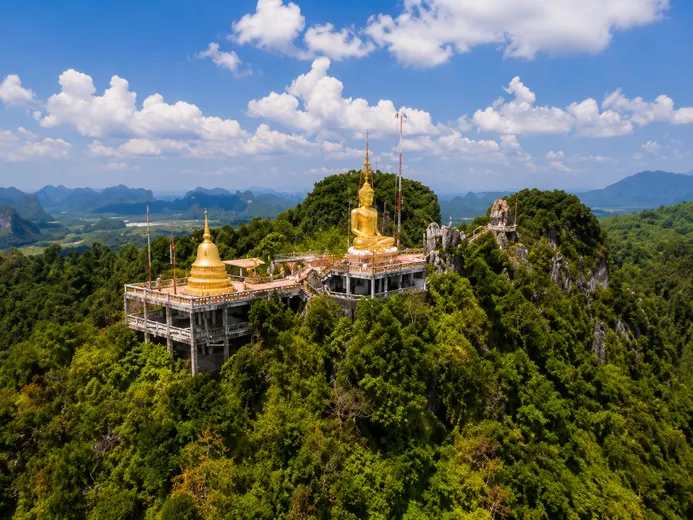
What pulls in the crowds, though, is the summit climb. A long, steep staircase winds up the limestone mountain to a giant golden Buddha and a panoramic platform overlooking the whole Krabi region. It's part pilgrimage, part endurance test, and the payoff at the top is the kind of view people travel a long way for.
The Climb: How Many Steps and How Hard Is It Really?
Let's settle the question everyone asks first. A weathered sign at the base proudly states 1,237 steps. But after one section of the staircase was rebuilt, the real count crept up to around 1,260 — and you'll hear slightly different totals depending on who's doing the counting. Either way, the headline is the same: it's a lot of stairs, and it's a proper workout.
This isn't a gentle slope. Many steps are uneven, and some are almost knee-high, so it feels steeper than a normal staircase. Depending on your fitness, expect anywhere from 40 minutes to an hour to reach the top. There are benches along the way to catch your breath, so you can absolutely take your time — nobody's racing you.
Honest take: If you're reasonably fit, the climb is challenging but very doable. If you have knee trouble, vertigo, or you're travelling with very young kids or elderly family, think carefully — there is no cable car, lift, or tram here. The only way up is on your own two feet.
Allow roughly 2.5 to 3 hours in total to climb up, soak in the view, explore the summit shrine, and come back down. Going down can be just as tough on the knees as going up, so save a little energy.
What to Expect at the Top
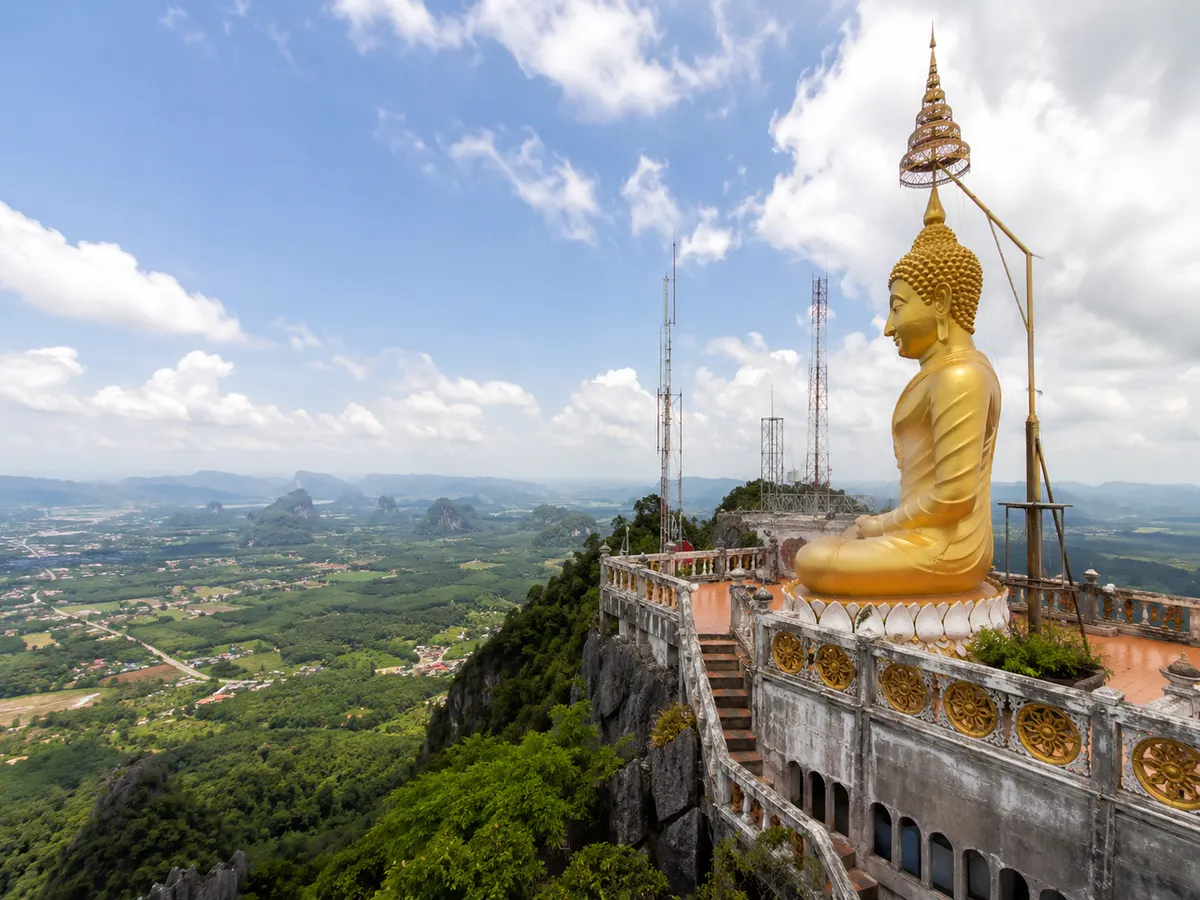
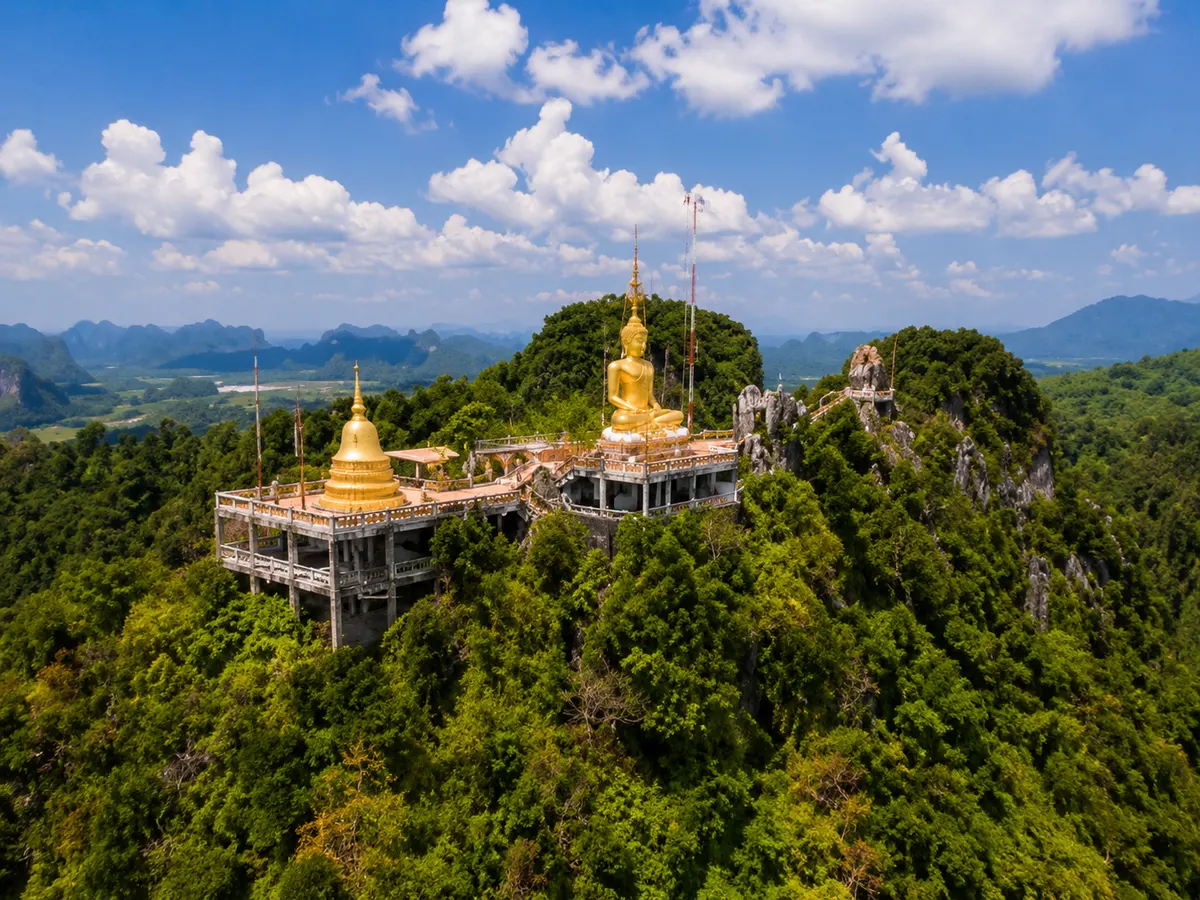
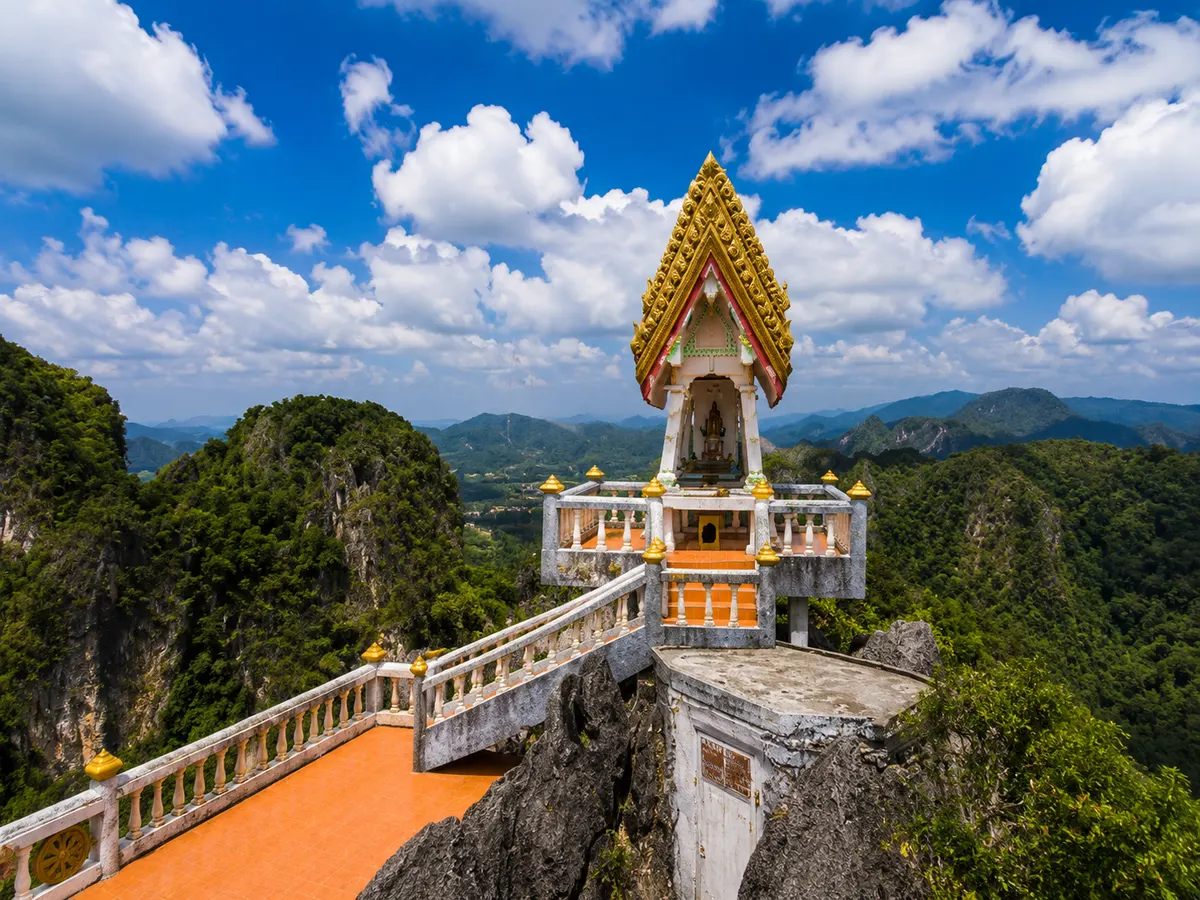
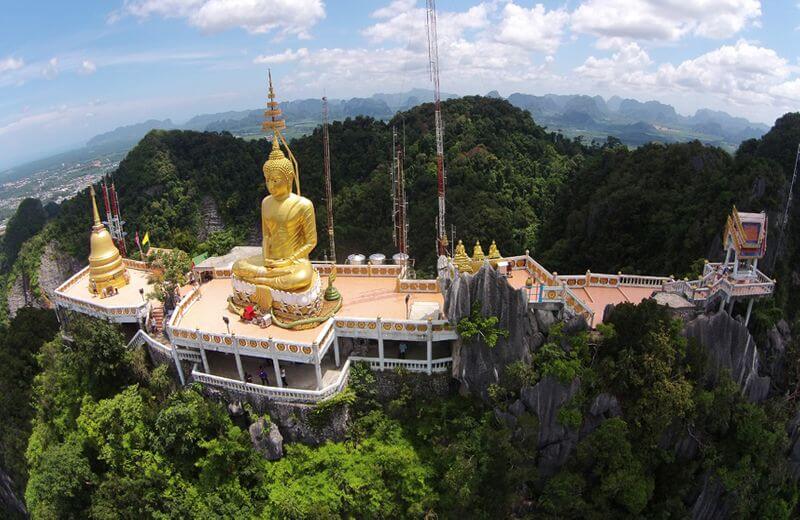
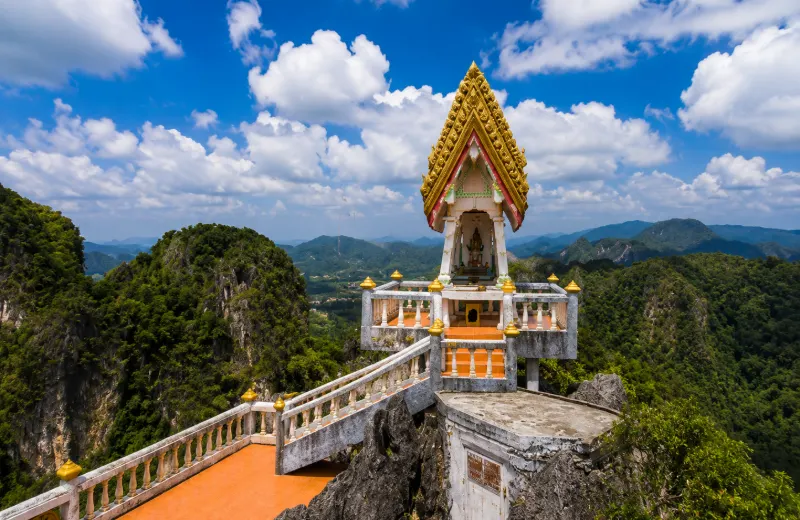
Reach the summit and the suffering pays off instantly. A large golden Buddha statue sits serenely at the peak, alongside a golden chedi (pagoda) and a small shrine. Locals come here to pay respect, and the atmosphere up top is quiet and reverent despite the steady trickle of climbers.
But the real showstopper is the view. From the platform you get a sweeping, near-360-degree panorama: limestone karst peaks rising out of dense green jungle, the lush Kiriwong Valley on one side, and Krabi Town with the region's farmland and the distant coastline stretching out on the other. On a clear day it's genuinely breathtaking.
Time your climb for early morning or late afternoon and the light is softer, the air is cooler, and the views are at their best. Take a few minutes at the top to simply sit and breathe it in. After 1,200-plus steps, you've earned it.
Best Photo Spots & Camera Tips
This is one of the most photogenic spots in all of Krabi, and the climb rewards you with shots you can't get anywhere else. Here's where to point your lens:
- The summit panorama — the headline shot. A near-360-degree sweep of limestone peaks, jungle, plantations, Krabi Town, and the distant sea. Use a wide angle if you have one.
- The giant golden Buddha — frame the seated statue against the sky or the valley behind it for scale and drama.
- The golden chedi (pagoda) — gleams beautifully in low-angle morning or evening light.
- The staircase itself — looking back down the winding steps from partway up gives a dizzying sense of just how far you've climbed.
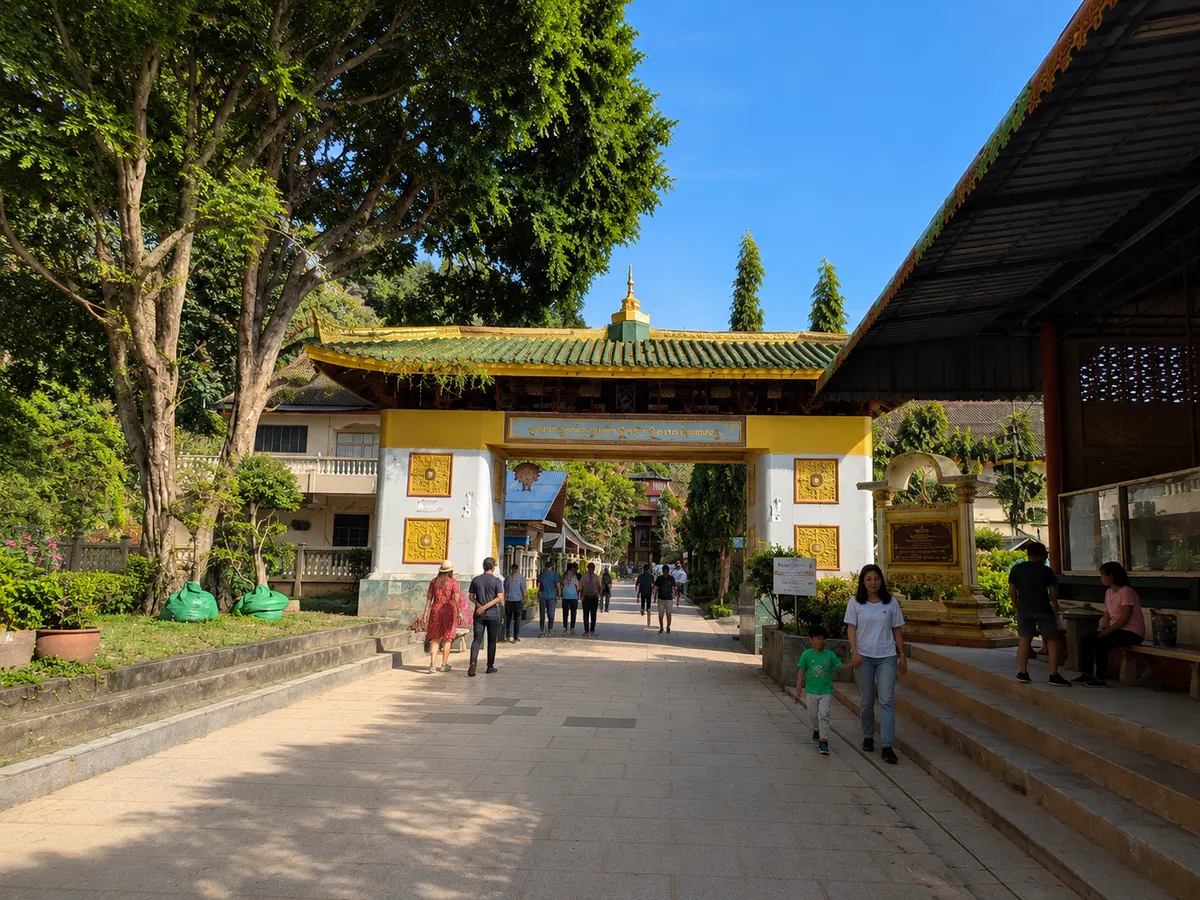
- The base complex — the tiger statues at the entrance, the shrines, and the ancient rainforest trees along the lower footpaths.
On timing, the golden hours win every time. Sunrise brings the softest light, the coolest air, the fewest people, and a quiet, spiritual mood. Sunset can be magical too, with the sun dipping behind the mountains and a warm glow over the Buddha — just carry a torch for the descent in fading light.
Respect the camera rules: This is an active place of worship. Don't photograph monks without asking, avoid disruptive poses near shrines, and skip the flash inside the cave. Drone use in Thailand is tightly regulated and requires registration — don't fly over the temple without permission, and check the current rules first.
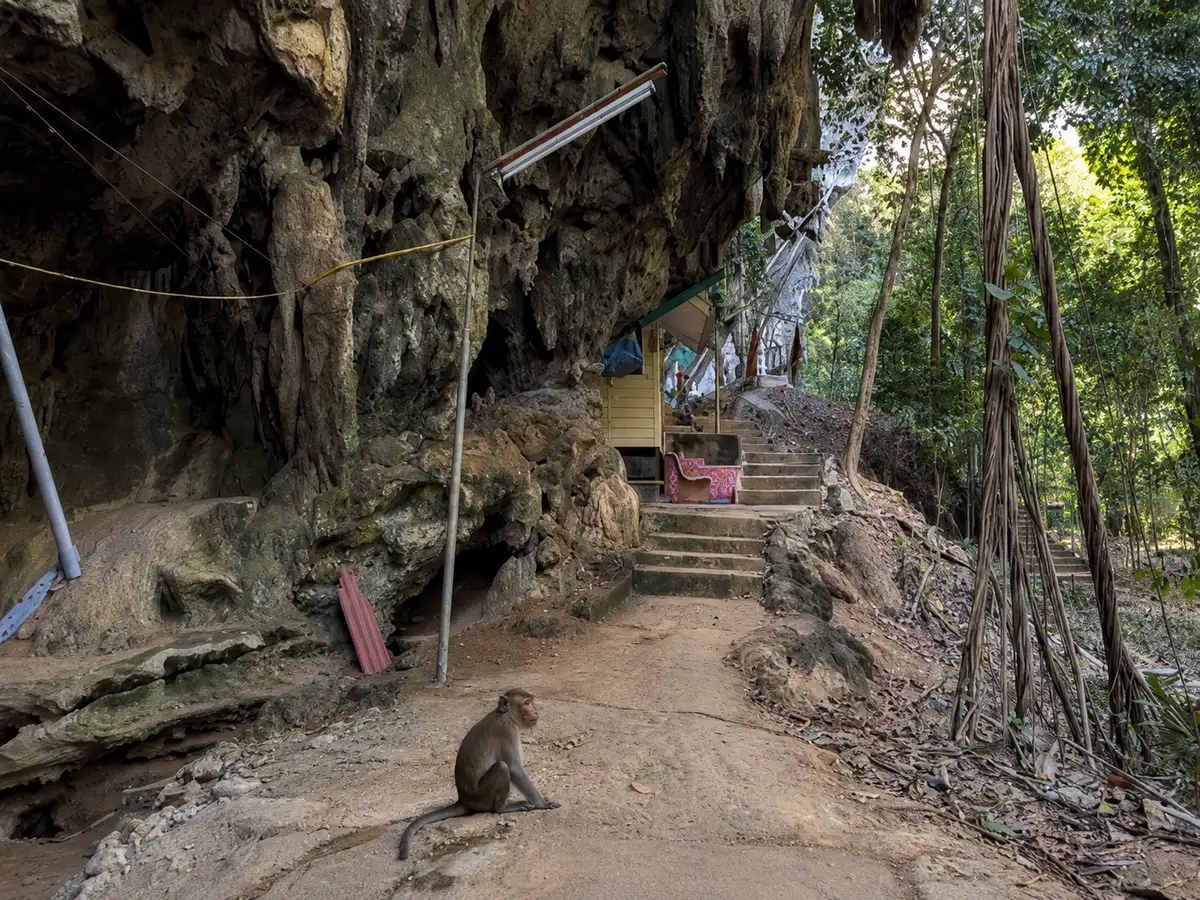
A couple of practical notes: the humidity and your own sweat are hard on gear, so pack a cloth and a sealable bag, and keep cameras and phones secured — the monkeys near the lower steps will happily grab anything loose and shiny.
The Tiger Cave at the Base (Don't Skip It)
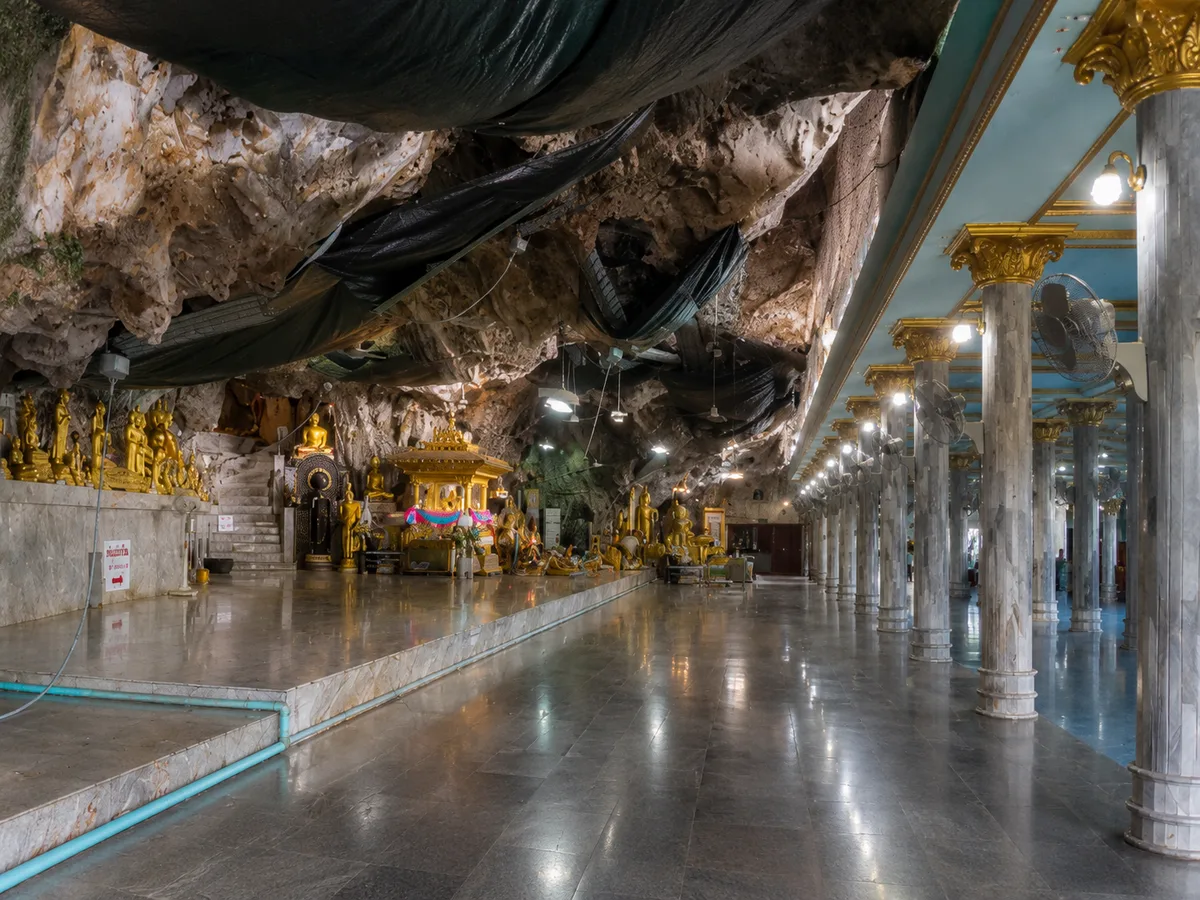
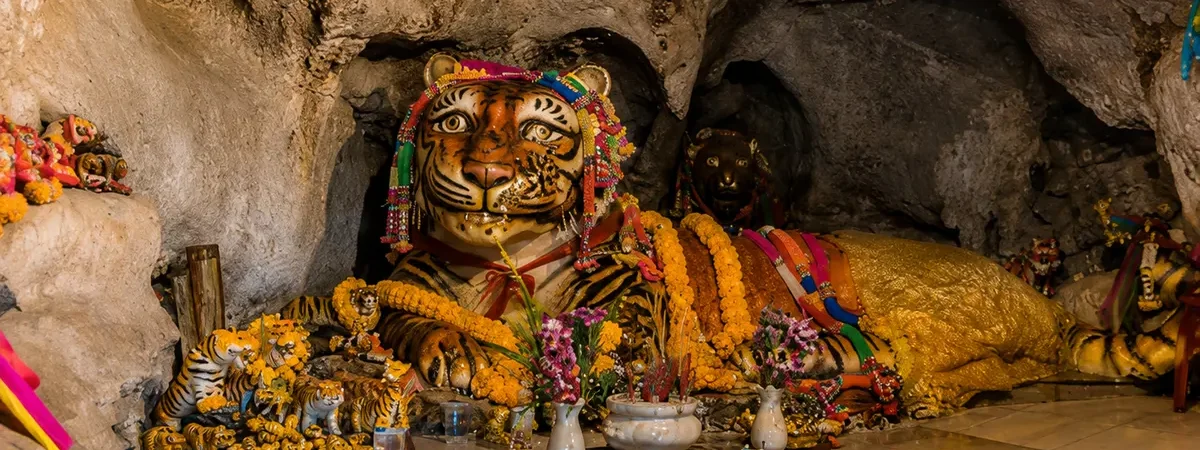
Here's a common mix-up worth clearing up: the actual Tiger Cave is not at the summit. It sits down at the base of the complex, separate from the big staircase. So even if you don't fancy the full climb, you can still visit the cave that gives the temple its name.
Inside, you'll find shrines, Buddha images, tiger statues, and the famous tiger paw-print rock formation tucked into the cave. The lower complex is a sprawling collection of temple buildings, shrines, and shops, all wrapped in ancient rainforest. There's also a quieter inner loop around the back of the mountain — a forested circuit of meditation caves and monk dwellings that many rushed visitors miss entirely. If you have time and want a calmer, more spiritual side of the site, it's worth seeking out.
How to Reach Tiger Cave Temple
The temple sits a short way northeast of Krabi Town, so it's an easy half-day trip from most bases. Here's how the options stack up.
| From | Distance | Approx. Drive | Common Options |
|---|---|---|---|
| Krabi Town | ~9 km | 15–20 min | Scooter, songthaew, taxi, Grab/Bolt |
| Ao Nang | ~23 km | ~30 min | Scooter, songthaew, taxi, Grab/Bolt, day tour |
By scooter: The most flexible and budget-friendly choice if you're comfortable riding. Rentals typically run around 200–300 baht per day, and the ride from Krabi Town takes about 20 minutes.
By songthaew (shared pickup truck): The cheapest and most local way to go. Fares are usually around 50 baht from Krabi Town or roughly 150 baht from Ao Nang, one way. The catch: it drops you on the main road, so you'll walk a short distance to the entrance.
By taxi or Grab/Bolt: Convenient and good for groups. Prices vary quite a bit, so agree on the fare upfront or use the app's estimate — and consider asking the driver to wait for you, since this area isn't well served by passing transport.
By organised tour: Many full-day tours pair the temple with the nearby Emerald Pool and Krabi Hot Springs, often with hotel pickup from Ao Nang, Krabi Town, or Klong Muang. Ideal if you want to see several highlights in one go without planning logistics.
A quick heads up: songthaew and shared transport thin out later in the day, so they suit morning visits best. If you're staying for sunset, sort out your return ride in advance — and pack a torch or use your phone light for the walk back down.
Best Time to Visit
For the climb itself, early morning is unbeatable. You'll dodge the worst of the heat, beat most of the crowds, and enjoy clearer views before any midday haze rolls in. Climbing 1,200-plus steps under a blazing afternoon sun is a different, far sweatier story.
Seasonally, Krabi's dry months (roughly November through March or April) offer the most reliable sunshine and the best chance of those crisp panoramic views. The wetter months bring lush green scenery but also slippery steps and the risk of a downpour mid-climb.
If a sunrise feels too ambitious, late afternoon is the next best window — cooler light, gentler temperatures, and a shot at golden-hour views. Just plan your descent so you're not stuck on the stairs after dark.
Entry Fee & Opening Hours
Good news for your wallet: it's free to enter the complex and climb the stairs. When you visit the actual Tiger Cave, you may be asked for a small voluntary donation (a token amount), which goes toward the temple's upkeep and community work. Donations elsewhere are encouraged but not required.
As for hours, this is a living monastery, so the grounds are generally accessible from early in the morning. Posted hours for specific areas can vary, and exact timings (along with any donation amounts) change over time.
Always confirm the latest opening hours and any fees locally or on arrival, since these details are not fixed and can change without notice.
What to Wear & What to Bring
This is a sacred site as well as a sweaty hike, so dress with both in mind. Cover your shoulders and knees for the temple and cave areas, and be ready to remove your shoes before stepping onto sacred tiled areas. Sarongs or cover-ups are usually available to rent or buy near the base if you arrive underdressed.
A quick packing checklist:
- Plenty of water — there's no reliable place to refill at the top, and the climb is dehydrating.
- Proper shoes with grip — flip-flops make the uneven steps harder and riskier.
- A small towel and a change of shirt if you sweat easily.
- Sun protection — hat, sunscreen, and the early start your skin will thank you for.
- Some cash for donations, transport, snacks, and the sarong if needed.
Travel-smart tip: Bring more water than you think you'll need. The single most common regret climbers mention is running out halfway up.
Watch Out For: Monkeys and Other Practical Tips
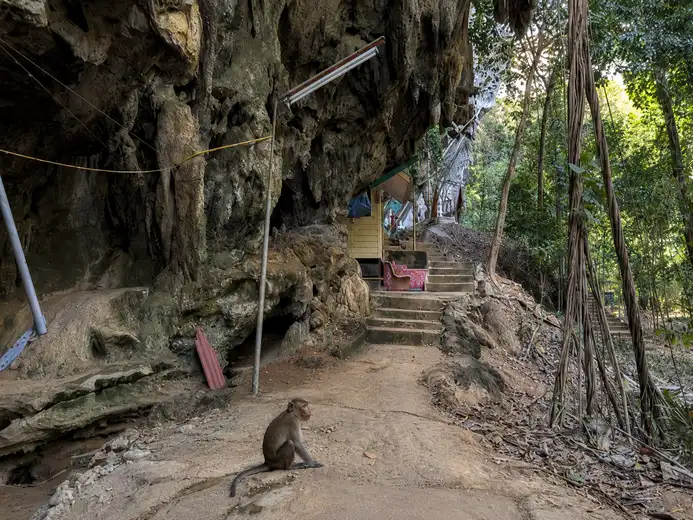
The temple doubles as a bit of a monkey village, and the macaques on the lower steps are bold. They've been known to snatch food, drinks, sunglasses, and anything shiny or loose. The golden rule: don't feed them, keep food zipped away, and don't taunt or get too close — a few can turn aggressive, especially when they associate humans with snacks.
A few more do's and don'ts:
- Do start early to beat the heat and crowds.
- Do keep your belongings secured and your bag zipped on the climb.
- Don't rush the descent — tired legs and steep steps are a bad combination.
- Do be respectful and quiet near monks who are praying or meditating.
- Don't assume there's an ATM on site — sort out cash beforehand in town.
A Perfect Day Trip: Tiger Cave Temple, Hot Springs & Emerald Pool
The classic Krabi mainland day out pairs the temple with two of the region's loveliest natural spots: the Krabi Hot Springs (warm mineral pools set in the jungle) and the Emerald Pool (Sa Morakot), a clear blue-green natural pool inside the Khao Phra Bang Khram Nature Reserve, often with a nearby Blue Lagoon to admire. The springs and pool sit deeper inland, roughly an hour or more from Krabi Town and Ao Nang, while the temple is much closer to town — so a little planning goes a long way.
The number one timing tip: Do the temple climb first, early in the morning while it's cool. Many guided tours save it for after lunch, and tackling 1,200-plus steps in the afternoon heat is a choice plenty of travellers come to regret. Beat the sun, then cool off in the water later.
A sensible self-drive flow looks like this:
| Time | Stop | Notes |
|---|---|---|
| Early morning | Tiger Cave Temple | Climb in the cool, beat crowds; allow about 2.5–3 hours |
| Late morning | Drive inland | Roughly an hour-plus toward the Khlong Thom area |
| Midday | Krabi Hot Springs | Soak in the warm mineral pools and waterfall |
| Lunch | Local restaurant | Plenty of simple spots near the pools |
| Early afternoon | Emerald Pool & Blue Lagoon | A refreshing cool dip and short jungle walk |
| Late afternoon | Drive back | Head home before dark |
Guided or independent? Full-day group tours (usually 8 to 9.5 hours, with hotel pickup from Ao Nang, Krabi Town, or Klong Muang) handle all the driving and often include lunch — easy and stress-free. Driving yourself by scooter or car gives you the freedom to hit the temple at sunrise and dodge the tour crowds.
Budget heads-up: The Emerald Pool / Nature Reserve and the Hot Springs charge national park entry fees, usually payable in cash on the day — and these are not always included in tour prices. Amounts change over time, so carry cash and confirm the current rates before you go. Bring swimwear, a towel, and water shoes too.
Combine Your Visit: Nearby Krabi Highlights
The temple pairs perfectly with the rest of what Krabi does best — dramatic limestone scenery and gorgeous beaches. If you're building a wider itinerary, consider stitching together a few of these:
- Railay Beach — a cliff-ringed peninsula reachable only by boat, famous for rock climbing and postcard scenery.
- Phra Nang Beach — one of the area's most beautiful beaches, tucked beside Railay.
- Ton Sai Beach — a laid-back, climber-favourite cove near Ao Nang.
- Koh Lanta — a relaxed island in Krabi Province, great for slowing down for a few days.
- Koh Phi Phi — the iconic island group, easily reached on a day trip or overnight from the Krabi coast.
- Koh Jum — a quiet, under-the-radar island for travellers craving calm.
Where to Stay & What to Eat Near Tiger Cave Temple
The temple sits in a rural pocket at the foot of the mountains, so there's no cluster of hotels right at its doorstep. Instead, you'll base yourself in one of two hubs and make the short trip out: Krabi Town, the closest and most local option, or Ao Nang, the beachy, tour-friendly favourite.
Where to Stay
| Base | Vibe | Distance to Temple | Best For |
|---|---|---|---|
| Krabi Town | Local, low-key, riverside, weekend night market | ~9 km (closest) | Budget travellers, early temple starts, authentic feel |
| Ao Nang | Beachy, lively, restaurants, island day trips | ~23 km | Beach lovers, nightlife, combining temple with island tours |
| Klong Muang / Tubkaek / Railay | Quiet, upscale, scenic | Further out | Couples and travellers after luxury and seclusion |
Krabi Town is the smart pick if the temple is your priority. It's the nearest base, the cheapest, and full of simple guesthouses and small hotels clustered around Maharaj Road and the night market — ideal for rolling out of bed and beating the heat with an early climb.
Ao Nang is the more popular all-rounder. You'll find everything from budget guesthouses and modern mid-range hotels to a few upscale resorts with rooftop bars and karst views, plus easy access to the beach and island-hopping tours. It's a touch further from the temple, but most organised day tours pick up here.
For a luxury escape, the quieter coastal stretches of Klong Muang and Tubkaek, and the boat-only Railay peninsula, are home to some of Krabi's best beachfront resorts.
Where to base yourself: Choose Krabi Town if the temple and a low budget top your list. Choose Ao Nang if you want beaches, dining, and island trips alongside it.
Room rates and availability shift a lot with the season, so compare current prices and book ahead during the busy dry months.
What to Eat
Here's a reward worth saving room for: the food market at the base of the temple is locally famous for khanom krok — little coconut-rice pancakes, crisp on the outside and creamy in the middle, often sold for around 20 baht a portion. They make the perfect post-climb refuel. The same stalls are known for a good massaman curry, ideally mopped up with flaky roti instead of rice.
For a proper feast, head to the Krabi Town Night Market, the area's best food scene. It runs on weekend evenings along Walking Street, packed with stalls serving grilled seafood, pad thai, fresh fruit shakes, coconut crepes, and more khanom krok, often with live music and a friendly, local atmosphere. Ao Nang has its own night market too — smaller and more tourist-oriented, but handy and close to the beach.
A few southern Thai dishes worth hunting down:
- Gaeng tai pla — a bold, pungent fermented-fish curry; intense and very local.
- Crab curry with wild betel leaf — coconut-rich and peppery, a true regional specialty.
- Satay skewers and grilled seafood — smoky, cheap, and everywhere; follow the queues.
- Mango sticky rice — the classic sweet finish.
Spice warning: Southern Thai cooking is some of the fieriest in the country. If you're heat-sensitive, ask for it "mai phet" (not spicy) when you order.
Final Word: Is the Climb Worth It?
For most people who make it up, the answer is a resounding yes. The Tiger Cave Temple Krabi climb is demanding — around 1,260 uneven steps, no shortcut to the top — but the reward is a panorama and a sense of accomplishment that few attractions in the region can match. Go early, carry water, dress respectfully, keep an eye on the monkeys, and pace yourself.
Your next step? Pick your base in Krabi Town or Ao Nang, lock in an early start, and treat the climb as a slow, mindful adventure rather than a race. Confirm the latest hours and transport prices when you arrive, lace up your best shoes, and get ready to earn one of southern Thailand's greatest views.