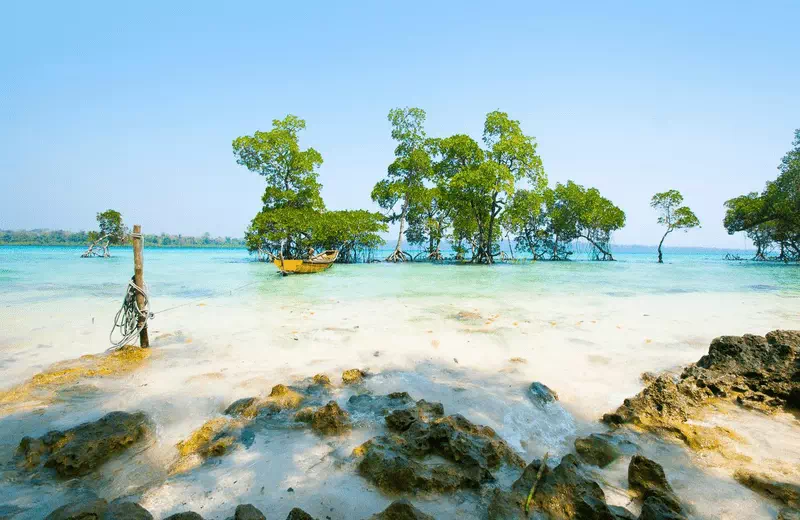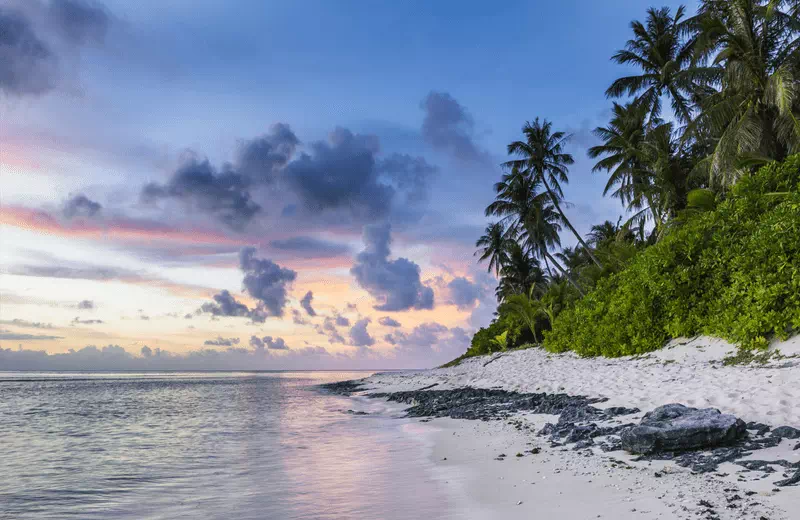


Two islands. Two hemispheres. Two destinations so dramatically beautiful that most travelers spend years going back and forth between them — in their heads, on their Pinterest boards, in their "someday" lists. New Zealand and Iceland are the kind of places that don't just impress you; they rewire you. Both are volcanic, wild, sparsely populated, and almost offensively photogenic. But they are not the same trip. Not even close. One will shake you awake with fire and ice in the dark of an Arctic winter. The other will wrap you in ancient forests, Pacific warmth, and a culture so alive it sings. So before you flip a coin, read this. The answer might already be inside you — you just need the right questions.
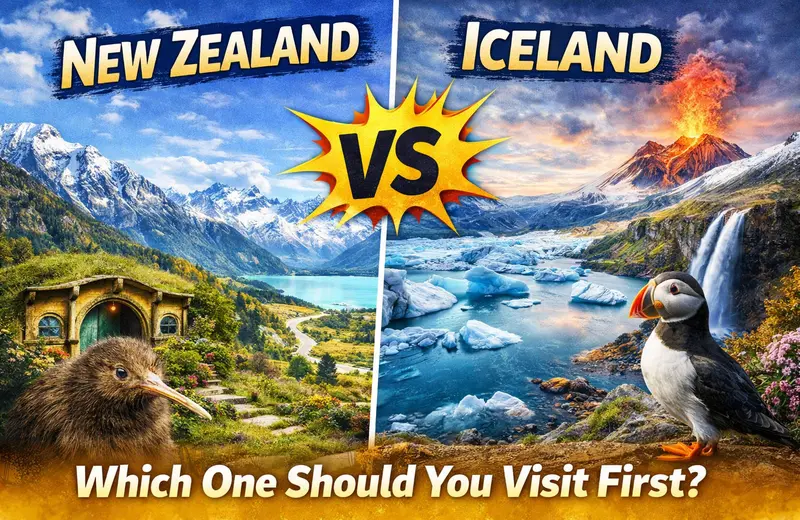
Round 1: The Landscapes - Fire & Ice vs Green & Wild
Iceland earns its nickname honestly. The "Land of Fire and Ice" is a raw, elemental place — black lava fields stretching to the horizon, geysers erupting on schedule, glaciers calving into icy lagoons, and the aurora borealis painting the sky in green and violet on a clear winter night. It looks like another planet, and that's exactly the point. There is nowhere else on Earth that feels quite so primordially alive.
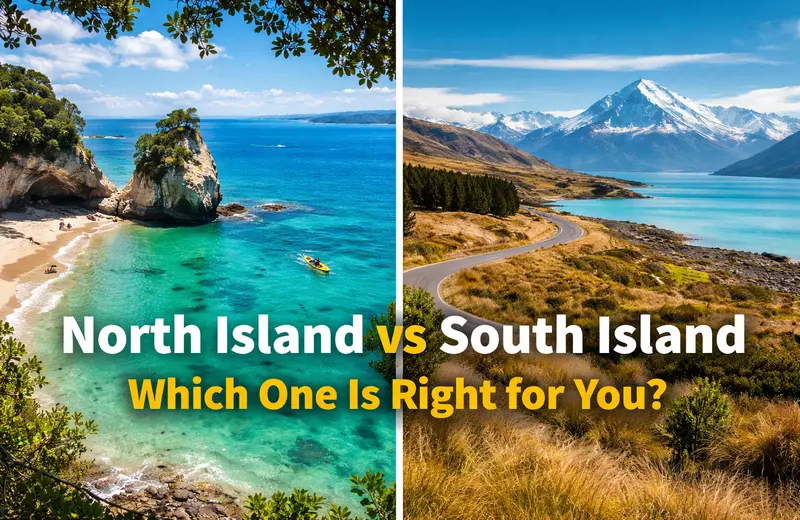
New Zealand plays a completely different game. Where Iceland is stark and dramatic, New Zealand is lush and layered. In a single day of driving the South Island, you can pass through alpine snow, ancient rainforest, turquoise fjords, golden coastline, and wine country. From the snow-capped peaks of the Southern Alps to the geothermal wonders of Rotorua, New Zealand delivers a stunning variety of natural beauty packed into a compact space.The diversity here isn't just impressive — it's almost unfair.
Verdict: If you want one singular, otherworldly visual experience, Iceland wins. If you want a landscape that keeps shapeshifting and surprising you every hundred kilometers, New Zealand takes it.
Round 2: The Culture Experience
Iceland's culture is intimate and intellectual. Reykjavik — the world's northernmost capital — punches far above its weight with a thriving arts scene, world-class restaurants, Viking history museums, and a nightlife that ignites after midnight. The Norse sagas, the folklore of hidden elves (yes, really — a significant portion of Icelanders believe in huldufólk, or hidden people), and the quiet resilience of a nation that rebuilt itself after a devastating financial crisis all add fascinating human texture to the volcanic landscape.
New Zealand's cultural identity runs far deeper into the earth. The Maori people have called Aotearoa home for over 700 years, and their presence isn't a museum exhibit — it is a living, breathing part of everyday life. You'll hear te reo Maori on road signs, in greetings, and on national television. You'll feel the weight of a haka performance that sends electricity through your spine. You'll see intricate carvings that tell stories older than most nations. Engaging with Maori culture respectfully and genuinely is one of the most profound travel experiences available anywhere in the world today.
Verdict: Iceland offers rich Norse and contemporary culture. New Zealand offers something rarer — an indigenous culture that is actively thriving, not just preserved.
Round 3: Cost & Budget Reality
Let's not sugarcoat it — neither destination is cheap. But the two countries hit your wallet in different ways.
Iceland Air offers connections from the US to Reykjavik in around 5–7 hours, making it significantly closer and cheaper to reach for travelers flying from North America or Europe.Once you're there, accommodation and dining in Reykjavik can be expensive, but renting a car and camping around the Ring Road dramatically cuts costs. Iceland rewards the self-sufficient traveler.
New Zealand's long-haul flights are the big expense — from most parts of the world, you're looking at 12+ hours in the air, which adds significantly to your budget. But once you land, smart travel is very possible. Freedom camping across hundreds of designated sites, budget supermarkets, and a well-connected intercity bus network mean that day-to-day costs can be managed well. The country rewards those who plan ahead and travel slow.
Verdict: Iceland is cheaper to reach from Europe and North America. New Zealand can be more affordable on the ground if you plan well. For Indian travelers, both require similar investment — but New Zealand offers far more experiences per dollar once you're there.
Round 4: Adventure & Activities
Both countries are absolute playgrounds for outdoor enthusiasts, but they offer different flavors of thrill.
Iceland gives you glacier hiking, ice cave exploration, snorkeling between two tectonic plates in the Silfra fissure, whale watching off the northern coast, and snowmobiling across a volcanic plateau. Every activity here feels genuinely rare — the kind of thing you can't do most places on Earth.
New Zealand offers world-class hiking, bungee jumping, kayaking, and wildlife encounters, including the iconic kiwi bird.Queenstown alone — the self-declared adventure capital of the world — could keep an adrenaline junkie busy for two weeks straight. Add in the Tongariro Alpine Crossing (one of the world's great day hikes), sea kayaking in Abel Tasman, surfing black sand beaches, and stargazing in the Mackenzie Dark Sky Reserve, and you have a destination that simply never runs out of things to do.
Verdict: Iceland wins for uniqueness of experience. New Zealand wins for sheer volume and variety of adventures.
Round 5: Best Time to Visit
Timing matters enormously for both destinations — and they operate on opposite seasonal logic.
Iceland is best visited between June and August for endless daylight, green landscapes, and accessible highland roads. Winter (November–February) is for Northern Lights chasers and those who don't mind cold, dark days in exchange for the most magical night sky on the planet. Traveling to Iceland in winter means the best chance to see the Northern Lights, though conditions must be perfect — a clear night with no light pollution.
New Zealand's summer runs December through February, bringing long golden evenings, beach weather, and festival season. But spring (September–November) is arguably the sweeter spot — wildflowers blooming, fewer crowds, and the mountains still dusted with snow. Autumn (March–April) offers harvest festivals, wine country at its most beautiful, and some of the calmest hiking weather of the year.
Verdict: Iceland's Northern Lights (winter) and midnight sun (summer) have no equivalent. But New Zealand is honestly enjoyable year-round in a way Iceland simply is not.
Round 6: Time Required
This is where the decision gets practical.
Iceland is a destination you can genuinely experience well in 7–10 days. The famous Ring Road loops the entire country in roughly 1,300 km, and most major attractions sit right along it. A focused 10-day trip will leave you deeply satisfied.
New Zealand needs more breathing room. At least two weeks is recommended to give yourself time to immerse in the country properly. The North and South Islands are distinct enough that rushing between them feels like a waste. Four weeks is ideal; two weeks is the minimum for a meaningful trip. If you only have 10 days, pick one island and go deep rather than skimming both.
Verdict: Iceland is the better choice if your holiday window is short. New Zealand demands time — but rewards every extra day generously.
So, Which One Should You Visit First?
Here's the honest answer: it depends entirely on what kind of traveler you are right now.
Visit Iceland first if you want a shorter, more compact trip with extreme natural drama, easy accessibility from Europe or North America, and the kind of alien landscape you've never seen before. It's the perfect "dip your toes into wild nature" destination.
Visit New Zealand first if you have two to four weeks, crave cultural depth alongside natural beauty, want your adventures layered with warmth and human connection, and you're ready to be genuinely transformed by a place — not just impressed by it.
And if someone tells you to wait — don't. Both countries have a quiet, persistent magic that has a way of turning one visit into a lifelong love affair. The question was never really "which one." It was always "which one first."