







The New Zealand Mistakes I Made (So You Don't Have To)
There's a particular kind of humbling that happens when you're standing on the side of State Highway 6 at dusk, watching the last rays of sun disappear behind the Southern Alps, realizing your accommodation is still 90 minutes away and you've got maybe 20 minutes of safe driving light left.
That was me, on my first trip to the South Island. I'd looked at a map, seen that Fox Glacier to Queenstown looked fine, maybe three hours tops. Google Maps even agreed. What I hadn't accounted for: the road is a winding coastal ribbon that demands your full attention, there are photo stops you physically cannot not take, and the light — that famously extraordinary New Zealand light — fades fast once the mountains get involved.
New Zealand lures you into overconfidence. It's small on a world map. The people are friendly. The infrastructure seems reliable. Everything feels manageable. And then it absolutely humbles you in the best and worst ways. Here's what I wish someone had told me — and what I've since heard from countless other travelers who learned the same lessons the hard way.
Mistake #1: Treating the Map Like a Speedometer
New Zealand is roughly the size of Colorado or the UK. That sounds reassuring. It is not.
The North Island's central plateau and the South Island's mountain passes mean that "short" distances frequently take twice as long as they look. The rule of thumb most locals use: take whatever Google Maps tells you, add 30-40%, then add time for the thing you'll inevitably stop to photograph.
The Haast Pass is one example. It's genuinely one of the most spectacular drives in the world — waterfalls dropping through ancient kahikatea forest, a coastline that appears like a fever dream after hours of mountain scenery. You will not drive it at pace. You will pull over every 15 minutes. Plan for it.
The fix: Build your itinerary backwards from daylight hours, not distance. New Zealand's golden hour photography is phenomenal, but driving unfamiliar mountain roads in the dark is not. Book accommodation earlier in the day's drive if you're in doubt, and give yourself permission to go slower than feels necessary.
Mistake #2: Packing for One Season When You're Actually in Four
Ask a New Zealander about the weather and watch their face do something complicated. The country sits in the "Roaring Forties" — a band of latitude notorious for rapid, dramatic weather changes — and its geography means you can drive from subtropical warmth to near-alpine cold in a single afternoon.
I once packed for a sunny Marlborough wine tour and ended up hiking the Tongariro Alpine Crossing the next day in borrowed layers because I'd left my fleece in Wellington. The Crossing sits at altitude and can shift from bluebird skies to horizontal sleet in an hour. People genuinely get into trouble up there, even in summer.
The South Island's West Coast is particularly notorious. Rainfall totals that rival a rainforest, pushed up by the Southern Alps. On the day I visited Lake Matheson — famous for its mirror reflections of Aotearoa's highest peaks — the cloud sat at exactly the wrong height for about six hours, then lifted for a perfect 20-minute window just before closing time. Weather here has a personality.
The fix: Layer aggressively. Merino wool is New Zealand's unofficial national fabric for a reason — it regulates temperature, doesn't smell after a hard day, and packs small. Don't leave any region without a waterproof shell and something genuinely warm. And check the MetService app (not Google Weather, which uses international models that are notoriously inaccurate for NZ) the morning of any outdoor activity.
Mistake #3: Underestimating the Freedom Camping Rules
Freedom camping — sleeping in your van or tent outside of designated campgrounds — is one of New Zealand's great pleasures and one of its most-misunderstood systems.
For years, visitors would pull up anywhere beautiful and camp. The country's "clean green" image made it feel like a logical thing to do. The resulting mess — in some cases, literal mess — led to a significant crackdown. The Freedom Camping Act is now enforced with real fines, and specific areas have completely banned it.
The situation is genuinely confusing because the rules vary by council, sometimes by road, and change regularly. A spot that was legal when someone wrote about it in a 2022 blog post may now have a $200 fine attached to it.
The fix: Download the Campermate or Rankers Camping NZ apps. Both are updated regularly with current rules, freedom camping zones, and user-verified information. If you're renting a campervan, check whether it's certified self-contained — this opens up more legal camping locations and is worth the upgrade.
Mistake #4: Booking Too Little (Or Too Much) of the South Island
The South Island has a gravitational pull on first-time visitors. Queenstown, Milford Sound, Mount Cook, Abel Tasman — they all appear on every list, everyone says you must go, and the result is itineraries that are logistically impossible or so rushed that you're ticking boxes without absorbing anything.
I've seen travelers try to do Queenstown, Milford Sound, the Catlins, Mount Cook, and Kaikoura in six days. The distances alone make this borderline impossible. Milford Sound requires either a full-day return drive from Queenstown on roads that don't hurry, or an overnight stay, or a flight. The Catlins are remote and wonderful but not "on the way" to anything in particular.
On the flip side, others go too minimal — three days in Queenstown and nothing else — and miss the quieter magic entirely.
The fix: Pick a lane. If you have 10 days for the South Island, consider the western loop (Queenstown → Milford → Westland → Nelson) or the eastern route (Christchurch → Mount Cook → Dunedin → Catlins → Queenstown). Don't try both. The South Island rewards slow travel, and the best moments tend to happen in places that aren't on any top-10 list — a roadside pie from a farm stall, a DOC hut with a hot spring view, a conversation with a musterer who's worked the same valley for 30 years.
Mistake #5: Ignoring the North Island
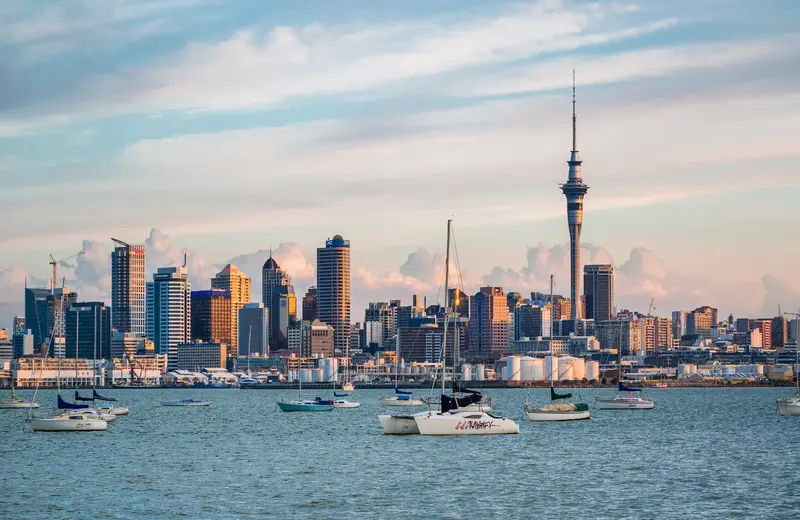
This one genuinely frustrates me, and it's incredibly common among travelers on tight schedules: they fly into Auckland, maybe spend a day or two, then bolt south.
The North Island is extraordinary in ways the South Island simply isn't. Rotorua's geothermal landscape is unlike anywhere else on earth — bubbling mud, sulphur clouds, and the kind of geysers that make you understand why Maori culture developed such a vivid mythology around the land. The Coromandel Peninsula has beaches that rival anything in the Pacific. The Hawke's Bay wine region is producing some of the most interesting red wines in the Southern Hemisphere. Cape Reinga, at the tip of the Northland peninsula, is one of the most spiritually significant places in Maori tradition — and watching two oceans collide from that cliff is something you simply can't unknow.
The fix: Give the North Island at least five days if you can. Wellington is worth two alone — it punches far above its size for food, culture, and the extraordinary Te Papa Tongarewa museum. If you're an adventurer, the Tongariro Alpine Crossing deserves its status as one of the world's great day walks. If you're a beach person, head north.
Mistake #6: Missing the Maori Cultural Experience — Or Getting a Shallow Version of It
New Zealand's Maori heritage is not a tourist attraction. It's a living culture that infuses everything from place names (Aotearoa, Whangarei, Whanganui, Otautahi) to food to political discourse to haka performed at sports events with genuine emotional weight.
A lot of visitors consume the most visible version — a concert at a Rotorua hotel, a hangi dinner, a photo with a performer — and leave thinking they've engaged with Maori culture. It's a start, but there's so much more available if you're willing to look.
The fix: Seek out iwi-led tourism operations rather than hotel packages. Mitai Maori Village in Rotorua is a good example of a culturally-led experience rather than a purely commercial one. Read a little before you go — even a basic understanding of the Treaty of Waitangi and its ongoing significance will change how you see the country. Learn to pronounce place names correctly; New Zealanders genuinely appreciate the effort, and the Maori language has consistent phonetic rules that make it learnable quickly.
Mistake #7: Leaving the Great Walks to Chance
New Zealand's nine Great Walks — including the Milford Track, Routeburn, and Abel Tasman — are among the finest hiking experiences in the world. They're also booked out months in advance during peak season (October through April).
This one seems obvious until you're standing at a DOC office in November being told the next available hut on the Milford Track is in March.
The fix: Book through the DOC website the moment the booking window opens — typically in late May or June for the following season. If you've missed the window, check for cancellations, consider the shoulder season (late April, early May), or look at the less-famous but equally magnificent alternatives like the Heaphy Track or Paparoa Track.
One Last Thing
New Zealand has a phrase that guides its outdoor culture: "Prepare for the worst, hope for the best." It sounds grim but it's actually freeing. Once you accept that the country will not always perform on schedule, that the weather will have opinions, that the road will take longer than expected — you stop trying to control it and start actually experiencing it.
The travelers who love New Zealand most aren't the ones who executed a flawless itinerary. They're the ones who got weathered off Milford and ended up in a small café in Te Anau for three hours talking to a retired shepherd. Who missed their booking and found a better place. Who stopped driving when the light got good and watched the stars appear over the Mackenzie Basin in absolute silence.
The mistakes, more often than not, become the stories.