









Backpacking New Zealand: What Worked, What Didn't
Six weeks. One 65-litre pack. Roughly $4,200 NZD spent. And a very specific lesson learned somewhere on the road between Picton and Nelson about the relationship between cheap wine and ferries.
I want to be upfront about something before we get into it: most New Zealand backpacking content is aspirational to the point of uselessness. The golden photos, the "budget tips" that assume you're skipping meals and sleeping in parking lots, the implied promise that everything will flow seamlessly if you just believe in the journey. That's not what this is.
This is a forensic look at six weeks of backpacking the length of Aotearoa — what genuinely worked, what quietly burned through money and energy, and the specific decisions I'd change if I went back tomorrow. Which, for the record, I would. Immediately.
The Setup
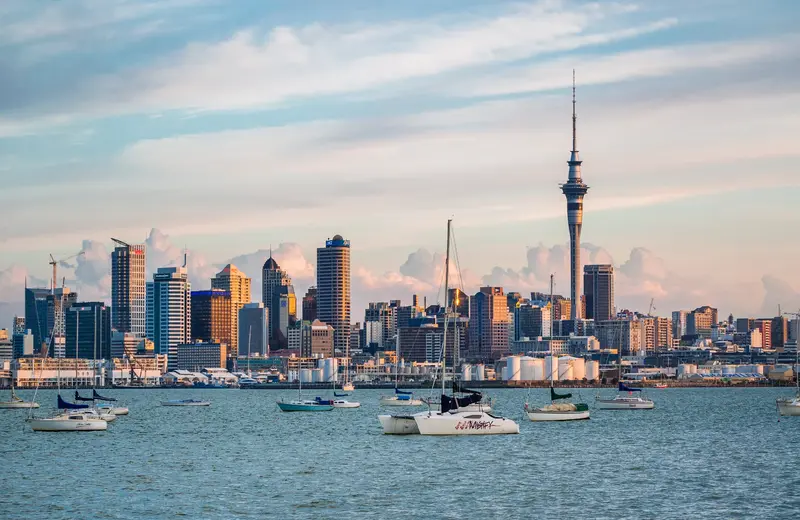
I flew into Auckland and out of Queenstown, covering both islands over six weeks in mid-autumn — March into April. This is actually one of the better windows for backpacking New Zealand. The summer crowds thin out, the light turns that deep honeyed gold you see in all the postcards, and the Great Walks become genuinely pleasant rather than shoulder-to-shoulder pilgrimages.
My transport was a mix of the Intercity bus network, the Interislander ferry, and a brief, economically questionable flirtation with renting a car for the South Island's West Coast. More on that shortly.
What Worked
The Naked Bus / Intercity Combo — Booked Early
Getting between New Zealand's towns as a backpacker without a vehicle is a real puzzle, and the answer most people land on is the Intercity bus network, which covers an impressive amount of ground. The hack that saved me hundreds of dollars: booking at least a week ahead and watching for Naked Bus deals, which occasionally posts seats at absurd discounts — I once got Auckland to Tauranga for $1. One dollar.
The buses themselves are comfortable, reliable, and staffed by drivers who double as unofficial tour guides through the boring stretches. The downside is that they run on their schedule, not yours, and some smaller towns are only served once a day. But for the backbone of a North Island backpacker route — Auckland, Rotorua, Taupo, Wellington — they're ideal.
What I'd tell myself: Download the Intercity app and book your key legs before you even land. The cheapest fares disappear fast.
YHA Hostels Over Random Budget Accommodation
I'll say something potentially controversial here: not all hostels are equal in New Zealand, and the difference between a good one and a bad one is more than just a hot shower. The YHA (Youth Hostel Association) network is worth paying a small membership fee for. The properties tend to be cleaner, better located, and — crucially — better maintained than a lot of independent budget places I stayed in.
The YHA in Queenstown has a communal kitchen with actual counter space. The one in Franz Josef had a drying room that saved my hiking gear from two days of sustained rain. These things sound minor until it's 9pm, you're damp, and you're trying to cook pasta in a kitchen with one functioning burner and no colander.
The social element matters too. Hostels are how backpackers find walking partners for the Tongariro Crossing, how you learn which shuttle is cheaper for getting to Milford, how you end up at a wine bar in Nelson with people you met four days ago in Wellington. That stuff can't be booked.
Cooking Almost Everything
Food in New Zealand is genuinely delicious and genuinely expensive. A sit-down meal in a mid-range restaurant will comfortably cost $25–35 NZD per person, and even cafés can sting you with a $22 brunch that disappears in eight minutes. Supermarkets, on the other hand, are your best friend.
New World and Pak'nSave are the two chains worth knowing. Pak'nSave is the budget option — brutal fluorescent lighting, no bags provided, exceptional produce prices. I ate well on roughly $15–20 NZD a day by shopping there, cooking communal hostel meals, and treating restaurant meals as events rather than defaults.
The one food splurge I consistently did not regret: pie. New Zealand bakery pies — mince and cheese, steak and mushroom, bacon and egg — are a national institution and cost around $5. They are portable, warming, and available at petrol stations throughout the country. This is not a joke. This is travel advice.
Travelling in Autumn
March and April turned out to be near-perfect timing. The Tongariro Alpine Crossing was busy but not chaotic. Abel Tasman had space on the water taxis. The Remarkables above Queenstown had early snow on their peaks while the valley below was still golden with autumn colour — one of the most unreasonably beautiful things I've ever seen.
Accommodation was cheaper, campsites had breathing room, and I had conversations with locals at bars that I'm not sure would've happened in the high summer scrum of December. Autumn in New Zealand also means harvest season in wine country — if your route takes you through Marlborough or Hawke's Bay, this is the best possible time to be there.
What Didn't Work
The Campervan Temptation I Should Have Resisted
Okay. The West Coast campervan situation.
Every backpacker who reaches the South Island eventually encounters the seductive logic of renting a campervan or small car for the West Coast, which genuinely does not lend itself to public transport. The bus service is minimal, and the distances between Franz Josef, Fox Glacier, Haast, and Wanaka are real. So I split a car rental with two people I'd met in Greymouth, which sounded like a perfect plan right up until one of them left the trip in Franz Josef and we were left covering a four-person share cost between two.
The rental itself was fine. The car was a small Toyota that handled the mountain passes nervously but reliably. The problem was the cumulative cost: rental, insurance, petrol (fuel prices on the West Coast are higher than average), and the parking fees at Franz Josef Glacier that sneak up on you. It ended up costing more than flying that leg would have.
What I'd do instead: Book the dedicated West Coast shuttle services that exist specifically for backpackers moving between Queenstown and Franz Josef, or budget properly for the car from the start. Splitting costs on an uneven group is a recipe for awkwardness.
Underestimating Wellington
I gave Wellington two nights. This was wrong. I knew it was wrong roughly four hours into the first day when I found myself down a side street in Te Aro at a natural wine bar with a chef who'd moved there from Copenhagen, eating some of the best food I'd had in weeks and realising I hadn't even been to Te Papa yet.
Wellington has a cultural density that's startling in a city of its size. The waterfront, the cable car, the Cuba Street precinct, the coffee (seriously — Wellington has some kind of civic pride attached to its espresso culture that means even mediocre cafés are good). I'd been warned by multiple people that two nights wasn't enough, and I'd filed that warning under "things people say about their city out of loyalty."
They were right. Four nights minimum. Maybe five.
The broader lesson: In New Zealand, the cities people dismiss — Wellington, Dunedin — are often more interesting per square kilometre than the famous landscapes. Plan them properly.
Overpacking for the Outdoors, Underpacking for Everything Else
My pack included a full rain jacket, two pairs of hiking boots (one light trail runners, one waterproof), and enough moisture-wicking base layers to dress a small expedition team. I wore my nice going-out shirt approximately three times and spent two weeks wishing I had a second pair of non-hiking trousers.
New Zealand backpacking encourages a kind of gear maximalism because the outdoor activities are so prominent. But unless you're doing multiple Great Walks back-to-back, you don't need to gear up like you're summiting Everest. One pair of solid trail runners handles most day hikes. One warm layer. One good rain shell. The rest of your bag space is better spent on clothes that make you feel like a functioning human being in a hostel common room.
What I'd cut: The spare hiking boots I wore once. The ultralight camping stove I used twice before deciding hostel kitchens were fine. The travel pillow that compressed to the size of a grapefruit but was still somehow annoying.
Booking Milford Sound Too Late
I got there. Barely. And I paid full peak price for a last-minute cruise because I'd been vague about dates and assumed availability would be fine. It was not fine. Milford Sound's cruise operators fill up, particularly for the early morning departures that catch the fiords before the tourist coaches arrive en masse.
If Milford is on your list — and it should be — book it before you leave home. The overnight cruise, if it's in budget, is one of those travel experiences that doesn't have an equivalent anywhere else on earth. Waking up inside a fiord, mist lifting off walls of ancient rock, before the day boats arrive. Book it early.
The Numbers, Honestly
Six weeks, NZD $4,200 total. Breakdown approximately:
- Accommodation: ~$1,100 (averaging $26/night, mix of dorms and a few private rooms)
- Transport: ~$900 (buses, ferry, car rental share, one domestic flight)
- Food: ~$850 (heavy on self-catering, light on restaurants)
- Activities: ~$750 (Tongariro shuttle, Milford cruise, kayaking, a bungee jump I don't regret)
- Miscellaneous: ~$600 (gear replaced, a DOC Great Walk booking, the occasional bad financial decision)
Is this achievable? Yes. Is it the absolute budget floor? No — people do New Zealand on less by skipping activities and cooking every meal. Is it comfortable and genuinely enjoyable travel? That's the sweet spot I'd aim for.
The Things Nobody Tells You
New Zealand drivers are almost aggressively courteous — they'll stop for you when they have right of way, wave you through at intersections, which is lovely until you're not sure if they're actually giving way or just being polite and now you're both frozen at a roundabout.
The silence in remote areas is a different quality than silence elsewhere. Stand on a West Coast beach at dawn with the Tasman Sea running up to your boots and there will be a moment where you understand why people come here and never quite leave.
Locals will give you directions using landmarks that no longer exist. "Turn left where the old pub used to be." Accept this. Ask a follow-up question.
And one final thing that matters more than any logistical tip: New Zealand rewards the people who slow down. The backpackers who try to sprint through both islands in three weeks come back with a camera full of photos and a vague sense that they've missed something. They have. The country reveals itself gradually — in the second conversation with the hostel host, in the afternoon you didn't plan, in the moment the clouds finally lift.
Give it time. It gives back accordingly.